Choosing a Specialist for Complex Dental Implants: What Actually Matters
Medically reviewed by Dr. Alexander V. Antipov, DDS — Board-Certified Oral & Maxillofacial Surgeon · Diplomate, American Board of Oral & Maxillofacial Surgery (ABOMS) · California Dental License #50724
A specialist for complex dental implants is a board-certified oral and maxillofacial surgeon whose training and daily caseload center on the hardest situations — severe bone loss, failed or poorly placed implants, medically compromised healing, and full-arch reconstruction, explains Dr. Alexander Antipov, a board-certified oral surgeon in Roseville, CA. Being told you "aren't a candidate" for implants is rarely a final verdict; more often it means the provider you saw doesn't have the surgical tools to solve your anatomy. This guide explains what actually makes a case complex, how an oral surgeon's training differs from a general dentist's, and the specific questions that separate a true specialist from an office that simply advertises implants.
This article is for general education and is not a substitute for a clinical evaluation. Whether your case is routine or complex — and which reconstruction approach fits — can only be determined with an in-person exam and 3D imaging.
What Makes a Dental Implant Case “Complex”?
Most single-implant cases in healthy bone are genuinely routine. A case crosses into complex territory when the biological foundation is compromised or the margin for error shrinks. If any row in this table describes you, the choice of surgeon becomes the most important decision in your treatment plan — our guide on being told no to dental implants explains why so many “impossible” cases turn out to be very possible.
| Complexity factor | Why it raises the stakes | What a specialist brings |
|---|---|---|
| Severe bone loss / long-term denture wear | Standard implants may have nowhere to anchor near sinuses and nerves | Grafting, sinus lifts, and zygomatic (cheekbone) alternatives |
| A failed or mispositioned implant | Removal must preserve bone; infection must be cleared first | Revision protocols and atraumatic removal instruments |
| Full-arch reconstruction | Biting forces must be engineered across the whole jaw | All-on-4/full-arch planning and prosthetic coordination |
| Health factors (diabetes, smoking history, medications) | Healing and bone integration behave differently | Hospital-based surgical training and anesthesia management |
| Aesthetic zone (front teeth) | Millimeter errors show as recession or an artificial look | 3D-guided placement with an eye for facial symmetry |
Oral Surgeon vs. General Dentist: The Training Gap
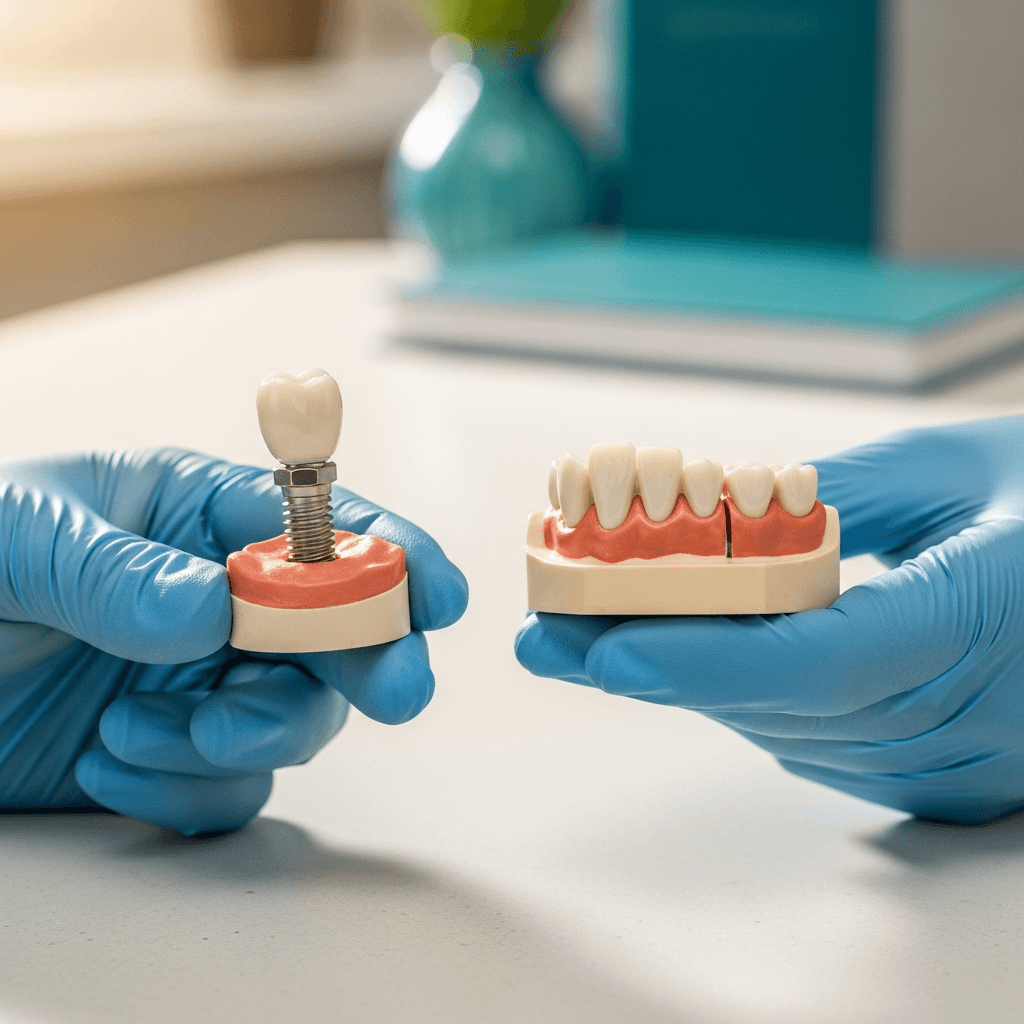
Any licensed dentist may legally place implants, but the training behind the drill varies enormously. A general dentist's education centers on restorative care — fillings, crowns, cleanings — with implant training often added through weekend courses. An oral and maxillofacial surgeon completes a four-to-six-year hospital-based surgical residency after dental school, devoted to jaw surgery, bone grafting, and anesthesia. The American Association of Oral and Maxillofacial Surgeons outlines what that surgical scope includes. For routine cases the gap may not show; in complex ones, it is the difference between a predictable outcome and a referral after something goes wrong.
Board certification adds another layer: it is a multi-year process of written and peer-reviewed oral examinations, not a one-time test. A Diplomate of the American Board of Oral and Maxillofacial Surgery has defended their management of difficult cases before a panel of examiners. Our overview of what an oral surgeon does covers the credential in plain language.
Advanced Solutions When Bone Is the Problem
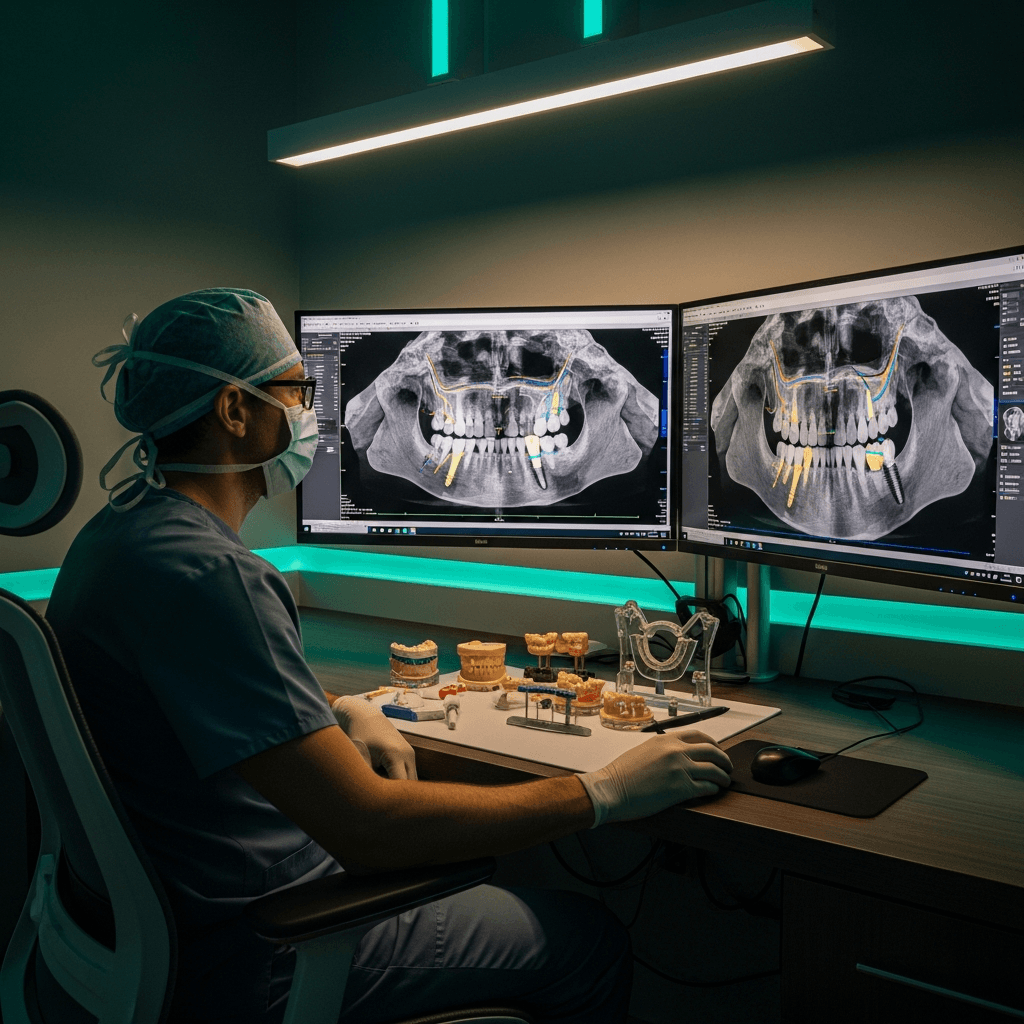
Bone loss is no longer a disqualifier — it is a design constraint. When the upper jaw is too thin for standard fixtures, zygomatic implants anchor in the dense cheekbone, often eliminating months of grafting and supporting a full arch immediately. When grafting is the better path, bone grafting techniques — sinus lifts, ridge augmentation, block grafts — act as a scaffold that your body replaces with living bone over several months. The deciding factor between the two approaches is your CBCT anatomy, which is why the evaluation matters as much as the surgery.
Revision Surgery: Fixing What Went Wrong the First Time
Implant failure is uncommon, but when it happens — usually from peri-implantitis (infection around the implant) or poor initial positioning — the fix is a specialist's job by definition. The failed post must be removed while preserving surrounding bone, infection cleared, and the site rebuilt before a new implant goes in. Our guides on replacing a failed dental implant and getting a second opinion on failed implants walk through that process step by step. Done properly on a healthy foundation, revision outcomes are excellent — often better than the original attempt, because the plan finally matches the anatomy.
How to Evaluate a Specialist: Questions Worth Asking
You have every right to interview a surgeon before trusting them with your jaw. The strongest candidates welcome these questions:
- — Are you a board-certified oral and maxillofacial surgeon? (Not “implant certified” — actual specialty board certification.)
- — How many full-arch and revision cases do you personally perform each year?
- — Can I see before-and-after cases similar to mine — including revisions of other providers' work?
- — Will you plan my case on a 3D CBCT scan, and will you show me the scan?
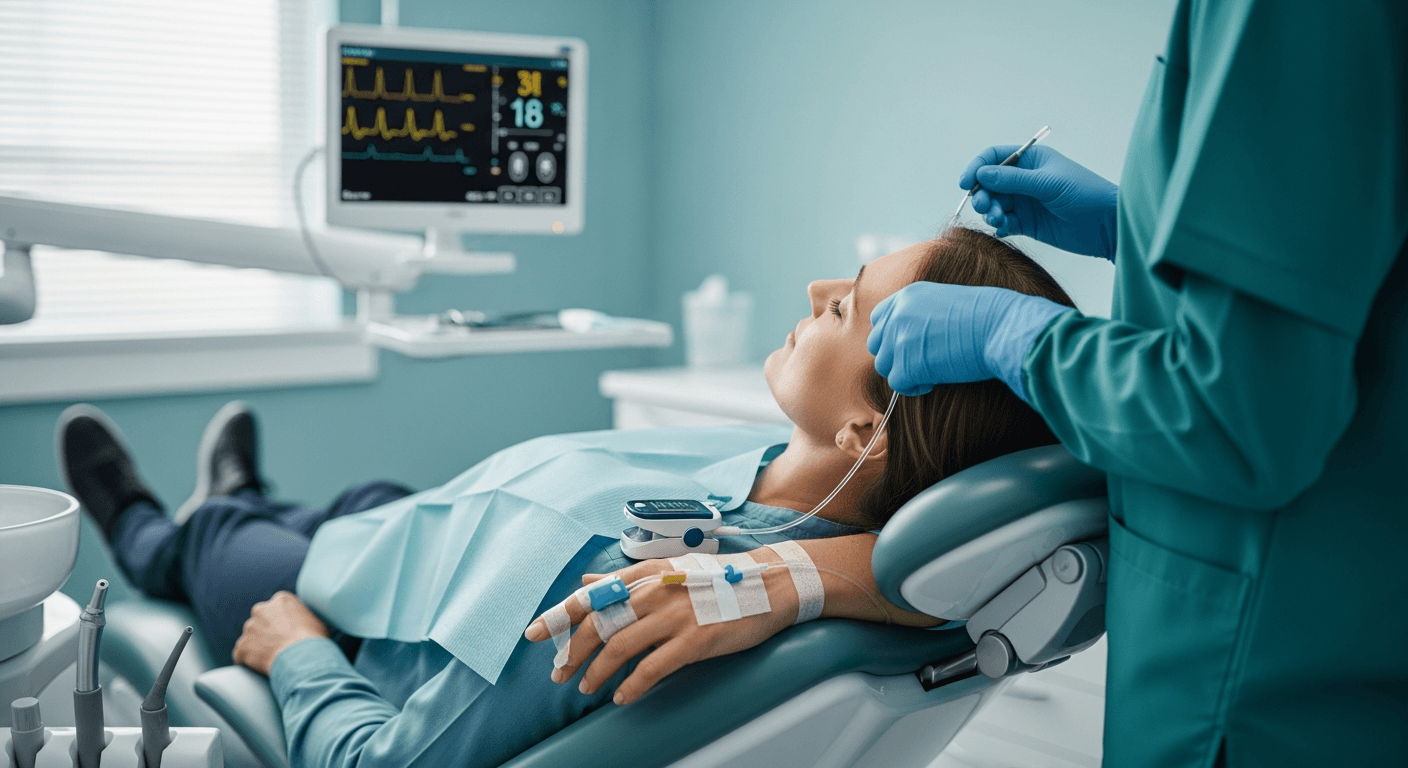
- — Is IV sedation administered in-office, and who manages it?
- — Is your quote all-inclusive — imaging, grafting, abutments, sedation, and the final teeth — or implant-post-only “teaser” pricing?
Specialist Care in Roseville, Without the Corporate Markup
Patients from Sacramento, Rocklin, Folsom, Granite Bay, and beyond come to Dr. Alexander Antipov for exactly these cases: severe atrophy, failed implants placed elsewhere, and full-arch reconstruction. He is a board-certified oral and maxillofacial surgeon and Diplomate of the American Board of Oral and Maxillofacial Surgery, plans every case personally on 3D CBCT imaging, and performs surgery with IV sedation available in his Roseville office. In the Sacramento region, full-arch restoration typically runs $25,000–$35,000 per arch, and every quote is transparent and all-inclusive — backed by a price-match guarantee so specialist expertise doesn't cost more than a corporate implant chain. Financing options can spread the investment into manageable monthly payments.
Frequently Asked Questions
Am I still a candidate for implants if I have severe bone loss?
Very likely, yes. Advanced techniques like bone grafting, sinus lifts, and zygomatic implants — which anchor in the dense cheekbone instead of the jaw — allow specialists to build a stable foundation even after years of atrophy. A 3D CBCT scan at a consultation shows exactly which approach fits your anatomy.
What's the difference between a general dentist and an oral surgeon for implants?
Training depth. Oral and maxillofacial surgeons complete four to six years of hospital-based surgical residency after dental school, focused on jaw surgery, bone grafting, and anesthesia. General dentists focus on restorative care and often learn implants through short courses. For complex cases — bone loss, failures, full arches — that gap directly affects outcomes.
How do I know if my existing dental implant is failing?
Warning signs include persistent pain or swelling around the implant, a feeling that it moves, gum recession, or bleeding when you brush. If you notice any of these, see a specialist promptly — early treatment can save the implant or at least preserve the bone needed for a replacement.
Can a specialist fix an implant that was placed incorrectly by another provider?
Yes. Revision surgery removes the failed or mispositioned fixture while preserving bone, clears any infection, and rebuilds the site — often with grafting — before a new implant is placed. Dr. Antipov regularly revises implants placed elsewhere, including work done abroad.
Is implant surgery painful for complex cases?
You won't feel pain during surgery — complex cases are typically done with local anesthesia plus IV sedation, so most patients remember little of the procedure. Afterward, swelling typically peaks within 48–72 hours and discomfort is managed with medication; many patients say it's far less than the chronic pain of failing teeth.
Does a specialist cost more than a general dentist for implants?
Not necessarily — and quotes can be misleading. Many offices advertise implant-post-only 'teaser' pricing that excludes imaging, abutments, grafting, and sedation. A specialist's all-inclusive quote often ends up comparable, and Dr. Antipov backs his transparent pricing with a price-match guarantee against corporate implant chains.
How long is recovery after bone grafting and implant surgery?
Soft tissue typically heals within one to two weeks, while the implant fuses with bone over roughly 3–6 months. Significant grafting adds a healing stage before implant placement. Your surgeon maps the full timeline at the consultation so there are no surprises.
Told Your Case Is Too Difficult?
Complex cases are Dr. Antipov's specialty. At a consultation in Roseville, you'll get 3D CBCT imaging, an honest assessment of your options — grafting, zygomatic implants, or revision — and a transparent, all-inclusive quote. Restrictions apply.
Book a Consultation