Dental Implant Financing in California: A Guide to Affordable Payment Plans in 2026
Medically reviewed by Dr. Alexander V. Antipov, DDS — Board-Certified Oral & Maxillofacial Surgeon · Diplomate, American Board of Oral & Maxillofacial Surgery (ABOMS) · California Dental License #50724

Yes — California patients can finance dental implants through options such as CareCredit, Proceed Finance, Cherry, and pre-tax HSA/FSA dollars, turning a five-figure estimate into a predictable monthly payment, explains Dr. Alexander Antipov, a board-certified oral and maxillofacial surgeon in Roseville, CA. Dental care in California costs well above the national average, and nowhere does that gap feel wider than on a dental implant estimate. A single implant in the Sacramento region typically runs $4,000–$6,000, and full-arch (All-on-4) restoration $25,000–$35,000 per arch. Add our state's high cost of living, confusing insurance fine print, and worries about credit scores, and it's easy to see why patients delay treatment they genuinely need. The good news: with the dental implant financing California residents can access in 2026, almost nobody pays that number as a lump sum. Most patients trade the up-front bill for a predictable monthly payment — often in the $200–$500 range for financed full-arch cases on long terms. This guide walks through every reliable payment structure available this year, how to stack your insurance and pre-tax HSA/FSA dollars, and the exact checklist we recommend to Roseville and Sacramento patients before they sign anything.
Costs and terms vary by provider and plan — confirm details with your own provider before making decisions.
Why Financing Matters More in California
Financing only makes sense once you know the real number. In the Sacramento region, a complete single implant (post, abutment, crown) generally runs $4,000–$6,000, and full-arch restoration $25,000–$35,000 per arch, depending on bone volume, grafting, and materials — see our guides to single dental implant cost in Northern California and All-on-4 cost for detailed breakdowns. Dental implant financing is essentially a specialized medical credit tool: it distributes the cost of a permanent surgical solution over several years instead of demanding it up front.
There is also a hidden number worth understanding: the cost of waiting. When you lose teeth, the jawbone that supported them begins to resorb. That progressive bone loss makes future surgery more complex — often adding bone grafting or sinus lift procedures that wouldn't have been needed a year or two earlier. Acting now is frequently the cheaper clinical path, not just the faster one.
Compare that with dentures: adhesives, relines, and full replacement every five to ten years are recurring costs that quietly add up, while a well-placed implant is designed to last decades. Same-day protocols also compress treatment into fewer visits, reducing the hidden costs of time off work, travel, and childcare.
| Financing route | Best suited for | Key terms |
|---|---|---|
| CareCredit | Smaller balances, short-term payoff | 6–24-month deferred-interest promos; ~33% APR if unpaid in the window |
| Proceed Finance | Large full-arch cases | Fixed-rate loans up to $75,000, terms up to 144 months |
| Cherry | An imperfect credit history | ~60-second soft-pull pre-qualification, no score impact |
| LendingClub | Predictable fixed payments | Personal-loan terms up to 84 months |
| HSA / FSA | Pre-tax savings before financing | 2026 limits: $4,400 HSA self-only, $3,400 health FSA |
Why Traditional Dental Insurance Isn't Enough
Most California dental plans are built for maintenance — cleanings, fillings, the occasional crown — not major restorative surgery. Annual maximums commonly cap at $1,500–$2,500, which barely dents a full-arch case. Many policies also contain a "missing tooth clause" that denies coverage for any tooth lost before the policy began. And Denti-Cal coverage for implants is extremely limited, generally reserved for cases deemed medically necessary. Financing exists to pick up where insurance leaves off; details on the PPO plans we work with are on our insurance page.
That said, insurance is still worth maximizing — even out-of-network. PPO plans reimburse against "Usual, Customary, and Reasonable" (UCR) fee schedules set for your zip code, and our team files claims on your behalf and can often accept an assignment of benefits, meaning the insurance check goes directly to the practice instead of passing through you first. We verify both dental and medical benefits before your consultation, so the estimate you see already reflects them.
Top Third-Party Lenders for California Patients in 2026
Most patients don't have tens of thousands of dollars liquid — third-party medical lenders fill that gap. Two features to insist on in 2026: a soft credit pull for pre-qualification (so checking your options costs you nothing, including credit-score points) and a fixed interest rate, which guarantees your payment never fluctuates over the life of the loan.
CareCredit is the industry standard revolving credit line for healthcare. It shines for smaller balances — a single tooth implant, or the remainder after insurance — thanks to deferred-interest promotions of 6 to 24 months: pay the balance inside the window and you pay no interest at all. The fine print matters, though. If any balance remains when the promo ends, a standard APR of roughly 33% is applied retroactively to the entire original purchase. CareCredit is a powerful tool only with a firm short-term payoff plan.
Proceed Finance is built for larger cases like All-on-4. It offers fixed-rate installment loans up to $75,000 with repayment terms as long as 144 months — that long runway is exactly how full-arch patients land monthly payments in the $200–$500 range. Payments go directly to the provider, which simplifies surgery-day logistics.
Cherry pre-qualifies you in about 60 seconds with a soft credit check and reports approval rates around 90% for qualified borrowers, making it a strong first stop for patients worried about an imperfect credit history. Personal-loan platforms like LendingClub offer terms up to 84 months as another fixed-payment route. And if your score is below 600, adding a co-signer with stronger credit routinely unlocks a meaningfully lower APR — as can phasing treatment (graft first, implants later) across two calendar years.
The Stacking Strategy: Insurance + HSA/FSA + Financing
The most expensive mistake patients make is treating financing as all-or-nothing. The most effective approach is a stacking strategy: apply your insurance contribution first, then spend pre-tax HSA/FSA dollars, and finance only the remainder. Every dollar you stack before borrowing shrinks the loan — which lowers both your monthly payment and the total interest you pay.
Your Health Savings Account and Flexible Spending Account are the most underused tools in implant funding. For 2026, the HSA contribution limit is $4,400 for self-only coverage and the health FSA limit is $3,400. Because these are pre-tax dollars, spending them on surgery is effectively a discount equal to your tax rate — for many California households, 20–30% off that portion. HSA funds roll over indefinitely, so patients planning a large case sometimes max out contributions the year before treatment. FSA dollars are use-it-or-lose-it, which makes a December consultation and January surgery a common (and smart) pattern.
Don't forget April. The IRS allows you to deduct unreimbursed medical and dental expenses exceeding 7.5% of your adjusted gross income — a threshold that full-arch treatment often clears. Confirm the details with your tax professional, but for many families this deduction meaningfully lowers the true net cost of care.
The California Patient's Checklist for Affordable Implants
Securing the best financing California offers is a process, not a signature. Five steps remove the guesswork:
- — Step 1: Request a comprehensive, no-surprise cost estimate — an all-in written price covering the implant, abutment, crown or bridge, 3D imaging, anesthesia, and lab fees. Vague "starting at" prices are where budget shocks hide.
- — Step 2: Verify the surgeon's board certification. A board-certified oral & maxillofacial surgeon completes 4–6 years of hospital-based surgical residency — and precise placement the first time is what prevents the heaviest cost of all: revision surgery.
- — Step 3: Compare APRs across at least two lending platforms. Small rate differences compound into thousands of dollars over a 100+ month term.
- — Step 4: Ask about a price-match guarantee, so you aren't overpaying for equivalent board-certified care.
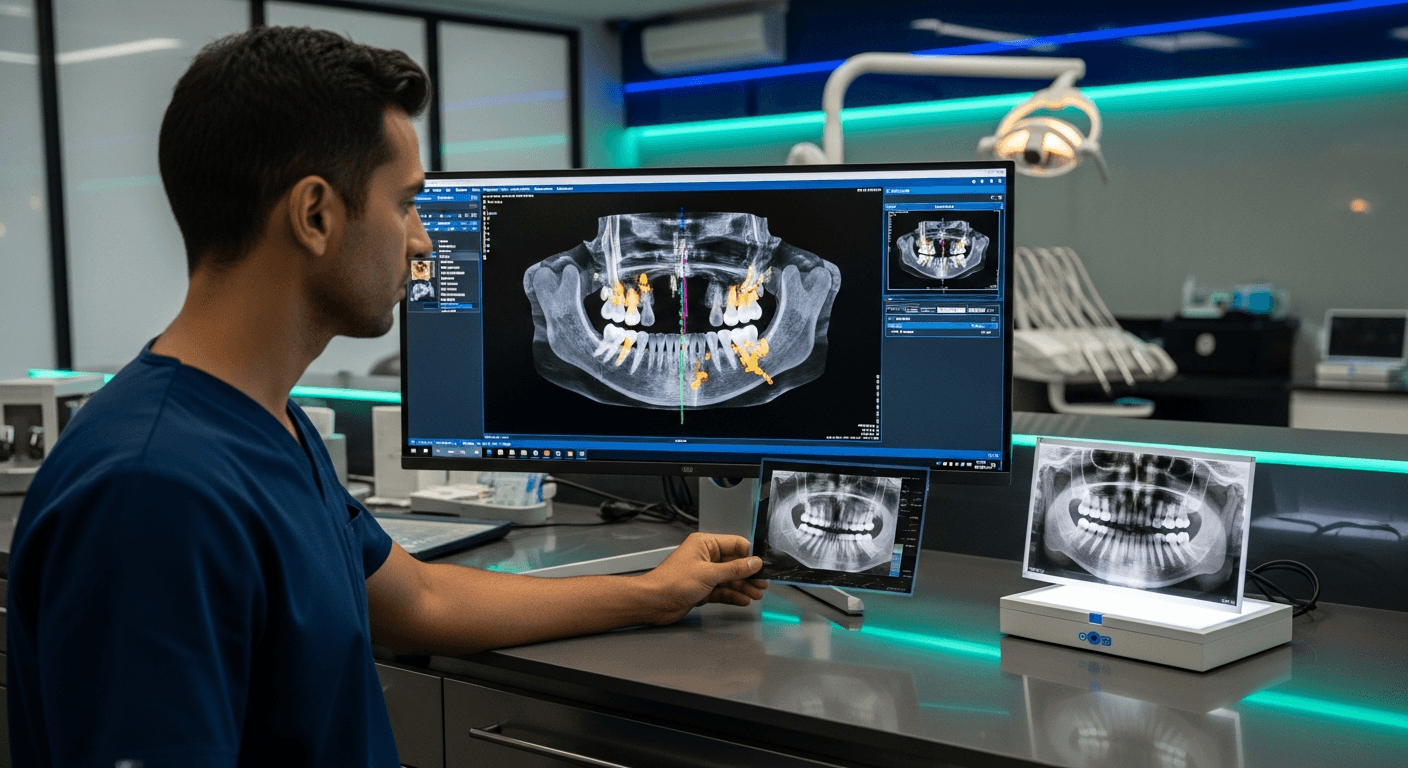
- — Step 5: Schedule an in-person consultation. A personalized quote after a 3D scan is the only way to lock in a real monthly payment — everything before that is an estimate.
Why Staying Local in Roseville & Sacramento Pays Off
Some patients consider traveling to Bay Area or Southern California clinics for surgery. But follow-up care is a core part of implant treatment — post-operative checks, prosthetic adjustments, and long-term maintenance — and long commutes while healing get old quickly. A local surgeon in Placer County means your entire care cycle happens close to home.
Local financial coordination matters just as much. Our Roseville team works daily with the PPO plans common in this region and handles the UCR and assignment-of-benefits details that decide whether a claim is paid or denied. And because you should never have to choose a less experienced surgeon just to save money, Dr. Antipov backs his fees with a like-for-like price-match guarantee: bring a written estimate from another local provider for the same treatment plan and materials, and we'll work to match that value without compromising surgical quality.
How to Choose the Right Plan for Your Case
A simple framework: if you can pay the balance within the promo window, a deferred-interest line (CareCredit) is usually the cheapest borrowed money available. If you need a longer runway or payment predictability, a fixed-rate installment loan (Proceed Finance for large cases, Cherry or LendingClub otherwise) protects you from retroactive interest. If credit history is the concern, start with a soft-check pre-qualification — it costs nothing and doesn't touch your score. And whatever the route, stack insurance and HSA/FSA dollars first so you finance the smallest possible remainder.
The best time to sort this out is at the consultation, with an itemized quote in front of you. We walk through the numbers, apply your insurance verification, and pre-qualify you for financing in the same visit — so you leave knowing your actual monthly payment, not just the sticker price. See what the visit includes on our consultation page.
Frequently Asked Questions
Does dental insurance in California cover All-on-4 implants?
Most California PPO plans contribute partially — commonly $1,500–$2,500 per year against their annual maximum, sometimes framed as 30–50% of specific procedure codes. Denti-Cal rarely covers implants unless deemed medically necessary. We verify your exact benefits before your consultation and layer them with financing to reduce your out-of-pocket cost.
What is the average monthly payment for dental implants with financing?
Financed full-arch cases on long fixed terms often land between $200 and $500 per month — lenders like Proceed Finance offer terms up to 144 months, which is what makes those numbers possible on a $25,000+ case. Shorter 24–60-month plans run higher. Your exact payment depends on the amount financed, your credit profile, and the term you choose.
Can I get dental implant financing with a credit score below 600?
Often, yes. Platforms like Cherry use soft credit pulls that don't affect your score and report approval rates around 90% for qualified borrowers. Adding a co-signer with stronger credit typically secures a lower APR, and phasing treatment across two calendar years reduces the amount you need to finance at once.
Are there $0-down dental implant options in Roseville or Sacramento?
Many third-party lenders offer $0-down plans for qualified borrowers, including CareCredit promotional plans and newer installment platforms. Whether you qualify depends on your credit profile — we review the current programs with you at your consultation and identify plans that require no initial cash payment.
How do I use my HSA or FSA to pay for dental implants?
Dental implants are a qualified medical expense, so you can pay with your HSA or FSA debit card just like a regular card. For 2026, contribution limits are $4,400 for self-only HSA coverage and $3,400 for health FSAs. Because these are pre-tax dollars, that portion of your treatment is effectively discounted by your tax rate. FSA funds expire annually, so time treatment around your plan year.
What happens if I can't pay off a deferred-interest plan in time?
Any balance remaining after the promotional period triggers retroactive interest — roughly 33% APR with CareCredit — applied to the entire original purchase, not just the remainder. If you're not certain you can pay within the window, choose a fixed-rate installment plan instead; the rate is disclosed up front and never applied retroactively.
Is dental implant treatment tax-deductible in 2026?
Unreimbursed medical and dental expenses exceeding 7.5% of your adjusted gross income are generally deductible if you itemize — a threshold full-arch treatment often clears. Consult your tax professional about your 2026 return before counting on the deduction.
What if I find a lower price for the same implant treatment elsewhere in California?
Bring the written estimate to your consultation. Dr. Antipov offers a like-for-like price-match guarantee: for the same treatment plan, materials, and scope from another local provider, we work to match that value — so you never have to trade board-certified surgical quality for affordability.
Get Your Real Number — and a 2026 Plan to Pay It
At your consultation with Dr. Antipov in Roseville, you'll get an itemized written quote after a 3D scan, insurance verification, financing pre-qualification, and a price-match review — in the same visit. You'll leave knowing your actual monthly payment, not just the sticker price. Schedule your consultation to see what your treatment really costs.
Schedule Your Consultation