Best Full-Arch Dental Implant Clinics in California: How to Actually Compare Them
Medically reviewed by Dr. Alexander V. Antipov, DDS — Board-Certified Oral & Maxillofacial Surgeon · Diplomate, American Board of Oral & Maxillofacial Surgery (ABOMS) · California Dental License #50724
The best full-arch dental implant clinic for you is the one you can verify against seven concrete criteria — surgeon credentials, technology, anesthesia, transparent pricing, materials, complication ownership, and continuity — not the one that ranks itself first, explains Dr. Alexander Antipov, a board-certified oral and maxillofacial surgeon in Roseville, CA serving the greater Sacramento area. Type "best full-arch dental implant clinics in California" into Google and you'll get a wall of ads, sponsored lists, and clinics ranking themselves first. None of that tells you what actually matters: who will hold the scalpel, what happens if something goes wrong, and whether the quote you're shown is the price you'll pay. This guide gives you the seven criteria that genuinely separate full-arch providers — from national chains to local surgical practices — plus the exact questions that reveal the differences in a single phone call. Use it to build your own shortlist instead of trusting anyone else's.
This article is for general education — consult a qualified oral surgeon for a personalized recommendation.
Why "Best Clinic" Lists Don't Help You
Most "best clinics in California" articles are pay-to-play directories or content written by the clinics themselves. Full-arch treatment is a surgical procedure with a five-figure price tag and a decades-long consequence — the decision deserves better inputs than a sponsored list. The good news: the factors that predict a good outcome are knowable, verifiable, and mostly free to check.
| What to compare | Why it matters |
|---|---|
| Who performs the surgery | Board-certified oral & maxillofacial surgeon vs. weekend-course training |
| Technology | CBCT imaging and digital surgical planning as a baseline |
| Anesthesia depth | Full spectrum from local to IV sedation to general |
| Pricing transparency | Itemized, all-inclusive written quote, not "starting at" |
| Material quality | Monolithic zirconia vs. acrylic-titanium hybrid |
| Complication ownership | One surgeon who owns your outcome and revisions |
| Continuity | The same surgeon at every visit vs. rotating staff |
Criterion 1: Who Actually Performs the Surgery
This is the criterion that outweighs all others. Full-arch surgery — extracting remaining teeth, reshaping bone, placing four to six implants at precise angles — is a surgical discipline. A board-certified oral and maxillofacial surgeon completes 4–6 years of hospital-based surgical residency after dental school, including anesthesia training and facial reconstruction. Some clinics instead use general dentists who learned implant placement in short continuing-education courses.
Verify rather than assume: ask directly, "Is the person placing my implants a board-certified oral and maxillofacial surgeon?" and check the name against the American Board of Oral and Maxillofacial Surgery diplomate directory. At some high-volume chains, the surgeon who appears in your consultation is not the one who operates — ask that question explicitly.
Criteria 2–3: Technology and Anesthesia Depth
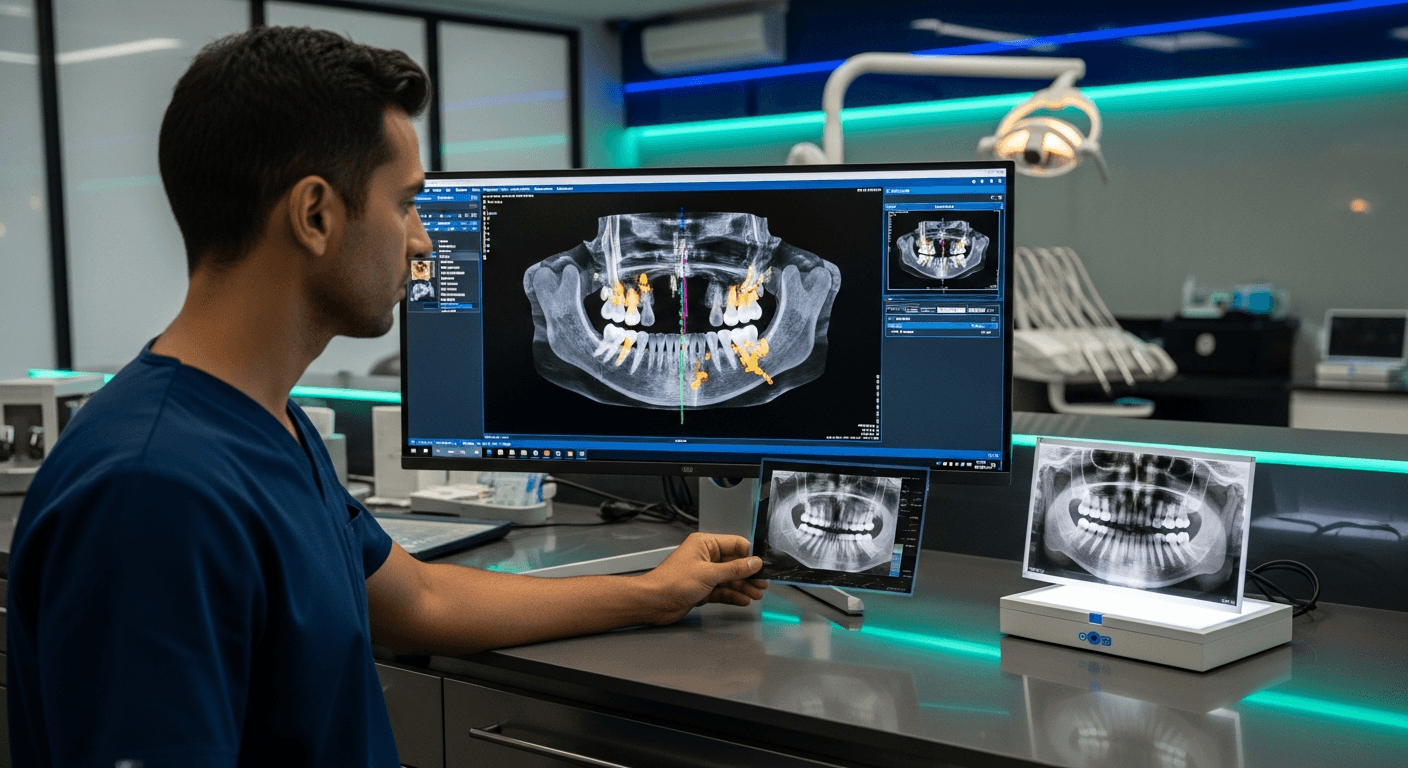
Modern full-arch care requires 3D CBCT imaging and digital surgical planning as a baseline — guided placement is how implants end up in the densest bone and away from nerves. See how 3D planning improves implant accuracy. Ask what imaging the clinic uses and whether your case is digitally planned before surgery.
Anesthesia depth matters just as much for a long full-arch procedure. Oral surgeons are licensed for the full spectrum — from local anesthesia through IV sedation to general anesthesia — while many general practices can only offer oral sedation. Review the options in our guide to sedation for dental implant surgery.
Criteria 4–5: Pricing Transparency and Material Quality
"Starting at $19,999 per arch" advertising is the most common trap in full-arch marketing. Those figures routinely exclude extractions, bone grafting, sedation, the temporary bridge, or the final prosthesis — items that can add $10,000 or more. The standard you should demand: an itemized, all-inclusive written quote after a 3D scan, valid for a stated period. For what real numbers look like, see our All-on-4 cost guide.
Material quality shows up years later. Ask what your final bridge is made of: monolithic zirconia is the current standard for strength and aesthetics, while acrylic-titanium hybrids cost less initially but wear and stain faster. Our guide to zirconia arches explains the differences in depth.
Criteria 6–7: Complication Ownership and Longevity of the Relationship
The question that separates clinics fastest: "If an implant fails or the bridge breaks, who fixes it, and what does it cost me?" A local surgical practice typically has one surgeon who owns your outcome for years. At some corporate chains, complications are handled by whoever is staffed that month — or referred out entirely. Warranty terms in writing matter here, and so does the practice's experience with revisions; a clinic that routinely repairs other providers' failed cases (see our guide on fixing a failed All-on-4) has the surgical depth to stand behind its own work.
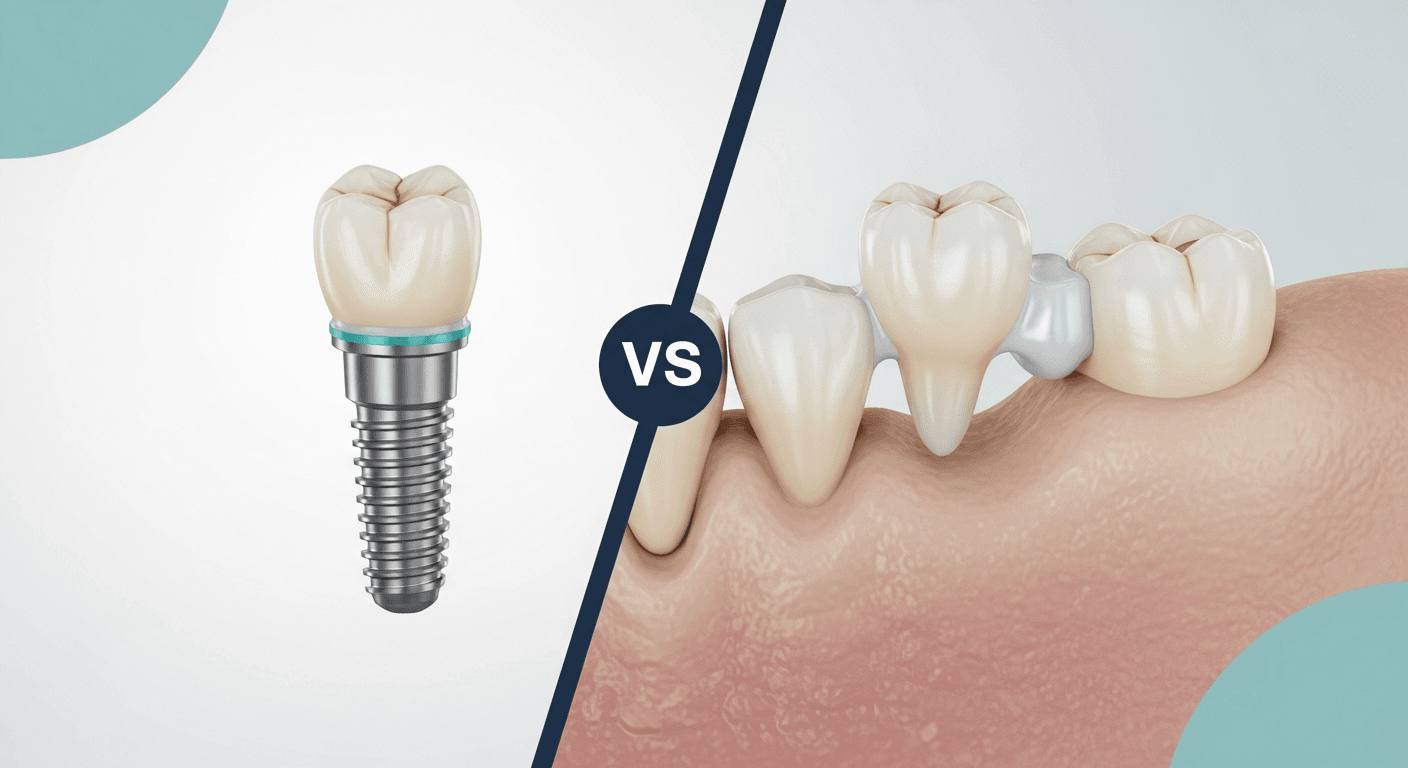
Finally, weigh the corporate-chain question directly. National brands offer marketing polish and volume; independent surgical practices offer continuity, itemized pricing, and the same board-certified surgeon at every visit. We've written a detailed comparison for Northern California patients: ClearChoice alternatives in Northern California.
The One-Phone-Call Test
You can apply all seven criteria in a single call to any clinic on your shortlist. Ask: (1) Is the operating surgeon a board-certified oral & maxillofacial surgeon, and will I meet them before surgery? (2) Do you use CBCT imaging and digital surgical planning? (3) What anesthesia options are available? (4) Will I receive an itemized, all-inclusive written quote? (5) What is the final bridge made of? (6) What's your written warranty, and who handles complications? (7) How many full-arch cases does the operating surgeon perform per year? Clinics with good answers give them readily; evasive answers are themselves an answer.
For patients in the Sacramento region, Dr. Antipov's Roseville practice was built around these exact standards: a board-certified oral and maxillofacial surgeon who personally plans and performs every case, guided 3D surgery, itemized transparent quotes, and long-term follow-up from the same surgeon. Compare us with anyone — start with our full-arch implants overview.
Frequently Asked Questions
What is the best full-arch dental implant clinic in California?
There is no single 'best' clinic — but there is a best clinic for your case, and it's identifiable by verifiable criteria: a board-certified oral and maxillofacial surgeon who personally operates, CBCT-guided digital planning, full anesthesia options, itemized all-inclusive pricing, quality materials, and a written warranty with local complication management.
Are national implant chains better than local surgical practices?
Chains offer brand recognition and volume, but the operating clinician may not be a board-certified surgeon, pricing is often less itemized, and complication care can lack continuity. Local surgical practices typically offer the same surgeon from consultation through years of follow-up. Judge both against the same criteria rather than the marketing.
How much should full-arch dental implants cost in California?
Realistic all-inclusive pricing for a full arch in California generally runs $25,000–$35,000, depending on grafting needs, materials, and sedation. Quotes far below that range usually exclude major components — always compare itemized, all-inclusive written quotes rather than advertised 'starting at' prices.
How do I verify a surgeon is board-certified?
Search the surgeon's name in the American Board of Oral and Maxillofacial Surgery (ABOMS) diplomate directory, and confirm their license on the Dental Board of California website. Board certification means completed hospital-based surgical residency plus passed written and oral board examinations.
How many full-arch cases should a surgeon perform per year?
There's no magic number, but full-arch outcomes correlate with surgical volume and experience. A surgeon who performs these procedures regularly — and who also handles revisions of failed cases — has the pattern recognition that rare-complication management requires. Ask the question directly; experienced surgeons answer it comfortably.
What questions should I ask at a full-arch consultation?
Ask who performs the surgery and their credentials, what imaging and planning is used, which anesthesia options are available, what the final bridge material is, what the itemized all-inclusive cost is, what the written warranty covers, and who manages complications. A quality clinic answers all seven without hesitation.
Compare Us Against Anyone
Dr. Antipov is a board-certified oral and maxillofacial surgeon in Roseville who personally plans and performs every full-arch case with guided 3D surgery and itemized, transparent pricing. Schedule a consultation, get your written quote, and hold it up against any clinic in California.
Book a Consultation