Single Tooth Implant vs. Dental Bridge: Calculating the Real Cost
Medically reviewed by Dr. Alexander V. Antipov, DDS — Board-Certified Oral & Maxillofacial Surgeon · Diplomate, American Board of Oral & Maxillofacial Surgery (ABOMS) · California Dental License #50724
A single tooth implant costs more up front than a dental bridge but often costs less over 20 years, because a bridge grinds down two healthy teeth and typically needs replacing every 10 to 15 years, explains Dr. Alexander Antipov, a board-certified oral and maxillofacial surgeon in Roseville, CA serving the greater Sacramento area. When you lose a single tooth, the first quote you see for a dental bridge often looks like the easy, affordable answer. But the sticker price only tells part of the story. A bridge carries a "biological cost" that never shows up on the estimate — it requires grinding down two healthy neighboring teeth, and it typically needs replacing every 10 to 15 years. A single tooth implant costs more up front and stands entirely on its own. This guide walks through the honest math — biological, functional, and financial — so you can see why, over a 20-year horizon, the implant is often the more conservative and more affordable choice for patients in the Roseville and Sacramento area.
Costs and terms vary by provider and plan — confirm details with your own provider before making decisions.
The Two Ways to Replace One Missing Tooth
For a single missing tooth, the two most common fixed options are a traditional dental bridge and a single tooth implant. They solve the same visible problem — the gap — but they do it in fundamentally different ways, and that difference is where the real cost lives.
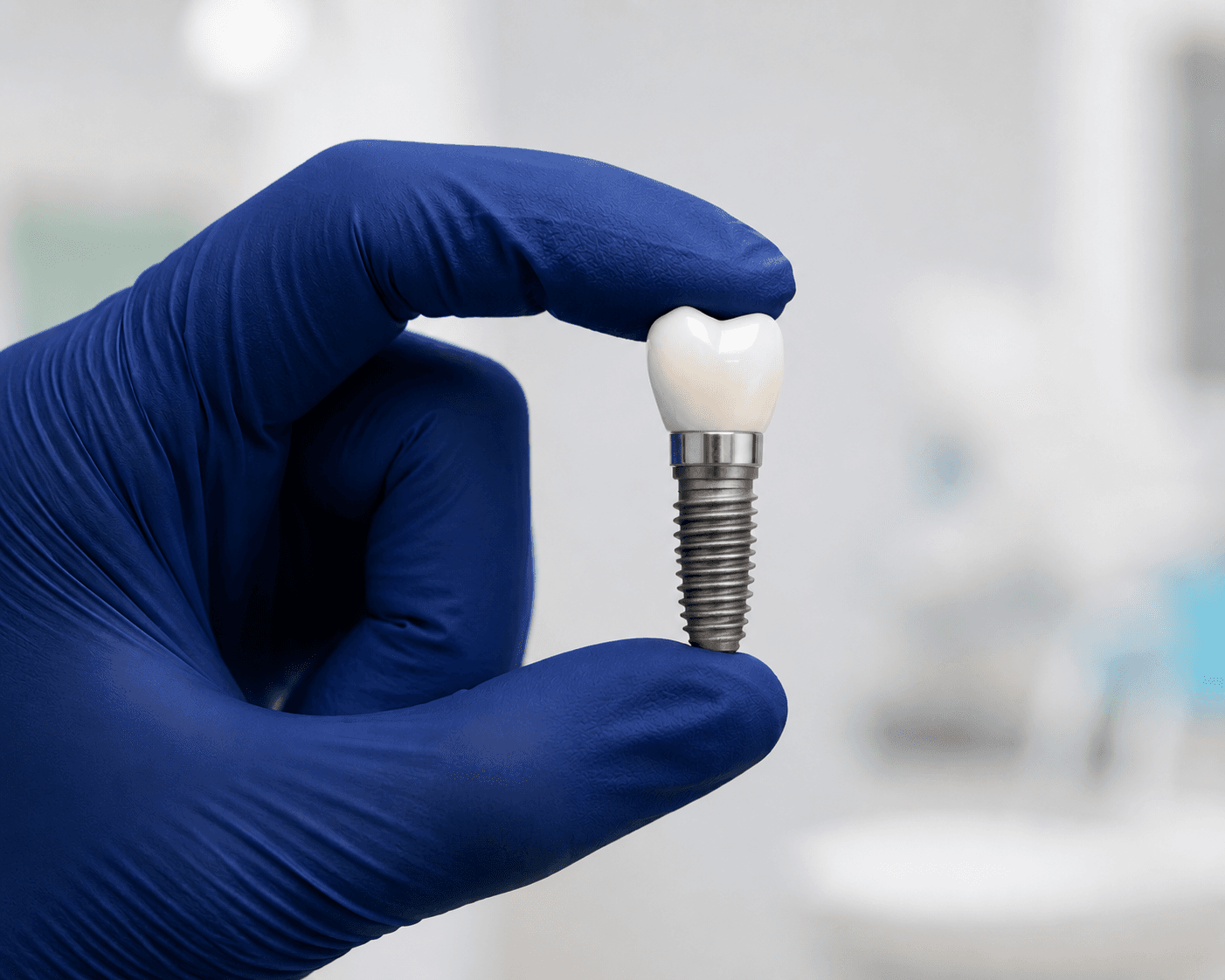
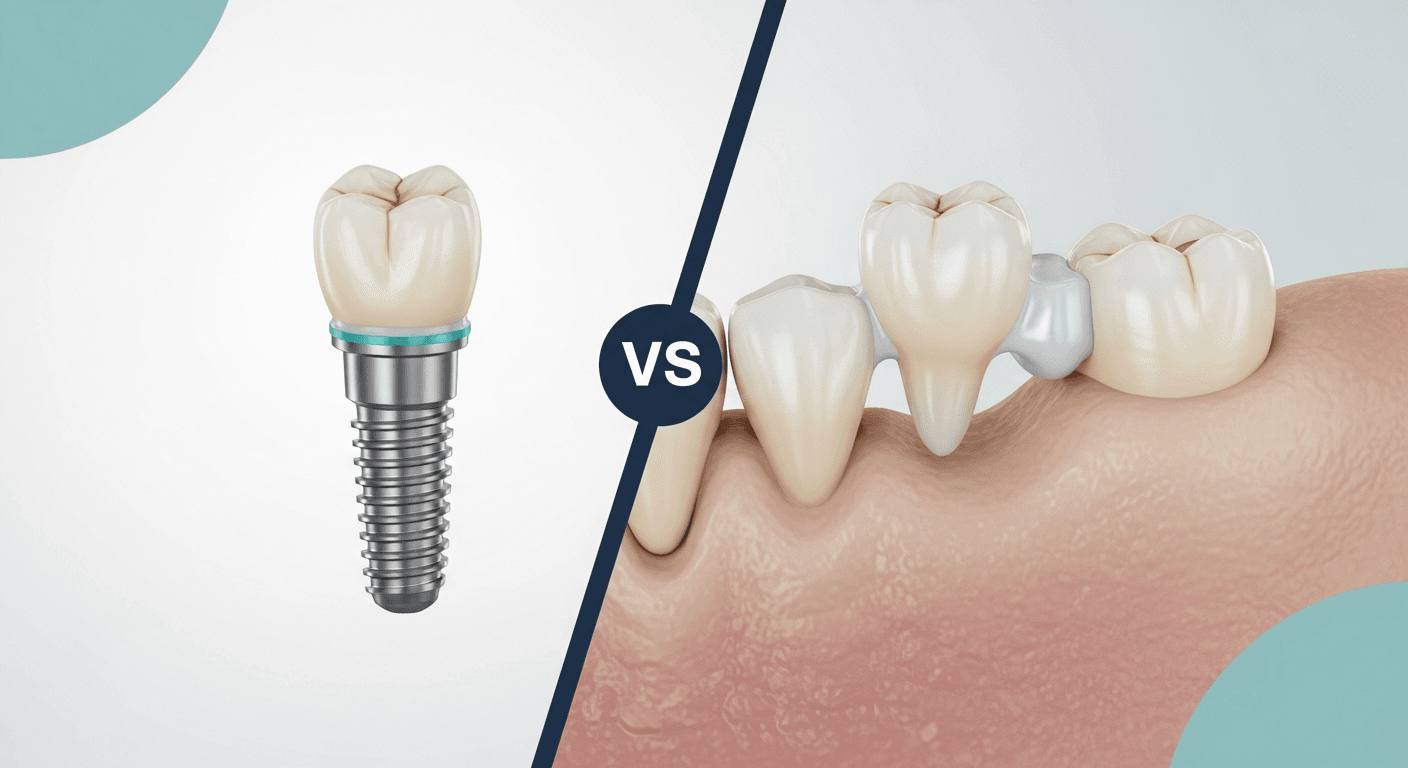
A bridge is a three-unit prosthetic: a false tooth in the middle, fused to crowns on each side that cap the two neighboring teeth. An implant is a standalone system — a titanium or zirconia post placed in the jaw, an abutment, and a crown — that replaces the tooth from the root up. For the full breakdown of how an implant works, see our complete single tooth implant guide.
The Biological Cost a Bridge Estimate Never Shows
The most important number in the implant-vs-bridge decision is not on the quote at all. To anchor a bridge, a dentist has to grind down the two healthy teeth on either side of the gap, removing much of their protective enamel to make room for the supporting crowns. In other words, a bridge treats one missing tooth by permanently altering two perfectly good ones.
That preparation is irreversible, and it puts those anchor teeth at long-term risk. Once the protective layer is reduced, the teeth become more vulnerable to decay and nerve irritation, which is why bridge anchors sometimes go on to need root canals or fail entirely down the road. An implant avoids this cycle completely — it stands on its own and leaves your remaining teeth exactly as they are. That is what dentists mean by the more conservative choice.
Protecting the Jawbone Under the Gap
There is a second hidden cost to a bridge: it sits on top of the gum and does nothing for the bone underneath. When a tooth root is gone, the jawbone stops receiving the pressure that keeps it dense and begins to shrink — a process called resorption that can claim a meaningful share of the bone in the first year. For why that matters long-term, see our guide to dental implants with severe bone loss.
A single tooth implant is the only option that replaces the root, so it keeps stimulating the bone and helps preserve both your remaining teeth and your facial structure. A bridge can restore the look of a full smile while the foundation beneath the gap quietly continues to erode.
Longevity: How Often Each One Needs Replacing
Durability is where the long-term math starts to shift. A bridge is a reliable restoration, but it is not permanent — most bridges need replacing every 10 to 15 years as the anchor teeth wear, decay, or lose their seal. Each replacement is another procedure and another expense, and eventually one of the anchors may fail beyond repair.
A well-placed, well-maintained implant is engineered to last for decades because it integrates with living bone rather than leaning on other teeth. The crown on top may occasionally need attention over a lifetime, but the implant itself is designed to be a one-time investment rather than a recurring one.
The 20-Year Cost Comparison
Up front, a bridge usually costs less than an implant. But the honest comparison is not day-one price — it is the total cost of keeping that tooth restored over 20 years. Once you factor in at least one bridge replacement, plus the possibility of treating or replacing a compromised anchor tooth, the two options often converge — and the implant frequently comes out ahead. The ranges below are typical for the Sacramento region; your exact cost is confirmed after an exam and 3D scan.
| Factor | Dental bridge | Single tooth implant |
|---|---|---|
| Typical up-front cost | $2,500 – $5,000 | $2,100 – $5,500 |
| Healthy teeth altered | Two (filed down for crowns) | None |
| Preserves jawbone | No | Yes |
| Expected lifespan | 10 – 15 years | Decades (implant post) |
| Replacements over 20 yrs | Usually 1 or more | Typically none |
| Daily care | Special floss threaders | Brush and floss normally |
Everyday Living: Function and Maintenance
Beyond cost, the two options feel different in daily life. Because a bridge spans a gap, food and plaque can collect underneath the false tooth, so keeping it clean requires special floss threaders and a bit more effort — and if that upkeep slips, the anchor teeth are the first to decay.
An implant is cared for exactly like a natural tooth: routine brushing, flossing, and cleanings. It cannot get a cavity because it is made of medical-grade materials, though keeping the surrounding gum healthy still matters. For most patients, the implant simply fits back into the routine they already know.
When a Bridge Might Still Make Sense
An implant is the gold standard for a single missing tooth, but it is not automatically the only answer for everyone. If the adjacent teeth already have large fillings or crowns and would benefit from being capped anyway, or if a health condition or bone situation makes surgery less ideal, a bridge can be a reasonable, faster option. The right call depends on your specific anatomy — which is exactly what a 3D-planned consultation is designed to determine.
The goal is not to push one solution but to make the trade-offs visible so you can choose with full information. For most patients with healthy neighboring teeth, that comparison points toward the implant.
Frequently Asked Questions
Is a dental bridge cheaper than an implant?
Usually on day one, yes. But a bridge typically needs replacing every 10 to 15 years and requires altering two healthy teeth, so over a 20-year horizon the total cost often matches or exceeds a single implant — which is designed to last for decades without replacement.
Why does a bridge require grinding down healthy teeth?
A traditional bridge anchors the replacement tooth to crowns placed over the two adjacent teeth. To fit those crowns, the dentist must remove much of the enamel on those otherwise-healthy teeth. This preparation is permanent and can leave the anchor teeth more prone to decay or nerve problems later.
Does a bridge prevent bone loss like an implant?
No. A bridge rests on the gum and does not replace the missing tooth root, so the jawbone under the gap continues to shrink over time. An implant replaces the root and keeps stimulating the bone, which is why it is the only option that helps preserve your jaw and facial structure.
How long does a dental bridge last compared to an implant?
Most bridges last about 10 to 15 years before needing replacement, while a well-placed, well-maintained implant is designed to last for decades. The crown on an implant may occasionally need attention, but the implant post itself is intended to be a one-time investment.
Which is easier to take care of, a bridge or an implant?
An implant is easier for most people — you brush and floss it like a natural tooth. A bridge requires special floss threaders to clean underneath the false tooth, and neglecting that upkeep puts the anchor teeth at risk of decay.
How do I know which option is right for me?
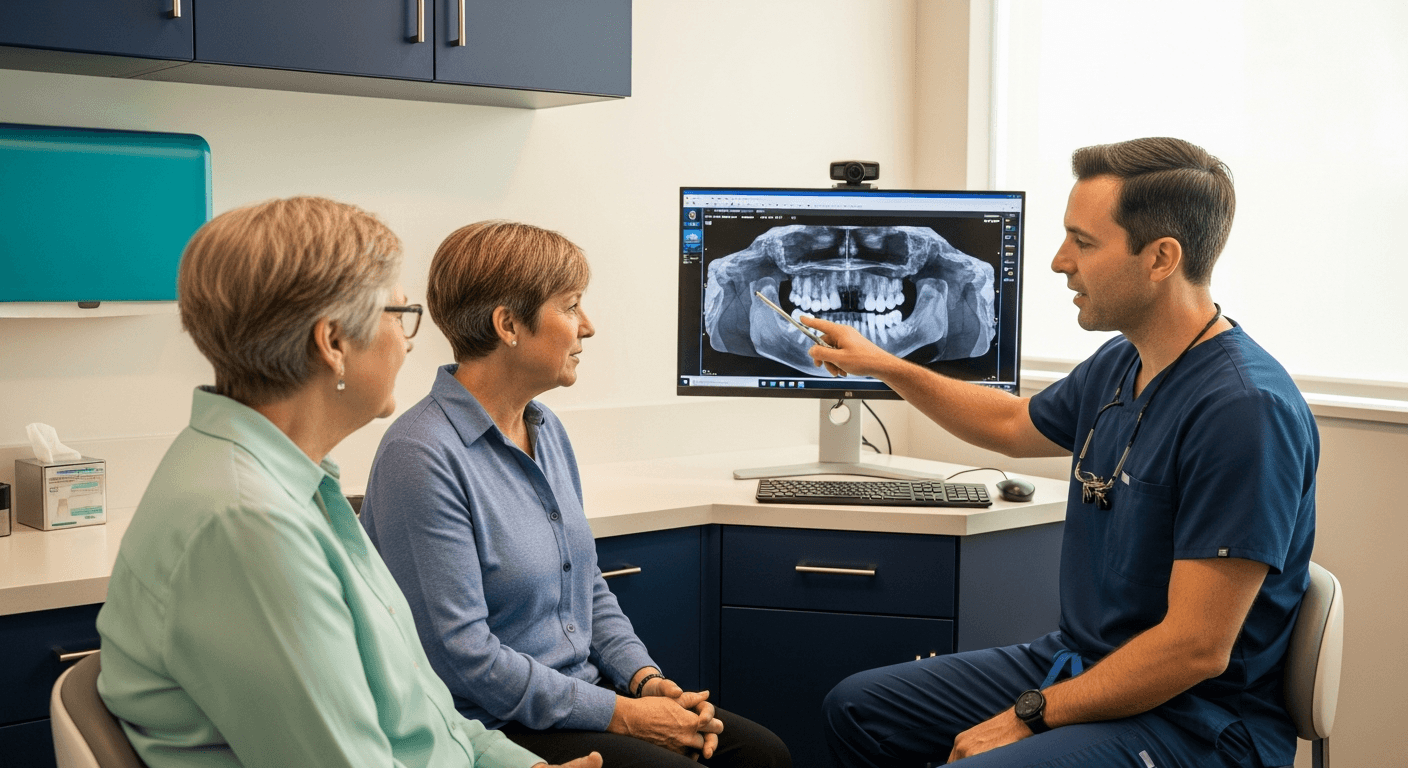
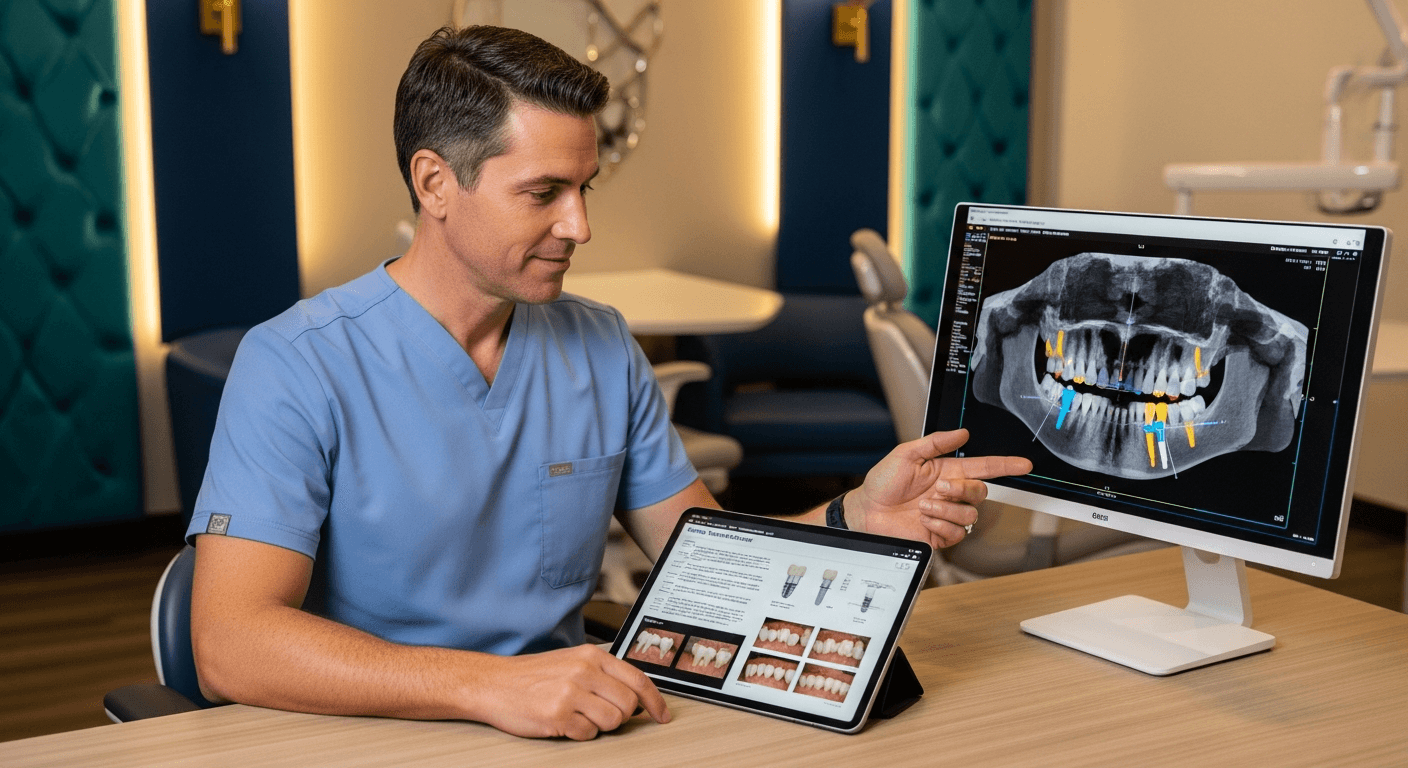
It depends on the health of your neighboring teeth, your bone, and your overall health. At a free consultation, Dr. Antipov reviews a 3D CBCT scan and walks you through the trade-offs so you can decide with full information. Restrictions apply.
See which option truly costs less for you
Book a free consultation with Dr. Antipov in Roseville — including a complimentary 3D CT scan — and get an honest, itemized comparison of a single tooth implant versus a bridge for your specific case. Restrictions apply.
Book a Consultation