Single Tooth Implant in Roseville: Complete Patient Guide
Medically reviewed by Dr. Alexander V. Antipov, DDS— Board-Certified Oral & Maxillofacial Surgeon · Diplomate, American Board of Oral & Maxillofacial Surgery (ABOMS) · California Dental License #50724
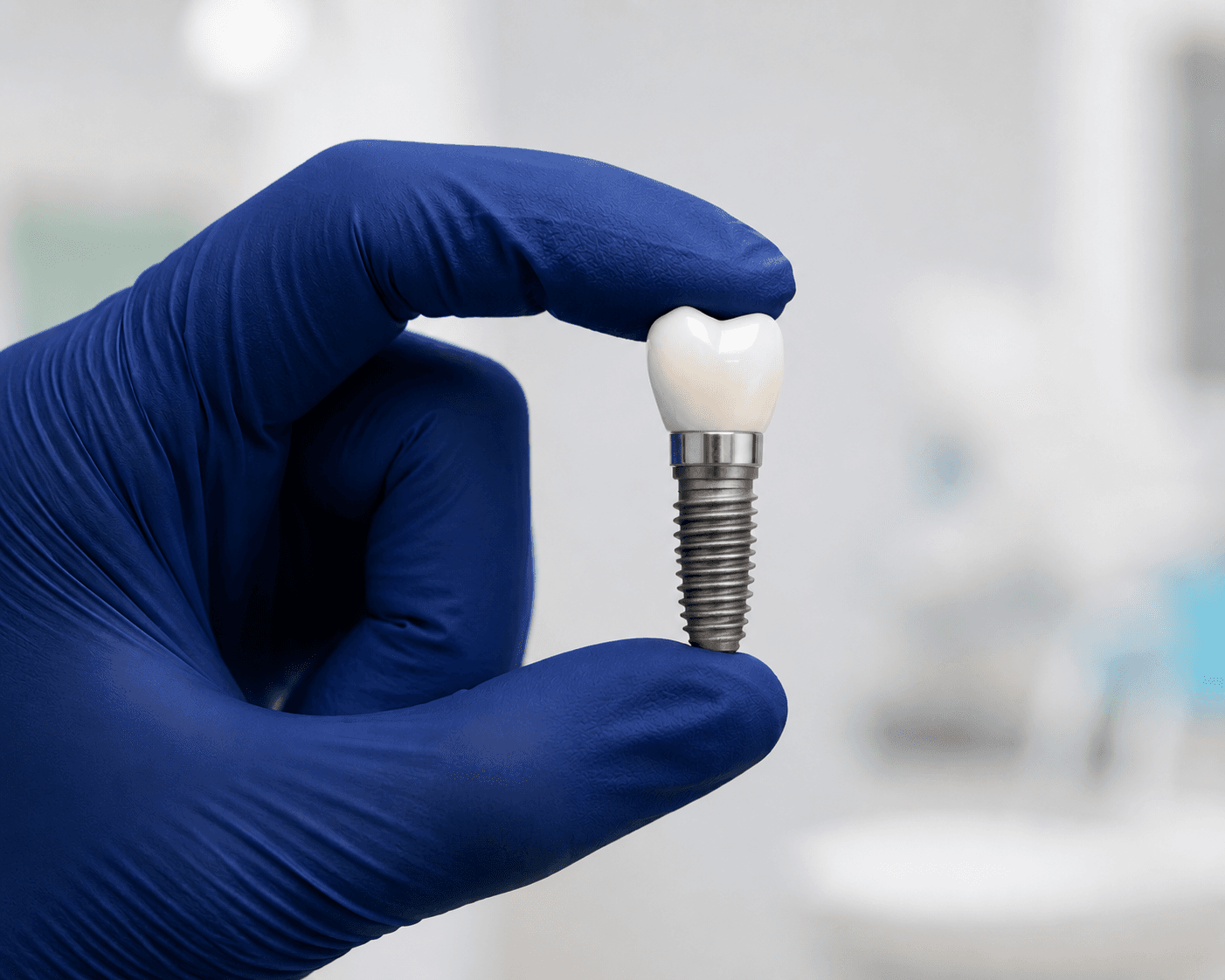
A single tooth implant replaces one missing tooth with a small titanium or zirconia root and a custom crown, without grinding down the healthy teeth on either side. At the practice of Dr. Alexander Antipov, a board-certified oral & maxillofacial surgeon in Roseville, CA, it is the option we recommend for most patients missing a single tooth because it restores a tooth that looks, feels, and functions like your own while protecting the jawbone underneath.
This article is for general education and is not a substitute for a personalized evaluation by a qualified oral surgeon.
Losing a single tooth can feel like a small problem — until you notice yourself chewing on one side, covering your mouth when you laugh, or seeing the gap widen as neighboring teeth drift. There is also a change you cannot see: once a tooth is gone, the jawbone that used to support it begins to shrink, and a meaningful amount of that bone can disappear within the first year. A single tooth implant is the one replacement option that stops that process while restoring a tooth that looks, feels, and functions like your own.
Key Takeaways
- • An implant replaces the whole tooth — root and crown — without grinding down healthy neighbors.
- • It is the only option that keeps stimulating the jawbone, preventing the bone loss that follows tooth loss.
- • Surgical placement is usually quick; most of the timeline is healing (osseointegration).
- • A 3D CBCT scan maps bone, nerves, and sinuses so placement is planned before any incision.
What a Single Tooth Implant Actually Is
A dental implant is not a single object — it is a three-part system engineered to recreate a natural tooth from the root up. Each part has a distinct job, and together they give the restoration its long-term reliability:
| Component | What It Does |
|---|---|
| The implant post | A small titanium or zirconia screw placed in the jaw that serves as the new tooth root. Bone grows against it and locks it in place over the following months. |
| The abutment | The connector that sits at the gumline and holds the crown steady against the forces of everyday chewing. |
| The crown | The only part you see, custom-made to match the shade, shape, and translucency of the teeth around it. |
Because the post integrates with living bone, a well-placed implant behaves like a real tooth rather than a placeholder resting on top of the gum. You can learn more about the surgery itself in our single tooth implant overview.
Why It Protects Your Jawbone — and Your Face
Bone is living tissue that maintains itself in response to pressure. When you chew, the tooth root transmits force into the jaw and signals the body to keep that bone dense. Remove the root and the signal stops, so the body gradually reabsorbs the minerals it no longer thinks it needs — a process called resorption. Studies commonly cite a loss of up to about a quarter of the surrounding bone volume in the first year after a tooth is lost.
Over time, that hidden shrinkage can change how your face looks, contributing to the sunken appearance associated with long-term tooth loss. An implant is the only replacement that takes over the root’s job of stimulating the bone, which is why placing one sooner rather than later helps protect both your remaining teeth and your facial structure.
Why the Surgeon You Choose Matters
Many practices offer implants, but there is a real difference in training. A board-certified oral and maxillofacial surgeon completes several additional years of hospital-based surgical residency after dental school, focused on jaw anatomy, bone grafting, and every level of anesthesia. That experience is most valuable exactly where single implants are most demanding — in the visible “aesthetic zone” at the front of the mouth, and in the back where chewing forces are highest and nerves and sinuses are close by.
Precision starts with planning. A 3D CBCT scan lets Dr. Antipov map your bone density, nerve positions, and sinus anatomy in three dimensions before the procedure, so the implant is placed at the ideal angle and depth. Comfort matters too: because oral surgeons are qualified to provide the full range of anesthesia, from local numbing to IV sedation, most patients are surprised that the experience is easier than they expected.
Single Tooth Implant vs. a Dental Bridge
For years the standard fix for one missing tooth was a fixed bridge. A bridge fills the gap with a false tooth anchored to crowns on the two adjacent teeth — which means those healthy neighbors have to be filed down to make room, even though nothing was wrong with them. In other words, a bridge treats one missing tooth by permanently altering two good ones.
An implant is the more conservative choice because it stands on its own and leaves the surrounding teeth untouched. It also tends to win on the long math: bridges typically need replacing every 10 to 15 years as the anchor teeth wear or decay, while a well-maintained implant is designed to last for decades. Day to day, an implant is simpler to care for too — you brush and floss it like a natural tooth, with no special threaders to clean underneath. For the full breakdown of the biological and 20-year cost trade-offs, see our guide to single tooth implant vs. dental bridge: the real cost. And if the tooth you lost is a front tooth, our guide to missing front tooth replacement optionscovers temporary fixes and the special demands of the “smile zone.”
What to Expect: Your Treatment Journey
Every case is planned individually, but a single tooth implant generally follows four stages:
- — 1. Consultation and 3D scan: we evaluate the whole area, check bone density, and build a digital plan with clear, itemized pricing.
- — 2. Implant placement: the post is placed in the jaw, usually in under an hour for a single site. When conditions allow, a failing tooth can be removed and the implant placed in the same visit.
- — 3. Osseointegration: over about three to six months the bone fuses to the post, creating a foundation for a lifetime of chewing.
- — 4. The final crown: once healing is complete, your custom crown is attached and your smile is whole again.
Recovery is usually easier than patients expect — soft foods and cold compresses for a few days handle most of it. Many patients are also candidates for a temporary crown so they never leave with a visible gap. Because the implant is made of medical-grade materials it cannot get a cavity, but keeping the surrounding gum healthy with routine brushing, flossing, and cleanings is still essential.
Cost, Insurance, and Financing in the Roseville Area
The investment for a single implant depends on the crown material, the condition of the site, and whether preparatory work such as a bone graft is needed — which is why we provide a transparent, all-inclusive quote after your 3D scan rather than a vague estimate. Many PPO plans cover part of the cost, and our team verifies your benefits for you. Flexible financing is available so that budgeting never has to stand between you and treatment. For a deeper look at pricing, see our guide to single dental implant cost in Northern California.
Dr. Antipov’s office is on Reserve Drive in Roseville, near the Westfield Galleria and the I-80 / Highway 65 interchange, making it convenient for patients across Placer County and the greater Sacramento region, including Rocklin, Lincoln, and Granite Bay.
Frequently Asked Questions
How much does a single tooth implant cost in Roseville?
The cost depends on the crown material, the condition of the site, and whether preparatory work such as bone grafting is needed. Because those factors vary from person to person, we give you an itemized, all-inclusive quote at your consultation after a 3D scan — and we offer flexible financing so cost does not have to delay treatment.
Does dental insurance cover single tooth implants in California?
Many PPO plans cover part of an implant, often somewhere in the range of $1,000 to $3,000 per year depending on your annual maximum and deductible. Every policy is different, so our team verifies your benefits for you and helps you make the most of the coverage you have.
How long does the single tooth implant process take?
Placing the implant post itself is usually a short procedure — often under an hour for a single site. The longer part is healing: the bone needs roughly three to six months to fuse to the implant (osseointegration) before the final crown is attached.
Is single tooth implant surgery painful?
The procedure is done under local anesthesia, with sedation available if you want it, so you should not feel pain during placement. Most patients report the recovery is milder than a routine tooth extraction, with minor soreness that usually settles within a few days and is managed with over-the-counter medication.
What if I don’t have enough bone for an implant?
If the jaw has lost volume after tooth loss, a bone graft can rebuild the foundation so the implant has stable support. A 3D CBCT scan at your first visit measures your bone in three dimensions and tells us whether grafting is needed before or alongside implant placement.
Why choose an oral surgeon instead of a general dentist for an implant?
A board-certified oral and maxillofacial surgeon completes several additional years of hospital-based surgical residency beyond dental school, with focused training in jaw anatomy, bone grafting, and all levels of anesthesia. That depth matters most for precise placement near nerves and sinuses and for managing more complex cases.
Sources & References
Peer-reviewed and authoritative references supporting the information in this article.
Dr. Alexander V. Antipov
Board-certified oral and maxillofacial surgeon in Roseville, CA, specializing in single tooth and full-arch dental implants, bone grafting, and corrective jaw surgery. Serving Placer County and the greater Sacramento region.