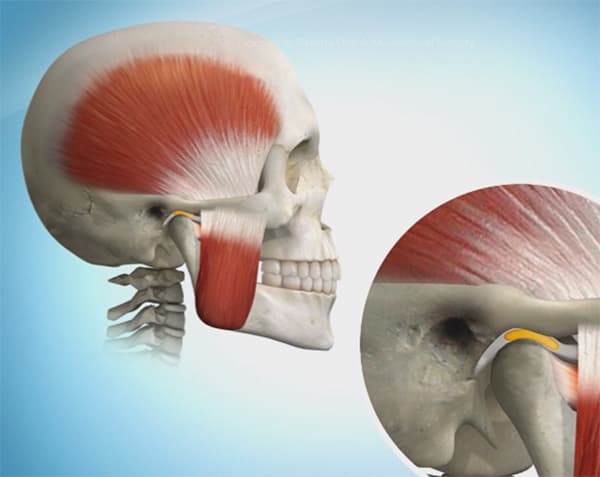
Comprehensive TMJ disorder care
Diagnosis-driven treatment for jaw pain, joint dysfunction, and chronic facial pain — starting with conservative therapy and reserving surgery for cases that truly need it.
Common symptoms
- • Jaw pain or tenderness
- • Clicking, popping, or grating sounds when chewing
- • Difficulty opening or closing the mouth
- • Locking of the jaw
- • Headaches or migraines
- • Ear pain or ringing (tinnitus)
- • Facial pain or pressure
- • Difficulty chewing certain foods
Diagnosis-first approach
Imaging, not guesswork
Most jaw pain is muscular or postural and resolves with conservative care. We use clinical exam, CBCT, and MRI (when indicated) to identify the actual cause before recommending any invasive treatment.
Conservative care first
Comprehensive evaluation
Clinical exam, imaging (CBCT, MRI if indicated), bite analysis.
Custom occlusal splint
Night-guard or full-coverage splint to reduce muscle strain and protect the joint.
Physical therapy
Targeted jaw and neck exercises, manual therapy, posture correction.
Medications
Anti-inflammatories, muscle relaxants, or short-course pain management as appropriate.
Lifestyle changes
Soft diet, stress management, jaw rest, avoiding chewing gum or hard foods.
Surgical options (when needed)
Only ~5% of TMJ patients ultimately need surgery. When they do, we offer the full range from minimally invasive to total joint replacement.
Arthrocentesis
Minimally invasive — needles wash inflammation out of the joint. Outpatient, ~30 minutes.
TMJ arthroscopy
Small camera enters the joint for diagnosis and treatment. Outpatient, 1-hour procedure.
Open joint surgery (arthroplasty)
Direct repair or reshaping of the joint structures when arthroscopy is insufficient.
Total joint replacement
Reserved for severe degeneration, ankylosis, or failed prior surgeries. Patient-specific implant.
Frequently asked questions
What is TMJ disorder?
Temporomandibular joint (TMJ) disorder, also called TMD, is a group of conditions affecting the joints, muscles, and ligaments of the jaw. Symptoms include jaw pain, clicking or popping sounds, headaches, ear pain, and difficulty chewing.
When does TMJ require surgery?
Most TMJ cases respond to conservative care: splints, physical therapy, anti-inflammatories, and stress management. Surgery is reserved for cases that fail conservative treatment after 3-6 months, structural joint damage seen on imaging, or severe symptoms that limit jaw function.
What surgical options exist for TMJ?
Options range from minimally invasive arthrocentesis (joint flushing) and arthroscopy, to open joint surgery (arthroplasty), and in severe cases total joint replacement. Dr. Antipov tailors the approach to your imaging and clinical exam findings.
How long is recovery from TMJ surgery?
Arthrocentesis: 1-2 days. Arthroscopy: 1 week. Open joint surgery: 2-4 weeks for return to soft diet, 6-12 weeks for full recovery. Physical therapy is essential during recovery.
Does insurance cover TMJ treatment?
Many medical insurance plans cover TMJ surgery when documented as medically necessary. Our insurance coordinator helps with pre-authorization. Conservative dental treatments may have separate coverage rules.
Schedule Your Consultation
Meet Dr. Antipov and discuss your treatment options, including advanced 3D imaging and a personalized treatment plan.
Free 3D CT Scan · No Obligation · Flexible Financing · Roseville, CA · Restrictions apply