Snap-In Dentures in El Dorado Hills: Your 2026 Buying Guide
Medically reviewed by Dr. Alexander V. Antipov, DDS — Board-Certified Oral & Maxillofacial Surgeon · Diplomate, American Board of Oral & Maxillofacial Surgery (ABOMS) · California Dental License #50724
Yes — El Dorado Hills residents can get snap-in dentures from a board-certified oral and maxillofacial surgeon about 25 minutes away: Dr. Alexander Antipov places implant-retained overdentures at his Roseville, CA office, using 2–4 titanium implants per arch to anchor a removable prosthetic that will not slip during a meal at Town Center or a hike near Folsom Lake. Unlike traditional dentures that rely on suction and adhesive, snap-in systems click onto implant attachments — restoring most of your natural chewing force, protecting the jawbone from the shrinkage loose dentures accelerate, and ending the daily ritual of messy pastes. This buying guide covers how the mechanism works, how snap-in overdentures compare to fixed All-on-4 bridges, what the procedure looks like step by step, and what El Dorado Hills patients should know about cost and insurance before choosing a provider.
This article is for general education and is not a substitute for a clinical evaluation. Whether snap-in dentures fit your case depends on your bone volume, oral health, and bite — all assessed with 3D imaging at an in-person consultation.
Snap-In vs. Traditional Dentures at a Glance
If you are weighing an upgrade from a conventional denture, the differences are not subtle:
| Feature | Traditional dentures | Snap-in overdentures |
|---|---|---|
| How they stay in | Suction and adhesive paste | Mechanical click onto 2–4 implants |
| Stability while eating | Can shift or slip mid-meal | Anchored — no movement in normal use |
| Chewing force | Roughly 10–20% of natural bite | Restores 60–80% of natural bite force |
| Jawbone health | Bone shrinks steadily under the plate | Implants stimulate and preserve bone |
| Daily care | Remove and soak; re-apply adhesive | Remove at night, brush prosthetic and attachments — no adhesive |
| Speech | Clicking or whistling as the plate moves | Firm foundation for natural speech |
How Snap-In Dentures Actually Work
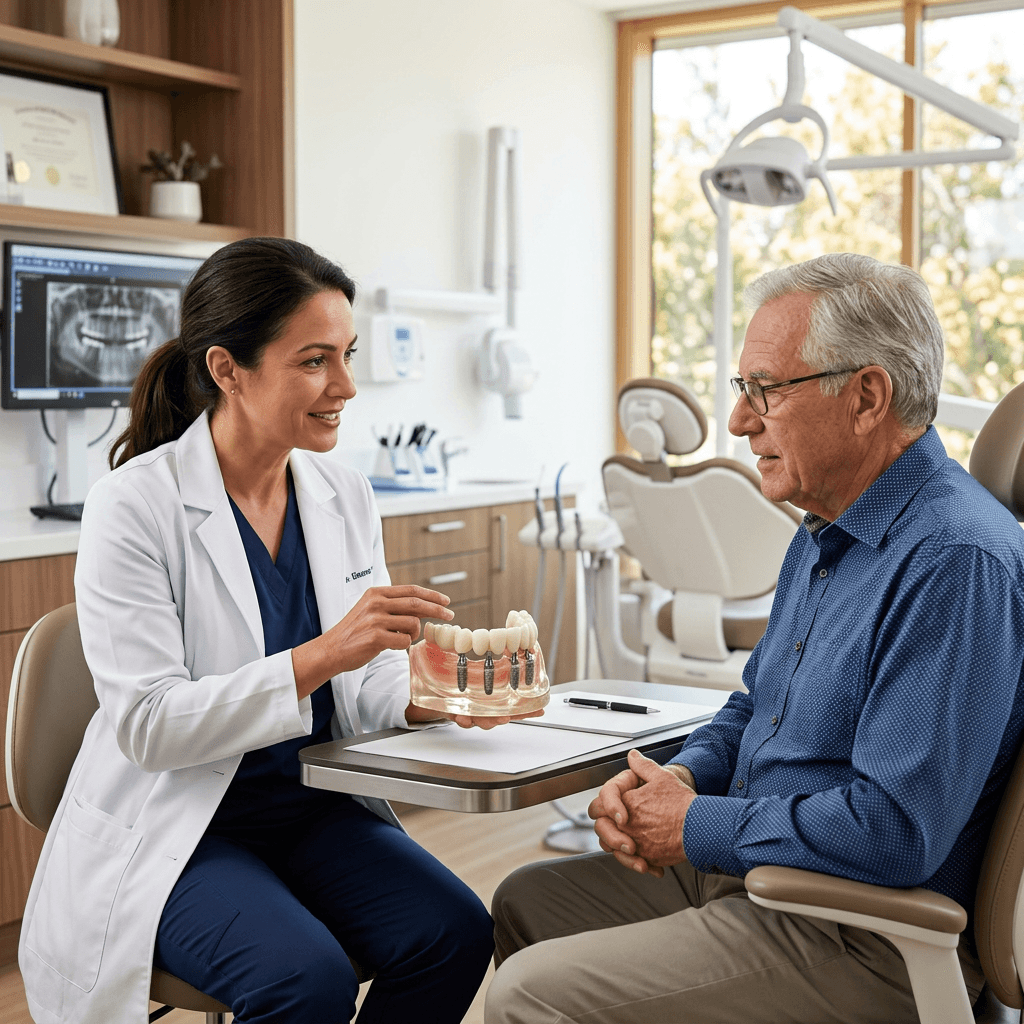
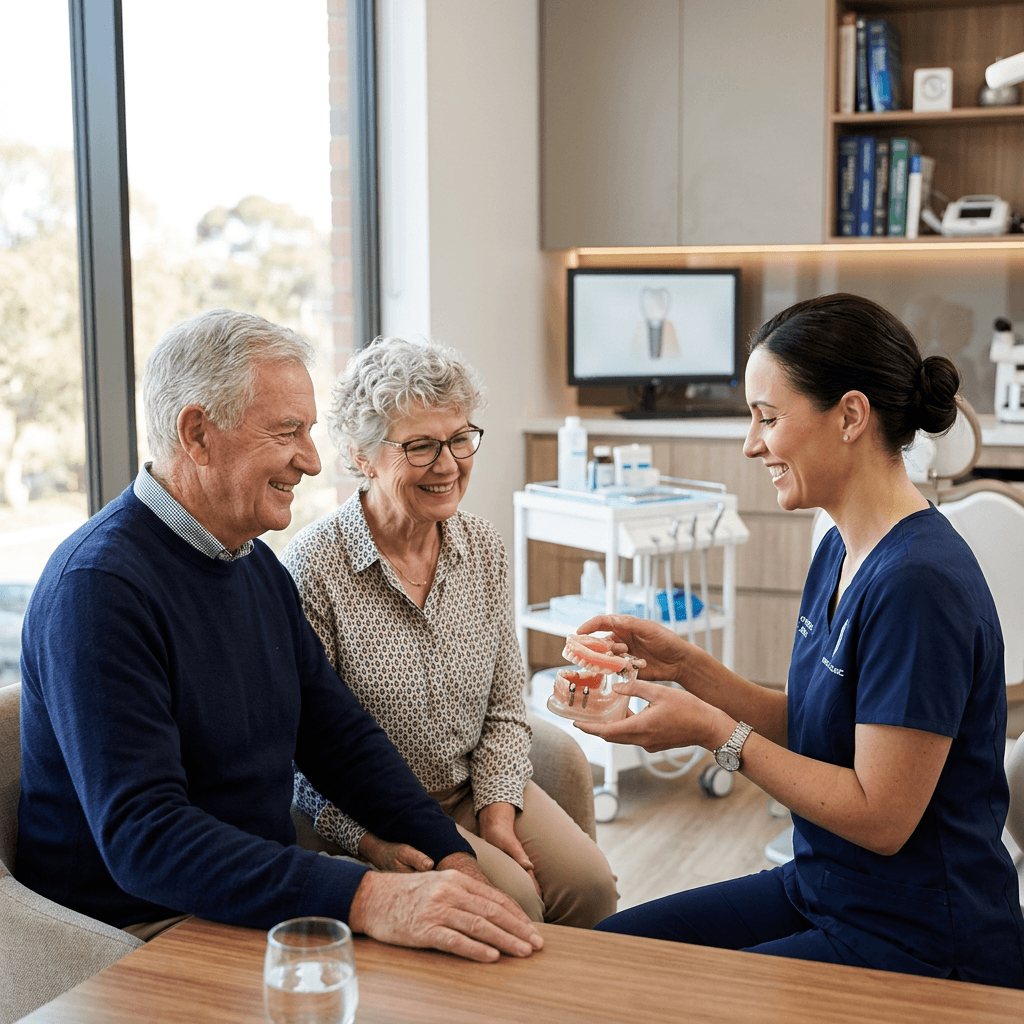
A snap-in denture — technically an implant-retained overdenture — rests on two parts: titanium dental implants placed in the jawbone, and locator attachments that connect them to the prosthetic. Each implant fuses with your bone over a few months (osseointegration), becoming a fixed anchor. The denture itself carries matching housings on its underside; seating it produces an audible, tactile snap, and it stays put until you intentionally release it for cleaning.
Most lower jaws are secured with two implants; upper jaws, where bone is softer, typically need four. Because the load is shared between implants and gum tissue, snap-in systems often work even for patients with years of denture-related bone loss — our guide to implant options with severe bone loss explains why a past “not enough bone” verdict is rarely final. For the full clinical picture of the attachment system, implant counts, and maintenance, see our complete snap-in dentures guide.
Snap-In vs. All-on-4: Which Fits Your Lifestyle?
The other implant-based path to a full arch is a fixed bridge like All-on-4 — permanently attached teeth you clean in the mouth like natural ones. The choice usually comes down to three factors:
- — Maintenance style: snap-in dentures come out at night for easy, visible cleaning — an advantage for patients with dexterity concerns. All-on-4 stays in and is cleaned with a brush and water flosser.
- — Budget: snap-in systems use fewer implants (2–4 vs. 4+), making them the more accessible entry point to implant-anchored teeth.
- — Feel: a fixed bridge feels most like natural teeth; a snap-in overdenture is extremely stable in use but is still a removable appliance.
The Procedure: What El Dorado Hills Patients Can Expect
Treatment starts with a 3D CBCT scan that maps your bone density and nerve positions so each implant is planned to sub-millimeter precision. Surgery is performed under IV sedation — a monitored “twilight” state in which most patients remember nothing of the procedure. Initial healing takes about a week; full osseointegration takes 3–6 months, during which you wear a temporary prosthetic so you are never without teeth.
Once your surgeon confirms the implants are solid, locator attachments are fitted and your final custom overdenture is snapped into place. Follow-ups verify the fit and the health of the surrounding tissue — our guide to normal healing versus infection covers what to watch for between visits.
Why El Dorado Hills Patients Choose Dr. Antipov in Roseville
El Dorado Hills has excellent general dentists, but implant surgery is a surgical specialty. Dr. Alexander Antipov is a board-certified oral and maxillofacial surgeon and Diplomate of the American Board of Oral and Maxillofacial Surgery — hospital-based surgical residency training beyond dental school. He plans every case personally on 3D imaging, performs the surgery under IV sedation, and follows your healing through to the final snap at his Roseville office, about 25 minutes from El Dorado Hills via Highway 50 and I-80.
Pricing is transparent and all-inclusive — implants, attachments, the prosthetic, imaging, and sedation — backed by a price-match guarantee. Our guide to paying for dental implants walks through 0% promotional financing and the insurance-plus-HSA stacking strategy California patients use.
Frequently Asked Questions
How much do snap-in dentures cost near El Dorado Hills?
The investment depends on how many implants your jaw needs (usually 2 for the lower arch, 4 for the upper) and whether any preparatory work is required. Dr. Antipov's Roseville office provides an all-inclusive written quote after a 3D scan, backed by a price-match guarantee for comparable board-certified treatment plans, with financing options available.
Are snap-in dentures better than traditional dentures?
For most patients, yes — significantly. Snap-in systems anchor to implants instead of relying on suction, which eliminates slipping and adhesive, restores 60–80% of natural chewing force, and stimulates the jawbone to prevent the bone loss and facial collapse that long-term traditional denture wear causes.
How many implants do snap-in dentures need?
Most lower jaws are secured with two implants; upper jaws typically need four because upper bone is softer and the prosthetic must resist gravity. A 3D CBCT scan at the consultation determines the exact number for your anatomy.
Can I eat normally with snap-in dentures?
Once healed, you can return to a far more varied diet — the implant anchorage provides the bite force for firmer foods that are off-limits with traditional dentures. Extremely hard or sticky items are still best avoided to protect the attachment components.
How do I clean snap-in dentures?
Remove the prosthetic at night and brush it with a non-abrasive cleanser, then gently brush the locator attachments and your gums with a soft toothbrush. This simple routine prevents plaque buildup and keeps the snap mechanism working reliably; the nylon inserts inside the denture are inexpensive to replace as they wear.
Does insurance cover snap-in dentures in California?
Many California dental plans partially cover the denture portion, while the surgical implant portion is often a separate benefit — every policy differs. Our team performs a detailed benefits check at the consultation and helps bridge any gap with financing.
What is the recovery time for snap-in denture surgery?
Initial surgical healing takes about a week; the implants then fuse with your jawbone over 3–6 months before the final overdenture is attached. You wear a temporary prosthetic during that period, so you are never without a functional smile.
Is the snap-in denture procedure painful?
The surgery is performed under local anesthesia with IV sedation — most patients remember nothing of it. Afterward, discomfort is typically mild, peaks within the first couple of days, and is managed with over-the-counter or prescribed medication.
Ready for Teeth That Stay Put? El Dorado Hills, You're 25 Minutes Away
Schedule a free implant consultation with Dr. Antipov in Roseville — you'll get 3D CBCT imaging, a clear answer on whether snap-in dentures fit your anatomy, and transparent, all-inclusive pricing backed by a price-match guarantee. Restrictions apply.
Book a Consultation