Implant-Supported Dentures for Monterey Patients: Why the Drive to Roseville Pays Off
Medically reviewed by Dr. Alexander V. Antipov, DDS — Board-Certified Oral & Maxillofacial Surgeon · Diplomate, American Board of Oral & Maxillofacial Surgery (ABOMS) · California Dental License #50724

Monterey patients searching for implant-supported dentures have a compelling option a three-hour drive inland: Dr. Alexander Antipov, a board-certified oral and maxillofacial surgeon in Roseville, CA, anchors full-arch dentures to titanium implants — ending the slipping, adhesive routine, and progressive bone loss of traditional plates — typically at Sacramento-area pricing that runs well below coastal California rates for identical materials. An implant-supported denture uses 2–6 posts fused to your jawbone to hold the prosthetic immovably in place, restoring most of your natural chewing power and stopping the bone resorption that makes conventional dentures loosen year after year. This guide explains how the systems work, the choice between removable snap-in and fixed All-on-4 designs, what the surgical journey looks like — including same-day teeth — and how out-of-area patients make treatment in Roseville simple.
This article is for general education and is not a substitute for a clinical evaluation. Whether an implant-supported denture fits your case depends on your bone volume, oral health, and bite — all assessed with 3D imaging at an in-person consultation.
Implant-Supported vs. Traditional Dentures at a Glance
The difference is structural, not cosmetic — one rests on shrinking gums, the other is anchored to bone:
| Feature | Traditional dentures | Implant-supported dentures |
|---|---|---|
| Retention | Suction and adhesive paste | 2–6 titanium implants fused to the jawbone |
| Chewing power | Roughly 10–20% of natural bite | Up to 90% restored |
| Fit over time | Loosens as the jawbone resorbs | Stable — implants halt bone loss |
| Facial structure | Progressive “sunken” collapse | Bone stimulation preserves the profile |
| Daily routine | Adhesive, soaking, re-fitting | Snap-in: nightly removal to clean; fixed: brush like natural teeth |
| Lifespan | Relined or replaced every few years | Implants designed to last a lifetime; prosthetic 10–15+ years |
How Implant-Supported Systems Actually Work
Every version of the technology rests on osseointegration: titanium posts placed in the jaw fuse with living bone over 3–6 months, becoming fixed anchors that function like tooth roots. That fusion does two jobs at once — it holds your dental implants and prosthetic immovably in place, and it restores the chewing stimulation that tells your body to maintain jawbone. Traditional dentures never address that second job, which is why they loosen no matter how many relines you buy — our guide to fixing loose dentures permanently explains the bone-loss loop in detail.
Bone loss from years of denture wear rarely disqualifies you. Angled-implant techniques maximize contact with your remaining bone, and grafting rebuilds genuinely deficient sites — see our guide to implants with severe bone loss before assuming you are not a candidate.
Snap-In vs. Fixed All-on-4: Which Design Fits You?
Implant-supported dentures come in two architectures. A snap-in overdenture clicks onto 2–4 implants: rock-solid during the day, removed at night for easy cleaning, and the more accessible investment. A fixed All-on-4 bridge is permanently secured to four or more implants: the highest chewing power, an open palate that restores full taste, and care that works just like natural teeth — only a dentist can remove it.
The right choice usually comes down to maintenance preference and budget; our comparison of fixed versus removable permanent dentures walks through the trade-offs decision by decision.
The Surgical Journey — Including Same-Day Teeth
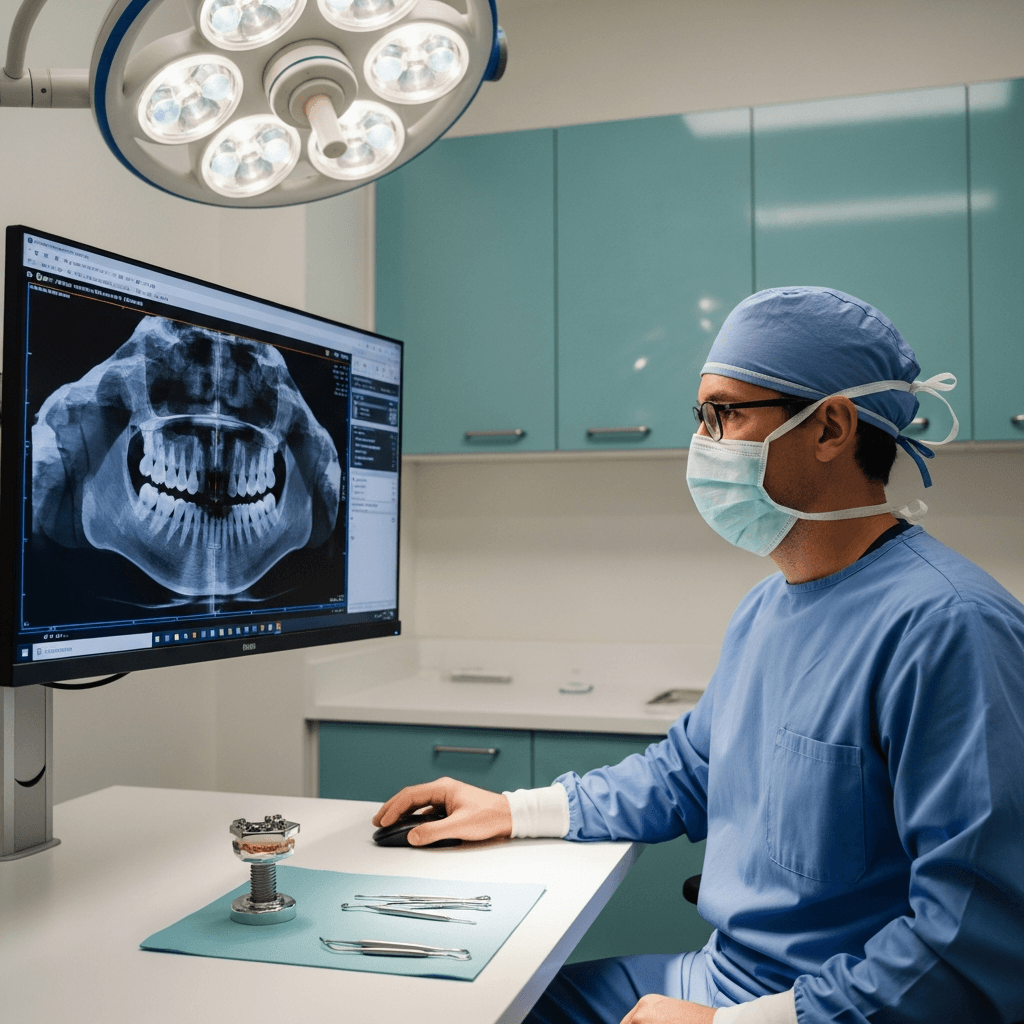
Treatment begins with a 3D CBCT scan that maps your bone density and nerve anatomy, letting the surgeon plan each implant position to sub-millimeter precision before the day of surgery. The procedure itself is performed under IV sedation — most patients describe drifting off and waking with their new smile in place. In qualifying full-arch cases, a functional set of fixed temporary teeth is attached the same day as surgery, so you never spend a day without teeth.
Soreness after surgery is typically mild — managed with over-the-counter medication and largely resolved within 48–72 hours. A soft-food protocol protects the implants during the 3–6 month integration period; then your final custom prosthetic, in zirconia or reinforced acrylic, replaces the temporaries.
Making the Trip from Monterey Work
Roseville sits about three hours from the Monterey Peninsula — an easy inland drive up Highway 101 and I-80, and shorter than many patients travel for specialist surgical care. Treatment is structured to respect that distance: the consultation (with 3D imaging) and surgical planning are consolidated, surgery and the post-op check fit within a several-day window, and follow-ups are scheduled to minimize repeat trips. Our patient travel guide covers recommended hotels near the office, recovery logistics, and a day-by-day itinerary for out-of-area patients.
The economics often favor the trip, too. Surgical overhead on the coast is substantially higher than in the Sacramento region, and that difference flows straight into full-arch quotes for identical hardware. Our California price-match guide explains the regional gap — and Dr. Antipov's price-match guarantee keeps the comparison honest, like-for-like.
Why Patients Choose Dr. Antipov in Roseville
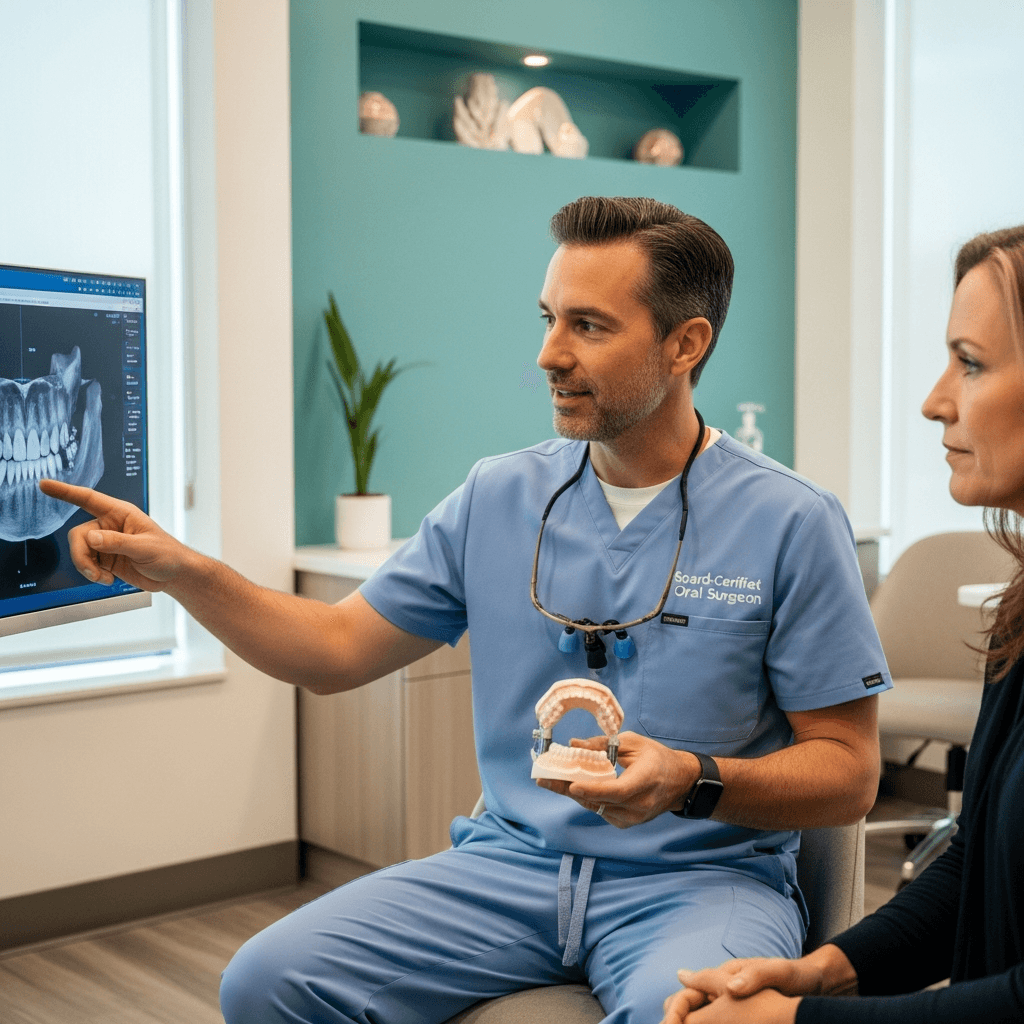
Full-arch restoration is a surgical discipline, and the surgeon's training is the variable that most determines whether the result lasts decades. Dr. Alexander Antipov is a board-certified oral and maxillofacial surgeon and Diplomate of the American Board of Oral and Maxillofacial Surgery, with hospital-based residency training and a practice focus on full-arch, complex, and revision cases. He plans every case personally on 3D imaging, operates under IV sedation, and follows your healing through to the final prosthetic.
Pricing is transparent and all-inclusive — implants, prosthetic, imaging, and sedation — and our guide to paying for dental implants covers insurance stacking and the financing platforms California patients use to turn a full-arch case into a predictable monthly payment.
Frequently Asked Questions
How much do implant-supported dentures cost for Monterey patients?
The investment depends on the system (snap-in vs. fixed), the number of implants your bone needs, and material choice (zirconia vs. reinforced acrylic). Sacramento-region pricing typically runs meaningfully below coastal California rates for identical materials, and Dr. Antipov's price-match guarantee covers qualifying like-for-like quotes. An exact all-inclusive number requires a 3D scan at the consultation.
Is it realistic to travel from Monterey for implant treatment?
Yes — Roseville is about a three-hour drive, and the treatment timeline is built for out-of-area patients: consolidated consultation and planning, surgery plus post-op check within a several-day window, and follow-ups scheduled to minimize trips. Many patients combine the coastal savings with a short inland stay near the office.
How many implants are needed for a full-arch denture?
Typically two to six per jaw. Snap-in systems often work with 2–4 posts; a fixed All-on-4 bridge requires at least four strategically placed implants to handle full chewing forces. A 3D CBCT scan determines the ideal number for your bone structure.
Are implant-supported dentures covered by insurance?
Coverage varies widely: many plans partially cover the prosthetic denture, while the surgical implant portion is treated differently policy by policy. The team verifies your benefits in detail at the consultation and offers financing to bridge any gap.
Is the surgery painful?
No — the procedure is performed under IV sedation with local anesthetic; most patients describe drifting off and waking with their new smile in place. Post-operative soreness is usually mild, manageable with over-the-counter medication, and largely resolved within 48–72 hours.
Can I get my new teeth the same day as surgery?
In qualifying full-arch cases, yes. When the implants achieve strong primary stability at placement, a functional set of fixed temporary teeth is attached the same day. You wear them while the bone integrates, then receive your final custom prosthetic.
How long do implant-supported dentures last?
The titanium implants are designed to last a lifetime, with 10-year clinical success rates of 95–98%. The prosthetic itself typically serves 10–15 years before wear calls for replacement or refurbishment. Good hygiene and regular checkups are the biggest longevity factors.
What if I have significant bone loss?
Bone loss rarely rules out treatment. Angled-implant techniques maximize contact with your existing bone — often avoiding grafting entirely — and grafting rebuilds genuinely deficient sites on a staged timeline. Board-certified surgical training is exactly what these complex cases call for.
Monterey to Roseville: One Trip to a Smile That Stays Put
Schedule a free implant consultation with Dr. Antipov in Roseville — you'll get 3D CBCT imaging, a clear recommendation between snap-in and fixed designs for your anatomy, and transparent, all-inclusive pricing backed by a price-match guarantee. Restrictions apply.
Book a Consultation