Snap-In Dentures: The Complete 2026 Guide to Secure, Implant-Supported Smiles
Medically reviewed by Dr. Alexander V. Antipov, DDS — Board-Certified Oral & Maxillofacial Surgeon · Diplomate, American Board of Oral & Maxillofacial Surgery (ABOMS) · California Dental License #50724
Snap-in dentures are removable prosthetic teeth that lock onto 2–4 dental implants with a mechanical click — replacing suction and adhesive with a physical connection that will not fail during a meal or a conversation, explains Dr. Alexander Antipov, a board-certified oral and maxillofacial surgeon in Roseville, CA. If you have ever ordered the soup instead of the steak because your denture might slip, this is the upgrade that changes the calculation: implant-anchored stability restores 60–80% of natural biting force, while the implants themselves preserve the jawbone that traditional dentures let shrink. This guide covers how the attachment system actually works, how many implants each jaw needs, who qualifies even after years of bone loss, and what the investment looks like from surgery through long-term maintenance.
This article is for general education and is not a substitute for a clinical evaluation. Whether snap-in dentures fit your case depends on your bone anatomy, gum health, and goals — all of which are assessed with 3D imaging at an in-person consultation.
Snap-In vs. Traditional Dentures at a Glance
Here is how a snap-in overdenture compares with the traditional denture it replaces — and with the fixed full-arch bridge one step above it:
| Factor | Traditional denture | Snap-in denture | Fixed full-arch bridge |
|---|---|---|---|
| How it stays in | Suction and adhesive | Clicks onto 2–4 implants | Screwed to 4–6 implants |
| Slipping while eating or speaking | Common | Locked in during the day | None — feels closest to natural teeth |
| Chewing power restored | Roughly 20–25% | 60–80% of natural force | Near-natural |
| Stops jawbone loss | No — can accelerate it | Yes — implants stimulate the bone | Yes — implants stimulate the bone |
| Removed at night | Yes | Yes — for cleaning and gum rest | No — cleaned in the mouth |
| Ongoing upkeep | Adhesive, relines, replacement | Nylon inserts swapped every 6–12 months | Periodic professional check-ups |
| Relative cost | Lowest up front | Middle | Highest up front |
How the Snap Mechanism Actually Works
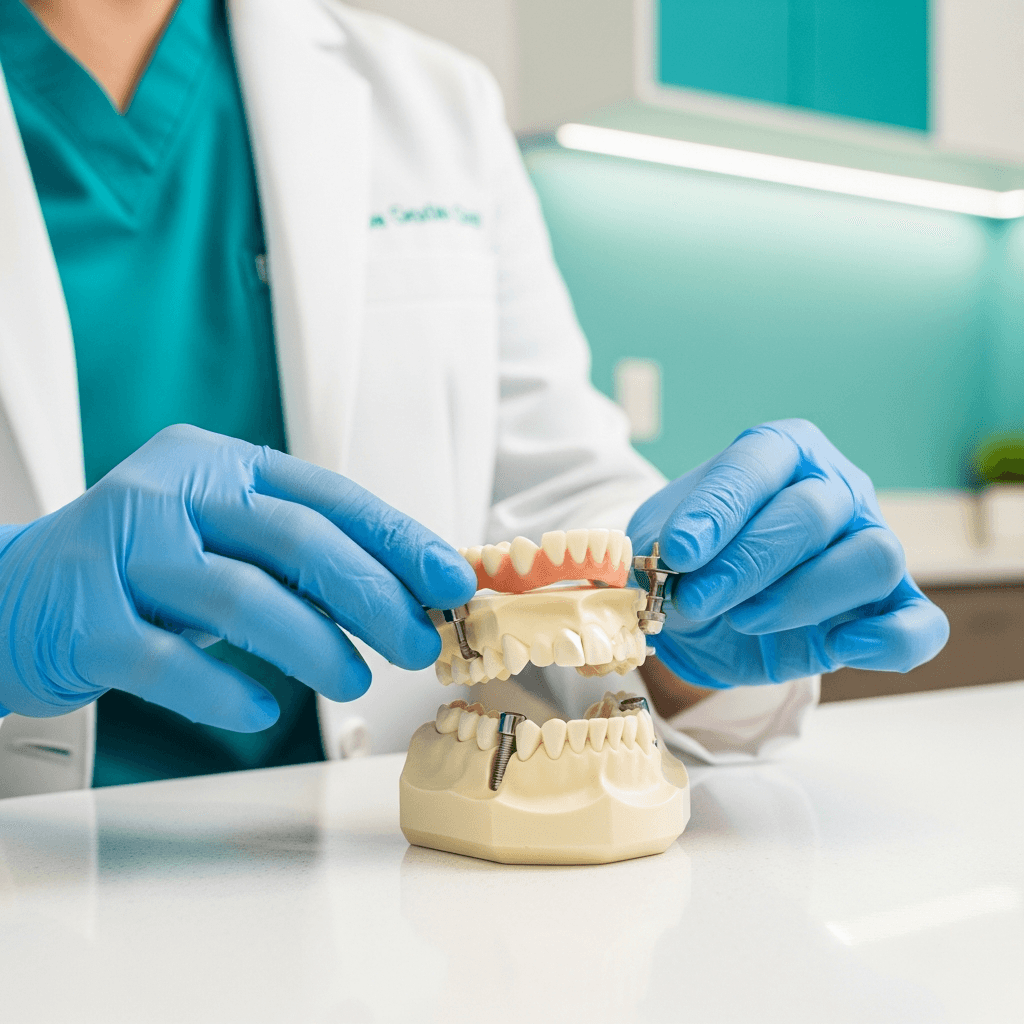
The system has two halves. The “male” component — a small locator abutment — is attached to each implant at the gumline. The “female” component is a metal housing with a replaceable nylon insert, built into the underside of the denture. Press the denture down and the parts snap together with a firm mechanical lock; lift with intentional pressure and it releases for nightly cleaning. Unlike suction or adhesive, this connection does not weaken with saliva, temperature, or time of day. The American Dental Association's overview of dental implants is a good primer on the titanium anchors underneath.
The nylon inserts are the deliberate wear point of the design: they cushion the connection, keep the grip snug, and are swapped out in minutes at a routine visit — typically every 6 to 12 months — so the “snap” stays as firm years in as it was on day one. That is far cheaper and simpler than relining or remaking a conventional denture that has gone loose.
How Many Implants You Need: Upper vs. Lower Jaw
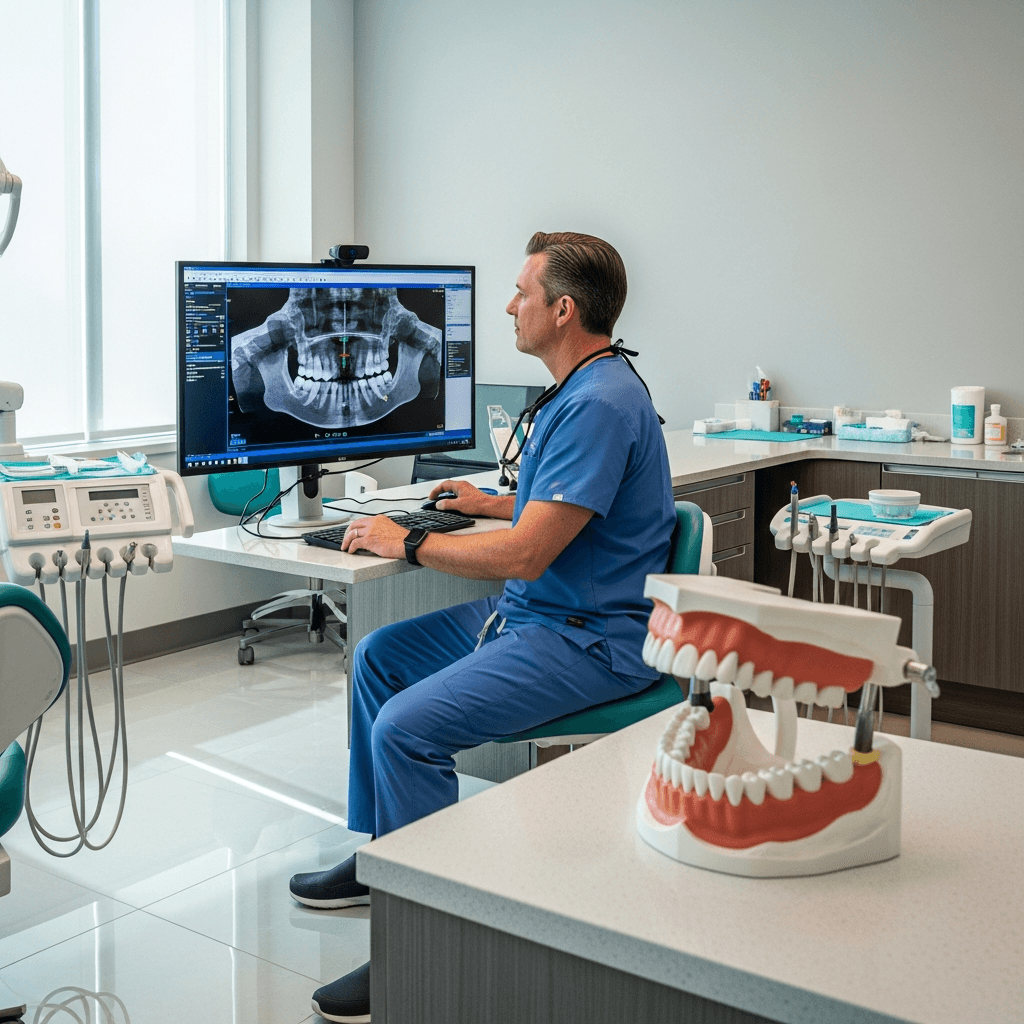
The lower jaw is where snap-in dentures shine most dramatically. Lower dentures float on a narrow ridge that the tongue constantly disturbs — and because lower jawbone is typically dense, just two implants usually deliver a life-changing level of stability. The upper jaw is softer and more porous, so it generally needs four implants to keep the denture balanced and prevent rocking. Dr. Antipov confirms the exact count with 3D CBCT imaging, mapping nerves, sinuses, and bone density before anything is placed. Our dedicated guide to snap-on dentures covers the treatment protocol in more detail.
If you are weighing a snap-in against a bridge that stays in permanently, see our side-by-side comparison of fixed versus removable permanent dentures — the honest trade-off is that a snap-in still rests partly on the gums, so a fixed bridge chews harder, while the snap-in costs meaningfully less.
Candidacy: What If I Already Have Bone Loss?
The ideal candidate has healthy gum tissue and a commitment to daily hygiene — but the question patients ask most is “do I have enough bone left?” After years in traditional dentures, bone resorption is the norm, not the exception, and it is rarely disqualifying. CBCT scans frequently reveal usable dense bone that flat X-rays miss, and when the foundation genuinely needs help, bone grafting rebuilds it on a staged timeline. Because only a few implants are needed — anchored where your bone is strongest — many long-term denture wearers qualify without grafting at all.
There is also a biological payoff beyond stability: implants transmit chewing forces into the jaw the way natural roots do, which halts the resorption cycle that makes every conventional denture fit worse than the last — and helps prevent the sunken facial profile of long-term tooth loss. Smokers can be treated, but nicotine slows healing, so a plan to pause or quit around surgery improves the odds.
The Timeline: From Planning to the Final Snap
Treatment follows a methodical path. It starts with digital planning on your 3D scan; on surgery day, implants are placed under local anesthesia with IV sedation available, and most patients describe pressure rather than pain, with a few days of manageable swelling afterward. Then comes osseointegration — over roughly 3 to 6 months, bone fuses to the titanium posts. Once integration is confirmed, the locator abutments go on and your custom denture snaps in. Patients who need faster fixed teeth can explore the teeth-in-a-day protocol, which trades the removable design for an immediately loaded fixed bridge.
Daily care is simple: brush the denture with a soft brush and non-abrasive cleaner, clean the locator abutments at the gumline, and leave the denture out overnight so your gum tissue rests — which also prevents fungal irritation. Routine check-ups let your surgeon monitor the implants and refresh the nylon inserts before the grip loosens.
Cost, Financing, and Long-Term Value
Because snap-in systems use fewer implants and a simpler prosthesis, they cost meaningfully less than fixed full-arch restorations — which typically run $25,000–$35,000 per arch in the Sacramento region. Compare value over time, not sticker price: implants boast a 10-year survival rate above 96%, the denture portion is typically replaced every 5–8 years, and the recurring costs of adhesives and relines disappear. Our guide to paying for dental implants covers financing and benefit-stacking, and Dr. Antipov's practice backs its quotes with a price-match guarantee.
Why Patients Choose Dr. Antipov in Roseville
A snap-in denture is only as reliable as the implant placement underneath it. Dr. Alexander Antipov is a board-certified oral and maxillofacial surgeon and Diplomate of the American Board of Oral and Maxillofacial Surgery, with hospital-based residency training beyond dental school. He plans every case personally on 3D imaging, places the implants with IV sedation available, and follows healing through to the final fitting at his Roseville office.
Patients come from across the Sacramento area — Rocklin, Granite Bay, Citrus Heights, Folsom, Sacramento — to stabilize dentures that have stopped working. Whether the right answer is a two-implant lower snap-in, a four-implant upper system, or a staged plan that rebuilds bone first, the recommendation starts from your anatomy and goals.
Frequently Asked Questions
Can I eat normally with snap-in dentures?
Mostly, yes. Because the denture is anchored by implants, snap-in systems restore roughly 60–80% of natural biting force — enough for steak, apples, and crunchy vegetables without fear of slipping. Start with smaller bites while you adjust; if you want chewing power closest to natural teeth, a fixed full-arch bridge is the step up.
How many implants do snap-in dentures need?
Typically 2–4 per arch. The lower jaw usually needs just two because its bone is dense; the upper jaw usually needs four because its bone is softer and more porous. The exact count is confirmed with 3D CBCT imaging of your jawbone anatomy.
How long do snap-in dentures last?
The implants are designed to be permanent, with a 10-year survival rate above 96%. The removable denture portion is typically replaced every 5–8 years from normal wear, and the small nylon inserts that create the snap are swapped every 6–12 months to keep the grip tight.
Do I have to take snap-in dentures out at night?
Yes — nightly removal lets your gum tissue rest, prevents fungal irritation, and gives you the chance to soak and clean the denture and the attachment points. If nightly removal is a dealbreaker, a fixed implant bridge stays in permanently and is cleaned in your mouth like natural teeth.
Is getting snap-in dentures painful?
The placement itself is done under local anesthesia, with IV sedation available, and most patients describe pressure rather than pain. Expect a few days of swelling or tenderness afterward, manageable with over-the-counter or prescribed medication.
Can I get snap-in dentures if I have bone loss?
Often, yes. 3D imaging frequently finds usable dense bone that flat X-rays miss, and because snap-in systems need only a few implants placed where bone is strongest, many long-term denture wearers qualify without grafting. When grafting is needed, it rebuilds the foundation on a staged timeline.
Is the snap mechanism reliable long term?
Yes. The lock is mechanical — a locator abutment on the implant engaging a nylon insert in the denture — so it does not weaken with saliva or temperature the way suction and adhesive do. The nylon inserts are designed to wear and are replaced in minutes at routine visits, keeping the snap firm for the life of the denture.
Ready for Teeth That Stay Put?
At a consultation with Dr. Antipov in Roseville, you'll get 3D imaging of your jaw, an honest recommendation between a snap-in overdenture and a fixed bridge for your specific anatomy, and transparent pricing backed by a price-match guarantee. Restrictions apply.
Book a Consultation