Denture Alternatives That Work: Your 2026 Guide to a Permanent Smile
Medically reviewed by Dr. Alexander V. Antipov, DDS — Board-Certified Oral & Maxillofacial Surgeon · Diplomate, American Board of Oral & Maxillofacial Surgery (ABOMS) · California Dental License #50724
The denture alternatives that actually work all share one feature: they are anchored by dental implants instead of resting on your gums — either a fixed full-arch bridge that stays in around the clock, or a snap-in overdenture that clicks onto implants for the day, explains Dr. Alexander Antipov, a board-certified oral and maxillofacial surgeon in Roseville, CA. Traditional dentures can look fine in a mirror, but if yours slip mid-sentence, rule out foods you love, or demand a daily ritual of adhesive, they are not doing the job — and they do nothing to stop the jawbone loss that makes every future denture fit worse than the last. This guide walks through the alternatives that solve those problems, and how to tell which one fits your anatomy, lifestyle, and budget.
This article is for general education and is not a substitute for a clinical evaluation. The right alternative for you depends on your bone anatomy, health history, and goals — all of which are assessed at an in-person consultation.
Your Options at a Glance
Here is how traditional dentures compare with the two implant-anchored alternatives on the factors that shape daily life:
| Factor | Traditional denture | Snap-in overdenture | Fixed full-arch bridge |
|---|---|---|---|
| How it stays in | Suction and adhesive | Clicks onto 2–4 implants | Screwed to 4–6 implants |
| Removable? | Yes — comes out nightly | Yes — comes out nightly | No — removed only by your surgeon |
| Stability while eating and speaking | Can slip and shift | Locked in during the day; slight movement possible | Feels closest to natural teeth |
| Stops jawbone loss | No — can accelerate it | Yes — implants stimulate the bone | Yes — implants stimulate the bone |
| Palate coverage (upper) | Full coverage; dulls taste | Often reduced | None — open palate |
| Ongoing upkeep | Relines and replacement every few years | Attachment inserts wear and need replacement | Periodic professional check-ups |
| Relative cost | Lowest up front | Middle | Highest up front |
Why Traditional Dentures Stop Working
The core problem is biological, not cosmetic. Your jawbone needs the stimulation of tooth roots to maintain its density; a denture resting on the gums provides none, so the bone slowly resorbs. That shrinkage is why dentures that fit at first start floating, why relines become a recurring expense, and why long-term wearers develop the sunken lower-face look. It is a downward spiral: the more bone you lose, the harder any removable plate is to keep in place. Our comparison of implants versus dentures covers the bone-health story in depth.
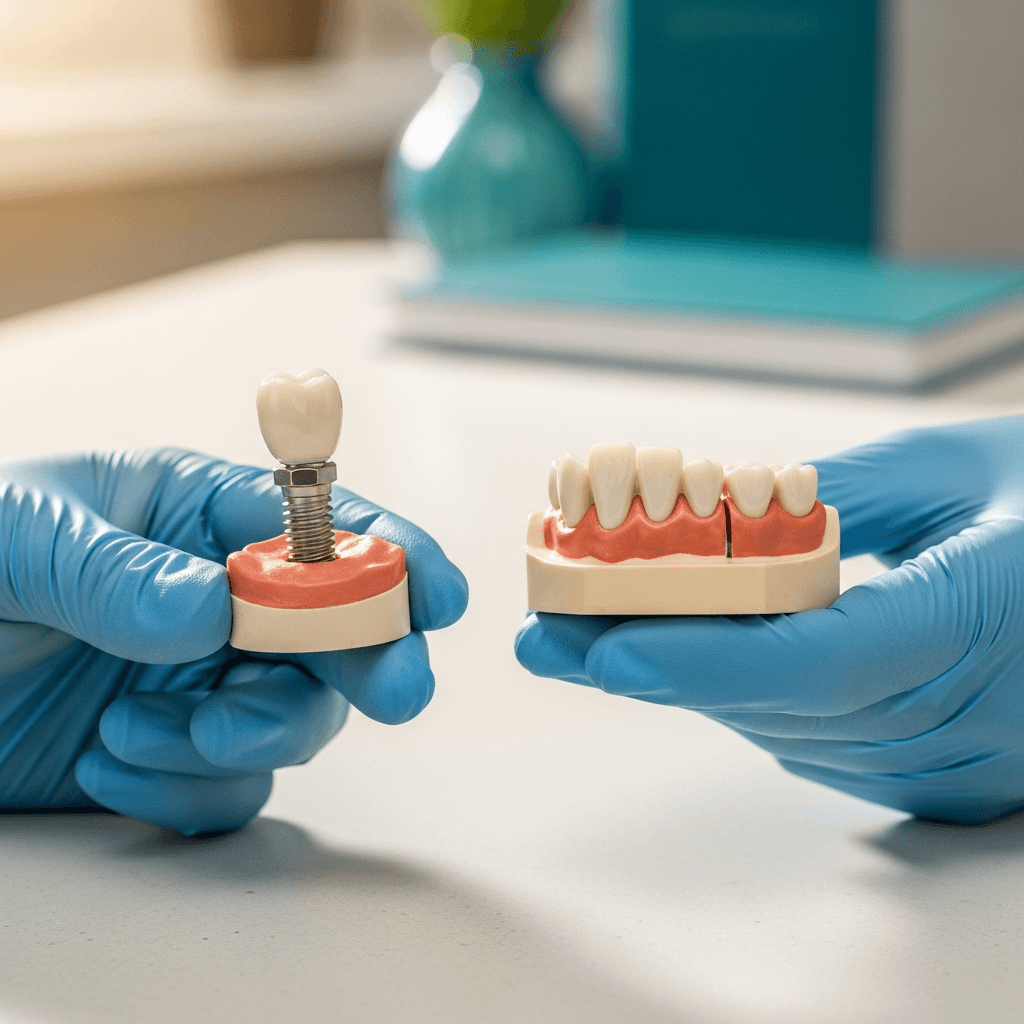
A working alternative has to fix that root cause — literally. Dental implants are titanium posts that fuse with the jawbone and transmit chewing forces into it the way natural roots do, which is what halts the resorption cycle. Every option worth considering in 2026 is built on that foundation; the real decision is how your new teeth attach to it.
The Gold Standard: A Fixed Full-Arch Bridge
For patients who want to stop thinking about their teeth entirely, the fixed full-arch bridge is the benchmark. Techniques like All-on-4 support an entire arch on four strategically tilted implants, anchoring in the densest available bone — which is why many long-term denture wearers qualify without grafting. The bridge stays in around the clock, there is no plate covering the palate (so food tastes right again), and most cases are delivered as teeth in a day: you leave surgery with a fixed temporary bridge already in place. The American Dental Association's overview of dental implants is a good primer on how the underlying anchors work.
Material choices shape the final result: zirconia bridges resist staining and mimic natural enamel's translucency, while acrylic-titanium hybrids cost less up front. Our guides to zirconia implant restorations and hybrid dentures versus fixed bridges break down the trade-offs.
The High-Performance Middle Ground: Snap-In Overdentures
Snap-in overdentures deliver most of the stability benefit at a lower cost of entry. Two to four implants carry locator attachments, and the denture clicks onto them — locked in while you eat and speak, removed at night for cleaning. The lower jaw is where this upgrade is most dramatic: a conventional lower denture floats on a ridge that the tongue constantly disturbs, and just a few implants end the slipping and the sore spots. Our dedicated guide to snap-on dentures covers candidacy and treatment in detail.
The honest trade-offs: a snap-in still rests partly on the gums, so chewing power — while far better than a traditional denture — does not match a fixed bridge, and the nylon attachment inserts wear and need periodic replacement. For a deeper side-by-side of the two implant options, see our comparison of fixed versus removable permanent dentures.
Cost, Value, and Paying for It
In the Sacramento region, a fixed full-arch restoration typically runs $25,000–$35,000 per arch, with snap-in systems costing less because they use fewer implants and a simpler prosthesis. But compare total cost over time, not sticker price: traditional dentures bring recurring relines, adhesives, and replacements, plus the health costs of a restricted diet — while implants stop the bone loss that drives those expenses. Our guide to paying for dental implants covers financing and benefit-stacking strategies, and Dr. Antipov's practice offers a price-match guarantee so specialist care doesn't cost more than a corporate implant chain.
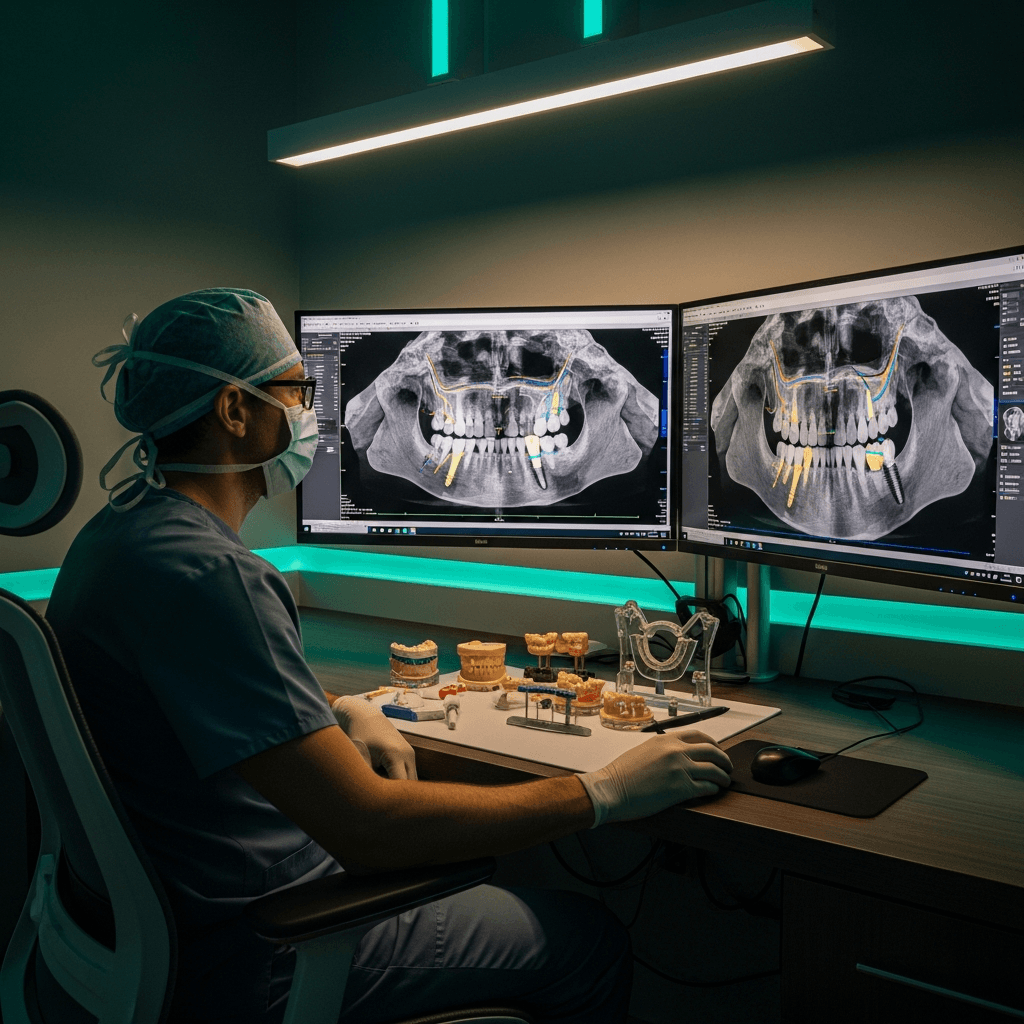
If you've been told you lack the bone for implants, get a second opinion with 3D imaging: CBCT scans frequently reveal usable dense bone a standard exam misses, and when grafting truly is needed, bone grafting rebuilds the foundation on a staged timeline.
Why Patients Choose Dr. Antipov in Roseville
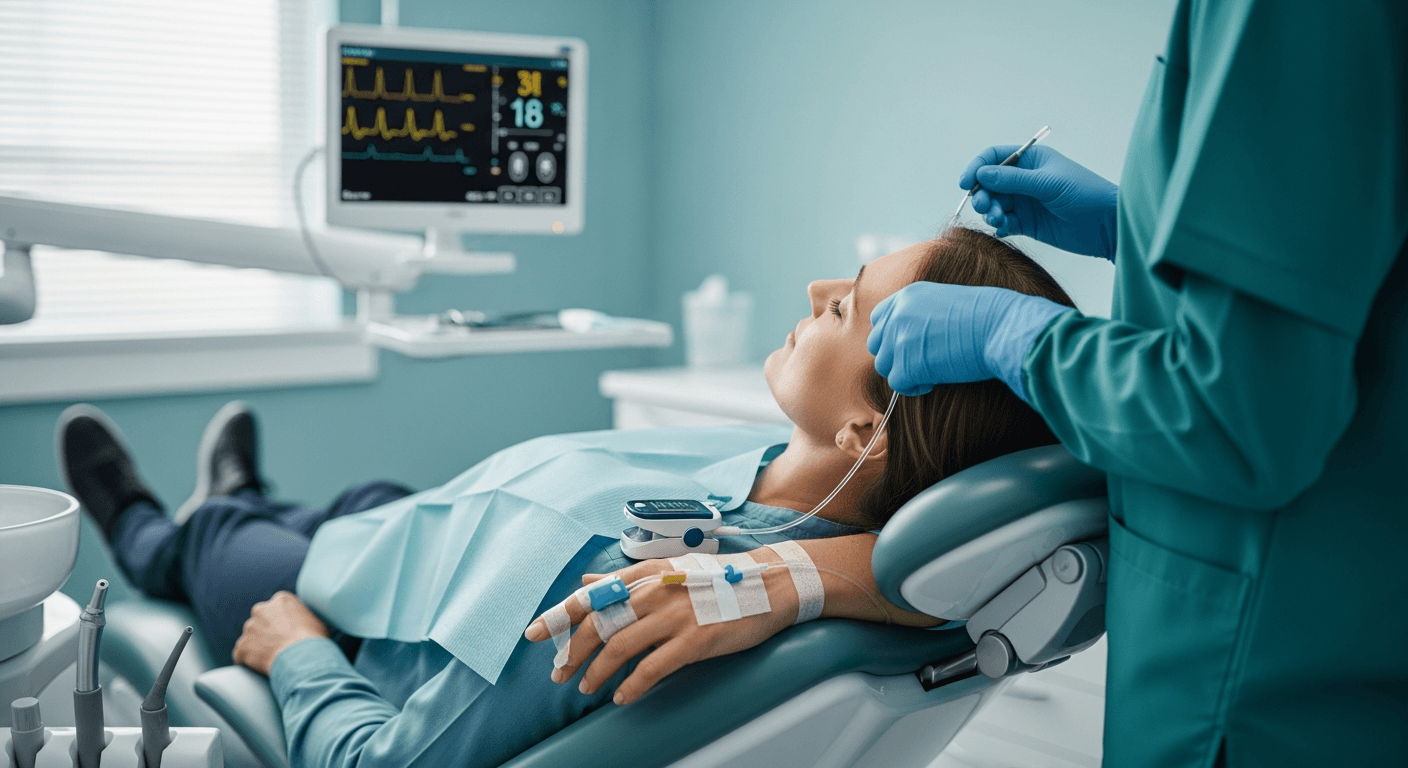
Every real denture alternative is a surgical solution, and results track the surgeon's training. Dr. Alexander Antipov is a board-certified oral and maxillofacial surgeon and Diplomate of the American Board of Oral and Maxillofacial Surgery, with hospital-based residency training beyond dental school. He plans every case personally on 3D imaging, performs the surgery with IV sedation available, and follows your healing through to the final restoration at his Roseville office.
Patients come from across the Sacramento area — Rocklin, Granite Bay, Citrus Heights, Folsom, Sacramento — to replace failing dentures. Whether the right answer is a fixed All-on-4 bridge, a snap-in overdenture, or a staged plan that rebuilds bone first, the recommendation starts from your anatomy and goals — not a one-size-fits-all pitch.
Frequently Asked Questions
What is the best alternative to dentures?
For most patients who want the most natural result, a fixed full-arch implant bridge (like All-on-4) is the gold standard — it stays in around the clock, restores strong chewing, and stops jawbone loss. Snap-in implant overdentures are the strong middle option: locked in during the day at a lower cost, removed nightly for cleaning.
Is there a non-surgical alternative to dentures that actually works?
No. Any option that stays in place and stops jawbone loss is anchored by dental implants, which requires a surgical procedure. Traditional dentures remain the only non-surgical option, but they cannot prevent slipping or bone resorption. Modern implant placement is minimally invasive and typically done in a single appointment.
Can I switch to implants after wearing dentures for years?
Usually, yes. Long-term denture wear causes bone loss, but 3D imaging often finds usable dense bone, and tilted-implant techniques like All-on-4 anchor where the bone is strongest — frequently avoiding grafting. When bone is severely resorbed, grafting can rebuild the foundation on a staged timeline.
How much do denture alternatives cost in the Sacramento area?
A fixed full-arch restoration typically runs $25,000–$35,000 per arch in the Sacramento region; snap-in overdenture systems cost less because they use fewer implants and a simpler prosthesis. Financing spreads either option into monthly payments, and Dr. Antipov's practice offers a price-match guarantee.
Do snap-in dentures come out at night?
Yes — a snap-in overdenture is removed nightly to clean the denture and the attachment points, then clicked back in each morning. During the day it stays locked in place. If nightly removal is a dealbreaker, a fixed full-arch bridge stays in permanently and is cleaned in your mouth like natural teeth.
Will implant-supported teeth stop my face from sinking?
They help significantly. The sunken look comes from jawbone resorption after tooth loss, and dentures resting on the gums can accelerate it. Implants transmit chewing forces into the bone like natural roots, stimulating it and helping preserve your facial structure.
How fast can I replace failing dentures with fixed teeth?
In many cases, in a single surgical appointment. The teeth-in-a-day protocol removes failing teeth, places implants, and attaches a fixed temporary bridge the same day; the final bridge follows after the implants integrate over roughly 3–6 months. Candidacy is confirmed with 3D imaging at the consultation.
Ready to Retire Your Dentures?
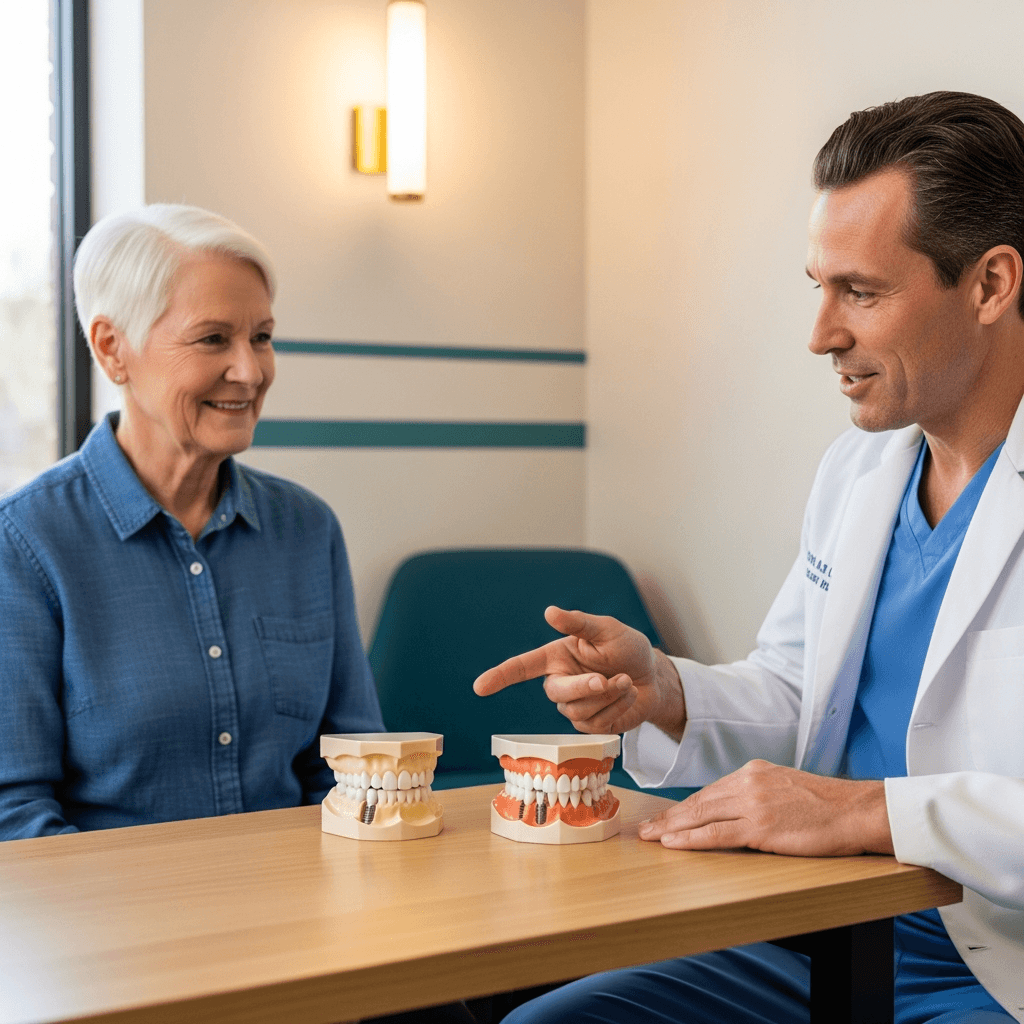
At a consultation with Dr. Antipov in Roseville, you'll get 3D imaging of your jaw, see the fixed and snap-in options in person, and leave with an honest recommendation and transparent pricing for your specific case — not a generic sales pitch. Restrictions apply.
Book a Consultation