Snap-In Dentures in California: The Guide to Secure Smiles
Medically reviewed by Dr. Alexander V. Antipov, DDS — Board-Certified Oral & Maxillofacial Surgeon · Diplomate, American Board of Oral & Maxillofacial Surgery (ABOMS) · California Dental License #50724
Snap-in dentures — technically implant-supported overdentures — anchor a removable plate to titanium implants in the jawbone, giving you a mechanical lock that suction-based plates simply cannot match, says Dr. Alexander Antipov, a board-certified oral and maxillofacial surgeon in Roseville, CA. For many of the 36 million Americans living without their natural teeth, the daily reality is quieter and more frustrating: ordering the soup instead of the steak because a traditional denture might slip. This guide explains how the snap-in approach offers a reliable middle ground — the stability of dental implants with the convenience of a removable plate — including how the system works, the clinical benefits for your jawbone and nutrition, how it compares to traditional dentures and fixed All-on-4 bridges, and what the journey from 3D imaging to secure smile actually looks like.
This article is for general education and is not a substitute for a clinical evaluation. Your implant count, candidacy, and exact cost depend on your bone volume and medical history — all assessed with 3D imaging at an in-person consultation.
How a Snap-In System Works: Three Parts, One Secure Lock
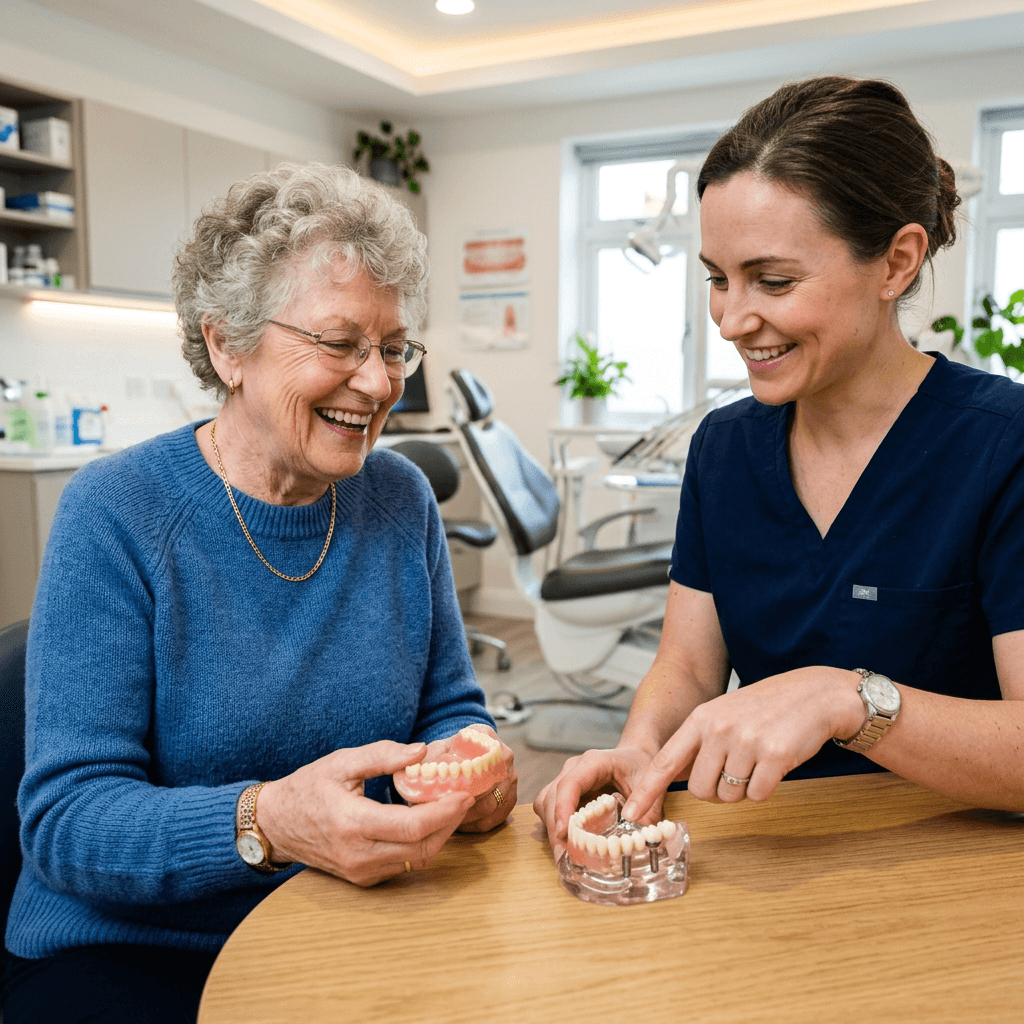
Unlike a standard denture that rests on the gums, a snap-in system is anchored to the jawbone through dental implants. The stability comes from specialized attachments — commonly called Locators — that let the plate snap firmly onto the implants so your teeth don't shift while you speak or chew. Three components work in unison:
- — The titanium implants: small, biocompatible posts placed into the jawbone that act as artificial tooth roots — the permanent foundation of the system.
- — The abutments: connector pieces on top of each implant carrying the snap mechanism that creates the secure mechanical lock.
- — The customized plate: the visible smile — custom-designed acrylic or porcelain shaped to your facial structure and shade preferences.
| Traditional denture | Snap-in overdenture | Fixed All-on-4 bridge | |
|---|---|---|---|
| Stability | Suction and adhesives — slips and clicks | Mechanical lock onto 2–4 implants | Screwed onto 4–6 implants — never removed |
| Chewing power | ~10% of natural force | 60–80% of natural force | 90%+ of natural force |
| Jawbone | Bone shrinks (resorption) — plates loosen over time | Implants stimulate and preserve bone | Implants stimulate and preserve bone |
| Care | Removed and soaked nightly | Removed nightly for cleaning; snap inserts replaced periodically | Cleaned in place like natural teeth |
| Relative cost | Lowest up front, replaced every 5–7 years | Middle ground — fewer implants than fixed options | Highest — typically $25,000–$35,000 per arch in our region |
The Clinical Benefits of Implant-Supported Stability
Choosing a snap-in system is a decision for long-term health, not just a cosmetic fix. When teeth are lost, the jawbone loses its biological purpose and begins to dissolve — resorption — which reshapes the lower face and makes plates progressively looser and more painful. Titanium implants act as artificial roots, signaling the jaw to stay dense and strong, which is what prevents the sunken “facial collapse” look that develops over years of conventional denture wear.
The functional difference is just as significant. Traditional dentures often deliver only about 10% of natural chewing force; implant-supported systems restore 60–80% of your original biting power — enough for steak, apples, and fiber-rich foods, with the digestion and energy benefits that follow. And because the implants provide the grip, the bulky acrylic covering the roof of the mouth can often be removed, restoring your ability to taste food and feel its temperature.
Speech, Confidence, and Daily Life
Clicking or whistling sounds happen when a loose plate moves against the tongue or lips mid-conversation; a snapped-in plate eliminates that movement entirely, allowing clear, natural speech. Many patients describe a genuine psychological unlock the first time they feel their teeth click into place — social gatherings, restaurants, and photographs stop being sources of anxiety. Our guide on how to fix loose dentures permanently covers the full range of stabilization options if you're weighing alternatives.
Snap-In vs. Fixed: Which Path Fits You?
A snap-in overdenture is often chosen as a cost-effective alternative to fixed bridges like All-on-4: it delivers the same bone-preserving benefits and a major share of the chewing power, typically on just two to four implants per arch — the lower jaw often functions well with two, while the upper usually needs four because of softer bone. A fixed bridge, by contrast, stays in permanently and restores the most bite force, at a higher investment. Our complete snap-in dentures guide and our comparison of hybrid dentures vs. fixed implant bridges break down the decision in detail, and our cost calculator lets you build an instant on-screen estimate for either path.
The Journey: From 3D Imaging to a Secure Smile
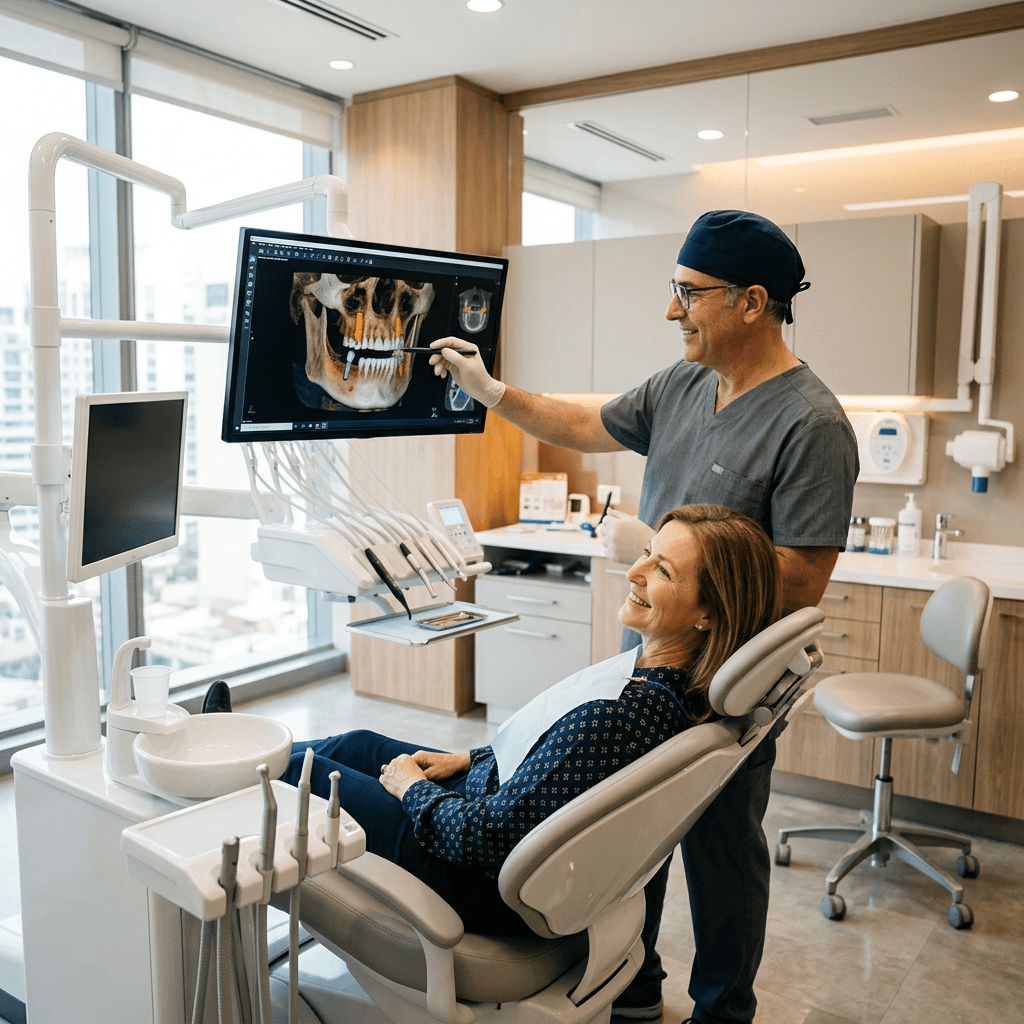
The process begins with 3D imaging that maps your bone density and identifies ideal implant positions before anything is placed — the precision work of a board-certified oral and maxillofacial surgeon. The surgical visit itself is performed under IV sedation, so most patients remember little and describe recovery as mild soreness rather than pain. In the first 48 hours you'll rest and manage minor swelling with cold compresses, then progress steadily from a soft-food diet back to firmer textures as the implants stabilize and fuse with the bone.
Significant bone loss rarely closes the door. Years of denture wear do shrink the jaw, but bone grafting and sinus lift techniques can rebuild the foundation, and 3D imaging often reveals healthy anchor bone even in patients missing teeth for decades — our guide to dental implants with severe bone loss explains every path. Conditions like diabetes or a smoking history call for careful management during healing, but they're usually hurdles to clear together, not permanent barriers.
Costs, Insurance, and Financing in Northern California
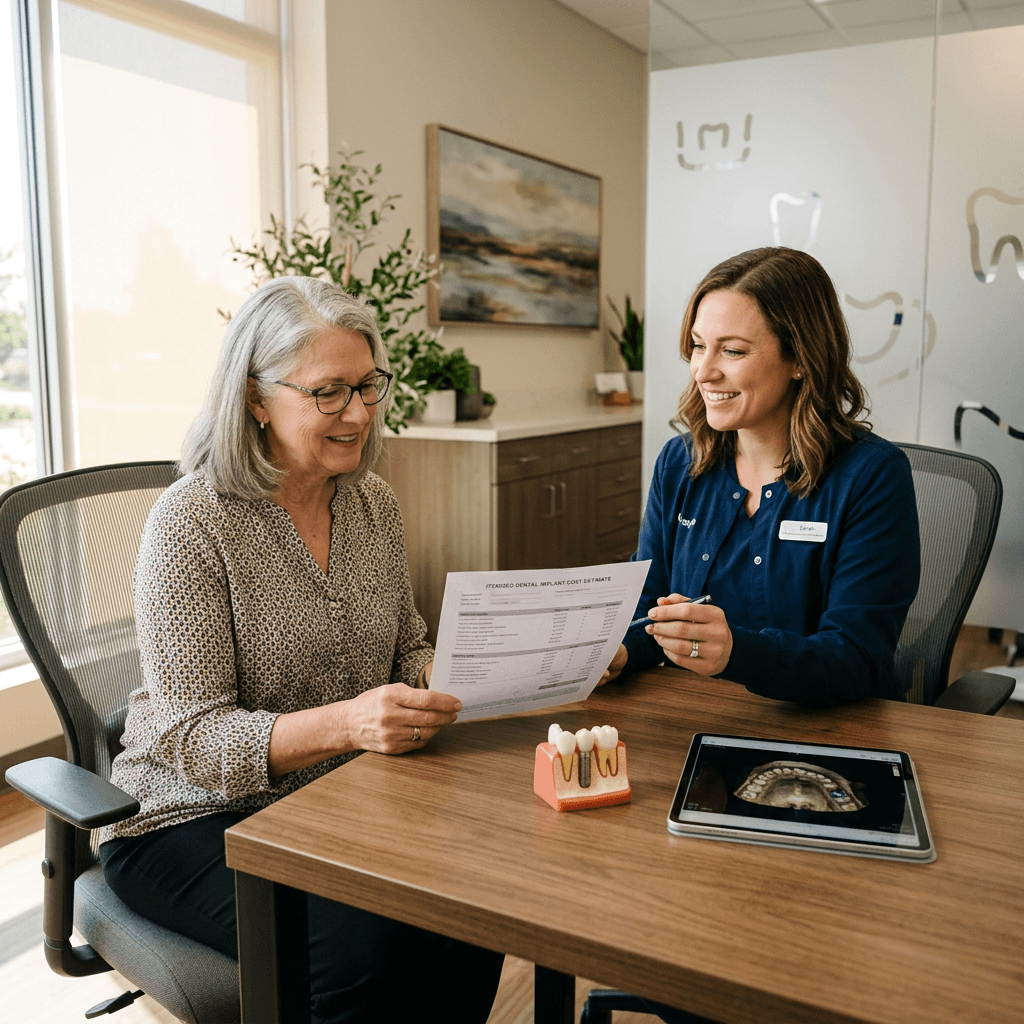
Because a snap-in case is highly customized — implant count, grafting needs, and plate material all vary — honest pricing comes as a written, all-inclusive quote after 3D imaging, not a flat advertised rate. Most dental insurance plans have annual caps that won't cover the full process, but many contribute toward the removable overdenture component, and flexible financing options turn the balance into predictable monthly payments. Dr. Antipov's Roseville office backs its quotes with a price-match guarantee for comparable written treatment plans, so you can choose your specialist on skill and reputation rather than price alone.
Patients travel to Dr. Antipov's Roseville office from El Dorado Hills, Sacramento, and across Northern California for implant-supported overdentures precisely because surgical specialization is the cornerstone of long-term implant success — board certification reflects rigorous training and peer review, and 3D-guided placement removes the guesswork from where each post goes.
Frequently Asked Questions
How much do snap-in dentures cost in California?
The total depends on the number of implants (usually two to four per arch), whether you need preliminary work like bone grafting, and the plate material — so honest pricing comes as a written, all-inclusive quote after 3D imaging rather than a flat rate. Snap-in systems typically cost meaningfully less than fixed full-arch bridges, and Dr. Antipov's office offers financing plus a price-match guarantee for comparable written treatment plans.
Can I sleep with my snap-in dentures in?
No — remove them every night. Taking the plate out lets your gum tissue rest and recover from daily pressure, prevents inflammation and infection, and gives you the chance to clean both the attachments and the denture properly. Nightly removal is a simple but vital habit for the long-term health of your implants.
How many implants are needed for a snap-in denture?
Most patients need two to four implants per arch. The lower jaw often functions well with just two, while the upper jaw typically requires four because its bone is naturally less dense. 3D imaging of your anatomy determines the exact number needed for the stability your lifestyle demands.
Do snap-in dentures look natural?
Yes — modern systems are custom-crafted with materials that mimic the color and translucency of natural enamel, shaped to your facial structure. Because the implants provide the grip, the plate doesn't need bulky plastic covering the roof of your mouth, which improves both appearance and speech.
How long do snap-in dentures last?
The titanium implant posts are designed to last a lifetime. The removable plate typically needs replacement every five to eight years, and the small nylon inserts inside the snaps are swapped every six to twelve months — quick, inexpensive maintenance that keeps the lock firm as the system ages.
Is the snap-in denture procedure painful?
No — the surgery is performed under IV sedation, keeping you relaxed and comfortable throughout. Most patients describe recovery as mild soreness rather than pain, managed with a methodical aftercare plan and standard medication for the first few days.
Can I eat steak with snap-in dentures?
Yes — once your implants have fully fused with the jawbone. Snap-in systems restore 60–80% of natural chewing power, so firm foods return to the menu without fear of slipping. You'll stick to softer foods during the initial healing phase, but the end result is a full, unrestricted diet.
What if I have significant bone loss in my jaw?
Bone loss is common after years of missing teeth, but it rarely rules out snap-in dentures. Bone grafting and sinus lift techniques rebuild the needed foundation, and precise 3D imaging often locates healthy anchor bone even in patients who have worn conventional dentures for many years.
Leave Slipping Dentures Behind
Schedule a free implant consultation with Dr. Antipov in Roseville — you'll get 3D imaging, a clear answer on how many implants your case needs, and one transparent, all-inclusive written quote backed by a price-match guarantee. Restrictions apply.
Book a Free Consultation