Front Tooth Dental Implant Procedure: Planning the Visible Tooth
By Dr. Antipov Practice Editorial Team. Clinical review pending; this article has not yet been medically reviewed by Dr. Alexander V. Antipov, DDS.
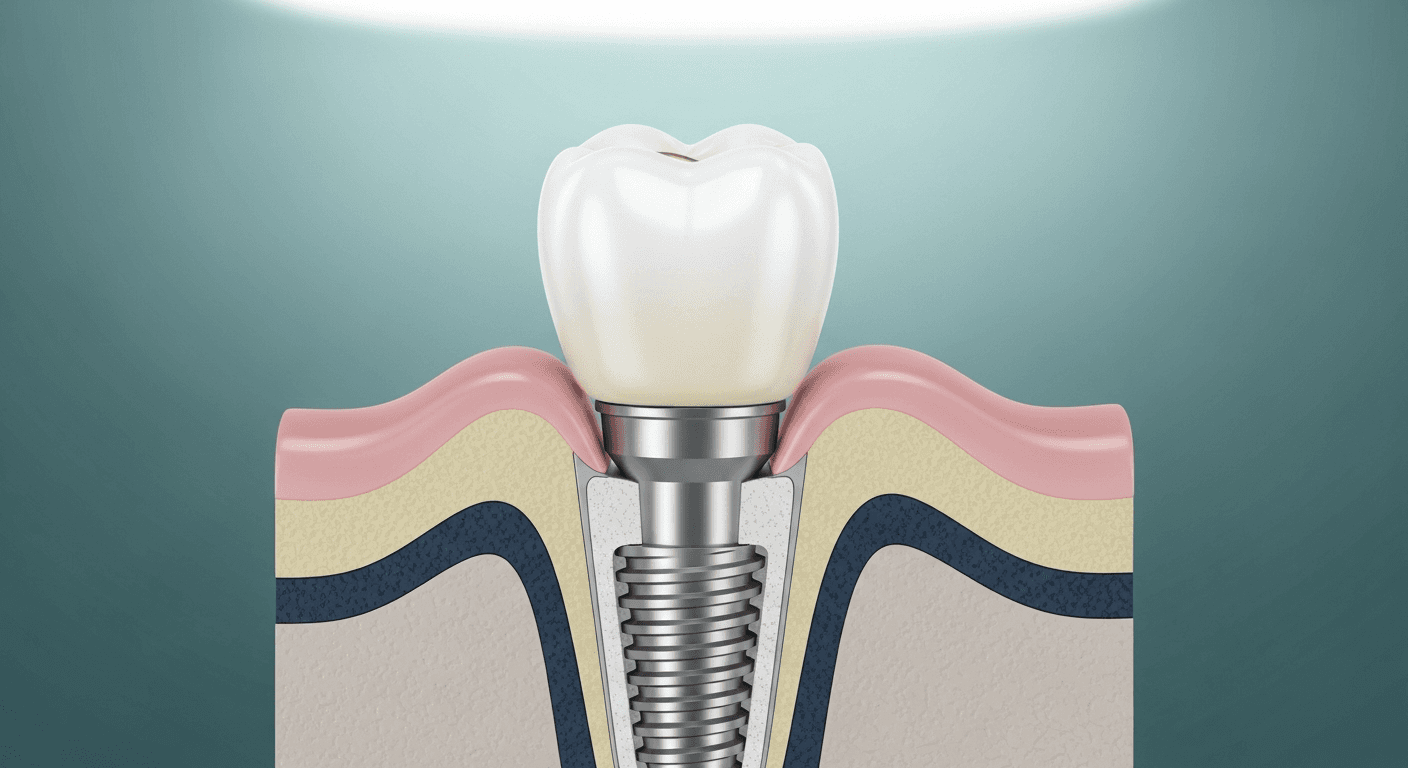
A front tooth implant replaces a missing root and supports a custom crown, but the best-looking plan begins before surgery with the gumline and temporary tooth in mind. In Roseville, Dr. Alexander Antipov, a board-certified oral and maxillofacial surgeon, helps patients evaluate the surgical side of front-tooth replacement alongside the restorative plan; neither immediate placement nor a perfectly matched gumline can be promised without examining the site.
Educational information about front-tooth replacement, not a diagnosis or a promise of cosmetic results. Your dentist and surgeon must assess the tooth, adjacent roots, gum tissue, bone and medical history before recommending treatment.
Compare the ways to replace a visible front tooth
The question is not just whether an implant is possible. It is what protects the neighboring teeth, manages the visible gap during healing and leaves a restoration you can clean. These choices have different biological and practical costs:
| Approach | Support and effect on other teeth | Important limitation or question |
|---|---|---|
| Implant and crown | An implant in the jaw supports a separate crown; neighboring teeth usually need not be prepared for support. | Requires adequate bone and healthy tissue; ask how the gum margin and crown will be planned. |
| Conventional fixed bridge | Crowns on neighboring teeth support a replacement tooth across the gap. | Supporting teeth generally need preparation; ask how to clean beneath the replacement. |
| Bonded resin bridge | A replacement tooth is bonded to one or both neighboring teeth with less preparation in suitable cases. | Bonding may loosen; ask whether the bite and adjacent enamel make this a reasonable option. |
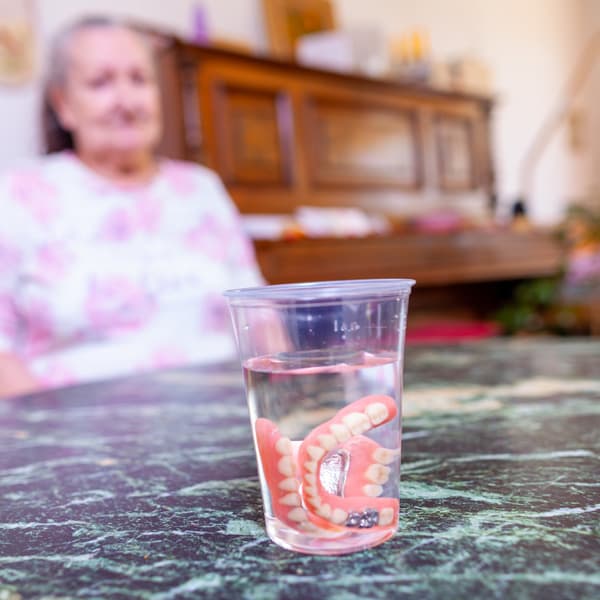
| Removable temporary tooth | An appliance fills the gap without an implant or permanently altering neighboring teeth. | It may feel bulkier and must be cared for; ask if it can be worn safely during healing. |
Begin with the tooth you have, not the implant you might need
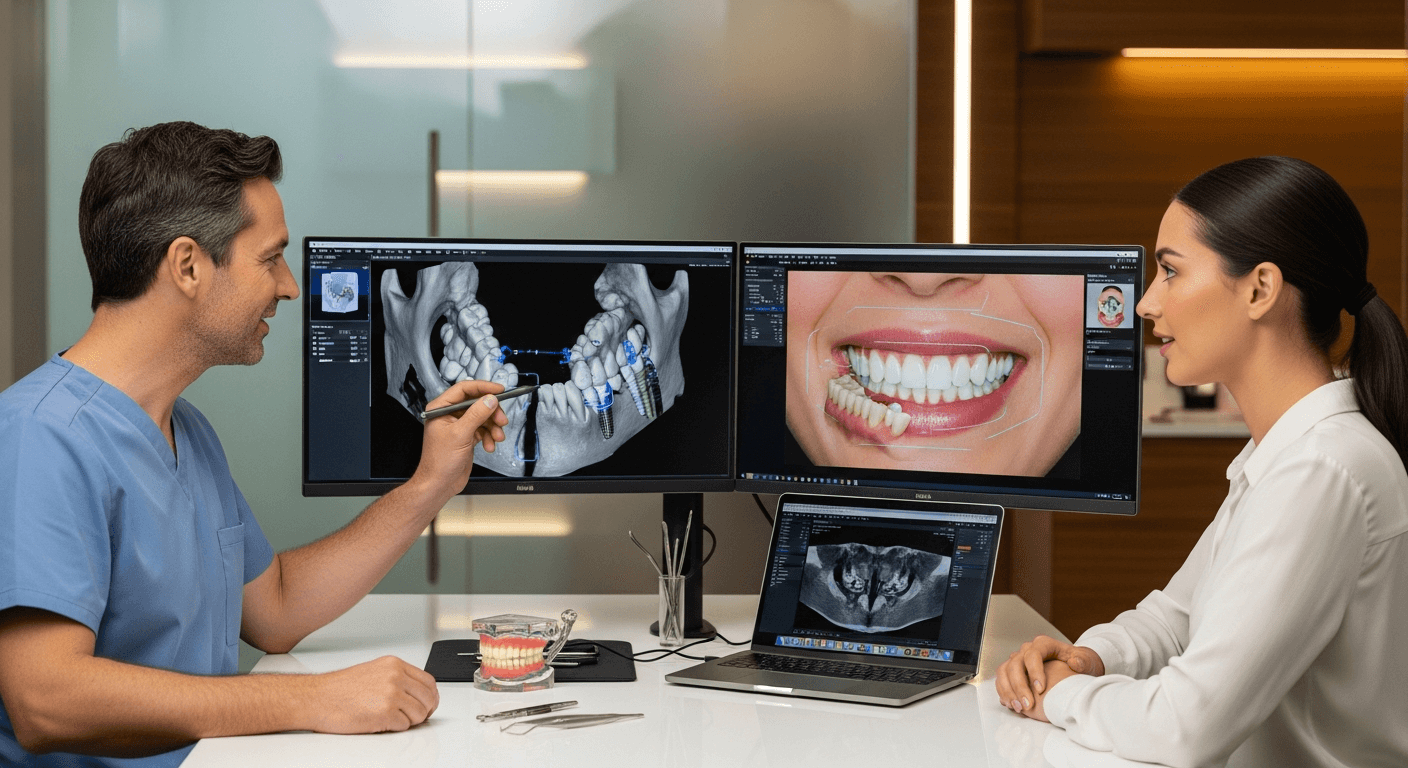
A cracked or discolored front tooth is not automatically unsalvageable. The first decision is whether a tooth can be predictably repaired with an appropriate restoration or endodontic care. If extraction is recommended, ask what findings make preservation unlikely. A photograph of the smile, assessment of gum levels and a careful examination of the neighboring teeth make the conversation more useful than simply selecting an implant size.
The American Dental Association's patient guide to implants explains that an implant supports a replacement tooth and that healthy gums and adequate bone matter. The front jawbone can be especially thin on the lip side of the tooth. If that wall is damaged or shrinks after extraction, the contour visible beneath the gum may change even when an implant is stable. A clinician may propose socket preservation or later grafting, but not every extraction needs a graft.
Ask who will place the implant and who will design and fit the crown. Surgery and restoration are related but different phases: implant position should leave room for a realistic crown emergence profile, and the crown design should not make cleaning the gumline impractical. Dr. Antipov's Roseville surgical evaluation is an opportunity to coordinate those questions with the restoring dentist, rather than promise that surgery alone creates the finished smile.
The possible sequences from extraction to finished crown
After examining the site and any clinically appropriate imaging, the team may place an implant when a tooth is extracted, place it after soft tissue heals, or wait until bone is rebuilt and matures. Immediate placement describes the timing of the implant, not necessarily the timing of the final tooth. Active infection, damage to the socket wall or inadequate stability can change the approach. A staged plan is not a failure; it can protect the foundation for the future restoration.
During implant surgery, the post is positioned in the bone. The surrounding bone subsequently heals in contact with it, a process called osseointegration. The team checks healing before attaching a definitive abutment and crown. Extraction, grafting, implant placement and restoration may take separate visits; the total schedule depends on anatomy, tissue health and healing. For a broader sequence beyond the smile zone, see the single-tooth implant timeline and our explanation of bone grafting for dental implants.
Ask for a written sequence with decision points: if implant stability is lower than expected, what temporary restoration would be used? If grafting becomes necessary, what will change about the appointment schedule? An individualized plan should distinguish the proposed timeline from an unconditional same-day guarantee.
Avoiding a visible gap without overloading a new implant
A temporary tooth can make the waiting period easier, but it must not jeopardize a healing implant. A removable appliance, a bonded temporary tooth attached to adjacent teeth, or in selected cases a provisional crown attached to the implant may be considered. These designs differ: a removable appliance may press on a grafted area if not adjusted, while an implant provisional may need to be kept out of biting contact. Ask which design the team recommends and exactly how to clean and use it.
A front tooth does not function in isolation. The way upper and lower teeth contact when you bite or move the jaw influences whether a provisional can be safely used. Patients who clench or grind should disclose this history; avoiding a hard bite on a temporary restoration is not the same as avoiding every daily activity. Your treating team should provide specific postoperative instructions rather than a generic rule taken from another patient's plan.
If you have a temporary crown, do not assume it is the final shade, contour or biting surface. Its job may be to maintain appearance and help manage soft tissue while healing proceeds. The definitive restoration is assessed later, when the tissues are stable enough to inform its shape.
What determines the gumline and crown appearance?
A front crown has to sit among natural teeth with their own translucency, shape and age-related changes. The width of the gap, the height of the neighboring gum peaks and the amount of tissue on the lip side all influence the apparent symmetry. Implant placement depth and angle matter because the crown has to emerge from the gum in a cleanable way. The final shade is chosen for the surrounding teeth, but lighting, materials and natural tooth variation can still make an exact match difficult.
The surgeon assesses bone and soft tissue; the restoring clinician plans the abutment, crown contour and bite. Ask whether a provisional will be used to test appearance and tissue shape, and which cosmetic limitations cannot be corrected by a crown alone. Soft-tissue or bone grafting may help selected cases, but it adds treatment stages and does not guarantee a particular gumline. Document your priorities: a gap between teeth, a dark shadow at the gum, or a tooth that looks too long may each call for different discussion.
For context on implant risks and maintenance, the ADA implant overview emphasizes ongoing oral care. An implant cannot decay like a natural tooth, yet inflammation can damage its supporting tissue. Keep the surrounding gum clean and attend follow-up so changes can be noticed early.
Questions to bring to a Roseville consultation
Bring photographs showing your usual smile if they help describe your concerns, plus relevant dental records and a list of medications. Explain whether the tooth hurts, was injured recently or has been treated before. Ask what imaging is necessary for your case, whether extraction and implant placement can reasonably occur together, and who will make the final crown. Request a specific plan for the visible gap between visits.
If the tooth was recently lost, do not wait solely because you assume the space will stay unchanged. Ask about the implant procedure and healing stages and what, if anything, needs to be done before healing alters the site. A thoughtful comparison of bridge and implant should include the condition of adjacent teeth and the maintenance you can commit to, not only the number of surgical appointments.
Finally, request an itemized written estimate identifying surgery, any graft, provisional, abutment, final crown and follow-up separately as applicable. A quote for implant placement alone is not the total for a visible finished tooth. Ask about alternatives and what might change the plan. The right decision is the one supported by your clinical findings and priorities, not an advertised calendar.
Frequently Asked Questions
Can an implant be placed immediately after a front tooth is removed?
Sometimes. Intact bone, control of infection and sufficient primary stability all affect the decision. Immediate placement does not automatically mean a final crown that day.
Will I have to go without a front tooth while the implant heals?
Not necessarily. Removable or bonded temporaries and, in selected situations, an implant provisional may be considered. Ask which design avoids pressure on your healing site.
Can a damaged front tooth be saved instead of extracted?
Possibly. Root, gum, bone and remaining tooth structure determine whether repair is reasonable. Request an explanation of the preservation option before consenting to extraction.
Why might I need a graft for just one front tooth?
Thin or damaged bone can affect implant support and the outer gum contour. Grafting is case-specific; an examination and appropriate imaging determine whether it is useful.
Who makes the final front tooth?
The restoring dentist plans and provides the crown, sometimes in collaboration with a surgeon who places the implant. Ask how both clinicians will coordinate implant position and the final appearance.
Will my implant crown match my natural teeth exactly?
Shade, contour and gumline can be carefully planned, but anatomy and healing limit predictability. Ask about realistic cosmetic expectations for your own smile.
How do I clean around a front implant after the crown is placed?
Use the brushing and interdental cleaning method your team demonstrates for the specific crown design, and keep regular professional checkups. Report bleeding or swelling rather than ignoring it.
Plan the tooth you will see, not only the surgery
Discuss preservation, temporary-tooth choices and implant planning with Dr. Antipov's Roseville team. Ask for a coordinated plan before choosing a front-tooth replacement.
Book a Consultation