Full-Mouth Reconstruction in California: Preserve, Repair, Replace
By Dr. Antipov Practice Editorial Team. Clinical review pending; this article has not yet been medically reviewed by Dr. Alexander V. Antipov, DDS.
Full-mouth reconstruction is a coordinated plan to restore teeth, bite and oral health across multiple parts of the mouth; it does not automatically mean extracting everything for implants. In Roseville, Dr. Alexander Antipov can assess the surgical and implant-related questions within a broader plan, while decisions about keeping teeth, restoring them and designing the final bite require appropriate restorative and periodontal evaluation.
This is general education about complex dental planning, not a diagnosis or a promise that teeth can be saved or implants placed. A full-mouth plan requires examination, appropriate records and coordination with the clinicians responsible for restorative, periodontal and surgical care.
Compare the building blocks before choosing an 'all new teeth' plan
Reconstruction is not a product. It may combine disease control with several types of restoration, and different parts of the mouth may need different treatment. Ask what problem each proposed procedure actually solves:
| Approach | What it addresses | What must be checked first |
|---|---|---|
| Periodontal and preventive care | Treats gum inflammation and helps maintain teeth that can be kept. | Gum pockets, bone support, daily cleaning ability and risk factors. |
| Repair, root-canal care or crowns | Preserves a damaged but restorable tooth and rebuilds its chewing surface. | Remaining tooth structure, root condition, cracks, bite forces and restorability. |
| Tooth-supported bridge | Replaces a gap using neighboring teeth as supports. | Health of support teeth, gap length, bite and access for cleaning. |
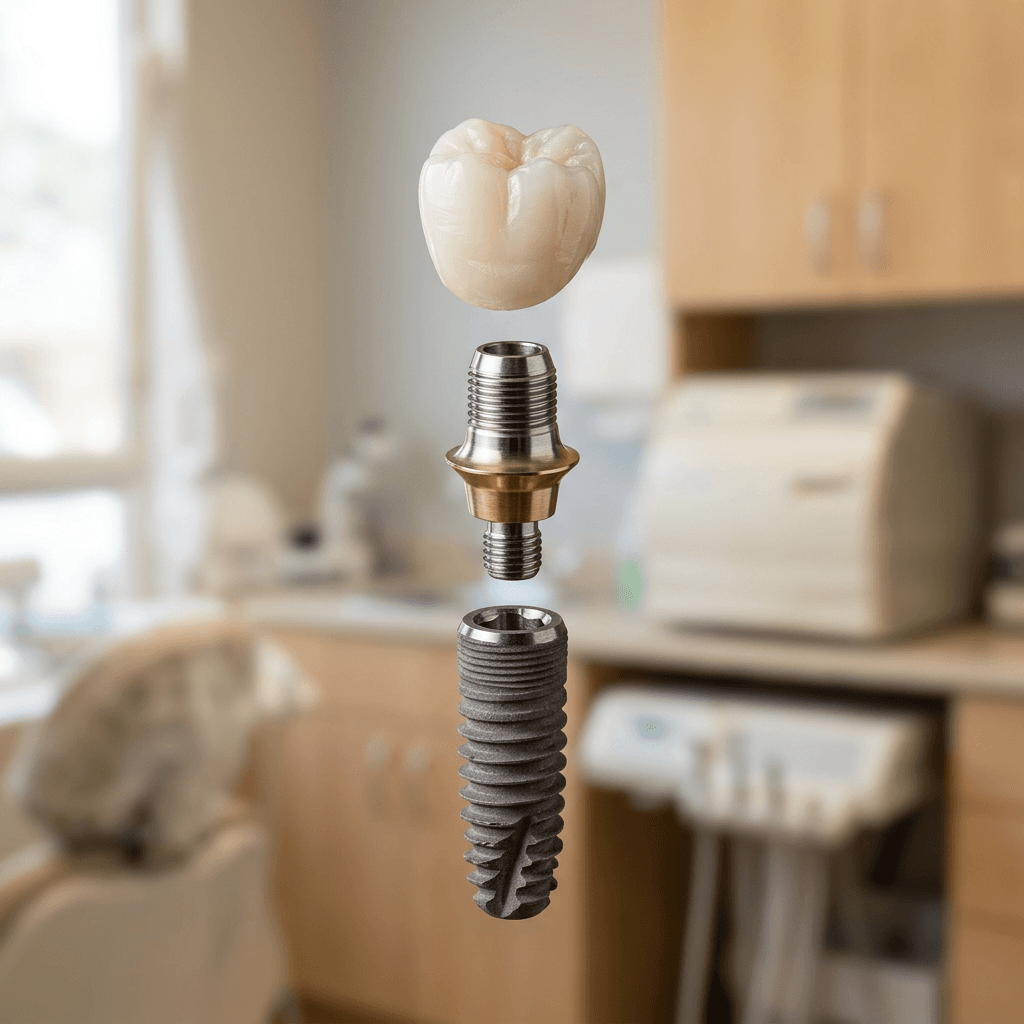
| Implant crown or bridge | Replaces one or more missing teeth without using adjacent teeth as direct supports. | Bone, gum health, medical factors, restoration space and maintenance. |
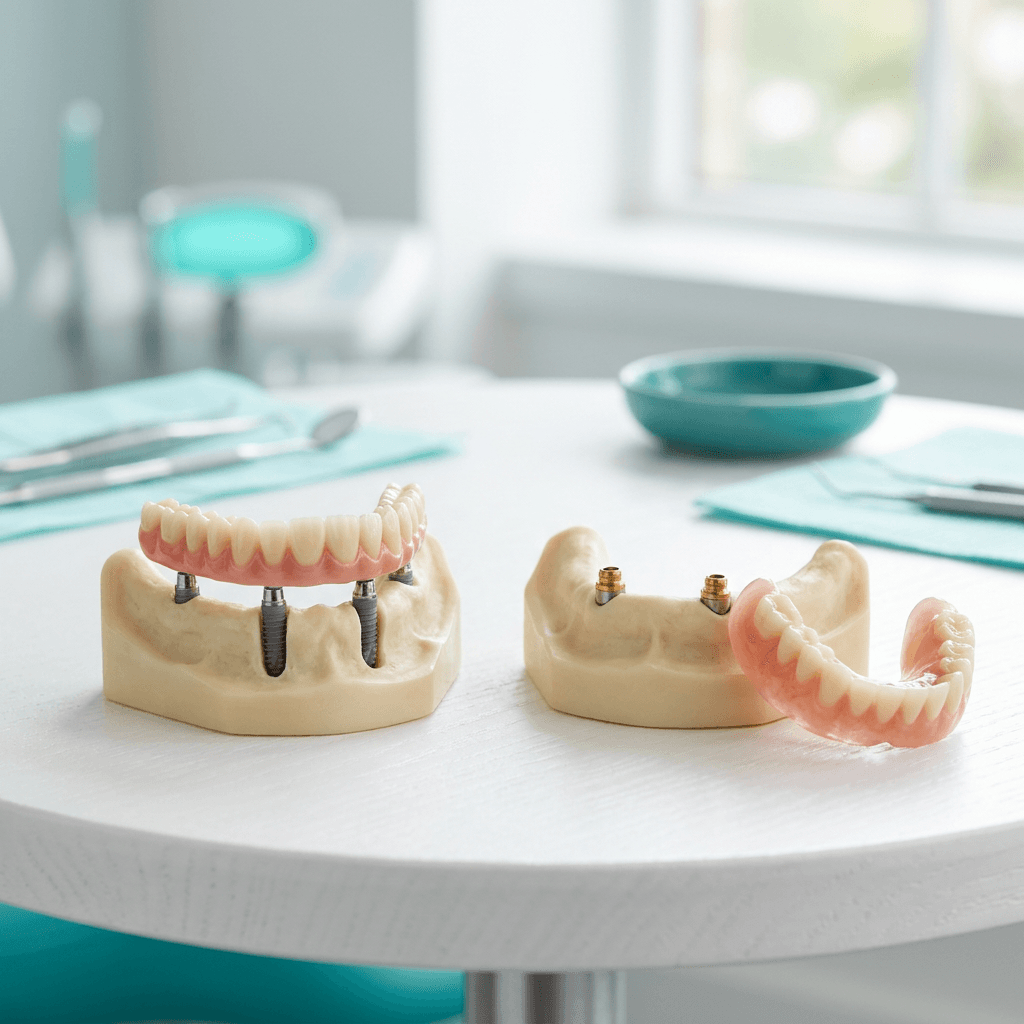
| Removable denture or fixed full arch | Replaces many or all teeth when adequate preservation is not possible or desired. | Which teeth truly cannot be retained, jaw anatomy, support needs and cleaning preferences. |
Why preserving a tooth is part of reconstruction
A mouth with multiple worn crowns, missing back teeth and bleeding gums may look overwhelming, yet those problems do not necessarily have the same cause or solution. One tooth may need periodontal treatment, another a new crown and a third extraction because a crack runs beneath the gum. A reconstruction plan should explain the prognosis tooth by tooth or region by region. Asking 'Why can't this tooth be retained?' is appropriate, especially before agreeing to remove an entire arch.
The National Institute of Dental and Craniofacial Research guide to gum disease describes how inflammation and loss of supporting tissues threaten teeth. Treating gum disease and improving home care can change what is maintainable. Likewise, restoring decayed teeth without addressing the cause of decay can lead to new problems around the margins of expensive work. Preserving teeth is not always possible, but it deserves an honest assessment rather than being omitted from an implant-focused proposal.
There are also reasons a tooth that looks intact might not be a good support: deep fracture, severe attachment loss or insufficient remaining structure. The evaluation should distinguish uncertainty from certainty and explain what additional information would change a recommendation. A second opinion is reasonable if the proposed treatment removes teeth you believe could still function.
The bite connects separate problems
Full-mouth planning looks at how the jaws close and how forces move across front and back teeth. Missing back teeth may shift chewing forces to already worn front teeth; an old bridge can conceal a support tooth that is breaking down. A new restoration that looks good in isolation may fail to address a bite that is uncomfortable or difficult to clean. Ask which bite findings matter, whether jaw-joint or muscle symptoms need separate assessment, and whether a temporary phase will help test proposed changes.
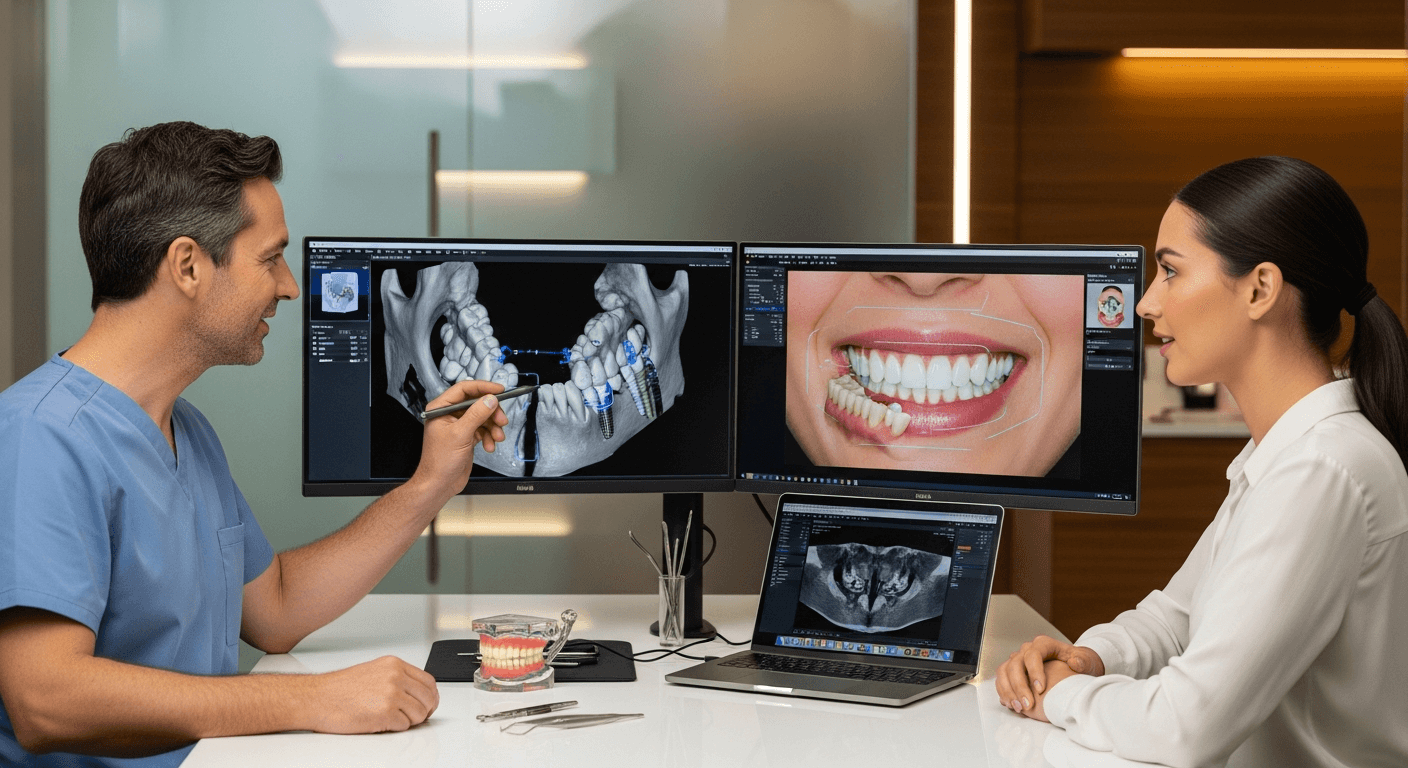
The team may gather photographs, examinations, dental records and imaging appropriate to the case. Imaging is particularly relevant when bone and implant placement are being considered, but a scan does not by itself decide whether a natural tooth should be extracted. Gum measurements, remaining tooth structure, prior treatment history and your ability to maintain a restoration all contribute to the decision.
A restorative clinician may coordinate the overall tooth and bite design, a periodontal clinician may address gum health, and an oral surgeon may handle extractions, grafts or implants as indicated. Ask who is responsible for the master plan and how the clinicians will exchange records. Dr. Antipov's board-certified oral and maxillofacial surgery background is relevant to surgical planning in Roseville; that does not imply that every restoration in a comprehensive plan is performed by one doctor.
Sequence care so the foundation comes first
The first phase often clarifies pain, infection and hygiene challenges. A clinician may treat active gum disease or decay, repair an urgent fracture or stabilize a temporary appliance before finalizing complex prosthetic work. If extraction is necessary, ask whether preserving the socket or grafting is recommended and why. If an implant is planned, healing and integration may separate surgery from the permanent restoration. A stable provisional can help some patients live with treatment while the final plan is refined, but its design is individualized.
The ADA overview of dental implants explains that implants require adequate bone and healthy tissues. For patients considering complete tooth replacement, our full-arch implant overview explains one option; it should be compared with maintaining sound teeth or using removable restorations where appropriate. Where grafting is proposed, ask what defect it addresses and whether it changes the timing or alternatives.
A plan spanning both jaws does not mean every procedure must happen simultaneously. Staging may protect function during healing and permit reassessment after disease control. Ask what temporary teeth or repairs will allow you to eat and speak between phases; do not accept a blanket promise that you will always have a fixed set of teeth regardless of clinical findings. The final timetable should name decision points, not simply an end date.
What 'full mouth' means on an estimate
An estimate for one arch is not a quote for both jaws. Likewise, a quote for implant placement does not necessarily include extractions, grafting, temporary teeth, abutments or the final bridge. Request an itemized plan by arch and by phase. If you are comparing two proposals, check whether each includes treatment of existing teeth, gum therapy, diagnostic records, surgery, the type of prosthesis and planned follow-up. Without those details, price comparisons can be misleading.
Ask what might change the estimate after disease control or surgery and how you would approve a change. Insurance coverage varies by policy and procedure; request appropriate codes or written details and confirm benefits directly with your insurer. If financing is being considered, read the written terms and total repayment amount. A reconstruction plan should fit your clinical situation and practical capacity for appointments and maintenance, not just your preferred monthly payment.
Consider the cost of keeping teeth alongside the cost of replacing them. A crown on a restorable tooth may require maintenance later, as can an implant bridge. A removable denture may need future adjustment as tissues change. None is permanent without care. Ask how routine professional visits, cleaning aids, replacement parts and potential repairs are handled for each option.
Questions that make a California consultation more productive
Bring a current medication list, previous dental records if available and a short account of what you cannot comfortably do today: chew on one side, smile without embarrassment or wear a denture without soreness. State your priorities openly. Some patients value a fixed restoration most; others prioritize keeping natural teeth, minimizing surgery or limiting trips from elsewhere in Northern California. Those values can change which reasonable alternative is preferred.
Ask to see a tooth-by-tooth or region-by-region explanation, the proposed sequence, and who will carry out each phase. Our article on reconstruction for failing dental work discusses the particular challenge of repeated repairs. The bone-grafting guide helps when lost bone complicates replacement. Neither guide substitutes for a prognosis of your own teeth.
Before deciding, ask: Which teeth can we preserve and with what expected maintenance? Why is each extraction recommended? What alternatives have been ruled out and on what evidence? Who will manage changes to the bite and who will be available if a provisional fails? A written answer makes it easier to seek a second opinion and compare plans fairly. Reconstruction succeeds as a process of coordinated decisions, not as a single procedure with one advertised label.
Frequently Asked Questions
Does full-mouth reconstruction mean all my teeth must be removed?
No. It describes coordinated treatment across the mouth. Some teeth may be preserved with gum treatment or restorations; others may not be restorable. Ask for the reasoning for each proposed extraction.
Is full-mouth reconstruction the same as full-mouth implants?
No. Complete implant replacement is one possible approach. Reconstruction can include preserving teeth, crowns, bridges, periodontal care, dentures and implants in different combinations.
Who coordinates a plan involving surgery and new crowns?
The clinicians should identify a lead planner and explain responsibilities for the bite, surgery, prosthetic design and follow-up. Ask how records and changes to the plan will be shared.
Can gum disease be treated before deciding which teeth to replace?
Often disease-control treatment helps clarify prognosis and protects future restorations. Severely compromised teeth may still require removal; only an examination can distinguish those situations.
Will I have temporary teeth while work is staged?
Temporary restorations can often be planned, but their type and whether they can be fixed depend on the condition of the remaining teeth, surgery and healing. Request a specific interim plan.
How long does a California full-mouth plan take?
It varies widely. Disease control, graft healing, implant integration and prosthetic fitting may require separate stages. Your team should explain what determines each interval and when the plan will be reviewed.
What should I ask about an estimate for both jaws?
Confirm whether both arches are included, which natural teeth will be treated, whether teeth are removable or fixed, and whether diagnostics, temporaries, grafts, final prostheses and follow-up are included.
Should I get a second opinion before removing several teeth?
If the prognosis or alternatives are unclear, a second opinion is reasonable. Bring the written plan and available records and ask the second clinician to explain what could be preserved and why.
Start with a plan for the teeth you have
Discuss complex surgical and implant questions with Dr. Antipov's Roseville team, and ask how preservation, restorative care and any replacement would be coordinated.
Book a Consultation