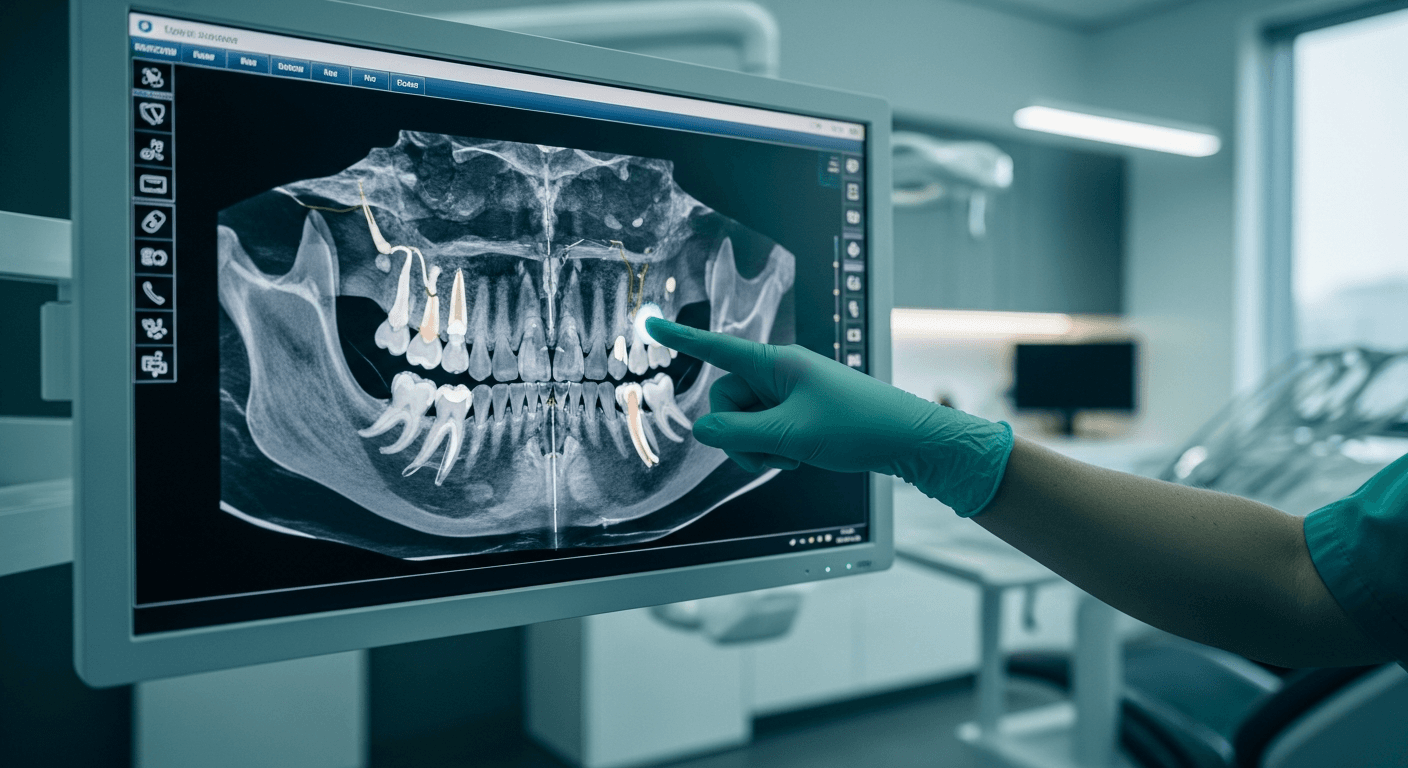
Full-Mouth Reconstruction for Failed Dental Work: Steps
Medically reviewed by Dr. Alexander V. Antipov, DDS — Board-Certified Oral & Maxillofacial Surgeon · Diplomate, American Board of Oral & Maxillofacial Surgery (ABOMS) · California Dental License #50724
Full-mouth reconstruction rebuilds an entire mouth of failing dental work with one coordinated plan instead of fixing a tooth at a time, explains Dr. Alexander Antipov, a board-certified oral and maxillofacial surgeon in Roseville, CA. Some patients reach a point where years of failing crowns, old bridges, cracked teeth, and worn dental work add up and piecemeal repairs no longer make sense. Reconstruction takes a step back and treats the mouth as one system.
This article is for general education — consult a qualified oral surgeon for a personalized recommendation.
When One Tooth at a Time Is Not Enough
Piecemeal repairs can become a cycle: a crown fails because the bite is off, then a bridge fails because a support tooth breaks. Each fix treats a symptom, not the whole picture. Full-mouth reconstruction is considered when a patient has:
- — Multiple failing or missing teeth
- — Widespread decay or old dental work breaking down
- — A collapsed or painful bite
- — A combination of cosmetic and functional problems
| Component | Purpose |
|---|---|
| Removing teeth that cannot be saved | Clear failing teeth before rebuilding |
| Bone grafting | Rebuild lost bone volume |
| Dental implants | Replace missing teeth |
| Full-arch restorations | Restore an entire arch |
| New crowns and a balanced bite | Restore function and appearance |
How a Complex Case Is Planned
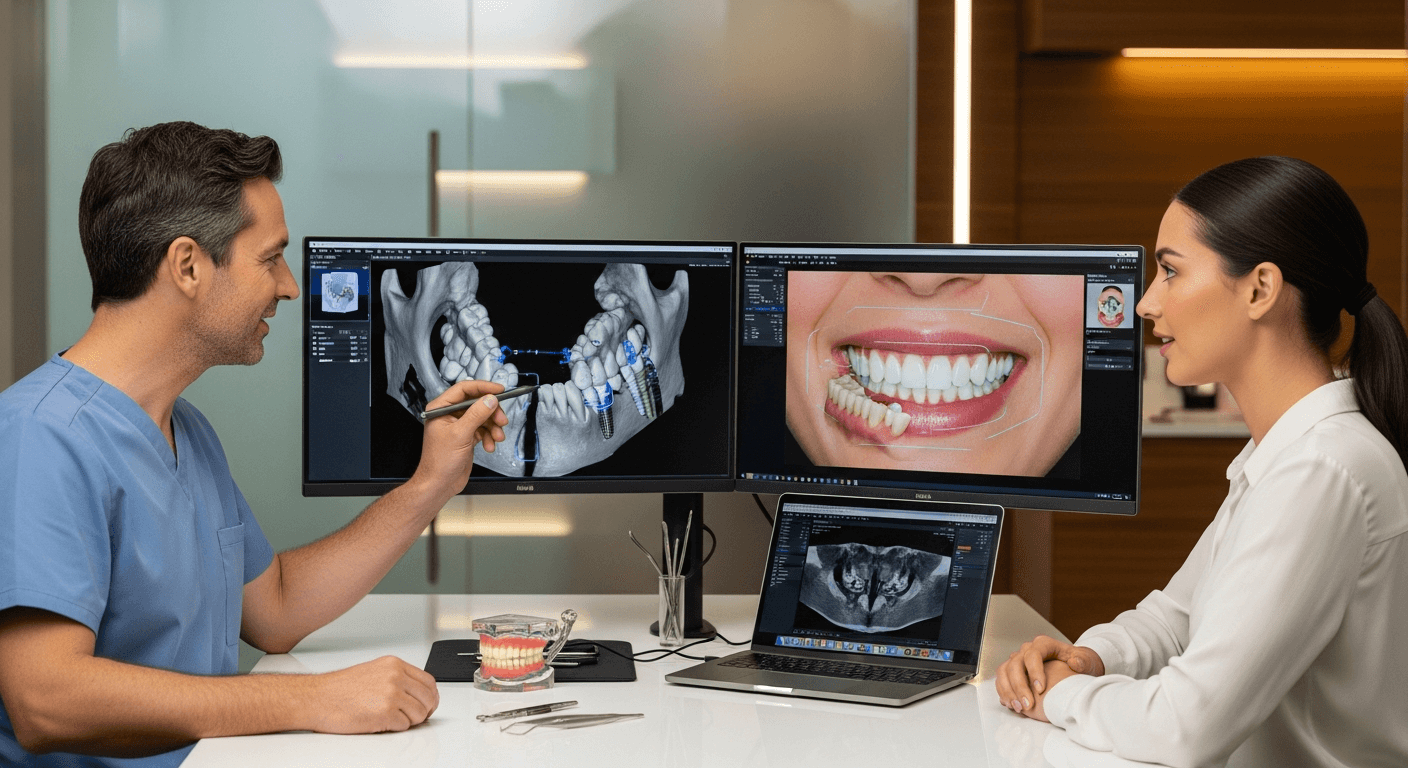
Reconstruction succeeds or fails on planning. Before any treatment, a complete picture of the teeth, gums, bone, and bite is gathered — including 3D imaging, a detailed bite and jaw-joint assessment, a staged treatment sequence, and a clear preview of the final result. You can see how imaging guides accuracy in our guide to guided implant surgery.
What Reconstruction Can Include
Because every mouth is different, a reconstruction combines the treatments each case needs. Common components are:
- — Removing teeth that cannot be saved
- — Bone grafting to rebuild lost volume
- — Dental implants to replace missing teeth
- — Full-arch restorations such as full-arch implants
- — New crowns and a balanced bite
What to Expect During Treatment
Reconstruction is a journey, not a single appointment. Treatment is staged over several months so the mouth heals properly at each phase, and temporaries keep patients comfortable and confident throughout. The result is a stable, functional bite and a natural-looking smile built to last.
Frequently Asked Questions
How long does full-mouth reconstruction take?
Most cases take several months from start to final restoration, depending on grafting and healing needs.
Who needs full-mouth reconstruction?
It is considered when a patient has multiple failing or missing teeth, widespread decay or old work breaking down, a collapsed or painful bite, or a combination of cosmetic and functional problems.
Why treat the whole mouth at once?
Piecemeal repairs can become a cycle where each fix treats a symptom, not the whole picture. Treating the mouth as one system breaks that cycle.
How is a complex case planned?
Planning comes before any treatment and includes 3D imaging, a detailed bite and jaw-joint assessment, a staged sequence, and a preview of the final result.
Will I have teeth during the process?
Yes. Temporary teeth are part of the plan, so you are never without a smile.
Can you rebuild work that has failed repeatedly?
Yes. Breaking the cycle of repeat failures is exactly what a coordinated reconstruction is designed to do.
Ready to stop the cycle of repairs?
Dr. Antipov plans the whole mouth as one system for results that last. Book a consultation at our Roseville practice to map your reconstruction.
Book a Free Consultation