Implant Revision After Bone Loss: Grafting Options
Medically reviewed by Dr. Alexander V. Antipov, DDS — Board-Certified Oral & Maxillofacial Surgeon · Diplomate, American Board of Oral & Maxillofacial Surgery (ABOMS) · California Dental License #50724
After bone loss around a failed implant, the bone can usually be rebuilt so a new implant will hold, explains Dr. Alexander Antipov, a board-certified oral and maxillofacial surgeon in Roseville, CA. When an implant fails it often leaves behind less bone than it started with, because infection, looseness, and inflammation all eat away at the bone that holds an implant in place. Before a new implant can succeed, that bone usually has to be rebuilt — and rebuilding it well is the foundation of a successful revision.
This article is for general education — consult a qualified oral surgeon for a personalized recommendation.
Why Bone Loss Happens After Failure
Bone and implant depend on each other — the implant gives the bone something to support, and the bone gives the implant stability. When that relationship breaks down, bone is lost. Common drivers include infection around the implant, an implant that loosened and moved, long-term overload from a poor bite, or a site left empty too long after removal. For more on these causes, see our guide to dental implant complications.
| Rebuilding Method | When It's Used |
|---|---|
| Bone grafting | To rebuild lost width and height |
| Guided regeneration | Uses protective membranes to guide new bone |
| Sinus lift | For upper back teeth |
| Zygomatic implants | When grafting is not enough |
Measuring the Bone First
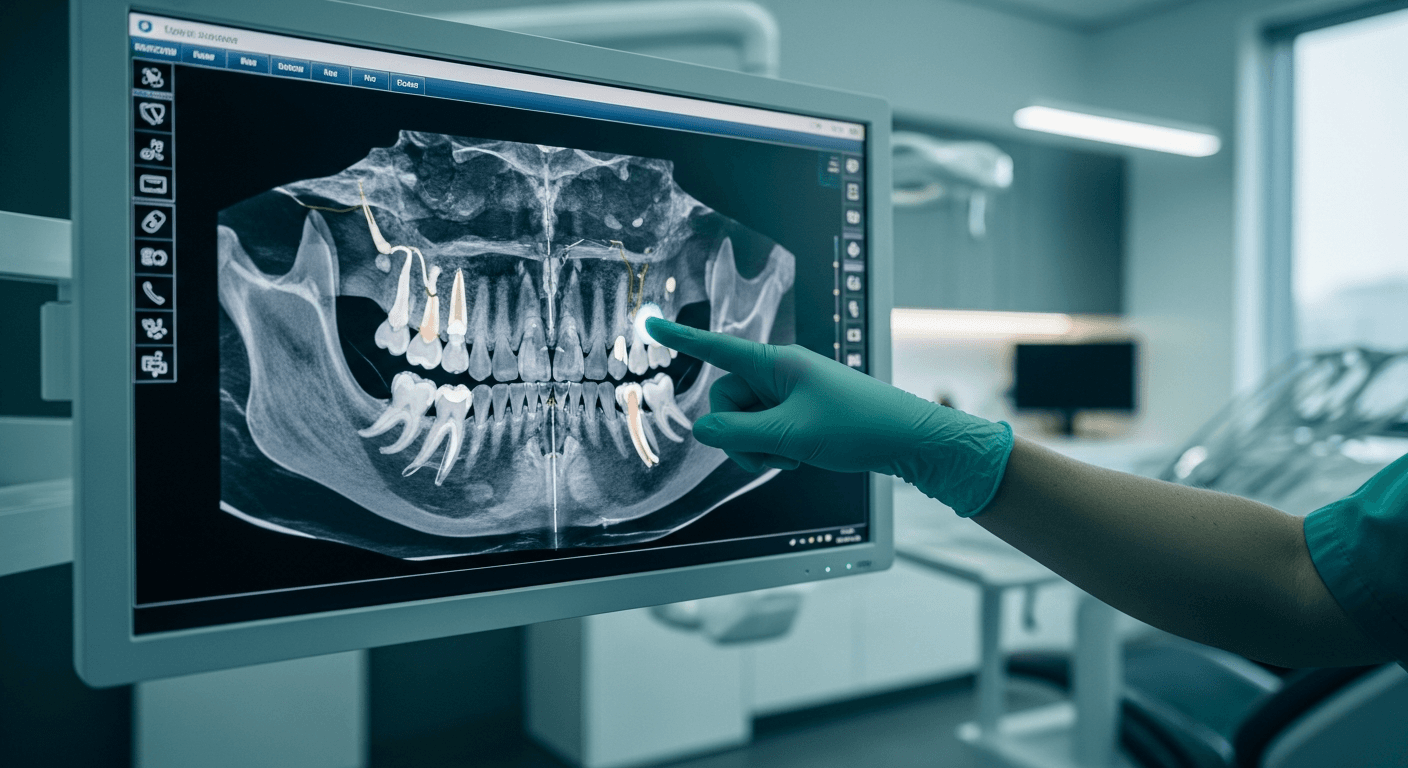
Revision planning starts with accurate measurement. A 3D scan shows exactly how much bone is left, its shape, and where nearby structures such as nerves and sinuses sit. This tells the surgeon whether bone can be rebuilt in one stage or whether grafting must come first. Guessing leads to repeat failure, so measurement matters.
Rebuilding the Bone
There are several ways to restore lost bone, chosen to fit the size and location of the defect:
- — Bone grafting to rebuild width and height
- — Guided regeneration using protective membranes
- — A sinus lift for upper back teeth
- — Zygomatic implants when grafting is not enough
Placing the New Implant
Once the bone has healed and matured, a new implant is placed into a stable, healthy site. The revised plan often uses a different size, position, or angle to avoid repeating the original problem. Healing for grafted sites can take several months, but the payoff is a strong foundation that supports the implant for the long term.
Frequently Asked Questions
Can an implant be placed where bone was lost?
Often yes, after the bone is rebuilt. Grafting restores the volume needed to hold a new implant.
What causes bone loss around an implant?
Common drivers include infection around the implant, an implant that loosened and moved, long-term overload from a poor bite, or a site left empty too long after removal.
How is bone measured before revision?
Revision planning starts with a 3D scan that shows exactly how much bone is left, its shape, and where nearby nerves and sinuses sit.
How long does grafting take to heal?
It varies by case, but many grafts mature over roughly three to six months before an implant is placed.
How is a repeat failure avoided?
A new implant is placed only after the rebuilt bone has healed, and the revised plan changes the size, position, or angle to avoid repeating the original problem.
Is revision after bone loss reliable?
When the cause is corrected and bone is properly rebuilt, replacement implants have high success rates.
Lost bone around a failed implant?
Dr. Antipov rebuilds bone and re-places implants on a solid foundation. Book a consultation at our Roseville practice to see what is possible.
Book a Free Consultation