Zygomatic Implants vs Bone Grafting for Severe Bone Loss
Medically reviewed by Dr. Alexander V. Antipov, DDS— Board-Certified Oral & Maxillofacial Surgeon · Diplomate, American Board of Oral & Maxillofacial Surgery (ABOMS) · California Dental License #50724
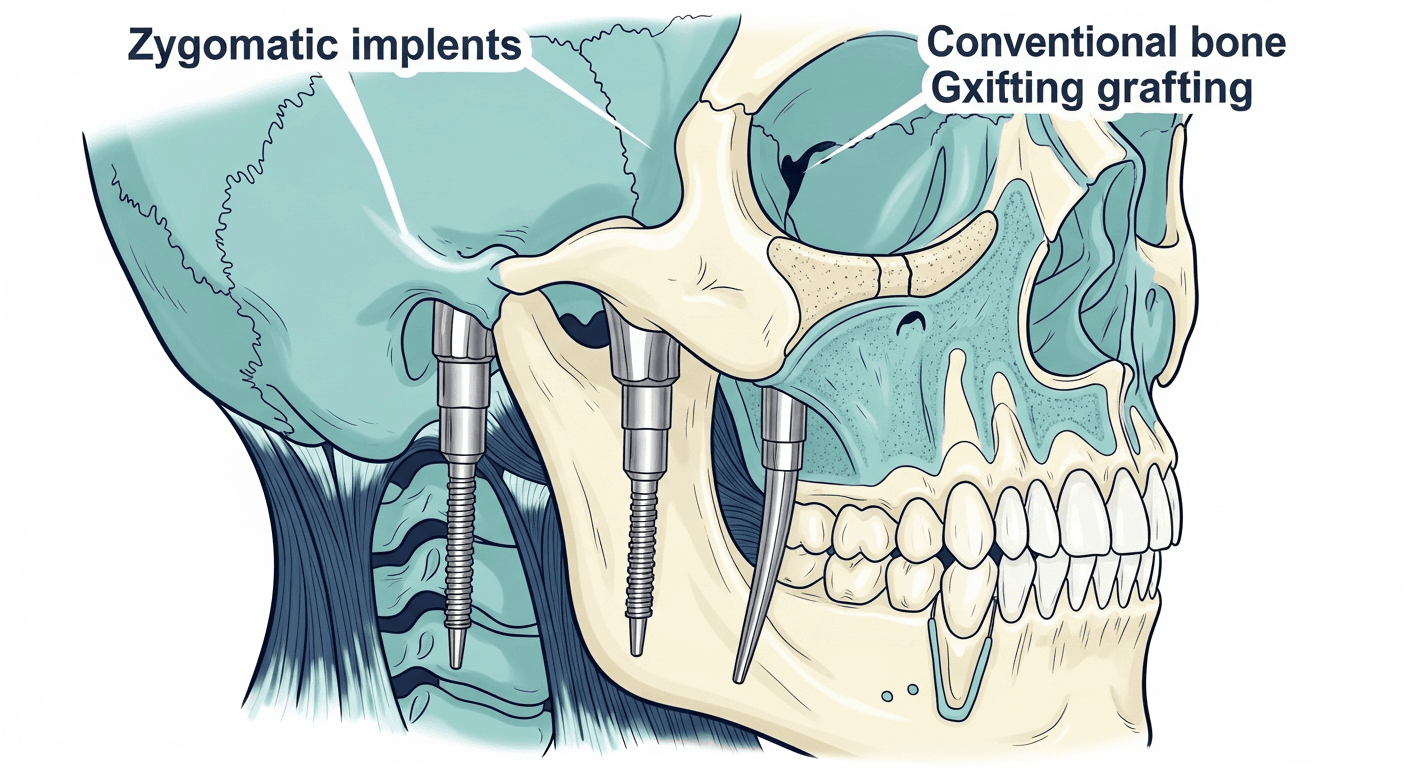
Zygomatic implants and bone grafting are two approaches for restoring teeth after severe jawbone loss: zygomatic implants anchor in the cheekbone for a faster path to fixed teeth, while bone grafting rebuilds the jaw before implants are placed. At the practice of Dr. Alexander Antipov, a board-certified oral & maxillofacial surgeon in Roseville, CA, both are used depending on the patient’s anatomy, health history, and goals.
This article is for general education and is not a substitute for a personalized evaluation by a qualified oral surgeon.
Understanding Severe Bone Loss
Severe bone loss in the jaw can occur due to tooth loss, periodontal disease, long-term denture wear, trauma, or other health factors. This can make it difficult to place conventional implants in the upper jaw because there may not be enough bone to stabilize them. A detailed evaluation — including imaging like 3D scans — helps determine how much bone remains and which approach is most predictable.
| Factor | Zygomatic Implants | Bone Grafting |
|---|---|---|
| Approach | Anchors in the cheekbone | Rebuilds bone in the jaw |
| Timeline | Generally faster, sometimes earlier restoration | Longer healing before implants are placed |
| Best suited for | Severe upper-jaw bone loss | Mild to moderate or localized bone loss |
| Grafting needed | Often reduced or avoided | Grafting is the procedure itself |
What Are Zygomatic Implants?
Zygomatic implants are specialized dental implants anchored in the zygomatic bone (cheekbone) rather than the upper jaw. This technique can provide stability for a fixed prosthesis in patients with significant bone loss in the upper jaw, often reducing or eliminating the need for extensive grafting.
Benefits of zygomatic implants:
- — Potentially faster timeline: In many cases, patients can move toward restoration sooner.
- — Reduced need for grafting: May avoid major sinus and bone graft procedures in severe cases.
- — Stable support: Designed for situations where conventional upper implants may not be possible.
What Is Bone Grafting?
Bone grafting is a surgical procedure that places graft material in areas with insufficient bone to rebuild volume and create a stable foundation for implants. Grafting can be done with the patient’s own bone, donor bone, animal-derived grafts, or synthetic materials. Healing time is usually required before implants can be placed.
Types of bone grafting:
- — Autografts: Bone harvested from the patient.
- — Allografts: Donor bone material.
- — Xenografts: Bone material from another species (often bovine).
- — Synthetic grafts: Biocompatible materials that support bone growth.
Benefits of bone grafting:
- — Rebuilds bone structure: Creates the foundation needed for standard implant placement.
- — Versatile: Useful for mild to moderate loss and many localized defects.
- — Long-term foundation: Successful grafting can support implants for many years.
Comparing Zygomatic Implants vs Bone Grafting
| Factor | Zygomatic Implants | Bone Grafting |
|---|---|---|
| Procedure Time | Often completed in fewer stages for eligible patients, sometimes allowing earlier restoration. | Commonly requires multiple appointments and a healing phase before implant placement. |
| Recovery Time | Recovery can be quicker to function, although it remains a surgical procedure and healing varies. | Healing may take several months, depending on graft type and extent. |
| Overall Cost | May have a higher upfront cost but can reduce added costs from multiple grafting procedures in severe cases. | The initial graft may be less expensive, but overall cost can rise if multiple grafts and staged surgeries are needed. |
Success rates:Both approaches can be successful when planned properly. Your anatomy, overall health, and the provider’s expertise play a major role in outcomes. Advanced imaging and experienced surgical planning are key for either option.
Who Is a Candidate for Each Procedure?
Determining the most suitable approach requires a thorough evaluation by a dental professional. In general:
Candidates for zygomatic implants:
- — Patients with severe upper jaw bone loss.
- — Individuals who want a faster route to a fixed restoration.
- — Those who prefer to avoid extensive grafting where possible.
Candidates for bone grafting:
- — Patients with mild to moderate bone loss (or localized defects).
- — Individuals who prefer a conventional staged approach.
- — Those whose anatomy is not suitable for zygomatic implants.
The Consultation Process
Before deciding between zygomatic implants and bone grafting, a comprehensive consultation is essential. This usually includes:
- — Dental examination to assess gum health and overall oral condition.
- — Imaging tests (X-rays or CBCT scans) to evaluate bone quality and anatomy.
- — Treatment discussion tailored to your goals, timeline, and preferences.
If you’re exploring advanced implant options, you can learn more about full-arch restoration and specialist evaluation.
Frequently Asked Questions
What are zygomatic implants?
Zygomatic implants are dental implants anchored in the zygomatic bone, providing support for prosthetic teeth. They are particularly useful for patients with severe upper jaw bone loss.
How does bone grafting work?
Bone grafting involves transplanting bone tissue to areas with insufficient bone. This creates a stable foundation for future dental implants, typically requiring several months to heal.
Which option is faster, zygomatic implants or bone grafting?
Zygomatic implants are generally faster, often allowing for immediate or earlier loading of dental prosthetics, while bone grafting typically requires a longer healing time.
Are there risks associated with these procedures?
As with any surgical procedure, both zygomatic implants and bone grafting carry risks, including infection and implant complications. A consultation and careful planning can help mitigate these risks.
How do I know which option is right for me?
The best option depends on your specific dental condition, health, and preferences. A thorough evaluation by your dental professional can help determine the most suitable treatment.
What should I expect during recovery?
Recovery experiences can vary. Zygomatic implants often allow for a quicker return to normal activities, while bone grafting requires more time for healing before implants can be placed.
Sources & References
Peer-reviewed and authoritative references supporting the information in this article.

Dr. Alexander V. Antipov
Board-certified oral and maxillofacial surgeon specializing in dental implants, full-arch restoration, zygomatic implants, and corrective jaw surgery. Serving patients throughout Northern California and beyond.
Find the Right Solution for Your Bone Loss
The best next step is a specialist consultation to review your anatomy, timeline, and treatment goals. The consultation is complimentary, and a patient coordinator will call back within 24 hours to explain what to prepare.