What to Eat After All-on-4 Surgery: A Week-by-Week Recovery Diet Guide
Medically reviewed by Dr. Alexander V. Antipov, DDS — Board-Certified Oral & Maxillofacial Surgeon · Diplomate, American Board of Oral & Maxillofacial Surgery (ABOMS) · California Dental License #50724
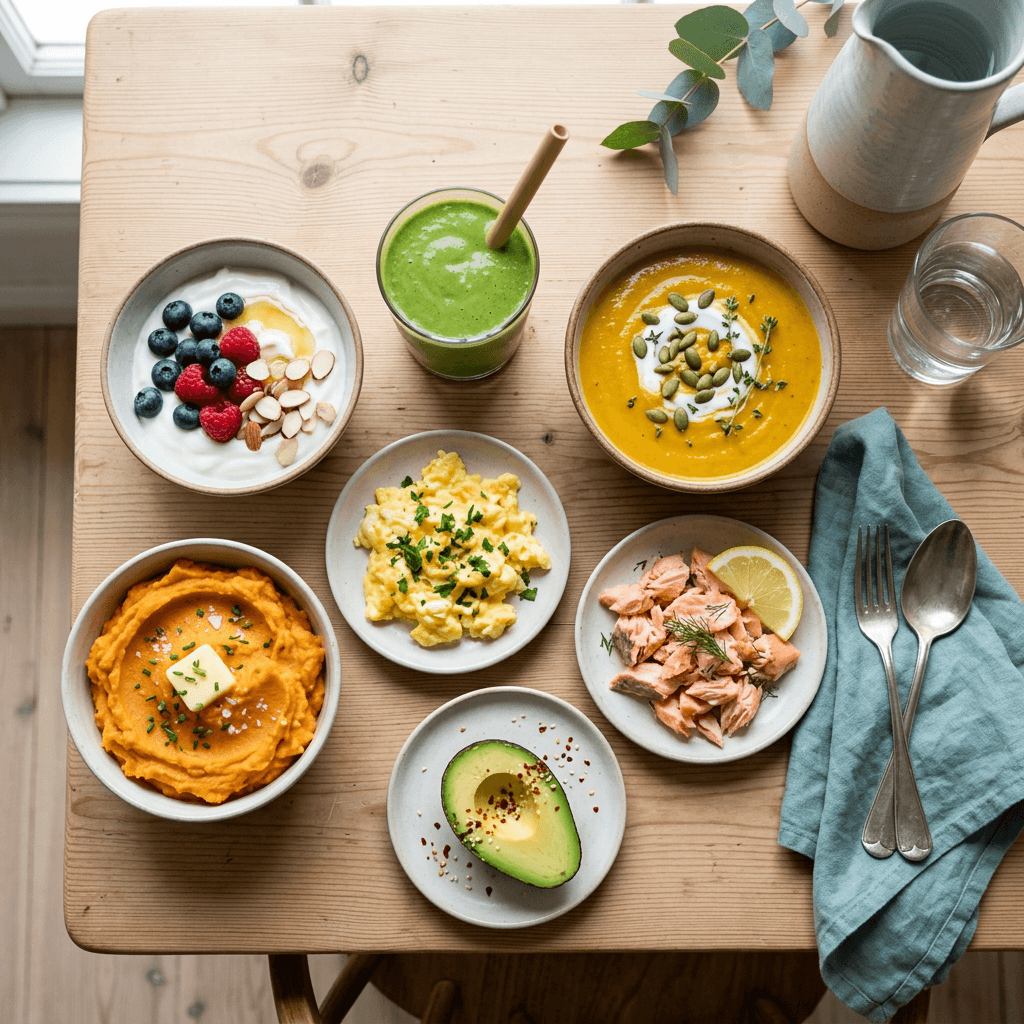
After All-on-4 surgery, plan on cool liquids and smooth foods for the first 72 hours, fork-tender soft foods through about week two, and a careful no-hard-chewing diet until your final bridge is placed — usually three to six months later, explains Dr. Alexander Antipov, a board-certified oral and maxillofacial surgeon in Roseville, CA. The goal is simple: keep protein and calories high enough for tissue repair while keeping chewing force low enough that the implants can fuse undisturbed with your jawbone. This guide walks through each phase, the foods that work best, the ones to avoid, and how to tell when it is time to advance.
This article is for general education. Your surgeon's written post-operative instructions take priority over any general guide; healing speed, implant stability, medical conditions, and dietary needs vary from patient to patient.
Recovery Diet at a Glance
Timelines are typical, not fixed. Advance only when your surgical team confirms you are ready:
| Phase | Texture | Examples | Avoid |
|---|---|---|---|
| Days 1–3 | Cool liquids and smooth purees, no straws | Protein shakes, yogurt, blended soups (lukewarm), applesauce | Hot foods, straws, alcohol, carbonation, seeds |
| Days 4–14 | Fork-tender, no chewing effort | Scrambled eggs, mashed potatoes, oatmeal, flaked fish, cottage cheese | Bread crusts, rice, nuts, chips, raw vegetables |
| Weeks 2–6 | Soft, cut small, chew gently | Soft pasta, ground meat in sauce, ripe banana, steamed vegetables | Steak, apples, crusty bread, sticky candy, ice |
| Until final bridge | Soft-to-medium; no hard or sticky foods | Tender chicken, soft fruits, cooked grains | Anything hard, sticky, or requiring tearing |
Why Diet Matters So Much After All-on-4
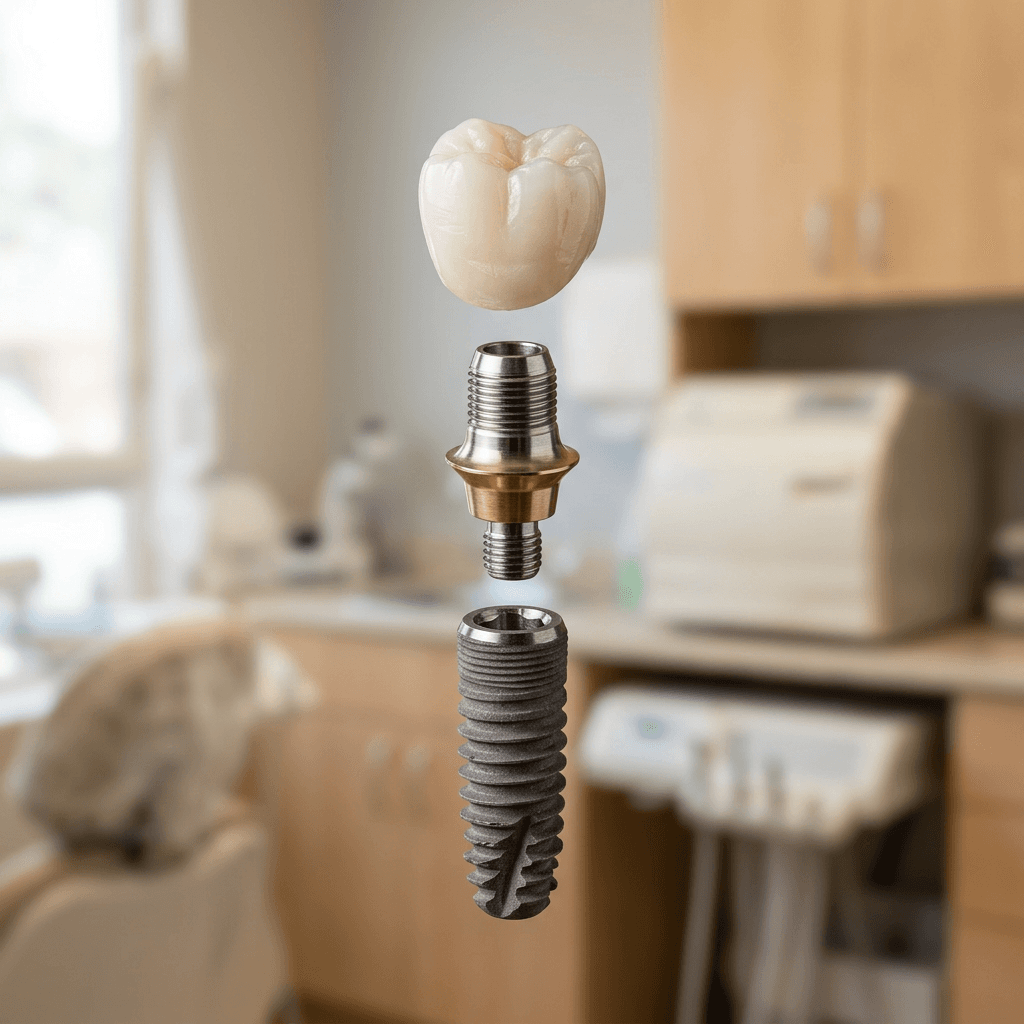
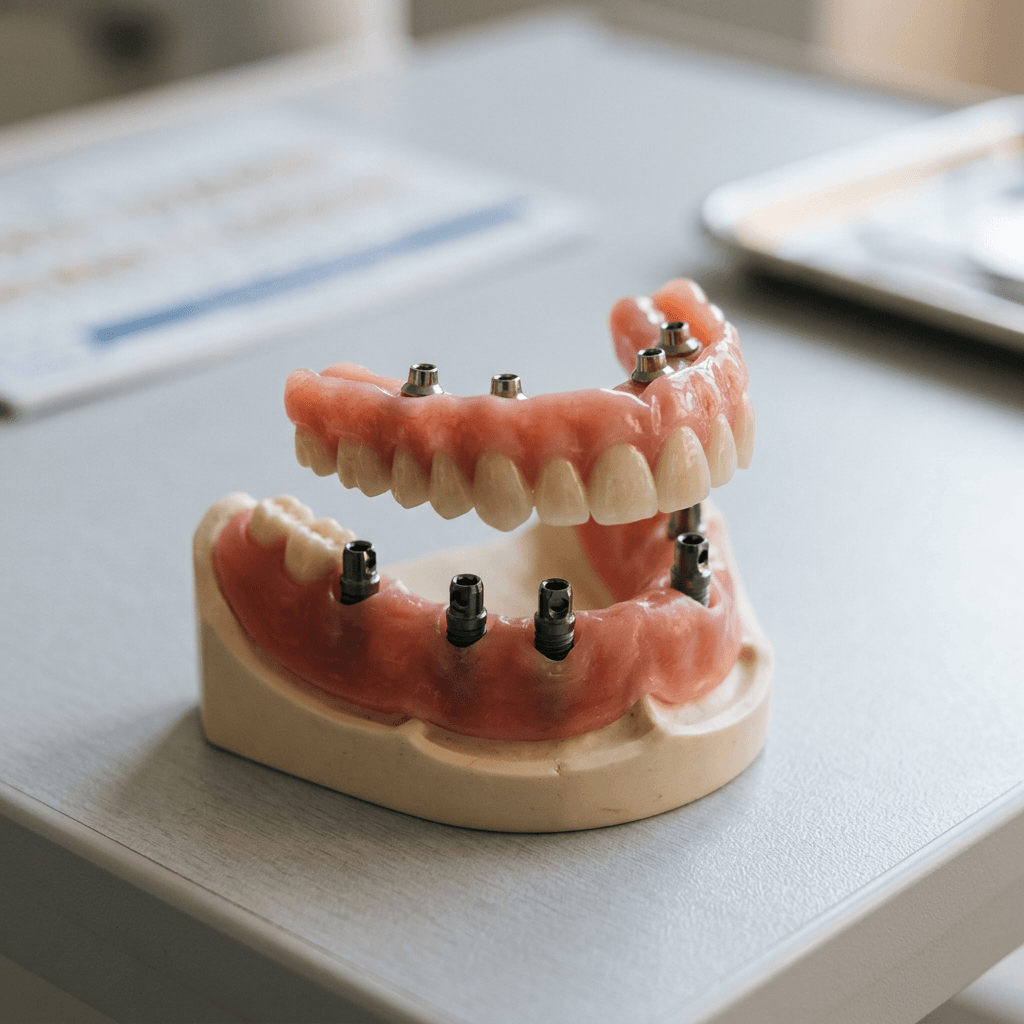
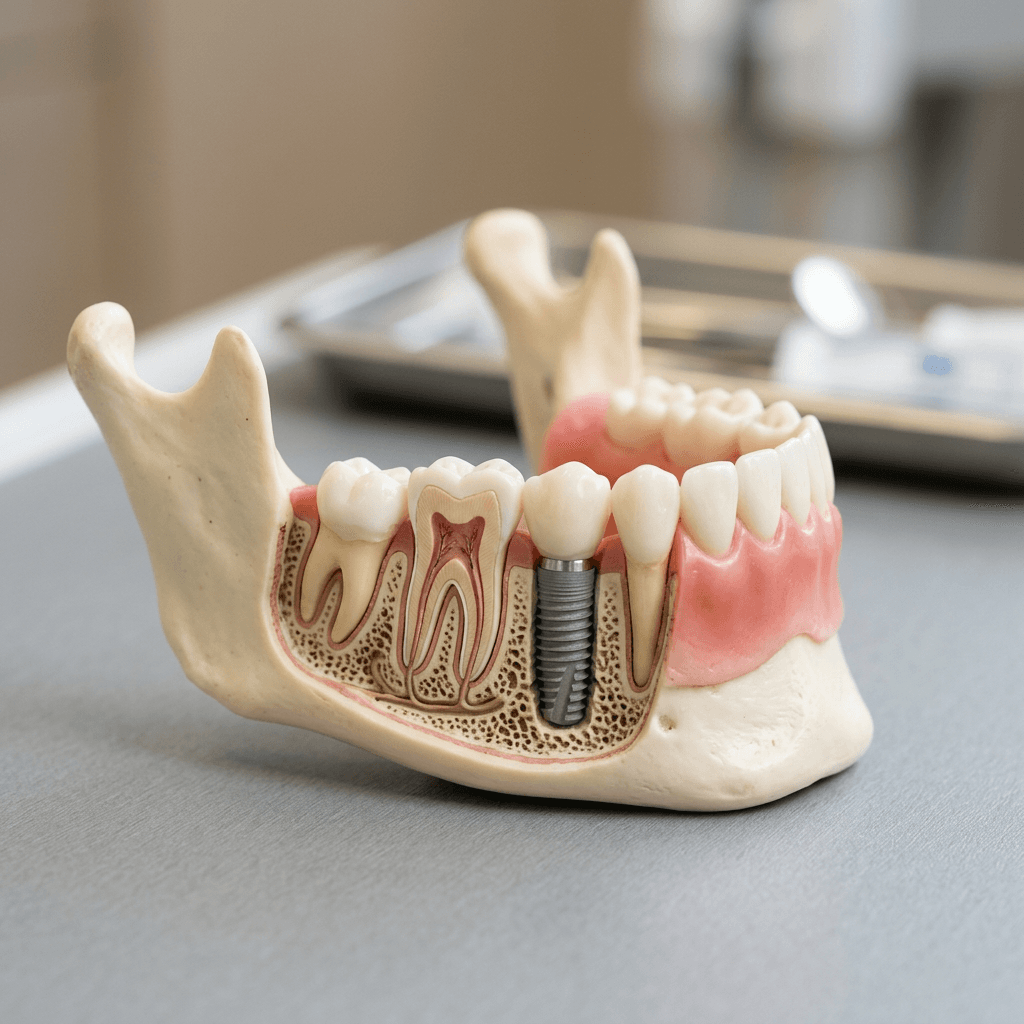
Implants stay in place long term because bone grows onto their surface — a process called osseointegration, described in the National Library of Medicine's overview of dental implants. During the first several weeks the implants are held by mechanical grip alone, and small repeated movements from hard chewing can interfere with bone attachment. A fixed provisional bridge lets qualifying patients leave with teeth the same day, but those teeth are for appearance and light function, not for steak.
Nutrition works in the other direction: protein, vitamin C, zinc, and adequate calories are the raw materials for gum healing and bone remodeling. Patients who under-eat because “everything is hard to chew” often heal more slowly and feel worse than they need to.
Days 1–3: Protect the Clot, Stay Hydrated, Keep It Cool
The first 72 hours are about protecting the surgical sites and controlling swelling. Keep everything smooth, cool or lukewarm, and effortless:
- — Protein shakes or meal-replacement drinks sipped from a cup — never through a straw, because suction can dislodge clots.
- — Plain or Greek yogurt, kefir, and smooth puddings for protein without chewing.
- — Blended vegetable soups and bone broth, cooled to lukewarm; heat increases bleeding and swelling.
- — Seedless fruit smoothies and applesauce (avoid berries with small seeds that can lodge in surgical sites).
- — Plenty of water. Skip alcohol, carbonated drinks, and very hot coffee for the first few days.
Days 4–14: The Fork-Tender Rule
Once swelling starts to settle, move to foods you can mash with the side of a fork without effort. Aim for protein at every meal: scrambled or soft-boiled eggs, cottage cheese, flaked salmon or cod, well-cooked lentils, silken tofu, and finely ground meat in gravy or sauce. Round out meals with mashed potatoes or sweet potatoes, oatmeal, cream of wheat, ripe avocado, and very soft, well-cooked vegetables.
Take small bites, chew toward the center of your mouth rather than the front teeth of the provisional bridge, and rinse gently after eating as your surgeon instructs. If you notice increasing pain, a bad taste, or swelling that gets worse rather than better while advancing your diet, review our guide to normal healing versus infection and call the office.
Weeks 2–6: The Quiet Phase That Matters Most
Many patients feel nearly normal by week two, and that is when diet mistakes tend to happen. Bone remodeling around the implants is still in progress and the implants' stability can briefly dip during this window before new bone matures. Soft foods you chew gently are fine — pasta, soft rice dishes, ground meats, ripe fruit, steamed vegetables cut small — but hard, crunchy, and sticky foods still are not.
The provisional bridge is generally an acrylic prosthesis designed for light function; biting into hard foods can fracture it or transmit excessive force to the implants. The full healing sequence, including when the final bridge is typically placed, is covered in our All-on-4 recovery timeline.
Foods to Avoid Until Your Final Bridge
Until your surgeon confirms integration and delivers the final bridge, keep these off the menu:
- — Hard foods: nuts, hard candy, ice, popcorn kernels, raw carrots and apples, crusty bread, tortilla chips.
- — Sticky foods: caramel, taffy, gum, dried fruit — they pull on the provisional and are hard to clean away.
- — Foods that require tearing with the front teeth: whole sandwiches, corn on the cob, ribs, steak.
- — Tiny seeds and grains that lodge around healing tissue: sesame, poppy, quinoa, raspberries in the first two weeks.
- — Tobacco and alcohol, which impair blood flow and healing — not foods, but the two largest avoidable risks.
Nutrients That Support Healing
Protein is the priority — roughly a palm-sized portion or its equivalent at each meal, which shakes and dairy can supply when solid protein is difficult. Vitamin C (smoothies, citrus juice diluted to avoid stinging, pureed peppers), zinc (yogurt, eggs, lentils, ground beef), calcium and vitamin D (dairy, fortified alternatives), and omega-3 fats (salmon, ground flaxseed blended into oatmeal) all support tissue repair.
Patients with diabetes should keep blood glucose well controlled during healing, and anyone on a restricted diet for medical reasons should tell the surgical team before surgery so the plan can be adapted. Daily cleaning matters as much as diet during this period; see our dental implant aftercare guide for how to keep the provisional bridge clean.
When Can You Eat Normally Again?
Most patients return to a broad, satisfying diet once the final bridge is placed — commonly three to six months after surgery, sometimes longer when grafting was needed. Even then, a zirconia or acrylic bridge is not indestructible: cut very hard foods, avoid chewing ice, and keep professional maintenance visits. Dr. Antipov's practice is located only in Roseville, and patients from across the Sacramento region travel here for treatment; if you are considering full-arch care, learn more about full-arch implants at our Roseville practice.
Frequently Asked Questions
What can I eat the first day after All-on-4 surgery?
Cool or lukewarm liquids and smooth foods only: protein shakes, yogurt, blended soups, applesauce, and smoothies without seeds. Sip from a cup rather than a straw, and avoid hot, carbonated, or alcoholic drinks.
How long do I have to eat soft foods after All-on-4?
Plan on fork-tender soft foods for roughly the first two weeks and a careful soft-to-medium diet with no hard or sticky foods until your final bridge is placed, typically three to six months after surgery. Your surgeon will confirm when to advance.
Can I eat with my temporary teeth right after surgery?
The provisional bridge is designed for appearance and light function while the implants integrate. It can handle soft foods but not hard, crunchy, or sticky ones; heavy biting can fracture the provisional or disturb healing implants.
Why can't I use a straw after implant surgery?
Suction can dislodge the blood clots protecting the surgical sites, increasing bleeding and the risk of delayed healing. Drink from a cup or use a spoon for the first several days, or longer if your surgeon advises.
What foods should I avoid after All-on-4 surgery?
Avoid hard foods such as nuts, ice, chips, raw carrots, and crusty bread; sticky foods like caramel and gum; anything that must be torn with the front teeth; small seeds during early healing; and tobacco and alcohol.
Is coffee allowed after All-on-4 surgery?
Very hot drinks should be avoided for the first few days because heat can increase bleeding and swelling. Lukewarm coffee is generally acceptable after that, but follow your surgeon's specific instructions.
How much protein do I need while healing?
Aim for a protein source at every meal. Shakes, Greek yogurt, cottage cheese, eggs, flaked fish, lentils, and ground meat in sauce make this achievable without chewing. Patients who under-eat during recovery often heal more slowly.
When can I eat steak or apples again?
Generally after your final bridge is placed and your surgeon confirms the implants have integrated. Even then, cut hard foods into smaller pieces and avoid chewing ice to protect the bridge over the long term.
Planning Full-Arch Treatment in Roseville?
Schedule a free implant consultation with Dr. Antipov in Roseville — 3D CBCT imaging, an honest assessment of your candidacy, and a recovery plan tailored to you. Restrictions apply.
Book a Consultation