Dental Implants for Elk Grove Patients: A Practical Roseville Guide
By Dr. Antipov Practice Editorial Team. Clinical review pending; this article has not yet been medically reviewed by Dr. Alexander V. Antipov, DDS.
Elk Grove residents can seek dental implant evaluation with Dr. Alexander Antipov in Roseville; the right replacement depends on the number and location of missing teeth, gum and bone health, and how the finished teeth will be used. The office is in Roseville, not Elk Grove, so a useful plan should also explain travel and follow-up rather than describing an implant as a single appointment.
This Elk Grove-area guide is general educational information, not an assessment of your implant eligibility, a travel-time estimate or a guarantee that a procedure can be completed in one day. Confirm the current office address and appointments with the practice.
Compare what actually replaces the missing teeth
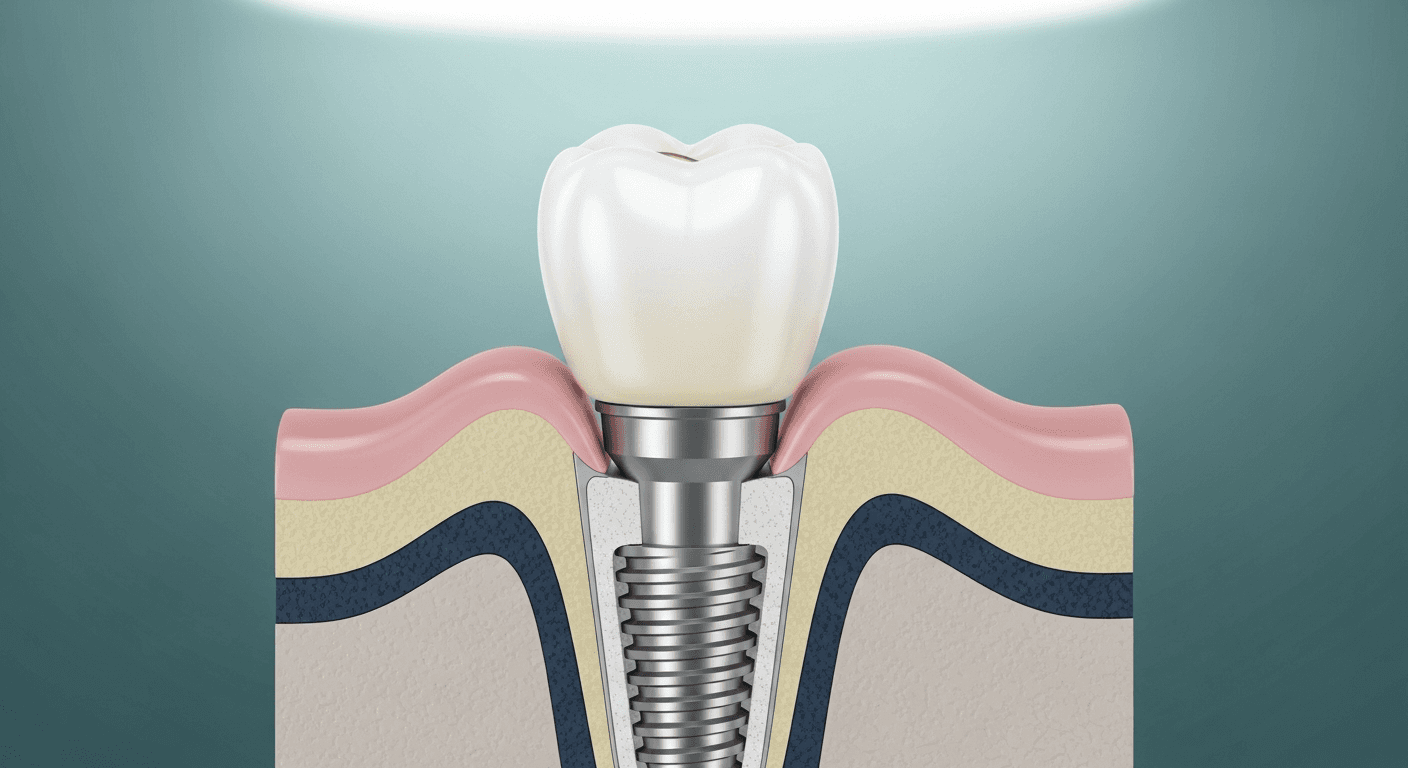
An implant is the support in bone; the visible part may be a crown, bridge or denture. Counting missing teeth alone does not decide the restoration. This overview gives Elk Grove patients a starting vocabulary for asking about reasonable options:
| Option | What it replaces and how it is supported | Practical trade-off |
|---|---|---|
| Single implant and crown | One implant supports a separate tooth in a one-tooth gap. | Preserves adjacent teeth as independent teeth, but surgery and healing are needed. |
| Implant-supported bridge | Implants support multiple connected replacement teeth. | May replace several teeth without an implant for each tooth; cleaning beneath the bridge matters. |
| Removable implant-retained denture | A denture attaches to implants and is taken out by the patient. | Added retention compared with a conventional denture, with attachment upkeep and daily removal. |
| Fixed full-arch restoration | A restoration replacing an entire upper or lower arch is attached to multiple implants. | Not removed by the patient; requires a plan for cleaning underneath and professional maintenance. |
| Conventional bridge or denture | A bridge uses neighboring teeth; a denture rests mainly on oral tissues. | Avoids implant surgery but has different support, adjustment and cleaning requirements. |
Start with a map of the missing teeth
Write down which teeth are absent, which are broken but still present and what bothers you most: chewing on one side, an unstable lower denture, a visible gap or a failing bridge. Those are different problems. A single implant may address one gap without treating an otherwise healthy arch. An implant bridge might span adjacent missing teeth. A full-arch plan is meant for an arch whose teeth cannot be retained or are already absent; it is not automatically the answer to two missing molars.
The American Dental Association's implant guide explains the role of bone and healthy gums in implant treatment. A clinician also examines the bite and whether neighboring teeth can be saved. Ask to see how the proposed number and location of implants correspond to the replacement teeth you will actually receive. An implant does not have to replace every missing root one-for-one when a carefully planned bridge or arch is appropriate.
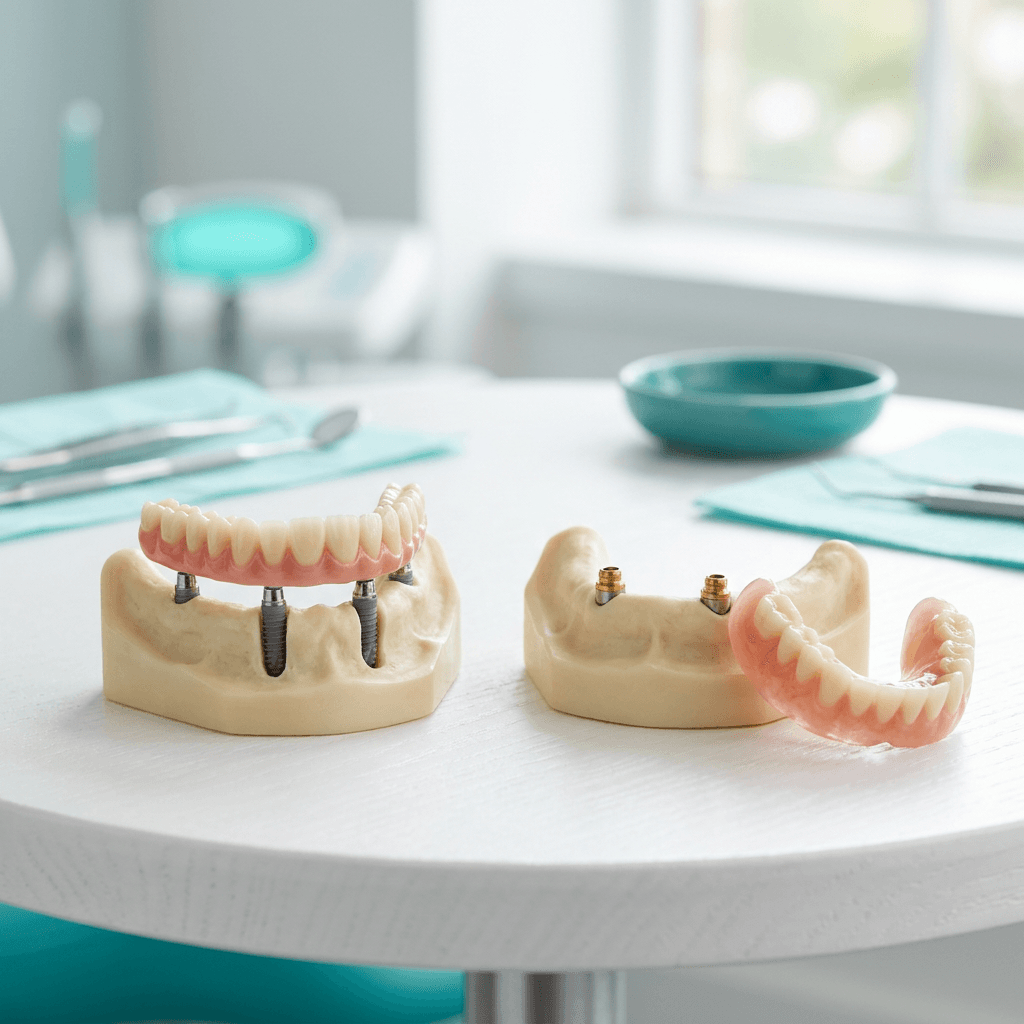
The removable-versus-fixed distinction deserves its own discussion. A removable snap-in denture attaches to implants but comes out for cleaning. A fixed bridge is removed only by a clinician when needed. Ask which type is proposed; the phrase 'implant denture' by itself does not answer that question. Our guide to implant-supported versus traditional dentures looks more closely at daily differences.
What a consultation should establish before you commit
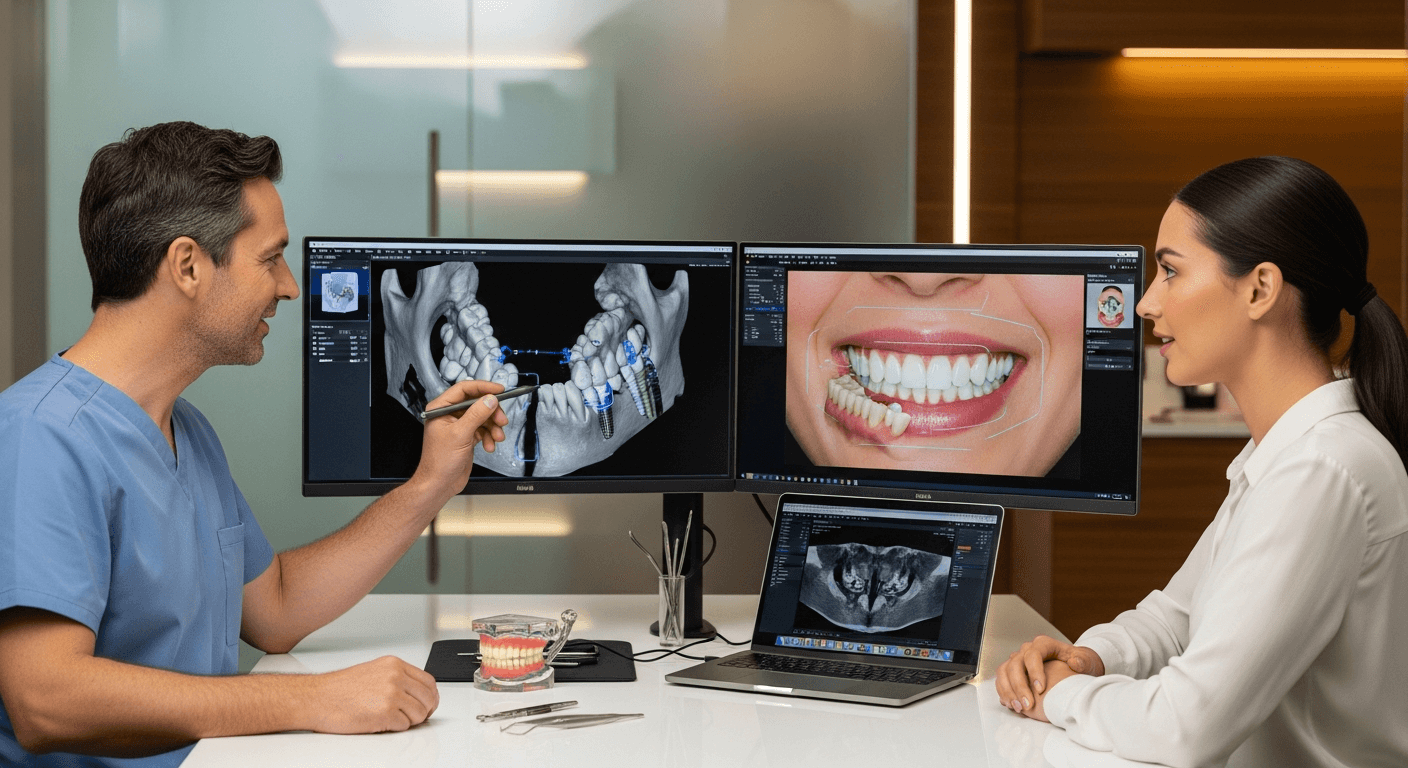
A serious recommendation follows a medical and dental history, an examination of teeth and gums, evaluation of the bite and appropriate imaging. Bone volume, the relationship to nearby anatomical structures and infection at a proposed site may change surgical options. Share medications, past implant treatment, smoking status and health conditions rather than trying to decide eligibility from a website. Medical conditions do not always rule out implants, but they can change precautions or sequencing.
Ask the team to identify which teeth can be maintained and which truly require replacement. If gum inflammation or untreated decay is present, addressing it may come before implant placement. If bone is insufficient, a graft or a different restoration may be discussed. Additional treatment is not automatically necessary just because an implant is being considered; the reason should be tied to the findings at your site.
For a closer look at the clinical assessment, see who is a candidate for dental implants. Ask who will plan and perform surgery, who will design and fit the replacement teeth, and which clinician will monitor healing. Dr. Antipov is a board-certified oral and maxillofacial surgeon; you can learn about his background on the about page. Credentials help frame questions, but they never substitute for a personal examination.
Make the Roseville visits workable from Elk Grove
Do not plan travel around the assumption that consultation, surgery and final teeth happen at the same visit. In many plans there is an evaluation, any disease-control or preparatory treatment, surgery, healing reviews, impressions or scans for the prosthesis, fitting and maintenance. The number of visits varies widely with the design and your healing. Ask the office which appointments must be in person and who to call if swelling, a loose temporary tooth or a broken restoration develops between visits.
If you expect sedation, ask the treating team about transportation and escort requirements before the appointment. Bring an up-to-date medication list and relevant records; ask whether existing radiographs are usable or whether new images are necessary. A prior scan may be useful background but is not necessarily current enough to plan surgery. Your work and family schedule matter when comparing treatment paths, especially if grafting and healing add separate stages.
Confirm the Roseville address, appointment availability, and where every phase of care will occur directly with the office. Do not confuse a page serving Elk Grove residents with an Elk Grove clinic. If a restorative dentist closer to home will participate, ask how the surgical and restorative teams will exchange the plan and handle urgent questions. Coordination can matter more than the distance to the first appointment.
Understand healing, temporary teeth and longer-term care
Surgery places the implant in the jaw; healing is what allows the bone to integrate with it. A temporary replacement may be possible during that period, but what it attaches to and whether you can chew on it are case-specific. A provisional bridge for a full arch is not identical to the final restoration. Ask which material and design are planned for each stage, when the implant will be checked, and what findings might delay the final prosthesis.
The ADA also emphasizes daily care and regular dental visits for implant restorations. Even though the replacement tooth cannot develop a cavity, surrounding tissues can inflame. The National Institute of Dental and Craniofacial Research overview of gum disease describes why gum health matters. Ask the team to demonstrate cleaning under a bridge or around attachments, and what adjustments or replacement parts may be expected over time.
After surgery, follow your clinician's specific instructions about eating, cleaning and when to call. Persistent worsening pain, uncontrolled bleeding or concerning swelling deserves a direct call to your treating team; an article cannot decide if your symptoms are normal. For patients who already wear dentures, describe sore spots and instability during evaluation so the interim and final plans both address real daily problems.
Compare written plans, not headline prices
Ask for an itemized estimate that separates evaluation and imaging when applicable, extractions, grafting, implant placement, connectors, temporary teeth, final restoration and maintenance. Confirm whether the proposal covers one arch or two, and whether a fixed or removable design is priced. Different plans can look similar on an advertisement while omitting very different components. Exact costs and insurance benefits require an individualized plan and direct confirmation with the insurer.
A useful written plan should identify alternatives, likely stages, what happens if a planned implant cannot be placed, who supplies the final teeth and what routine follow-up involves. Ask whether a conventional bridge or denture remains reasonable if you prefer less surgery. There is no obligation to choose an implant because it was the reason you booked the visit.
For an Elk Grove resident considering Roseville care, add one final column to your comparison: logistics. The best theoretical restoration may be less practical if you cannot attend essential follow-up or access the team for an adjustment. A good consultation should turn the question 'Can I get implants?' into a more useful one: 'Which complete replacement and aftercare plan fits my health, goals and life?'
Frequently Asked Questions
Is Dr. Antipov's implant office in Elk Grove?
No. Dr. Antipov practices in Roseville. Elk Grove residents should confirm the current office address and plan for evaluation and follow-up visits before booking.
Can two missing teeth be replaced with one implant?
Sometimes implants can support a connected restoration rather than replacing each missing root separately. The gap, bite, bone and prosthetic design determine whether this is reasonable.
Do I need a full arch if I am missing several teeth?
Not necessarily. Remaining teeth may be preservable and a smaller bridge or partial denture may be appropriate. Ask why an entire arch is or is not being recommended.
Will I have to travel back to Roseville for follow-up?
Implant treatment normally involves reviews and restorative appointments. Ask which visits take place in Roseville and whether another dentist will coordinate any part of care.
Can I use old dental X-rays at my consultation?
Bring available records, but the clinician decides whether they show the current anatomy clearly enough or whether additional imaging is needed.
Are snap-in dentures the same as fixed implant teeth?
No. Snap-in dentures typically come out for cleaning, while a fixed implant restoration stays attached for daily use. Both require maintenance.
What should an Elk Grove patient ask about cost?
Request a written estimate showing surgery, possible preparatory care, temporary and final teeth, plus maintenance. Confirm coverage directly with your insurer and ask what could change the quote.
Bring your tooth-replacement questions to Roseville
Ask Dr. Antipov's team about your missing teeth, the realistic visit sequence and a written plan that covers both the implants and the teeth they will support.
Book a Consultation