Implant-Supported Dentures vs. Traditional Dentures: The 2026 Comparison Guide
Medically reviewed by Dr. Alexander V. Antipov, DDS — Board-Certified Oral & Maxillofacial Surgeon · Diplomate, American Board of Oral & Maxillofacial Surgery (ABOMS) · California Dental License #50724
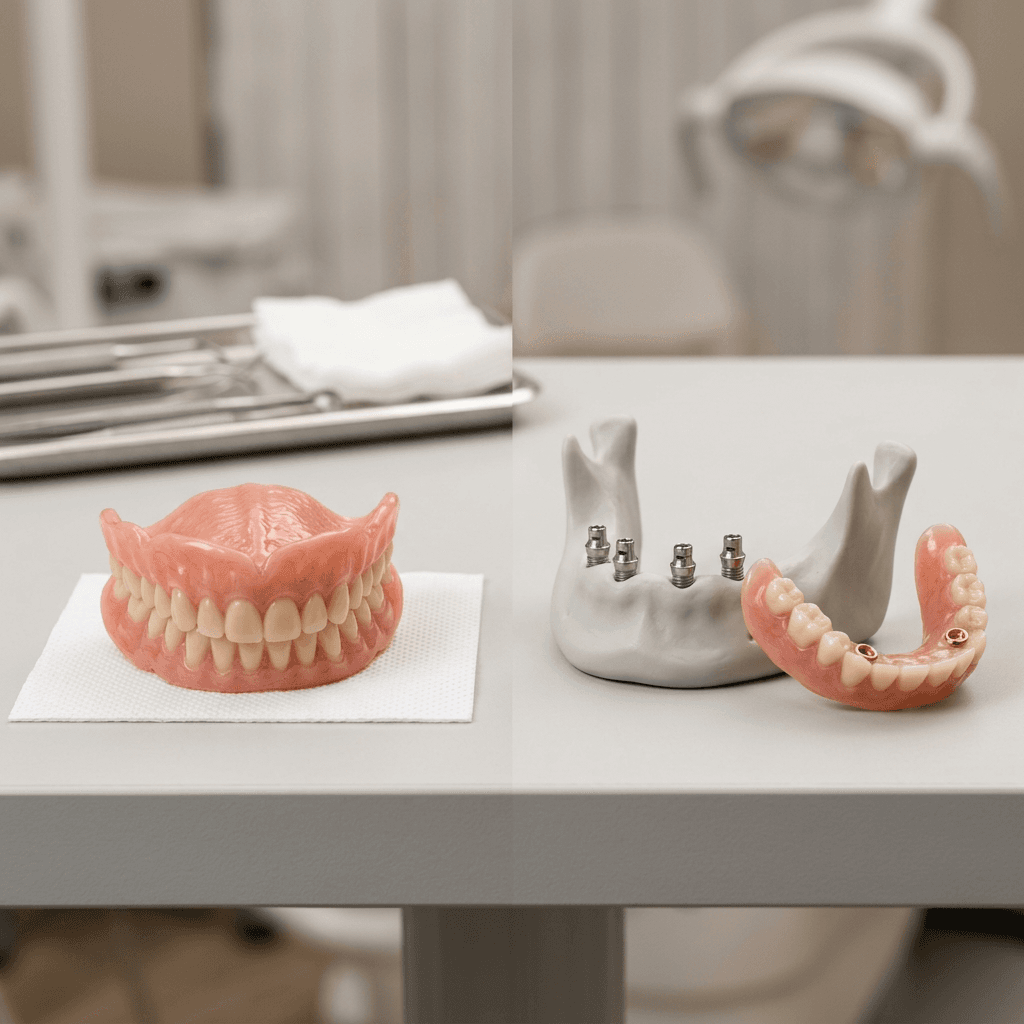
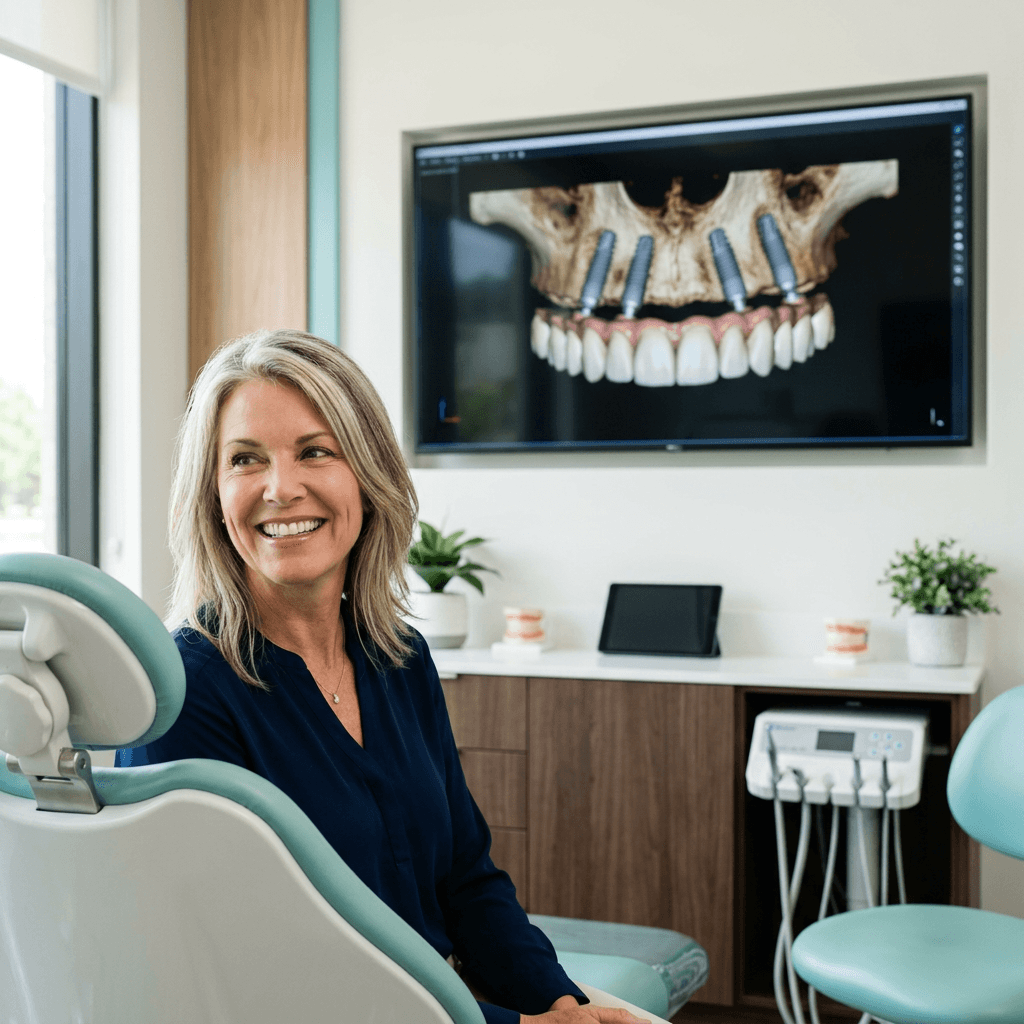
The core difference between implant-supported and traditional dentures is where the support comes from: a traditional denture rests on the gums and relies on suction or adhesive, while an implant-supported denture anchors to titanium posts fused into the jawbone — and that one mechanical distinction drives nearly every difference in stability, eating, speech, and long-term bone health, explains Dr. Alexander Antipov, a board-certified oral and maxillofacial surgeon in Roseville, CA. Neither option is automatically right for everyone: budget, bone volume, health history, and personal preference all matter. This guide lays out the honest side-by-side — how each works, what daily life looks like with each, what happens to the jawbone underneath, and how the costs compare over decades rather than at the register. If your current denture is the immediate problem, our guide to fixing loose dentures permanently is a practical companion to this one.
This article is for general education and is not a substitute for a clinical exam. Candidacy, timelines, and costs depend on your bone volume, health history, and anatomy — your specific plan is determined after 3D imaging at an in-person consultation.
The Side-by-Side Comparison
Here is how the two approaches compare across the factors patients ask about most:
| Traditional dentures | Implant-supported dentures | |
|---|---|---|
| Support | Rest on gum tissue; suction or adhesive | Anchored to 2–6 implants fused into the bone |
| Stability | Can shift when eating, speaking, laughing | Held mechanically — snap-in or fixed |
| Upper palate | Acrylic plate covers the roof of the mouth | Palate often left open — taste preserved |
| Chewing | A fraction of natural bite force; diet limits | Substantially closer to natural function |
| Bone health | No stimulation — resorption continues | Implants stimulate bone at each post site |
| Fit over time | Relines and remakes as the ridge shrinks | Foundation stays stable once integrated |
| Upfront cost | Lower | Higher — surgical investment |
| Recurring cost | Adhesives, relines, replacement every ~5–7 years | Periodic maintenance; attachments or wear parts |
How Each Option Actually Stays In
A traditional upper denture creates retention with a vacuum seal: a large acrylic plate covers the palate, and surface tension plus saliva hold it in place. The lower jaw has no palate to seal against, which is why lower plates are notorious for the “floating” feeling and why adhesives become a daily ritual for many wearers. The deeper problem is that the jawbone keeps changing shape once tooth roots are gone — so even a well-made plate loses its fit over time, starting the cycle of relines and remakes.
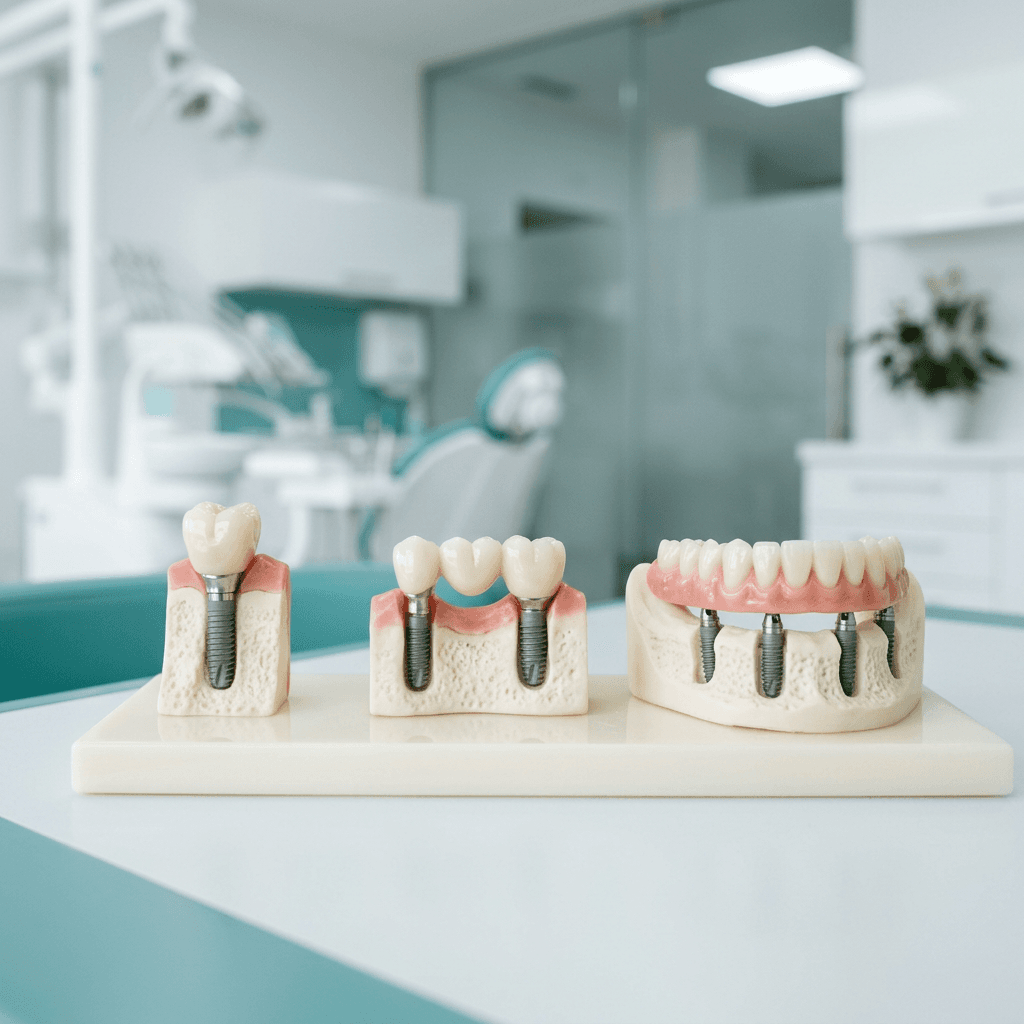
Implant-supported dentures move the support from the gum surface into the bone. Titanium posts — usually two to six per arch depending on bone density and design — are placed surgically and fuse with the jaw through osseointegration, a process described in the National Library of Medicine's overview of dental implants. The prosthetic then attaches to those anchors rather than resting on tissue, which is why a well-fitted implant denture typically stays put through meals and conversation.
Snap-In or Fixed: The Two Implant-Supported Designs
“Implant-supported” covers two quite different daily experiences. Snap-in overdentures click onto 2–4 implants for far better retention than a traditional plate, but still come out nightly for cleaning — a meaningful upgrade at a lower cost. Fixed full-arch restorations (the All-on-4 family) are screwed to 4–6 implants and stay in around the clock, cleaned in place like natural teeth — the closest experience to having your own teeth back. We compare the two designs in detail in our fixed vs. snap-in guides and the complete fixed dentures on implants guide.
Daily Life: Eating, Speaking, and Taste
The lifestyle gap between the two approaches is where most patients feel the difference. Traditional denture wearers commonly drift toward a soft-food diet — fibrous vegetables, nuts, and tough proteins become difficult — and reduced chewing efficiency can ripple into digestion and nutrition. Speech can be affected too: a plate that shifts mid-sentence, or the clicking many wearers learn to manage around.
Implant-anchored teeth restore bite force to a level substantially closer to natural function, reopening most of the menu. And because implants provide the retention, the upper palate can often be left uncovered — which for most patients noticeably improves the ability to taste food and feel its temperature, a sensory change mentioned as often as the stability itself.
The Bone Story: What Happens Underneath Each Option
The most consequential difference is invisible. Jawbone relies heavily on the loading it receives through tooth roots to maintain its density; once teeth are gone, resorption typically begins — the body reclaims minerals from the under-used bone, and the ridge tends to shrink year over year. A traditional denture rests on the gum surface and does not provide root-like stimulation to the bone beneath it — and that shrinking ridge is a key reason its fit keeps degrading.
Implants act as artificial roots, transmitting chewing forces into the bone and helping preserve density at each post site (the effect is localized around the implants rather than across the entire jaw). Over decades, this matters for more than denture fit: progressive bone loss shortens the lower face, thins lip support, and produces the sunken look associated with long-term denture wear. It can also eventually leave too little bone for implants without grafting first — one reason acting earlier tends to keep more options open.
Cost: Sticker Price vs. Total Cost Over Decades
Traditional dentures win on entry price, and for some patients — particularly where budget or health rules out surgery — they remain the reasonable choice. But the recurring costs deserve honest accounting: adhesives, professional relines as the ridge changes, and full replacement commonly every five to seven years. Implant-supported options cost more upfront — in the Roseville area, snap-in systems generally run well below fixed full-arch restorations, which commonly run $25,000–$35,000 per arch — but the integrated foundation is designed to last decades with good care. Many dental plans contribute toward portions of treatment, and monthly financing can spread the investment out; our dental implant payment plans guide walks through the options.
When comparing quotes anywhere, confirm what is included — imaging, extractions, sedation, attachments, and the prosthetic itself are sometimes billed separately. An all-inclusive written plan is the only fair basis for comparison.
Can You Upgrade From Your Current Dentures?
Often, yes — transitioning from a traditional plate to an implant-supported solution is one of the most common journeys in implant dentistry. In select cases an existing denture can be retrofitted with attachments, though a new, purpose-built prosthetic is usually recommended: it must handle the much higher bite forces an anchored design transmits, and fit precisely over the new attachments.
Even long-term denture wearers with significant ridge shrinkage are frequently still candidates — grafting can rebuild support, and tilted-implant techniques make the most of remaining bone. A CBCT scan at consultation shows exactly what your anatomy allows.
Making the Decision in Roseville
The right answer depends on your bone, budget, health history, and how much the daily frustrations of a removable plate weigh on you — which is why the decision should start with imaging and a candid conversation, not a sales pitch. Dr. Antipov treats implant-supported denture cases from snap-in conversions to complex full-arch and revision work at his Roseville practice, where patients travel in from Sacramento, Elk Grove, El Dorado Hills, and across Northern California. You can read more about full-arch implant treatment at our practice.
Frequently Asked Questions
How many implants are needed for implant-supported dentures?
Most designs use two to six implants per arch. Snap-in overdentures often need just 2–4 implants, while fixed full-arch restorations like All-on-4 typically use 4–6. The exact number depends on your bone density, which jaw is being treated, and whether the design is removable or fixed.
Can I upgrade my existing traditional dentures to implant-supported?
Often, yes. Some existing dentures can be retrofitted with attachments, but a new, purpose-built prosthetic is usually recommended — it must withstand the higher bite forces an anchored design transmits and fit precisely over the attachments. Your surgeon can tell you which route makes sense after imaging.
Is the surgery for implant-supported dentures painful?
The procedure is performed under local anesthesia, with IV sedation available, and most patients describe pressure rather than pain. Post-operative soreness is typically manageable with over-the-counter or prescribed medication, and most people return to normal routines within a few days.
How do I clean and maintain implant-supported dentures?
It depends on the design. Snap-in dentures come out daily so you can clean both the prosthetic and the attachments in your mouth. Fixed restorations stay in and are cleaned like natural teeth — brushing plus a water flosser or floss threaders under the bridge. Both need regular professional checkups.
How long does the process take from surgery to final teeth?
Commonly three to six months overall, to allow the bone to fuse with the implants. In many qualifying cases a temporary set is attached the same day as surgery, so you are not left without teeth while osseointegration completes. The final, high-strength prosthetic is placed once healing is confirmed.
Will insurance cover implant-supported dentures in California?
Many plans contribute toward parts of treatment — commonly $1,000–$3,000 depending on the policy — and some cover the prosthetic portion at the level of a traditional denture even when the surgical placement is excluded. A benefits review before treatment clarifies your actual out-of-pocket cost.
What if I don't have enough bone for implants after years in dentures?
Long-term denture wear does shrink the ridge, but that rarely closes the door. Bone grafting can rebuild support, and techniques like tilted implants make the most of the bone you still have. A CBCT scan shows precisely what your anatomy supports — many patients told “no” years ago are candidates today.
Are snap-in dentures better than fixed All-on-4?
Neither is universally better. Snap-ins cost less, work with fewer implants, and come out for easy cleaning; fixed restorations stay in around the clock and feel the most like natural teeth. The right choice weighs your budget, bone volume, dexterity, and how you want daily life with your teeth to work.
Compare Your Options With Real Imaging, Not Guesswork
Schedule a free implant consultation with Dr. Antipov in Roseville — 3D CBCT imaging, a candid comparison of snap-in, fixed, and traditional options for your anatomy and budget, and one transparent written plan. Restrictions apply.
Book a Consultation