All-on-4 Dental Implants for San Francisco Patients: Full-Arch Restoration Worth the Drive
Medically reviewed by Dr. Alexander V. Antipov, DDS — Board-Certified Oral & Maxillofacial Surgeon · Diplomate, American Board of Oral & Maxillofacial Surgery (ABOMS) · California Dental License #50724
If you are researching All-on-4 dental implants in San Francisco, here is a fact worth knowing before you commit: full-arch treatment is highly portable — the entire surgical phase typically happens in one or two key visits — and many Bay Area patients travel about two hours to Dr. Alexander Antipov, a board-certified oral and maxillofacial surgeon in Roseville, CA, where specialist-level full-arch care often comes at a meaningfully lower cost than in the city. This guide explains how the All-on-4 method delivers a fixed, same-day provisional set of teeth for qualifying patients, what the treatment realistically costs, and how to weigh a San Francisco provider against traveling inland for care. For a framework on comparing any full-arch provider, see our guide to comparing full-arch implant clinics in California.
This article is for general education and is not a substitute for a clinical exam. Same-day teeth candidacy, timelines, and costs depend on your bone volume, health history, and anatomy — your specific plan is determined after 3D imaging at an in-person consultation.
All-on-4 at a Glance: What Bay Area Patients Should Know
Before diving into details, here is the treatment in one view:
| Factor | What to expect |
|---|---|
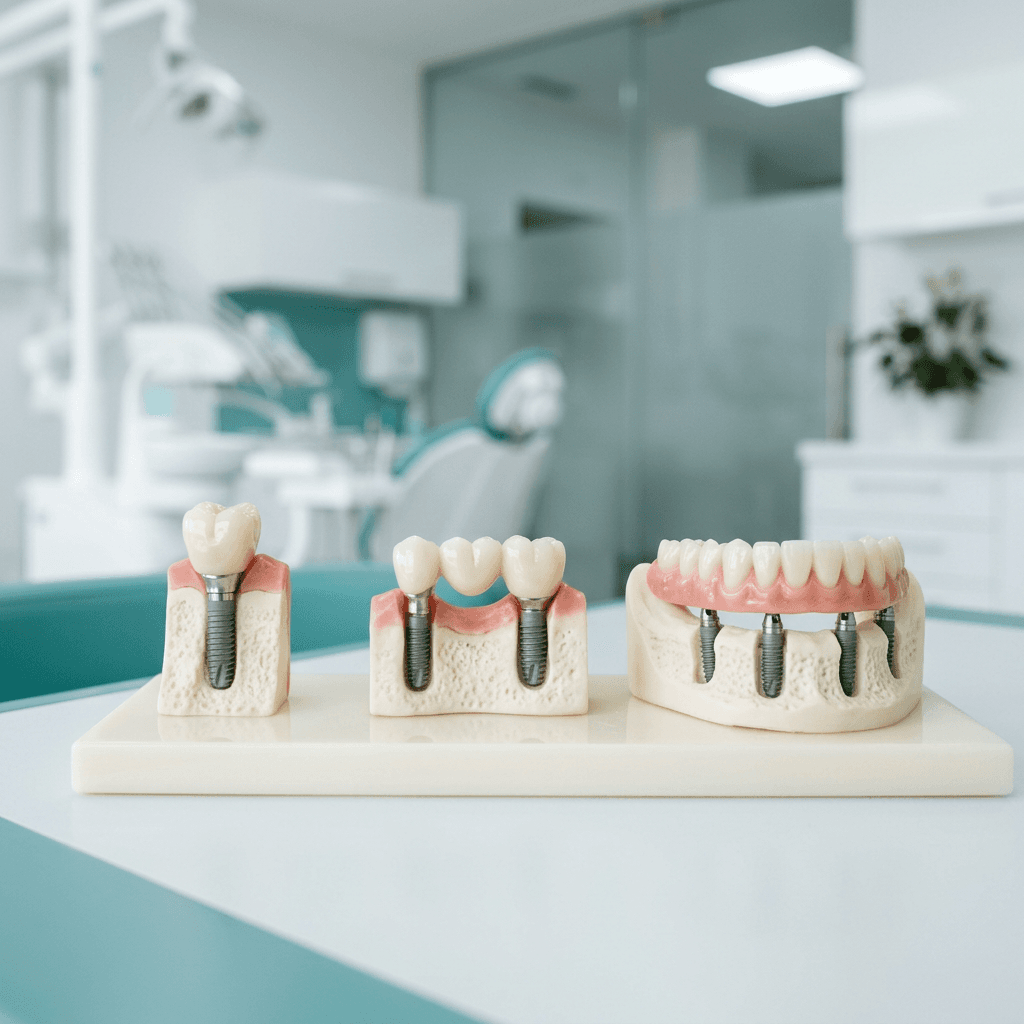
| What it is | A full arch of fixed teeth supported by 4 implants (5–6 in some cases) |
| Same-day teeth | Qualifying patients receive a fixed provisional bridge the day of surgery |
| Key surgical visits | Typically 1–2 major visits — practical even for patients traveling in |
| Bone grafting | Often avoided — tilted posterior implants use existing dense bone |
| Healing | Osseointegration takes roughly 3–6 months before the final bridge |
| Typical cost | $25,000–$35,000 per arch complete; SF-area quotes often run higher |
| Final bridge | High-strength zirconia or titanium-acrylic, placed after healing |
How the All-on-4 Method Works
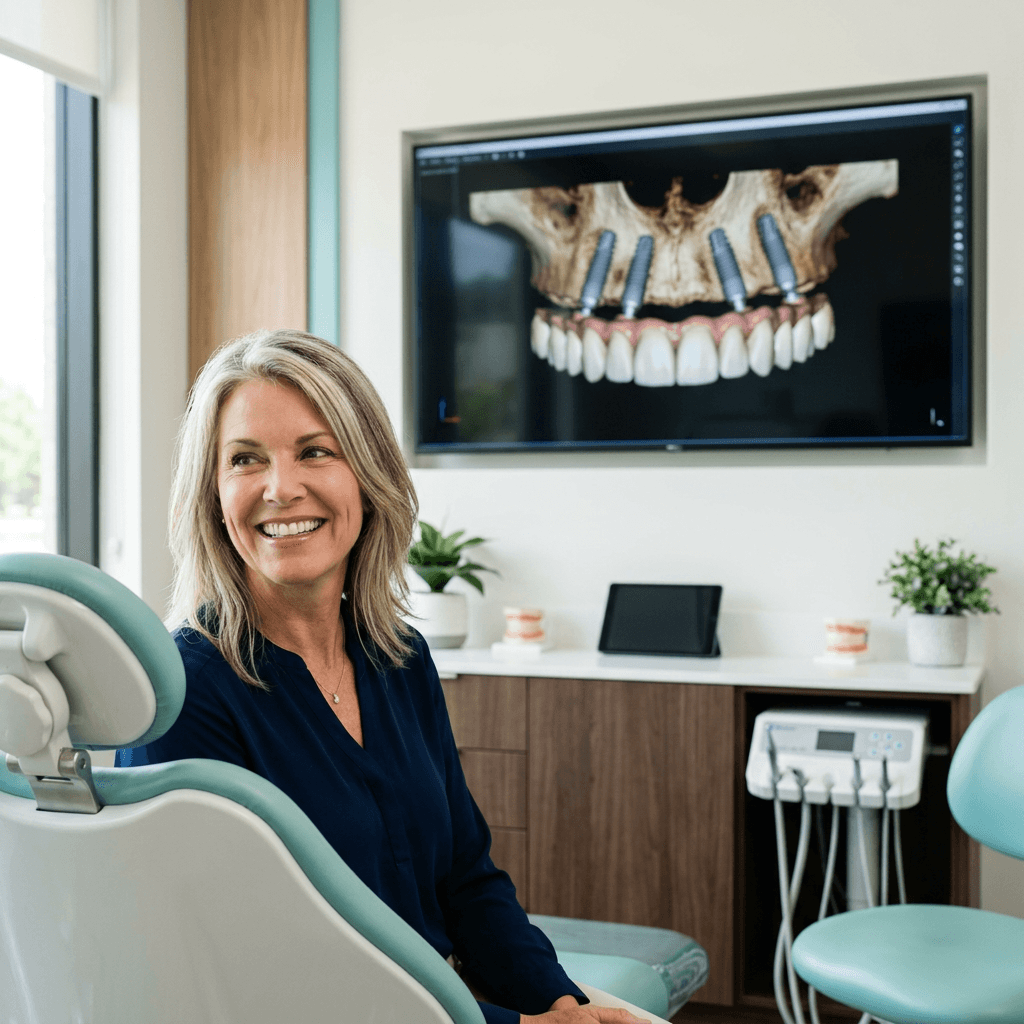
The All-on-4 concept replaces an entire arch of teeth on just four implants by using geometry intelligently: the two posterior implants are tilted — commonly around 30–45 degrees — to anchor into the denser bone toward the front of the jaw while avoiding the sinus cavities above and nerve canal below. That tilt is why many patients with years of bone loss can often be treated without separate grafting procedures. Once placed, the implants fuse with the jaw through osseointegration, the biological bonding process described in the National Library of Medicine's overview of dental implants.
Four implants is the baseline, not a rule. Where bone density or bite forces call for it, five or six implants may be recommended — the “All-on-X” spectrum. We compare the configurations in our All-on-4 vs. All-on-6 guide; the short version is that the right number is an engineering decision made from your CT scan, not a package you pick from a menu.
Same-Day Teeth: What “Teeth in a Day” Really Means
For qualifying patients, the surgical day compresses what used to take months: failing teeth are removed, implants are placed, and a fixed provisional bridge is attached before you leave — you are not sent home without teeth. Two honest caveats belong in any accurate description. First, the same-day bridge is a provisional; the final, high-strength bridge is made after the implants finish integrating over roughly three to six months. Second, immediate loading depends on achieving sufficient implant stability at surgery — candidacy is confirmed at the consultation and, finally, in the operating chair. Our teeth-in-a-day guide walks through the protocol step by step.
The process is performed under local anesthesia with IV sedation available, and most patients describe pressure rather than pain, with a few days of manageable soreness afterward. A soft-food diet protects the implants during early healing — your team will give you a staged plan for progressing back to a full menu.
What All-on-4 Costs — and Why San Francisco Quotes Run High
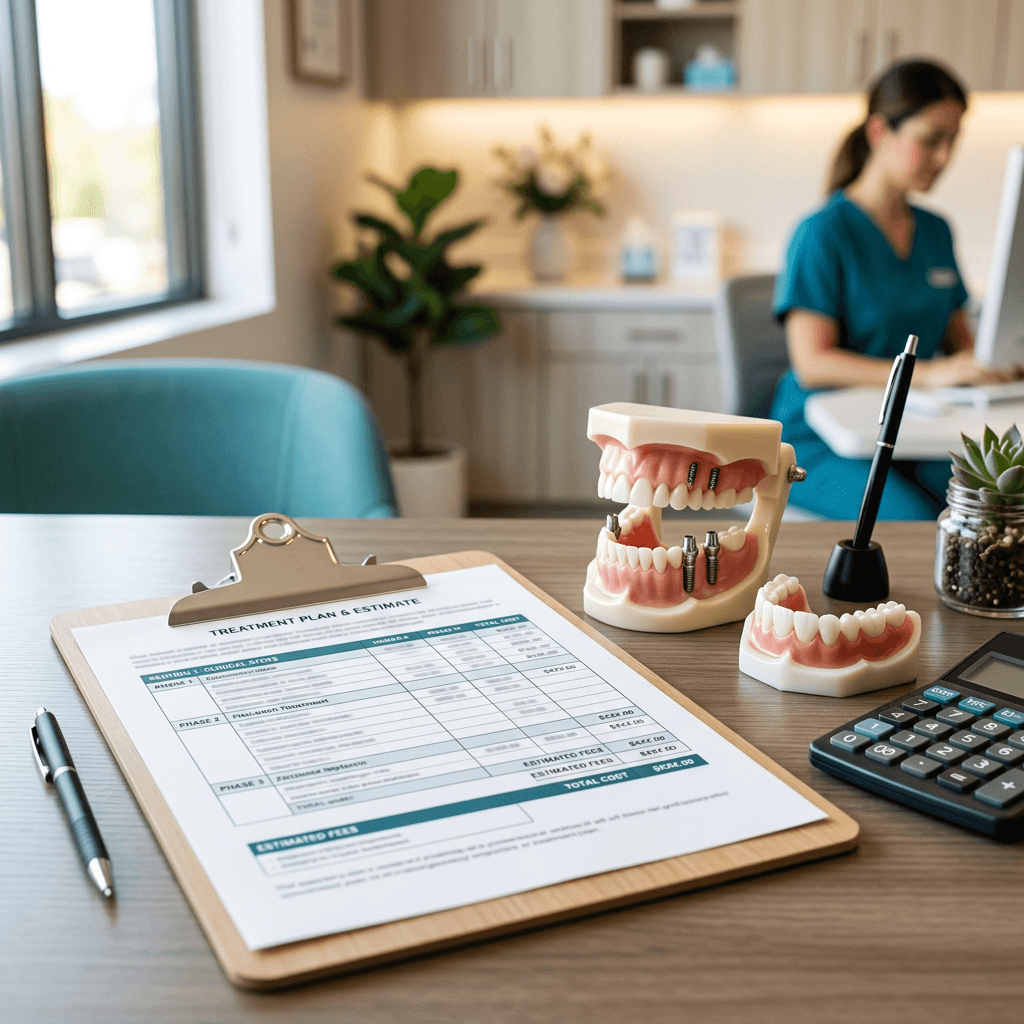
Complete full-arch treatment — imaging, extractions, implants, sedation, the provisional, and the final bridge — commonly runs $25,000–$35,000 per arch, or $50,000–$70,000 for both arches. San Francisco's overall cost of care is among the highest in the country, and full-arch quotes in the city frequently come in above these ranges for equivalent treatment. That gap — often thousands of dollars per arch — is the main reason Bay Area patients get a second opinion inland before committing. For a detailed cost breakdown by configuration and material, see our All-on-X cost guide.
Whoever you choose, compare all-inclusive written plans: imaging, extractions, sedation, the provisional, and the final bridge are sometimes quoted separately, which makes a low headline number misleading. Many dental plans contribute toward portions of treatment — commonly $1,000–$3,000 depending on the policy — and monthly financing can spread the remainder; our payment plans guide covers the options.
Is Traveling From the Bay Area for Full-Arch Treatment Practical?
More practical than most patients expect. Full-arch treatment concentrates the critical work into a small number of visits: a consultation with CBCT imaging, the surgical day itself, and a handful of shorter follow-ups — some of which can be coordinated to minimize trips. Roseville sits about two hours from San Francisco via I-80, an easy drive compared to the months-long treatment relationships some dental work requires.
Patients travel to Dr. Antipov's Roseville practice from San Francisco, Oakland, San Jose, Sacramento, and across Northern California — typically for one of two reasons: the cost difference for specialist-level care, or a complex situation (significant bone loss, failed previous implants, medical complexity) where they specifically want a board-certified oral and maxillofacial surgeon rather than a general dentist performing the surgery.
Why the Surgeon Matters More Than the City
All-on-4 is a surgical procedure whose outcome is largely determined in planning and placement: reading the CT scan correctly, managing soft tissue, achieving the primary stability that makes same-day teeth possible, and handling complications if they arise. Board-certified oral and maxillofacial surgeons complete four to six years of hospital-based surgical residency after dental school — training that covers exactly these scenarios, including the advanced options (grafting, tilted and, in select severe cases, zygomatic-style approaches) that keep patients with significant bone loss treatable. Our guide to verifying board certification shows how to check any surgeon's credentials — including Dr. Antipov's — in minutes.
If you have already been told you are not a candidate elsewhere, read why specialists often say yes before giving up — declined cases are frequently treatable with specialist techniques.
Your Next Step
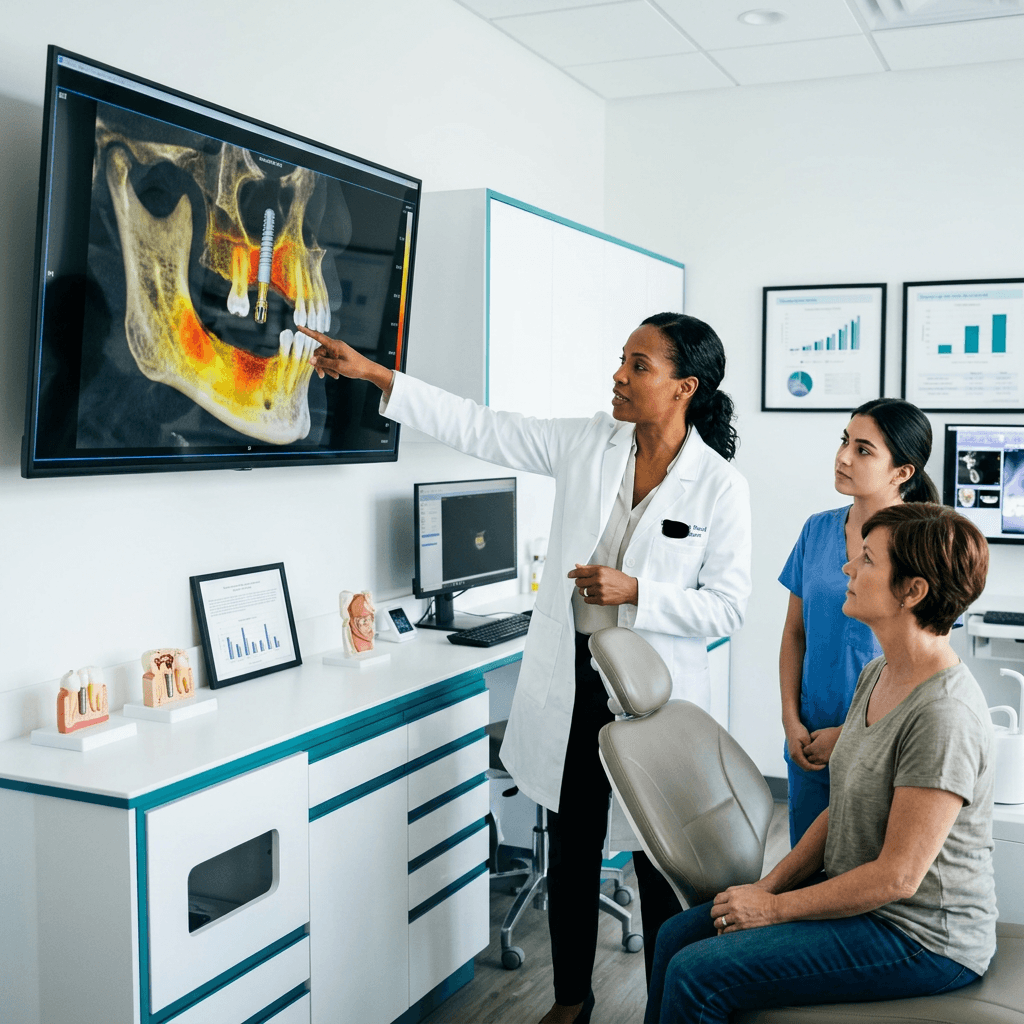
Whether you ultimately choose a San Francisco provider or make the drive to Roseville, start with a consultation that includes 3D CBCT imaging and a complete written plan — that is the only basis on which quotes and recommendations can be fairly compared. You can read more about full-arch implant treatment at our practice, including materials and the treatment timeline.
Frequently Asked Questions
How much do All-on-4 dental implants cost for San Francisco patients?
Complete treatment commonly runs $25,000–$35,000 per arch, or $50,000–$70,000 for both arches, including imaging, extractions, implants, sedation, and the final bridge. Quotes within San Francisco frequently run above these ranges, which is why many Bay Area patients compare an all-inclusive written plan from an inland specialist before committing.
Can I really get new teeth in one day?
For qualifying patients, yes — failing teeth are removed, implants are placed, and a fixed provisional bridge is attached the same day, so you are never left without teeth. The final, high-strength bridge is placed after the implants finish integrating over roughly three to six months. Candidacy for same-day teeth is confirmed at your consultation.
How long do All-on-4 implants last?
The implants themselves are designed to last decades with good hygiene and regular checkups, and long-term clinical success rates are commonly cited above 95%. The bridge is subject to normal wear and may need maintenance or replacement over time — zirconia bridges are the most durable option currently available.
What if I have significant bone loss — am I still a candidate?
Often, yes. The tilted posterior implants in the All-on-4 design anchor into the denser bone at the front of the jaw, frequently avoiding the grafting that individual implants would require. In select severe cases, advanced approaches such as zygomatic-style implants may be considered. A CBCT scan shows exactly what your anatomy supports.
How many trips to Roseville would treatment take from the Bay Area?
Typically a consultation with 3D imaging, the surgical day, and a handful of shorter follow-up and bridge-fitting visits — some of which can be coordinated to reduce trips. Roseville is about two hours from San Francisco via I-80, and many Bay Area patients find the small number of key visits very manageable.
Is the All-on-4 procedure painful?
The surgery is performed under local anesthesia with IV sedation available, so most patients feel pressure rather than pain during the procedure. Afterward, soreness is typically manageable with prescribed or over-the-counter medication, and most patients return to light activity within two to three days.
Does insurance cover All-on-4 treatment?
Many dental plans contribute toward portions of treatment — commonly $1,000–$3,000 depending on the policy — particularly extractions and parts of the restorative work. Our team helps coordinate benefits, and monthly financing can spread the remaining balance into manageable payments.
All-on-4 or All-on-6 — which is better?
Neither is universally better; the right number of implants is determined by your bone density, jaw anatomy, and bite forces, as read from your CT scan. Four implants is the proven baseline, and five or six may be recommended when additional support benefits the long-term result. It is an engineering decision, not an upgrade tier.
Get a Bay Area Second Opinion Worth the Drive
Schedule a free implant consultation with Dr. Antipov in Roseville — 3D CBCT imaging, an honest assessment of your same-day teeth candidacy, and one transparent all-inclusive written plan you can compare against any San Francisco quote. Restrictions apply.
Book a Consultation