Full Fixed Arch Implant Cost: What a Complete Quote Should Include in 2026
Medically reviewed by Dr. Alexander V. Antipov, DDS — Board-Certified Oral & Maxillofacial Surgeon · Diplomate, American Board of Oral & Maxillofacial Surgery (ABOMS) · California Dental License #50724
A complete full fixed arch implant restoration — imaging, extractions, implants, sedation, the provisional teeth, and the final bridge — commonly runs $25,000–$35,000 per arch in 2026, or $50,000–$70,000 for both arches, explains Dr. Alexander Antipov, a board-certified oral and maxillofacial surgeon in Roseville, CA. The catch is that many advertised prices cover only part of that list, which is why two quotes thousands of dollars apart can describe very different treatments. This guide takes the opposite approach: instead of a “starting at” number, it walks through every line item a fixed full-arch quote should contain, the clinical variables that move the price up or down, and the questions that expose an incomplete quote before you commit. For the broader treatment overview — configurations, materials, and timelines — see our All-on-X cost guide.
This article is for general education and is not a substitute for a clinical exam. Prices are typical ranges, not quotes; your actual cost depends on your bone volume, extractions needed, materials chosen, and anatomy — determined after 3D imaging at an in-person consultation.
The Line Items: What a Complete Full-Arch Quote Must Include
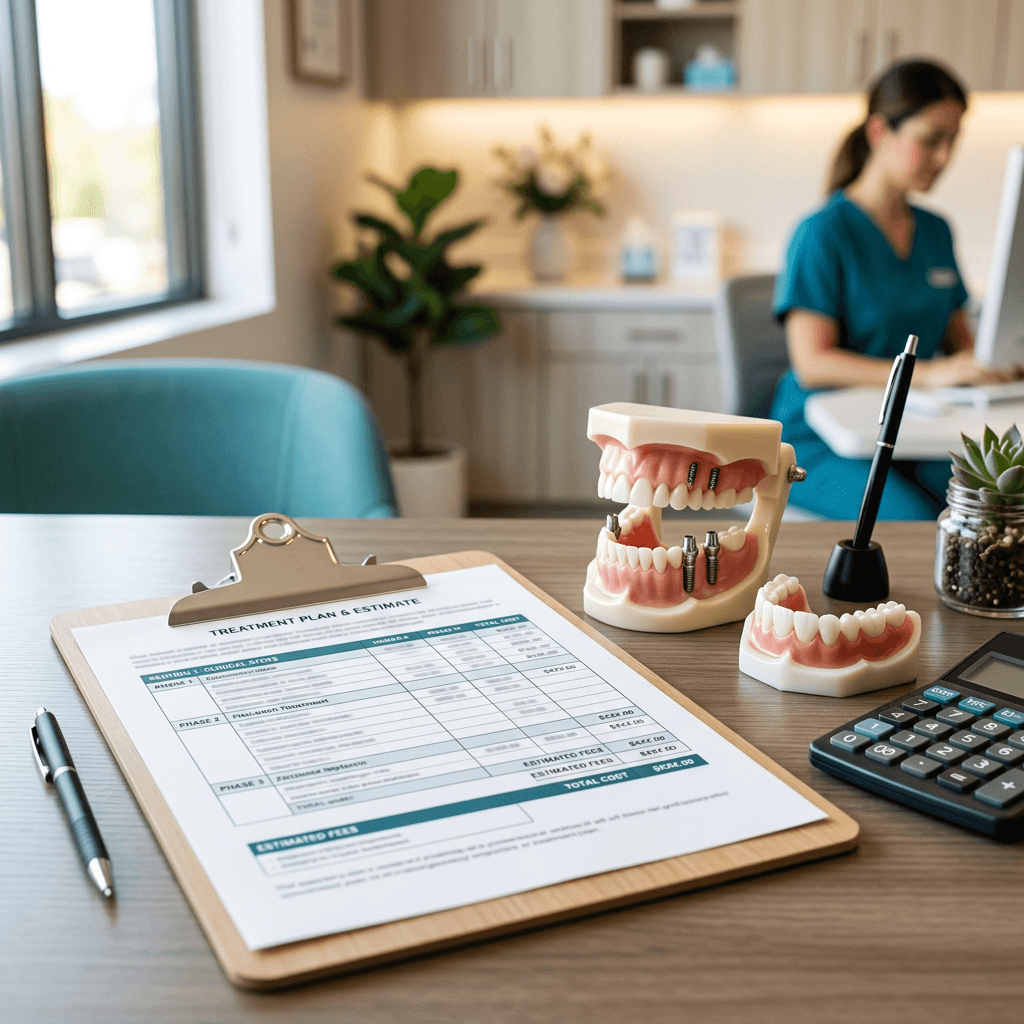
An honest all-inclusive quote itemizes everything below. If any line is missing, ask whether it is included — or budgeted separately:
| Line item | Why it matters | If quoted separately |
|---|---|---|
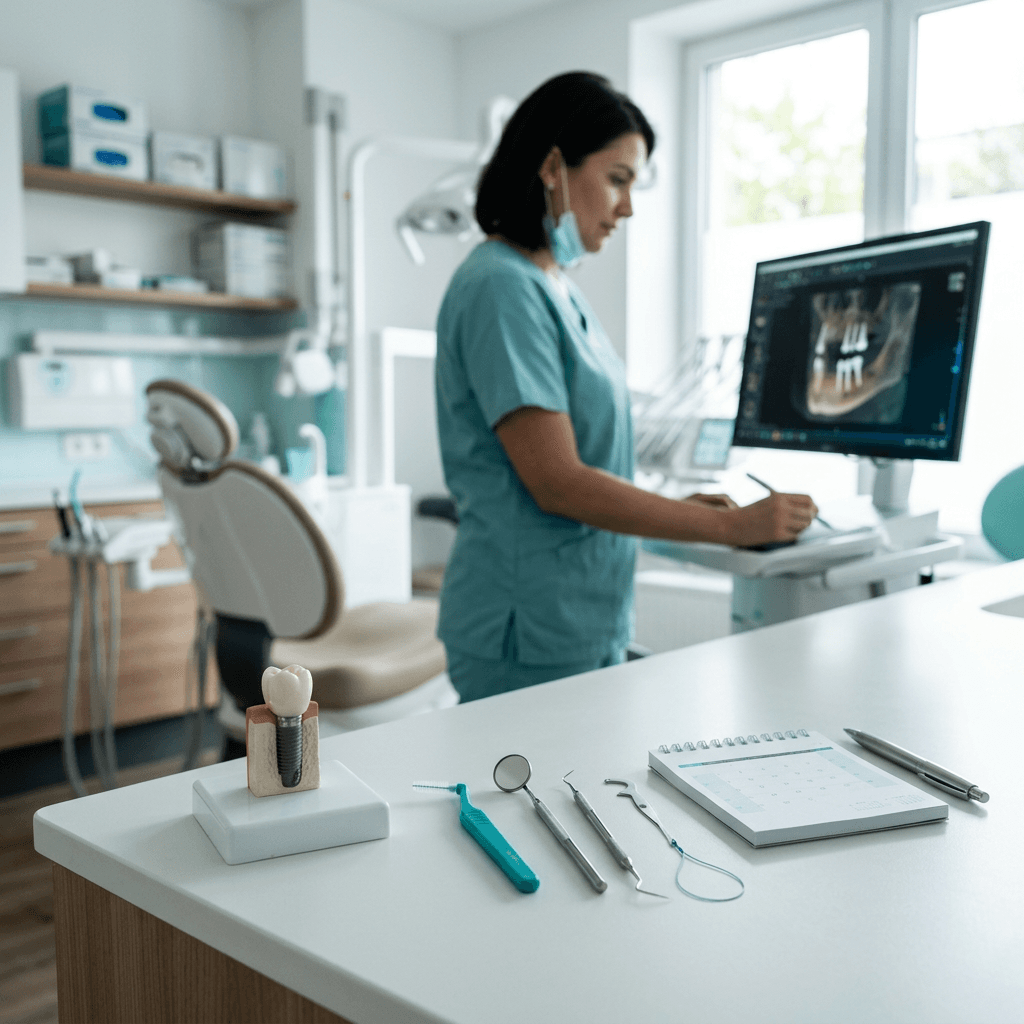
| 3D CBCT imaging & planning | The surgical blueprint — placement is planned here | Several hundred dollars |
| Extractions | Failing teeth removed the day of surgery | Per tooth — adds up fast |
| Implant placement (4–6 posts) | The surgical core of the treatment | The largest single component |
| IV sedation / anesthesia | Comfort through a multi-hour procedure | Often $1,000+ if billed apart |
| Provisional (same-day) bridge | Fixed temporary teeth during healing | Sometimes a surprise add-on |
| Final bridge (zirconia or titanium-acrylic) | The long-term prosthetic — material drives cost | Can be quoted years later at a higher price |
| Follow-up visits & adjustments | Healing checks and bite refinement | Per-visit fees accumulate |
What a Fixed Full Arch Actually Is — and Why It Costs What It Does
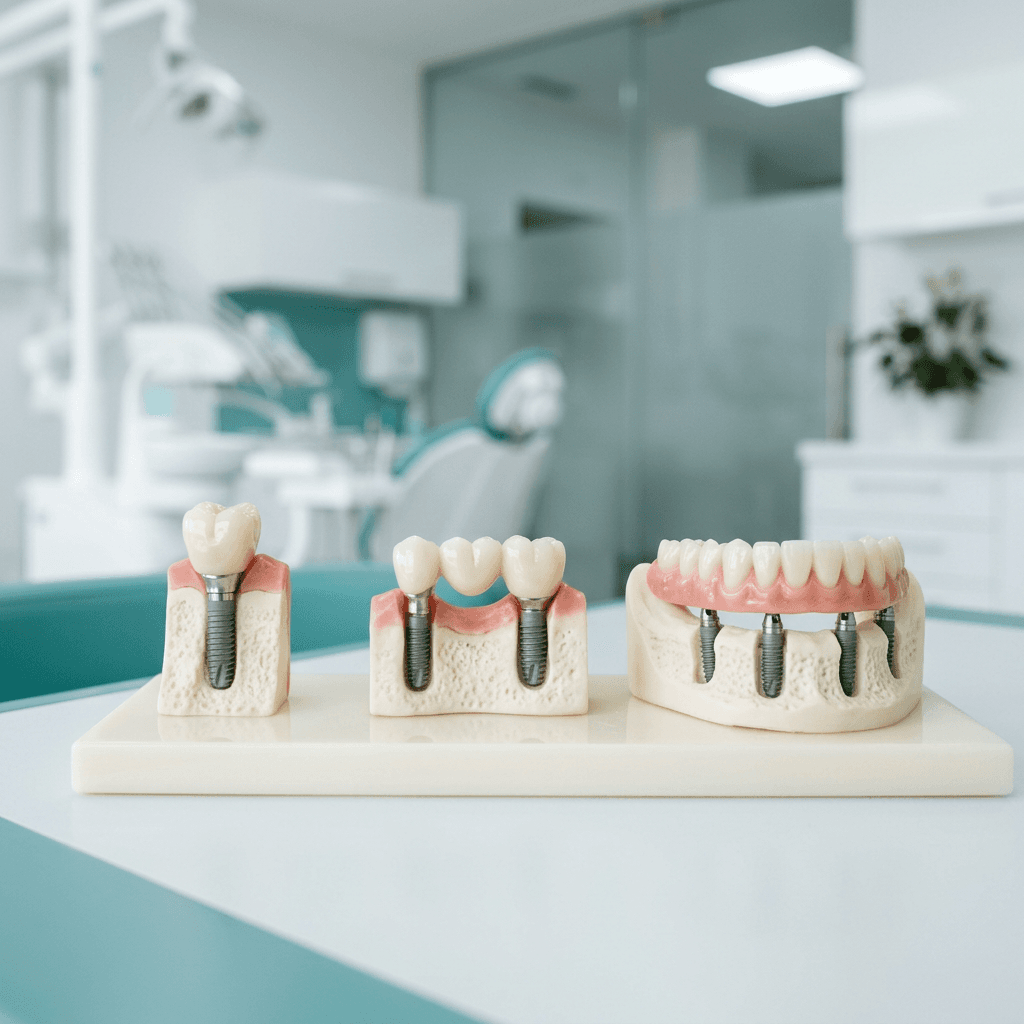
A fixed full-arch restoration is a non-removable prosthetic bridge anchored by four to six implants placed into the jawbone, where they fuse with the bone through osseointegration — the biological bonding process described in the National Library of Medicine's overview of dental implants. Unlike a denture resting on the gums, the implants act as artificial roots: they hold the bridge rigidly in place and transmit chewing forces into the bone, helping preserve density at each post site. “All-on-4” is the best-known technique in this family; “full fixed arch” is the broader category covering four-, five-, and six-implant designs — our All-on-4 vs. All-on-6 comparison explains how the count is chosen.
The price reflects what the treatment combines: a multi-hour surgical procedure under sedation, precision-milled prosthetics custom-designed to your face and bite, and months of staged follow-up — performed by a team whose planning determines whether the result lasts decades or fails early. It is genuinely expensive care; the goal of this guide is to make sure you pay for all of it once, not for parts of it repeatedly.
The Variables That Move Your Price Up or Down
Within the typical $25,000–$35,000 per-arch range, five variables explain most of the spread:
- — Final bridge material — monolithic zirconia costs more than titanium-acrylic hybrid designs but resists wear and staining better; this is the single biggest elective cost lever.
- — Number of implants — a six-implant design costs more than four; the right number is an engineering decision from your CT scan, not an upgrade tier.
- — Extractions and existing dental work — the number of failing teeth to remove, and whether infected tissue needs treatment, affect surgical time.
- — Bone volume — tilted-implant techniques avoid grafting for many patients, but severe resorption can require grafting or advanced approaches that add cost and time.
- — Sedation depth — IV sedation adds cost over local-only, and most patients consider it essential for a multi-hour full-arch procedure.
Fixed Arch vs. Removable Options: The Cost-Over-Time View
Sticker price is where removable options win; total cost over decades is where the comparison tightens. Traditional dentures need adhesives, periodic relines as the ridge shrinks, and replacement commonly every five to seven years — recurring costs that compound for life. A fixed arch is a larger single investment, but the implant foundation is designed to last decades with good care, with maintenance limited to hygiene visits and eventual prosthetic wear items. Snap-in overdentures sit between the two on both cost and experience — our implant-supported vs. traditional dentures comparison and fixed vs. removable guide cover the trade-offs in detail.
There is also a cost most spreadsheets miss: bone. Dentures do not stimulate the jawbone, so resorption continues — degrading fit, changing facial structure over years, and potentially making implants harder and costlier later. Implants preserve bone at each post site, which is part of why acting earlier tends to keep both options and budgets more favorable.
Where the Hidden Fees Hide
The most common trap in full-arch pricing is the incomplete quote: a headline number that covers implant placement but leaves imaging, extractions, sedation, the provisional, or — most expensively — the final bridge as separate charges. Some patients discover the advertised price bought them the surgery and temporary teeth, with the definitive bridge quoted separately after healing, when switching providers is impractical.
Three questions expose an incomplete quote quickly: Is the final bridge — in the specific material we discussed — included in this number? Are extractions, sedation, and all follow-up visits included? If grafting or additional implants turn out to be needed, how is that priced? A provider with all-inclusive pricing answers all three in writing without hesitation.
Paying for It: Insurance, Financing, and Timing
Dental insurance rarely covers full-arch treatment outright, but many plans contribute toward portions of it — commonly $1,000–$3,000 depending on the policy, often applied to extractions and parts of the restorative work. Third-party healthcare financing can spread the remainder into monthly payments over several years, and some patients use HSA/FSA funds or schedule treatment across two plan years to capture two annual maximums. Our payment plans guide and financing options overview walk through the mechanics.
California dental costs do run above the national average, which makes comparing complete written plans — not headline prices — especially important here. A lower number that excludes the final bridge is not a lower price; it is a deferred one.
Getting a Real Number for Your Case
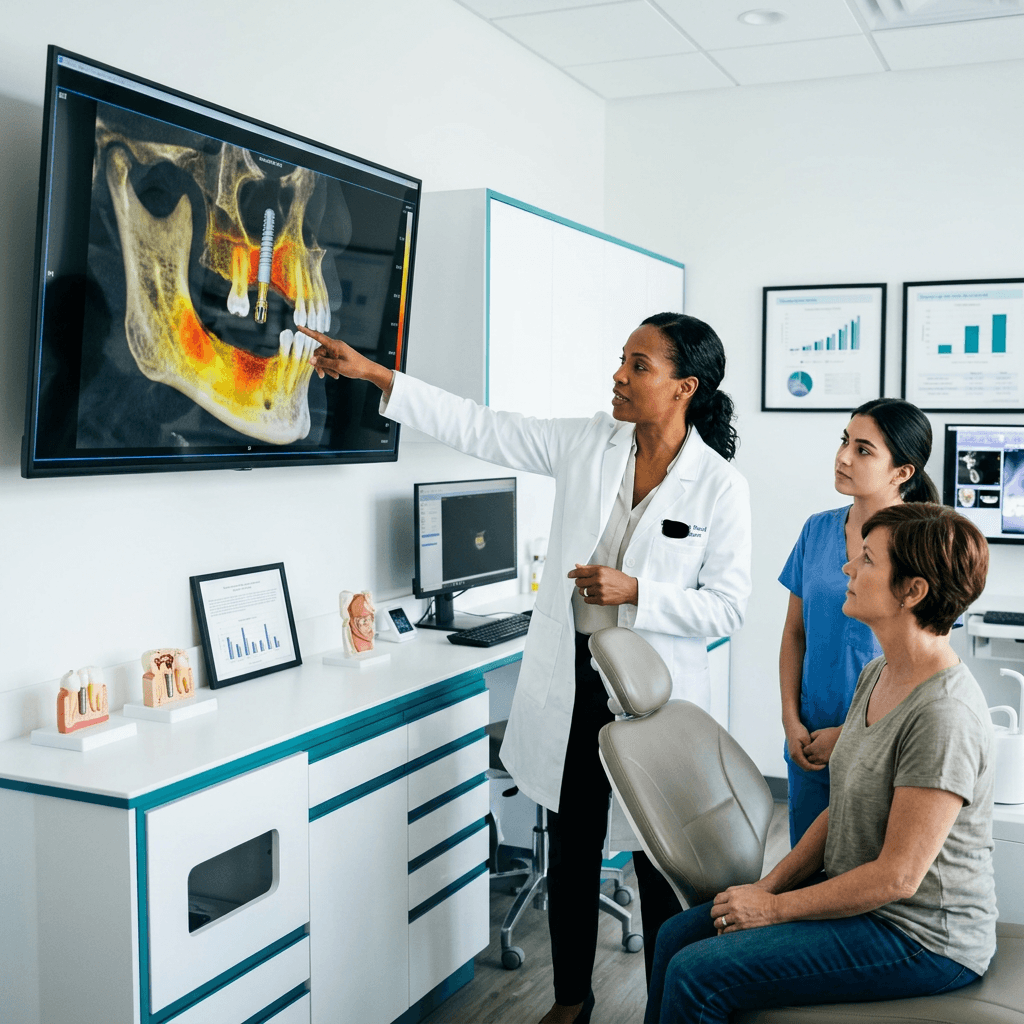
No article can tell you your cost — only a CBCT scan and an exam can, because bone volume, extractions, and material choice are all case-specific. What an article can do is arm you to evaluate the quote you receive. Dr. Antipov provides Roseville-area patients — including those traveling from Sacramento and across Northern California — a single all-inclusive written plan after imaging, itemized so it can be compared fairly against any other quote. You can read more about full-arch implant treatment at our practice.
Frequently Asked Questions
How much does a full fixed arch implant cost in 2026?
Complete treatment — imaging, extractions, implants, sedation, provisional teeth, and the final bridge — commonly runs $25,000–$35,000 per arch, or $50,000–$70,000 for both arches. Quotes far below that range usually exclude major components such as the final bridge, so always compare all-inclusive written plans.
What is the difference between All-on-4 and a full fixed arch?
All-on-4 is a specific technique using four implants, two of them tilted, to support a fixed bridge. “Full fixed arch” is the broader category covering any non-removable arch on four, five, or six implants. The right configuration is determined from your CT scan based on bone density and bite forces.
Why do some providers advertise much lower full-arch prices?
Usually because the headline number covers only part of the treatment — often implant placement and temporary teeth — with imaging, extractions, sedation, or the final bridge billed separately. Ask specifically whether the final bridge in your chosen material is included; that single line item can change the comparison by five figures.
Is zirconia worth the extra cost for the final bridge?
For many patients, yes. Monolithic zirconia resists wear, chipping, and staining better than titanium-acrylic hybrid bridges and typically needs less maintenance over its life. Hybrid designs cost less upfront and can be repaired more easily. Your surgeon can weigh the trade-offs against your bite forces and budget.
Can I get a fixed full arch if I have significant bone loss?
Often, yes. Tilted-implant techniques anchor into the denser bone at the front of the jaw and frequently avoid grafting; where grafting is needed, it rebuilds the foundation first. A CBCT scan shows what your anatomy supports — many patients told “no” elsewhere remain treatable with specialist techniques.
Does insurance cover any of the cost?
Full coverage is rare, but many plans contribute toward portions of treatment — commonly $1,000–$3,000 depending on the policy, often toward extractions and restorative components. Coordinating benefits, HSA/FSA funds, and financing together is how most patients structure the investment.
How long do fixed full-arch implants last compared to dentures?
The implant foundation is designed to last decades with good hygiene and regular checkups, while traditional dentures commonly need relines and replacement every five to seven years. The bridge itself is subject to normal wear and may need maintenance over time, with zirconia offering the longest service life.
What should I bring to compare quotes fairly?
Ask every provider for an itemized written plan listing imaging, extractions, number of implants, sedation, the provisional, the final bridge material, and follow-up care. With identical line items side by side, real price differences — and missing components — become obvious immediately.
Get One Honest, All-Inclusive Number for Your Case
Schedule a free implant consultation with Dr. Antipov in Roseville — 3D CBCT imaging and a single itemized written plan covering every component of your full-arch treatment, with no hidden line items to discover later. Restrictions apply.
Book a Consultation