All-on-4 vs All-on-6 Dental Implants: Which Is Better?
Medically reviewed by Dr. Alexander V. Antipov, DDS— Board-Certified Oral & Maxillofacial Surgeon · Diplomate, American Board of Oral & Maxillofacial Surgery (ABOMS) · California Dental License #50724
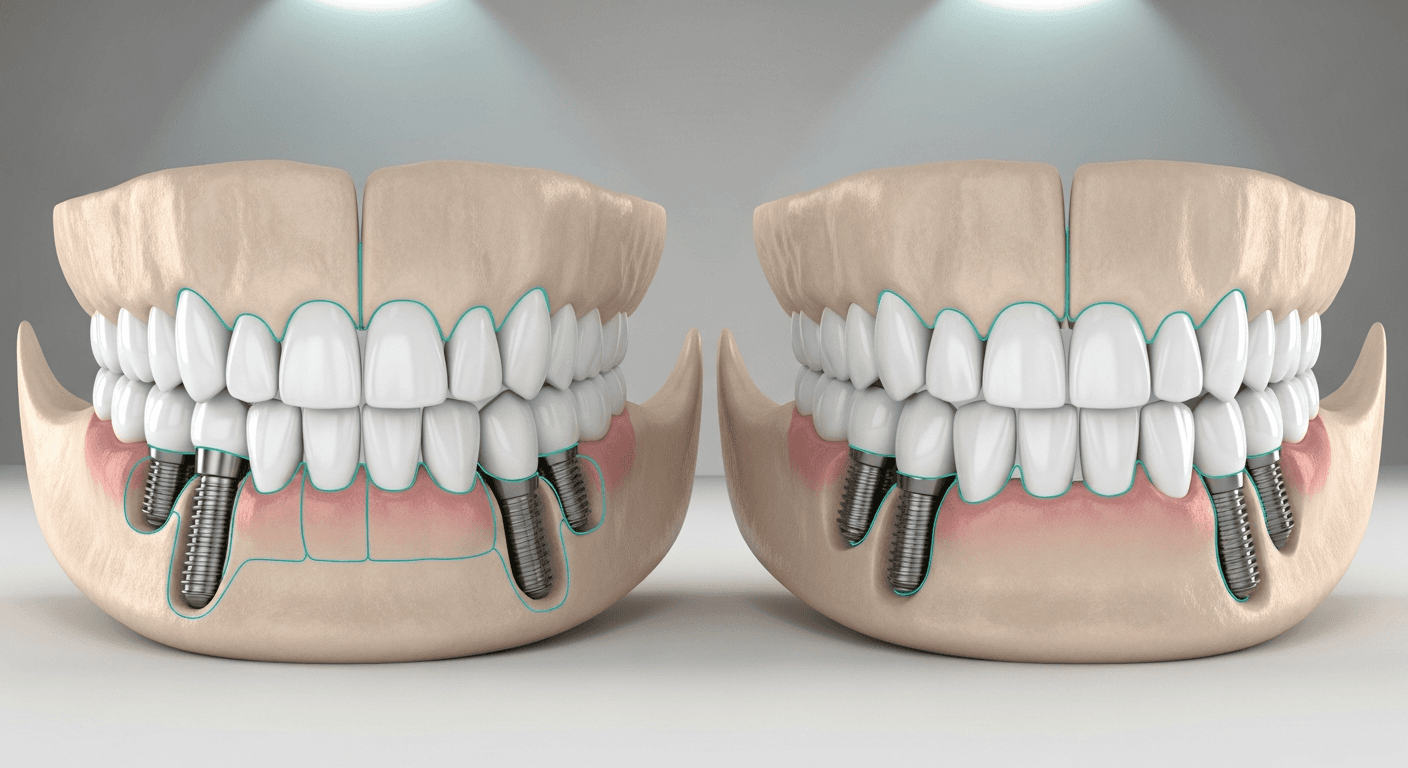
Neither All-on-4 nor All-on-6 is universally “better” — the right choice depends on your bone volume, bite forces, and goals, says Dr. Alexander Antipov, a board-certified oral & maxillofacial surgeon in Roseville, CA. In short, All-on-4 uses four implants and usually costs less, while All-on-6 adds two implants for extra support when bone is limited or bite forces are high. Both rebuild a complete arch of teeth on a fixed, implant-supported bridge, and both dramatically outperform traditional dentures.
This article is for general education — consult a qualified oral surgeon for a personalized recommendation.
Key Takeaways
- • Implant count: All-on-4 uses four implants; All-on-6 uses six.
- • Stability: All-on-6 can add support, especially when bone density is limited.
- • Cost: All-on-4 is usually less expensive.
- • Planning matters: your bone, bite forces, and goals decide the right choice.
What Each Approach Is
All-on-4uses four strategically positioned implants — typically two upright in the front and two angled toward the back — to support a full fixed bridge. The angled placement is designed to make the most of existing bone and often reduces the need for grafting.
All-on-6adds two more implants. Those extra anchor points can improve stability and distribute chewing forces more evenly — particularly valuable for patients with reduced bone density or higher functional demands.
| Feature | All-on-4 | All-on-6 |
|---|---|---|
| Implants per arch | Four | Six |
| Support & force distribution | Sufficient for most patients | More anchor points spread the load more evenly |
| Bone density | Good option with adequate bone | Helpful when bone is lower or stresses are higher |
| Cost | Usually less expensive | Typically more, with added surgical/restorative steps |
| Recovery | Some adapt slightly quicker | Can mean a little more initial healing |
The Key Differences
- — Support: two additional implants give All-on-6 more anchoring points for the prosthesis.
- — Bone density: patients with adequate bone are often good All-on-4 candidates; when bone is lower or stresses are higher, All-on-6 can spread the load.
- — Cost: All-on-6 is typically more expensive because it uses more implants and may involve additional surgical and restorative steps.
- — Recovery: both return you to function far faster than removable dentures; some patients adapt slightly quicker to All-on-4, while All-on-6 can mean a little more initial healing.
Benefits of All-on-4
- — Less invasive: fewer implants can mean less surgical manipulation.
- — Efficient treatment: often shorter surgical time with fewer implant sites.
- — May reduce grafting: angled posterior implants make good use of available bone.
Benefits of All-on-6
- — Enhanced stability: two extra implants provide a more secure foundation for some patients.
- — Better force distribution: more support points spread the chewing load more evenly.
- — Strong long-term support: especially helpful in complex cases or for heavy biters.
Which Option Is Right for You?
The honest answer is that it depends on your bone quality, anatomy, bite forces, medical history, and budget. A clinical exam with 3D imaging confirms what is realistic and safest for your specific case — not a one-size-fits-all recommendation. Be cautious of any practice that names a number before they have scanned and examined you.
Frequently Asked Questions
What is the main difference between All-on-4 and All-on-6?
The number of implants. All-on-4 uses four per arch and All-on-6 uses six, which affects stability and how bite forces are distributed across the prosthesis.
Is All-on-4 cheaper than All-on-6?
Generally yes — fewer implants and a less complex procedure usually make All-on-4 the more affordable option.
Can I get All-on-4 with low bone density?
Often, yes. The angled posterior implants use available bone well. When bone is significantly reduced, All-on-6 may be recommended to spread forces across more anchors.
Which offers better long-term success?
Both can succeed long term. All-on-6 can add stability for longer arches, heavy biters, or limited bone, while All-on-4 is well documented and biomechanically sufficient for most patients.
Does All-on-6 mean a longer recovery than All-on-4?
Placing two additional implants can mean a little more initial healing, while some patients adapt slightly quicker with All-on-4. For most people the difference is modest, and your surgeon will explain what to expect based on your specific plan.
How do I decide between All-on-4 and All-on-6?
The decision comes down to your anatomy and goals rather than a fixed rule. A 3D exam of your bone volume and density, your bite forces, the arch being treated, and your budget together guide which approach is likely to be more predictable for you.
Sources & References
Peer-reviewed and authoritative references supporting the information in this article.

Dr. Alexander V. Antipov
Board-certified oral and maxillofacial surgeon in Roseville, CA, specializing in dental implants, All-on-4 and All-on-6 full-arch restoration, and corrective jaw surgery. Serving the greater Sacramento region.
Not Sure Which Approach Fits Your Case?
A 3D scan and exam reveal exactly what your jaw can support — and let us build a personalized plan with transparent pricing.