Dental Implant Procedure: Complete Step-by-Step Guide
Medically reviewed by Dr. Alexander V. Antipov, DDS— Board-Certified Oral & Maxillofacial Surgeon · Diplomate, American Board of Oral & Maxillofacial Surgery (ABOMS) · California Dental License #50724
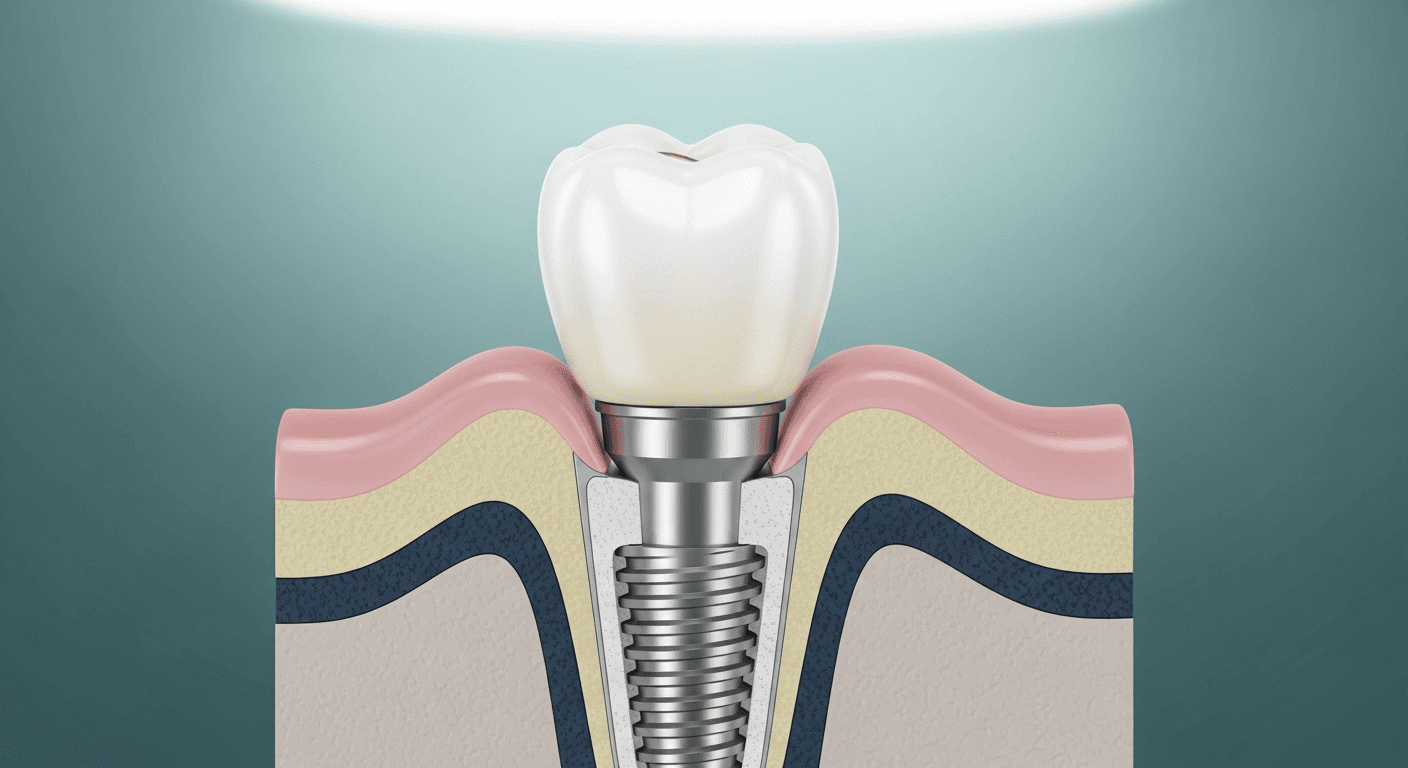
A dental implant procedure replaces a missing tooth with a titanium or zirconia post that fuses with your jawbone, then supports a permanent crown, bridge, or full arch of teeth, explains Dr. Alexander Antipov, a board-certified oral & maxillofacial surgeon in Roseville, CA. It’s the modern standard for tooth replacement — designed to look, feel, and function like your natural tooth. Most patients find the procedure far less involved than they expected. Here’s exactly what happens, step by step.
This article is for general education — consult a qualified oral surgeon for a personalized recommendation.
The Full Timeline at a Glance
Total time is typically 4–9 months for traditional implants. With our same-day implant protocol, patients can leave with a temporary tooth on the same day as placement.
| Phase | What Happens | Time |
|---|---|---|
| 1. Consultation | Exam, 3D scan, treatment plan | 1 visit (1 hour) |
| 2. Preparation | Extractions or bone grafting if needed | 1 visit + healing |
| 3. Implant placement | Surgical placement of titanium post | 1 visit (1–2 hours) |
| 4. Osseointegration | Bone fuses to implant | 3–6 months |
| 5. Abutment placement | Connector piece added | Often combined with placement |
| 6. Crown placement | Permanent tooth attached | 1 visit (30–60 min) |
Step 1: The Consultation
Before any surgery, you’ll have a comprehensive evaluation:
- — Medical and dental history review.
- — Clinical exam of teeth, gums, bone, and bite.
- — 3D cone-beam CT scan to map bone volume and locate nerves.
- — Digital impressions or molds.
- — Photographs of your smile.
- — Treatment plan presentation with clear pricing.
We’ll review your candidacy, options (single implant, bridge, full arch), and timeline. If you have questions about cost, financing, or recovery, we answer them here. There’s no obligation — many patients use the consultation to compare options.
Step 2: Preparation (If Needed)
Not every patient needs preparatory work. Some do.
- — Tooth extraction.If the failing tooth is still in place, it’s removed first. We can often place the implant the same day (immediate placement) — sealing the socket and reducing dry socket risk.
- — Bone grafting.If you’ve been missing the tooth for a while or have lost bone density, bone grafting may be needed. Modern grafting techniques heal in 3–4 months and dramatically expand who can receive implants.
- — Sinus lift. For upper back teeth where the sinus has expanded into the bone space, a sinus lift creates room for implant placement.
- — Treatment of gum disease. Active gum disease must be controlled before implant placement. Our team handles this in-house.
Step 3: Implant Placement Surgery
This is the day of the procedure most patients ask about. You have anesthesia options:
- — Local anesthesia alone(you’re awake but the area is numb) — appropriate for single implants in calm patients.
- — IV sedation— you’re deeply relaxed, conscious sedation, with no memory of the procedure.
- — General anesthesia— full sleep, used for complex full-arch cases.
During the surgery itself: the gum is opened to expose the bone (or guided through a small punch); a precise channel is created using a series of drills, often with computer-guided navigation; the titanium implant is placed into the channel; the gum is closed with dissolving sutures; and a healing cap or temporary tooth may be placed. For a single implant, this typically takes 45–90 minutes. Full-arch All-on-4 procedures take 2–4 hours per arch.
What you’ll feel: nothing during surgery if you’re sedated, or pressure but no pain if you’re awake. Right after, mild numbness from anesthesia gives way to manageable soreness. Day 1–2 brings discomfort similar to a tooth extraction, with rapid improvement from day 3. Most patients return to office work within 1–2 days.
Step 4: Osseointegration
This is the magic of dental implants. Over 3–6 months, your jawbone biologically fuses with the titanium implant in a process called osseointegration. The implant becomes part of your jaw, providing the same kind of stability as a natural tooth root. During this phase a temporary tooth or removable appliance fills the gap, most patients feel completely normal within a week or two of surgery, routine cleanings and checkups continue, and we may take a follow-up X-ray at 3 months. This step is what makes implants last decades — without proper osseointegration, the implant won’t have the foundation to support biting forces.
Step 5: Abutment Placement
The abutment is the small connector piece that links the implant (in the bone) to the crown (visible tooth). Depending on your case, it may be placed at the time of implant surgery (one-stage) or in a brief second visit after osseointegration (two-stage). If a second visit is needed, it takes 15–30 minutes under local anesthesia, and healing takes about 1–2 weeks.
Step 6: Crown (or Final Prosthesis) Placement
The visible tooth is custom-made in our in-house lab to match your existing teeth in shape, color, and texture.
- — Single implant crown.A digital scan or impression is taken of the abutment. The lab fabricates the crown over 1–2 weeks. At your final visit, the crown is attached — either screw-retained (removable for service) or cement-retained.
- — Implant bridge.For multiple missing teeth, a bridge spanning 2–4 implants is fabricated and attached.
- — Full arch (All-on-4 / All-on-X).A full prosthetic arch — typically zirconia or acrylic — is attached to 4–6 implants. Many patients receive a temporary same-day prosthesis and a final zirconia arch a few months later.
After the Procedure
Same day: eat soft foods, avoid the surgical site, take prescribed pain medication, apply a cold compress for swelling, and rest with your head elevated.
First week: soft diet, gentle salt-water rinses starting day 2, no smoking or straws, sleep with your head elevated, and take antibiotics if prescribed.
First month: gradually return to a normal diet, avoid hard or sticky foods on the surgical site, maintain excellent hygiene, and follow up as scheduled.
Long term:brush and floss like natural teeth, use a water flosser around implants, and keep professional cleanings every 3–6 months. Implants can last 20+ years with proper care.
Pain — What’s Realistic
Most patients report no pain during surgery (anesthesia handles it), discomfort on day 1–2 that is manageable with ibuprofen and similar to a tooth extraction, mild soreness from day 3 that no longer needs medication, and a return to essentially normal by week 2. Patients are consistently surprised at how comfortable the experience is.
How Long Do Dental Implants Last?
With proper care, dental implants last 20+ years — often a lifetime. Studies show 95–98% success rates at 10 years for properly placed implants in healthy patients.
What Could Go Wrong?
Implant procedures are highly predictable, but no surgery is risk-free. Possible complications include:
- — Implant failure to integrate (~2–5% of cases).
- — Infection (rare with proper post-op care).
- — Nerve injury (rare with 3D-guided placement).
- — Sinus complications (rare with proper planning).
- — Peri-implantitis later (preventable with good hygiene).
Choosing an experienced surgeon and following post-op instructions dramatically reduces these risks.
Cost of the Dental Implant Procedure
Costs vary based on case complexity:
- — Single implant + crown: typically $4,000–$6,000.
- — Implant bridge (3 teeth on 2 implants): $7,000–$12,000.
- — Full arch (All-on-4): from $16,999 per arch.
- — Bone grafting: $300–$3,000 depending on complexity.
Most patients use a combination of insurance, HSA/FSA, and financing. We offer in-house payment plans starting at $60/month for single implants and $250/month for full-mouth restoration.
Frequently Asked Questions
How long does the entire dental implant procedure take from start to finish?
Traditional implants take 4–9 months from consultation to final crown. With same-day implants, a temporary tooth is placed in one visit, and the final crown follows 3–6 months later.
How painful is the dental implant procedure?
Most patients describe day 1–2 discomfort as similar to a tooth extraction — manageable with ibuprofen. Significant pain is uncommon.
Can I get all my implants done in one day?
Yes — full-arch treatments like All-on-4 place all implants in one visit, often with a temporary set of teeth attached the same day.
How successful is the dental implant procedure?
Modern dental implants have 95–98% success rates at 10 years in healthy patients with proper post-operative care.
Can anyone get dental implants?
Most adults are candidates. Patients with uncontrolled diabetes, active periodontal disease, heavy smokers, or those with insufficient bone density may need preparatory work or alternative options.
Do dental implants look natural?
Modern crowns are virtually indistinguishable from natural teeth. The implant itself is hidden under the gum line.
Sources & References
Peer-reviewed and authoritative references supporting the information in this article.

Dr. Alexander V. Antipov
Board-certified oral and maxillofacial surgeon specializing in dental implants, full-arch restoration, zygomatic implants, and corrective jaw surgery. Serving patients throughout Northern California and beyond.
Ready to Start Your Dental Implant Journey?
Schedule a consultation to find out if dental implants are right for you. Most consultations include a 3D scan and a clear treatment plan, and a patient coordinator will explain what to prepare.