All-on-4 Near Sacramento: A Full-Arch Planning Guide
By Dr. Antipov Practice Editorial Team. Clinical review pending; this article has not yet been medically reviewed by Dr. Alexander V. Antipov, DDS.
All-on-4 can be an option for a Sacramento-area patient who needs a fixed replacement for an entire upper or lower arch, but suitability depends on bone, remaining teeth and the planned bridge. Dr. Alexander Antipov, a board-certified oral and maxillofacial surgeon in Roseville, evaluates the surgical foundation for full-arch treatment; patients should also understand the temporary-to-final restoration pathway before choosing a plan.
General educational guidance, not an individualized surgical plan. “All-on-4” describes one full-arch strategy; implant number, temporary-tooth eligibility, grafting needs and recovery instructions vary by examination.
Start with the arch, not the brand name
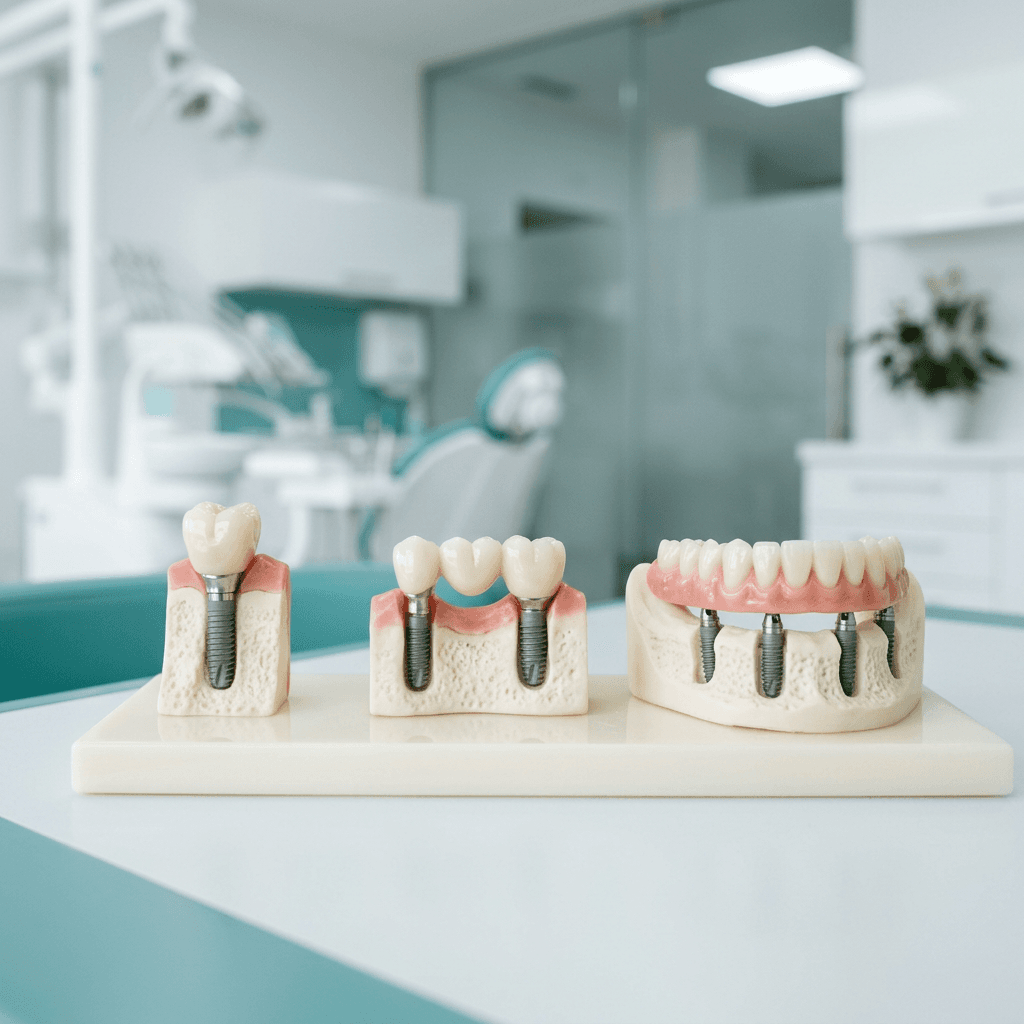
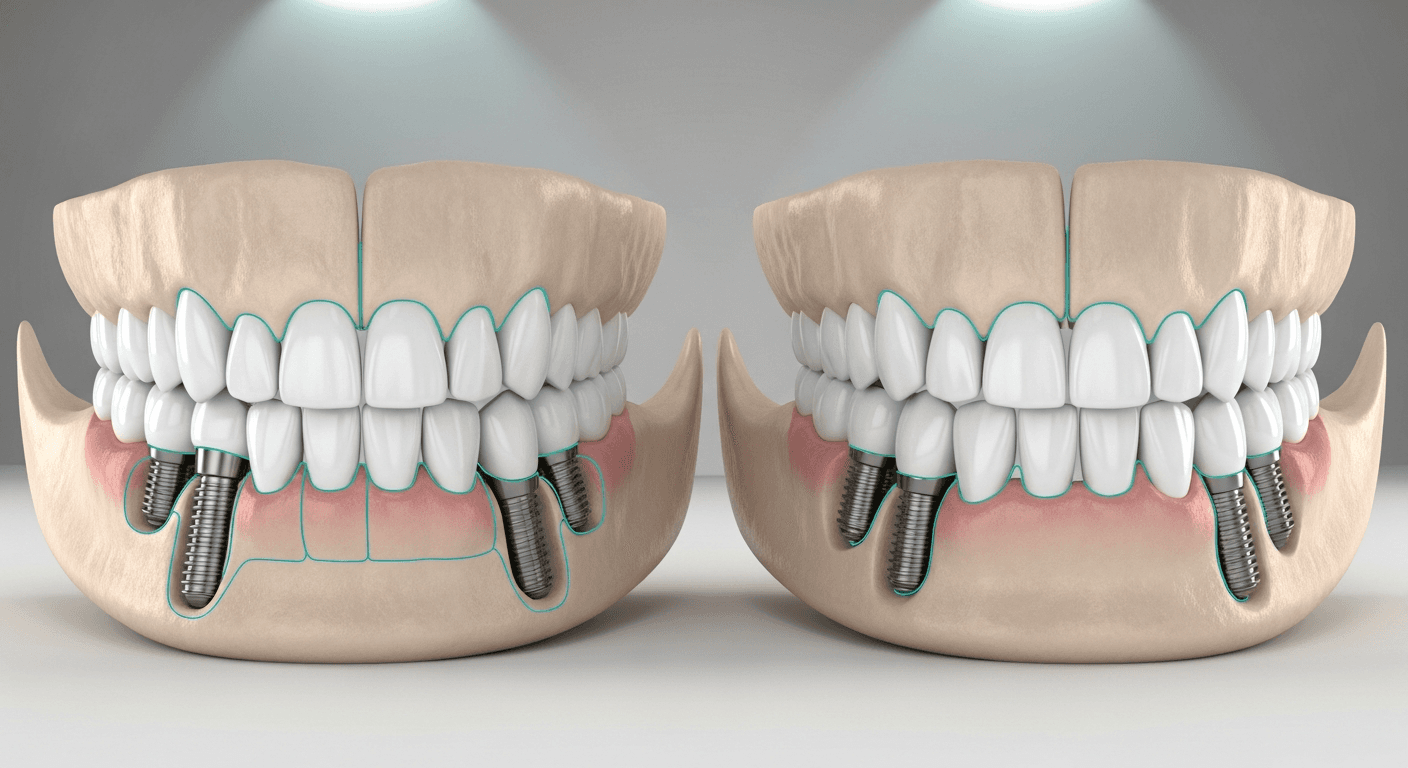
A full-arch implant bridge replaces a row of teeth using several implants rather than an implant for every tooth. In a four-implant configuration, the rear implants may be angled to make use of available bone and support the planned bridge. That geometry can be helpful in selected jaws, but it does not remove every bone limitation, solve active infection automatically or make four implants the right number in every case.
A patient missing many teeth may still have salvageable teeth worth preserving. The first diagnostic question is which teeth are maintainable, followed by whether a fixed bridge, removable overdenture or another combination best meets functional and hygiene needs. An upper and lower arch can require different solutions. The best plan is prosthesis-driven: where the new teeth need to sit determines where the implants must provide support.
| Full-arch approach | What remains in the mouth | Key planning consideration |
|---|---|---|
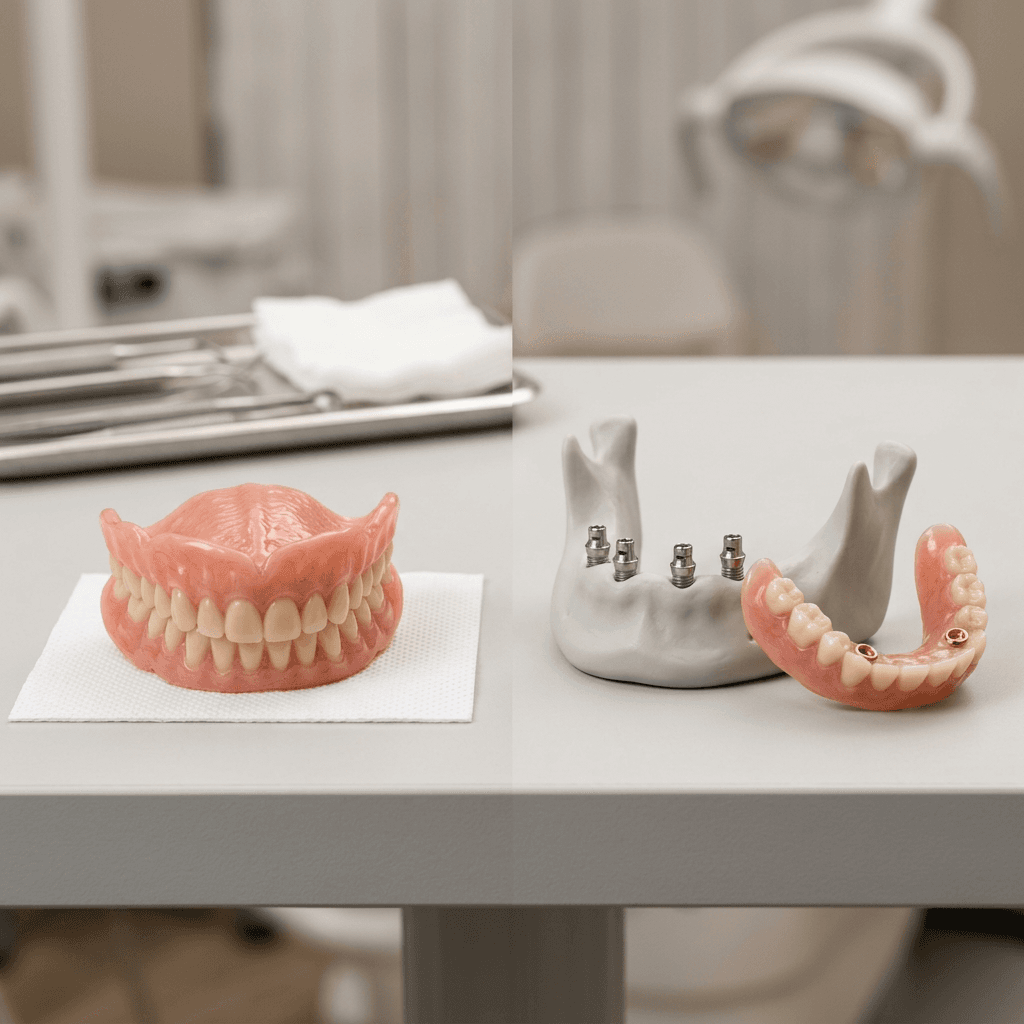
| Conventional full denture | No surgical implants; denture rests on tissue and is removed by the wearer. | Fit, ridge anatomy and future relines. |
| Implant-retained removable overdenture | Implants retain a denture that the wearer takes out to clean. | Attachments wear; denture may still share load with gums. |
| Four-implant fixed bridge | A clinician-secured bridge usually stays in place for daily use. | Bone distribution, implant stability, cleanable underside and temporary-bridge protocol. |
| More-than-four-implant fixed bridge | Fixed prosthesis supported by a plan using additional implants. | May offer a different support distribution; additional implants are not automatically better. |
| Preserve teeth with targeted restorations | Maintain viable natural teeth and restore only failing regions. | Tooth prognosis, bite and whether a full-arch extraction is avoidable. |
Who should be evaluated for full-arch treatment?
People with non-restorable teeth across an arch or a denture that cannot be made adequately stable may wish to explore it. A recent loose denture is not by itself a reason to remove remaining healthy teeth; adjustment, a new denture or a retained overdenture may be enough. Full-arch evaluation includes gum health, bone volume and shape, how the jaws meet, smile line, lip support and the space required for a strong prosthesis.
Medical history matters just as much. Smoking and diabetes can affect healing; prescriptions, jaw radiation history and prior implant problems can alter risk or sequence. The surgical team should consider nerve and sinus locations and the availability of sufficient bone at planned positions. In severely resorbed upper jaws, grafting or other specialized strategies may be discussed, but no alternative is guaranteed to avoid additional treatment.
If you have been told there is not enough bone, read our guide to options for severe bone loss before assuming that every patient should receive angled or cheekbone implants.
What “teeth in a day” really means
Some carefully selected full-arch patients can have a temporary bridge attached soon after implant placement. The word temporary matters: it protects appearance and limited function during integration, but it is not permission to immediately chew as though the final prosthesis were complete. The surgeon needs sufficient initial implant stability, a suitable bite and a manageable restorative plan to consider immediate loading.
Other patients need implants to heal before they carry a fixed bridge. A removable interim denture may be used, sometimes with adjustments to avoid putting pressure on surgical sites. A complication, graft or change in surgical findings can change what is possible on the day. Ask in advance what the backup temporary plan is if immediate loading is unsafe.
Our separate explanation of the All-on-4 recovery timeline covers why early tissue recovery and long-term bone integration are different milestones. The FDA's implant patient guide also emphasizes that healing and long-term hygiene are part of the treatment, not footnotes.
A stage-by-stage pathway from Sacramento to Roseville
First comes an examination and a discussion of objectives: do you want to stop a denture from moving, replace failing teeth, improve cleaning access or change appearance? Imaging and restorative records help the team plan implant positions relative to the proposed bridge. The clinician should explain why each remaining tooth is being preserved or removed, and whether a specialist in another aspect of care needs to participate.
On surgery day, extractions or site preparation may accompany placement if planned and appropriate. Anesthesia options are discussed individually; sedation does not eliminate ordinary postoperative swelling or the need for a ride and recovery support when indicated. Temporary teeth, if delivered, must be protected according to the team's instructions. Follow-up checks healing, bite and hygiene access.
After an individualized integration period, the restorative phase addresses final fit, speech, appearance, materials and cleaning access. Sometimes a provisional is adjusted before a definitive bridge is made. The clinician may remove a fixed prosthesis for servicing later; that is different from a patient-removable denture. Clarify who makes the temporary and final prostheses and who you contact if one feels loose.
Fixed is not maintenance-free
An All-on-4 bridge has spaces where food and plaque can accumulate around the implant-to-gum interface. The visible front surfaces can look clean while the underside needs attention. Your team should demonstrate the tools that fit your design and schedule professional exams to check inflammation, screw or component issues and wear. A bridge can require repair even when its supporting implants remain healthy.
Compare materials on their service needs, not only appearance. Acrylic and ceramic constructions have different potential repair issues; biting forces, available space and the laboratory design matter. Neither a material name nor a warranty claim replaces a written maintenance plan. Ask what happens if a tooth chips, the bridge cracks or one implant develops inflammation.
For the distinction between removable and fixed designs, see hybrid dentures versus fixed implant bridges. For everyday care see dental implant aftercare.
Getting a quote you can actually compare
A meaningful proposal states whether it is for one arch or both, how many implants are planned, whether extractions and grafting are included, what temporary teeth will be supplied, what material the final bridge uses and what follow-up and repairs cost. A surgery-only figure cannot be compared with a completed restorative package. Ask whether imaging, anesthesia and adjustments appear on separate bills.
For Sacramento-area residents considering a Roseville evaluation, logistics matter: plan transport after sedation, a soft-food period when instructed and visits for prosthetic adjustments. There is no universal price or guaranteed day-one result. A transparent plan includes the option of a removable restoration if its cleaning routine, scope and cost are a better fit for you.
See All-on-4 versus All-on-6 for a focused discussion of implant count. At the consultation, ask why that particular number is proposed for your anatomy rather than comparing numbers in isolation.
Frequently Asked Questions
Is All-on-4 the same as four separate implant crowns?
No. The concept usually involves one full-arch prosthesis supported by four planned implants, rather than an individual crown on each implant.
Will I definitely leave with fixed teeth on surgery day?
No. A same-day temporary is possible only when the surgical and prosthetic conditions support it. Discuss a backup plan for temporary teeth before treatment.
Does angling rear implants mean I never need grafting?
No. Angulation can make use of available bone in selected cases, but the position and amount of bone vary. Some patients still need additional preparation or another plan.
Are the final teeth delivered on the surgery date?
Typically a same-day bridge, when provided, is provisional. The definitive prosthesis follows healing and restorative assessment.
Can an All-on-4 bridge be removed?
A fixed bridge is not normally removed by the wearer; a clinician can remove it when servicing is needed. An overdenture is designed for the wearer to remove daily.
Is four always better than six implants?
Neither number wins universally. Bone distribution, restorative design, load and feasibility determine what support is appropriate for a specific arch.
Do I need to extract every remaining tooth?
Not automatically. Each tooth's prognosis and its role in a workable treatment plan should be assessed before irreversible extraction.
Plan the arch before choosing the implant count
Sacramento-area patients can discuss surgical options in Roseville with Dr. Antipov. Bring records and ask for a plan that separates temporary teeth, definitive teeth and maintenance. Restrictions apply.
Book a Free Dental Implant Consultation