Implants vs Dentures: Maintenance, Longevity and Everyday Trade-Offs
By Dr. Antipov Practice Editorial Team. Clinical review pending; this article has not yet been medically reviewed by Dr. Alexander V. Antipov, DDS.
Dental implants and dentures can both replace missing teeth, but neither is maintenance-free: implants require healthy surrounding tissue and cleanable restorations, while removable dentures need cleaning, fit checks and occasional adjustment. Dr. Alexander Antipov, a board-certified oral and maxillofacial surgeon in Roseville, can help patients distinguish the surgical implant from the replacement teeth it supports before comparing long-term care.
This comparison is general education, not a prediction of lifespan, chewing ability or candidacy for an individual patient. Discuss new soreness, bleeding, mobility or denture sores with your dental clinician.
What exactly are you maintaining?
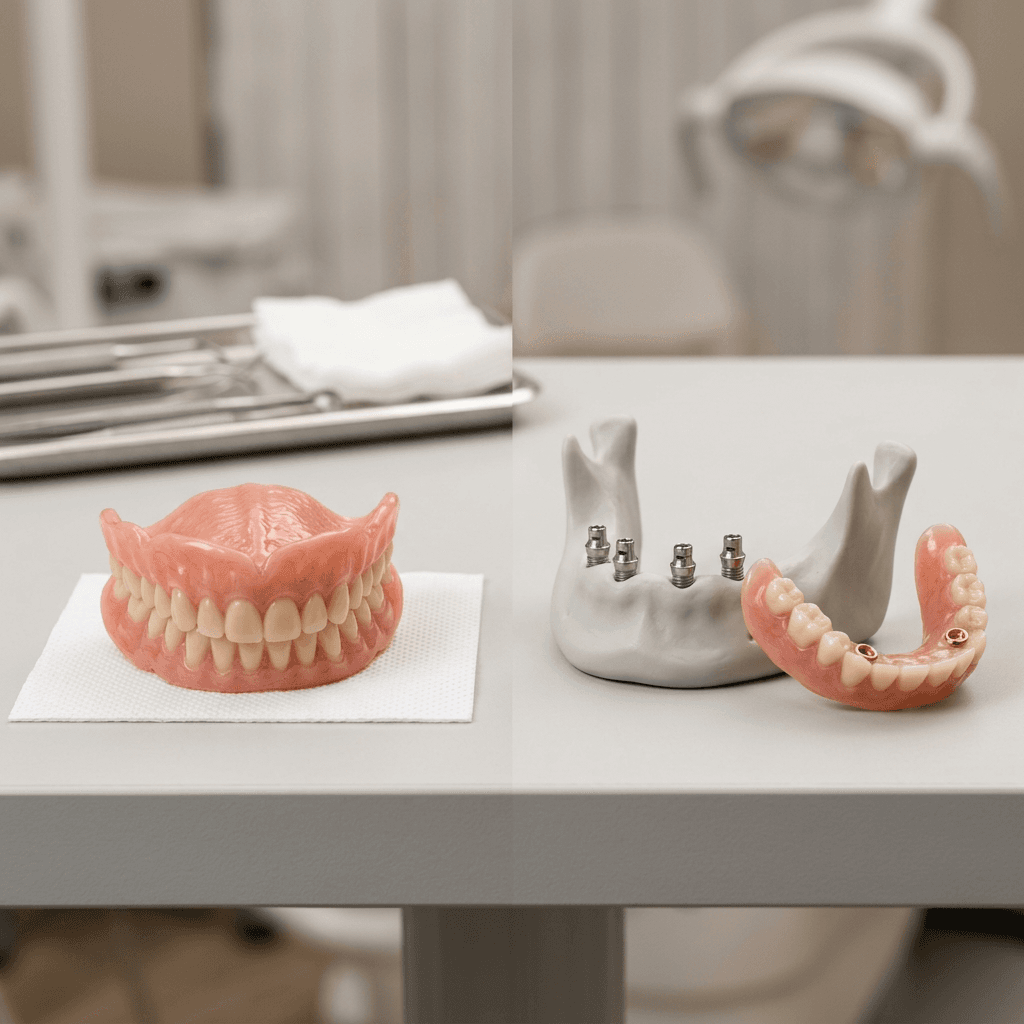
“Implants versus dentures” sounds like two choices, but it mixes a support system with a type of replacement tooth. A conventional denture sits on gum tissue; an implant is anchored in bone and can hold one crown, a fixed bridge or a removable overdenture. Some people therefore have both implants and dentures. Understanding which part can wear or loosen makes lifespan claims less misleading.
The table focuses on what you actually do at home and what a clinician may need to monitor. The least complicated daily routine for one patient may be difficult for another with limited dexterity, a dry mouth or trouble attending visits.
| Restoration | At-home routine | Common maintenance | What can change over time |
|---|---|---|---|
| Conventional removable denture | Take out and brush appliance; clean gums and remaining teeth | Fit checks, relines, repairs or replacement | Gum and ridge shape can change and loosen the fit |
| Single implant crown | Brush and clean around crown and gum margin daily | Examine tissue, bite and crown or connector | Crown can wear or loosen even if implant stays integrated |
| Implant-retained removable denture | Remove appliance; clean it and attachment areas separately | Replace worn retentive parts and reassess fit | Attachments wear and denture base may need adjustment |
| Fixed full-arch implant bridge | Brush and clean beneath bridge with recommended tools | Professional assessment of access, tissue and prosthesis | Teeth or bridge components may need repair or renewal |
The real difference between a fixture and its teeth
The American Dental Association's guide to implants explains how the fixture supports replacement teeth. An integrated fixture may remain stable for many years, but that does not mean its crown, connector, attachment or bridge lasts indefinitely. The restoration encounters chewing forces every day. Screws, acrylic teeth, ceramic and retaining inserts can have different repair needs.
An implant cannot decay like a natural tooth. It can still develop inflammation of the gums around it, and the supporting bone can be compromised. Brushing the visible part without reaching the gum margin or underside of a bridge is not adequate cleaning. Smoking, a history of periodontal disease and difficulty keeping appointments may affect the care plan.
For a broad introduction to replacement choices, see our implants-versus-dentures overview. This article concentrates instead on what happens after delivery: home care, professional maintenance, fit changes and the cost of upkeep.
What wearing and cleaning a conventional denture involves
The ADA's denture care information recommends keeping dentures clean and continuing dental visits. Remove the appliance as advised, clean it with suitable products and protect it from damage when handling it. Also clean the gums, tongue and any remaining teeth. Avoid using household glue or ignoring persistent sore spots.
A new denture may feel bulky at first. Speech and chewing can take practice, and soft-tissue support can change as the jaw ridge remodels following extractions. A reline adjusts the inner surface to fit the current ridge; it does not turn a conventional denture into an implant-supported one. Persistent rocking may call for an exam, not simply more adhesive.
Conventional dentures avoid implant surgery and can be appropriate when surgery is not wanted or not feasible. They can also function as interim teeth while a longer-term plan is being evaluated. Their lower initial procedural burden should be weighed against appliance cleaning, adaptation, repairs and changes in fit over time.
Snap-in dentures: better retention, still removable
An implant-retained overdenture connects to implants with attachments and can usually be taken out by the patient. It may improve retention compared with a denture supported entirely by tissue, especially when the lower denture is unstable. It does not eliminate the need to clean the denture base or inspect underlying tissues. Some designs still gain support from the gums.
Attachments are deliberately serviceable parts. When the denture stops engaging as expected, the solution might be replacing a worn insert, adjusting the base or checking an implant component. Do not assume the fixture has failed. Ask who maintains the attachments and what costs are expected after delivery.
Our snap-in denture guide explores this option in more detail. If you prefer to remove and clean your teeth yourself, that can be a feature rather than a drawback; compare it honestly with the cleaning access required under a fixed bridge.
Fixed implant teeth are not a shortcut around hygiene
A fixed restoration remains in the mouth for daily use; a clinician can remove it when necessary. A single crown can often be brushed and cleaned between adjacent teeth, but a full-arch bridge usually needs tools to reach under its underside. The right tools depend on the contours of the final prosthesis and the space left for cleaning.
Ask the restorative team to show you the cleaning route before the final teeth are delivered. If a bridge is difficult to clean in the office, it may be difficult to maintain at home. Follow-up also checks bite contact and possible fracture, wear, screw loosening or food trapping. Do not ignore bleeding simply because the prosthetic teeth look clean.
A fixed bridge may suit people who dislike removing an appliance; it also commits them to a more involved hygiene routine. Someone with hand-mobility limitations should discuss realistic assistance and tools before choosing. Fixed does not mean that every food is immediately safe during healing or that professional maintenance ends after the final delivery.
Bone health and the limits of longevity promises
Tooth loss is associated with changes in the supporting jaw ridge. Implants transfer forces into bone at the placement sites, which can help preserve local support, but they cannot freeze all bone changes across an arch or guarantee a particular facial appearance. A conventional denture does not replace roots; its fit may change as the ridge changes. Neither conclusion supplies a fixed expiration date.
A meaningful lifespan estimate distinguishes the fixture, the prosthesis and the patient's tissues. A fixture can need removal for biological or mechanical reasons. A perfectly integrated fixture can also support a crown that requires replacement. Likewise, a denture that still looks good can fit poorly. Individual maintenance needs vary too much for a universal “every five years” or “lifetime” promise.
If you are concerned about symptoms, read the implant complication guide and seek an examination rather than diagnosing the cause from pictures online.
Put ongoing cost on the same page as initial cost
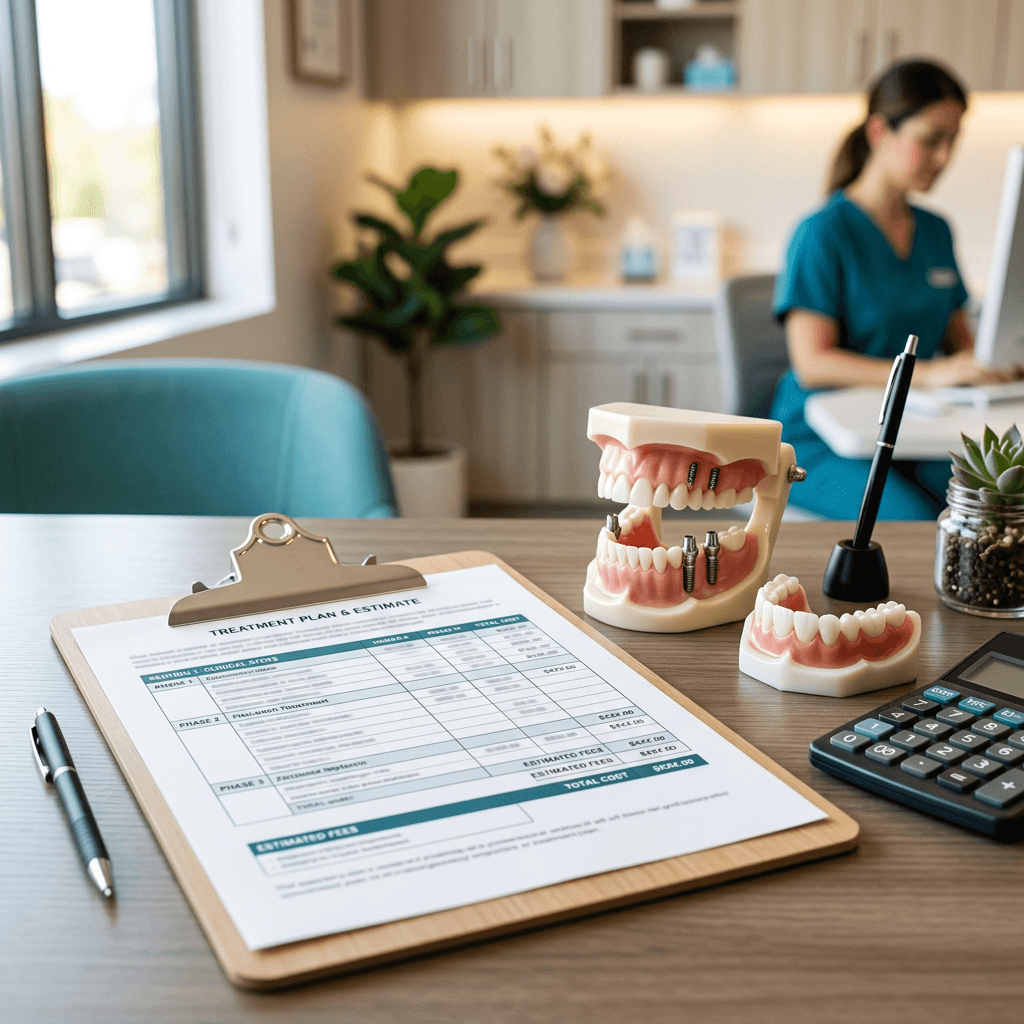
A useful estimate includes the initial procedure and a separate conversation about predictable and possible future expenses. For dentures, ask about fit checks, relines, repairs and replacement. For overdentures, include attachment inserts and appliance fit. For fixed implant work, ask who handles professional maintenance, prosthetic repairs and any future remake.
Ask about insurance coverage for each stage rather than assuming that coverage for a denture applies equally to surgery or replacement components. Ask whether a quoted maintenance visit includes removal of a bridge, if planned, and whether the practice can coordinate future work when the original prosthesis is made elsewhere.
Dr. Antipov's Roseville team can discuss surgical candidacy, while your restorative plan should explain who is responsible for the visible teeth and routine recall. The best value is a solution you can clean, attend follow-up for and repair when needed—not simply the one with the longest advertised lifespan.
Frequently Asked Questions
Do dental implants last forever?
No treatment has a guaranteed lifetime. A stable implant fixture may serve for many years, but it needs healthy surrounding tissue and monitoring. The crown, bridge or denture supported by it has separate wear and repair needs. Ask about each component instead of a single lifespan claim.
Can a conventional denture be repaired instead of replaced?
Often, depending on what is wrong. A clinician may adjust a sore spot, reline a base that has lost fit or repair a broken component. If the appliance or bite no longer functions well, replacement may be more appropriate. Have a clinician assess it before using adhesives to compensate for a major fit problem.
Must I remove a snap-in denture every night?
A removable overdenture is designed for you to take out for cleaning; follow your own dentist's schedule for overnight wear. Clean both the appliance and the exposed attachment sites. Do not treat it as a permanently fixed bridge.
Is a fixed full-arch bridge easier to clean than a denture?
Not necessarily. You do not remove it at home, but must clean the tissue margin and underside thoroughly using tools suited to its design. A removable denture is easier to inspect outside the mouth but adds separate appliance cleaning. Ask for a hands-on hygiene demonstration.
Do implants prevent all jawbone loss?
No. Implants can support bone at their placement sites, but natural remodeling and other conditions still affect the mouth. Missing teeth elsewhere may lead to additional changes. A clinician must assess your specific jaw and explain what a proposed restoration can and cannot preserve.
Why is my implant denture less secure than before?
Retention inserts can wear, the denture base can lose fit, or an attachment may need attention. Less commonly a fixture or surrounding tissues may be affected. A dental examination can identify which component changed; do not force an appliance that no longer seats comfortably.
Which is more economical over the long term?
It depends on your anatomy, surgical needs, prosthesis and future maintenance. Conventional dentures generally avoid implant surgery but may require fit work. Implants add a surgical stage and can require prosthetic repairs. Compare itemized initial and anticipated maintenance costs, not advertised lifetime claims.
Choose a routine you can sustain
If you are comparing removable and implant-supported teeth in Roseville, ask Dr. Antipov's team how each surgical choice fits a realistic long-term restorative and hygiene plan.
Book a Consultation