One Arch vs Two Arches: Understanding Dental Implant Replacement Costs
By Dr. Antipov Practice Editorial Team. Clinical review pending; this article has not yet been medically reviewed by Dr. Alexander V. Antipov, DDS.
Replacing “all your teeth” can mean restoring one upper or lower arch, or both—and the total implant cost changes fundamentally with that scope. Dr. Alexander Antipov, a board-certified oral and maxillofacial surgeon in Roseville, can help evaluate whether each arch needs surgical replacement at all before you compare a one-arch proposal with a two-arch plan.
This article explains how to interpret treatment estimates; it does not quote a price or recommend extraction. Preserve treatable teeth where clinically appropriate and seek an individual examination before making irreversible decisions.
Start by naming each arch and its actual condition
An upper full-arch bridge replaces an entire upper row; a lower full-arch bridge replaces a lower row. Neither necessarily means an implant for every missing tooth. A patient may need surgery in one jaw but have stable natural teeth in the other. Others may need separate restorative strategies for upper and lower jaws.
The table shows why adding a second arch is not simply doubling one quoted number. Treatment can be staged, and decisions in one jaw affect the opposing bite. It also highlights why preserving healthy teeth is a real option, not a failure to complete a “full-mouth package.”
| Decision | One arch | Both arches |
|---|---|---|
| Clinical starting point | Evaluate the selected jaw and how it meets natural or prosthetic opposing teeth | Evaluate two distinct jaws, their health, bone support and the bite between them |
| Surgery scope | Implants and any extractions or grafting in one jaw | Potentially separate surgical needs and healing courses in each jaw |
| Interim teeth | Ask what you will wear in the treated jaw and how you will chew against the other | Ask what each jaw will wear during healing and whether stages overlap |
| Final restorations | One final arch prosthesis, with opposing bite checked | Two prostheses, possibly with different designs or materials |
| Estimate language | Confirm upper or lower and every included stage | Request upper and lower line items and an overall total with contingencies |
A full-arch restoration is not the same as every tooth on its own implant
A full-arch restoration can use a set of implants to support a connected row of prosthetic teeth. The exact implant count and configuration depend on the jaw, available bone and prosthesis design. A removable overdenture and a fixed full-arch bridge may both involve implants, yet their fees, maintenance and experience differ.
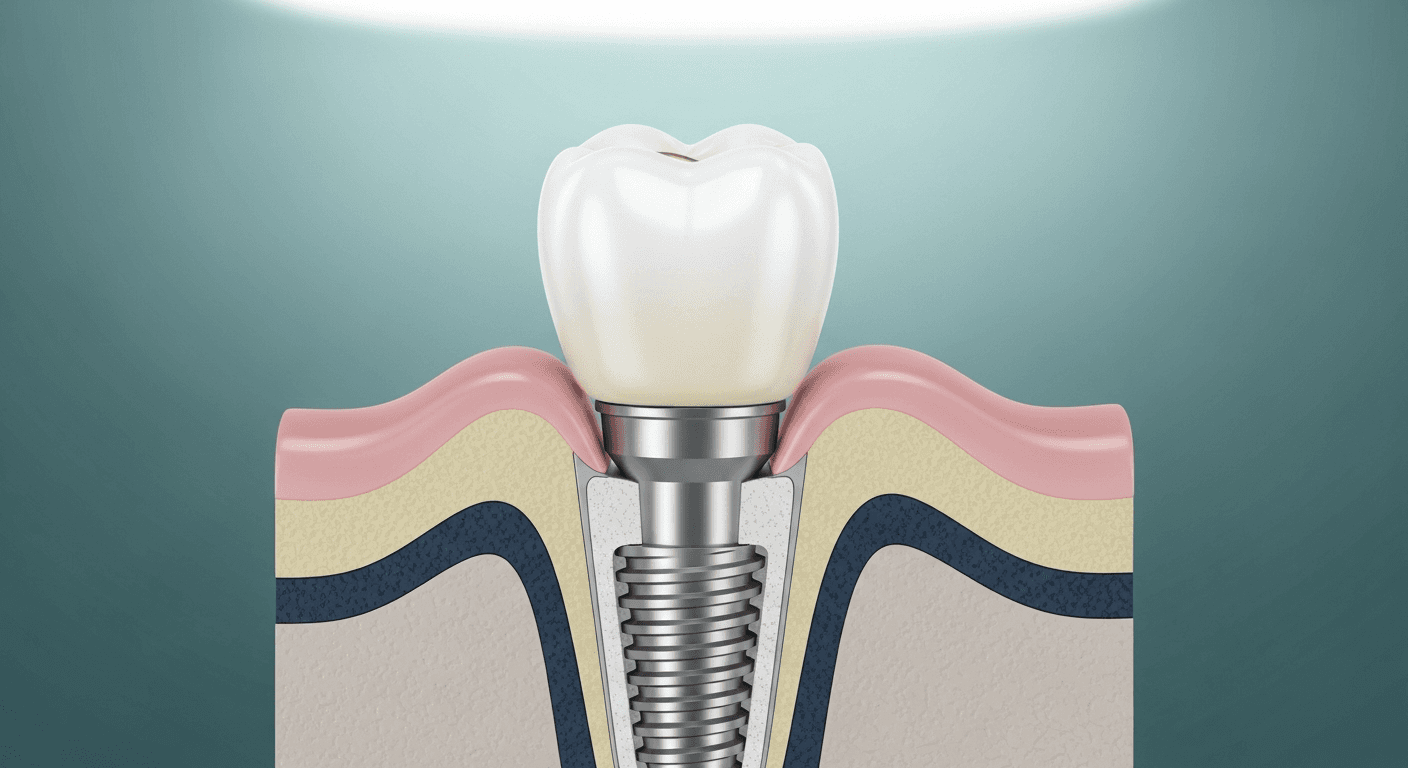
The American Dental Association's implant guide explains the relationship between implants and replacement teeth. Ask your clinician to show which part of the estimate pays for the fixture, which part pays for the connection and which part delivers the final teeth. A surgery-only quote is not the total cost to replace an arch.
If you want a deeper explanation of treatment stages independent of the one-versus-two-arch decision, see the site's full-mouth implant cost and process guide. This guide focuses instead on deciding what is included when the scope expands to both jaws.
Why the two jaws may need different plans
Upper and lower jaws differ in available bone, proximity to anatomical structures and how existing teeth have been used. A patient with a loose lower denture and stable upper teeth may benefit from evaluating only the lower jaw. Someone with severe disease in both jaws needs an assessment of whether any teeth can be retained, how extractions would be sequenced and what interim teeth would allow reasonable function.
An implant-supported upper overdenture may have a different design from a lower overdenture. A fixed bridge in one jaw may oppose natural teeth, a conventional denture or another fixed bridge; each pairing affects the bite. Ask what happens to the opposing arch even if it is not being surgically treated.
If a proposed plan removes remaining teeth, ask which teeth are not restorable and why. A written comparison should address retention of sound teeth, periodontal treatment or individual restorations when appropriate, rather than assuming both arches belong in the same package.
Build a total replacement estimate in layers
Layer one is diagnosis: examination, imaging when clinically indicated, assessment of gum disease and a restorative design. Layer two is preparation: treatment of infection, extraction of non-restorable teeth and grafting only where necessary. Layer three is surgery and any sedation. Layer four is the interim prosthesis, followed by the final prosthesis after the appropriate healing and fitting stages.
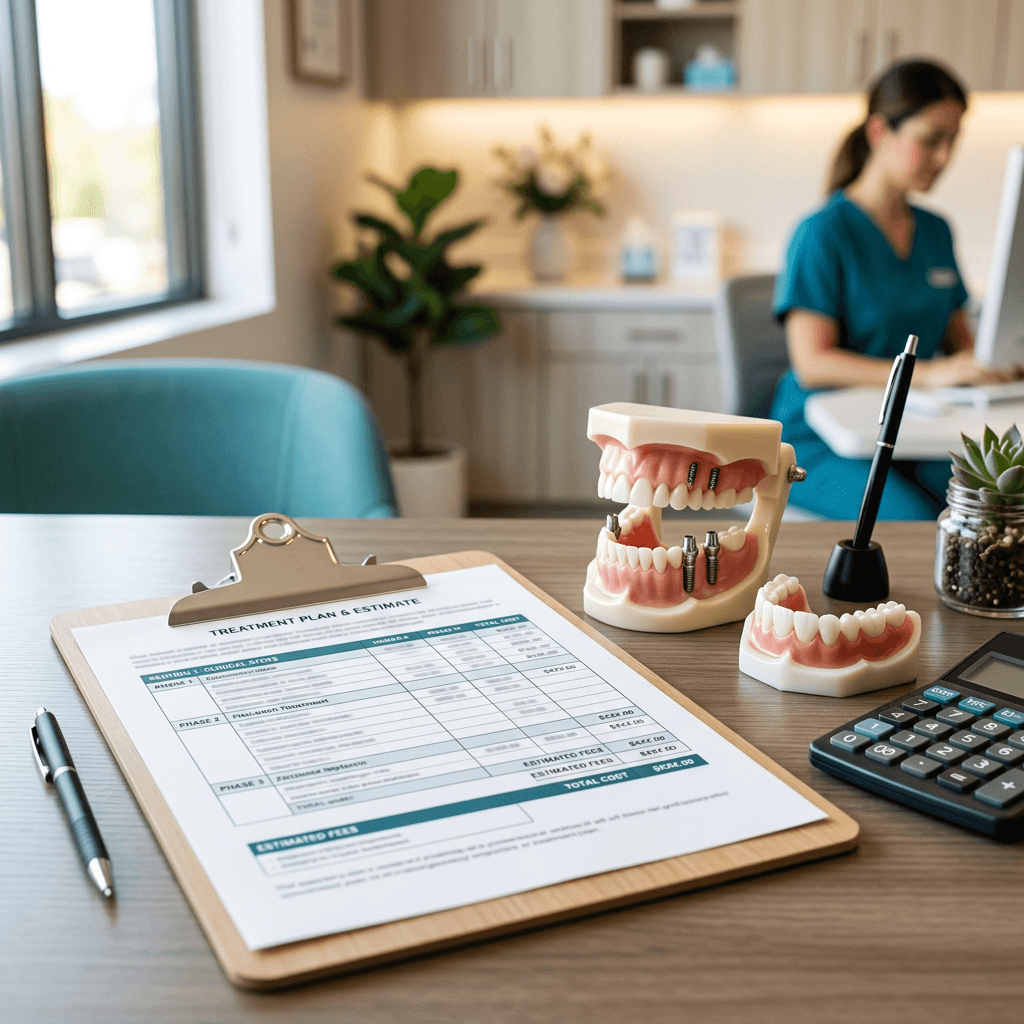
For each layer, ask whether costs are charged per arch, per site or for a combined visit. A shared appointment might simplify scheduling, but do not assume it eliminates all second-arch expense. Request separate upper and lower subtotals plus a combined total; label which items are firm, which are provisional and who approves a change of plan.
Include scheduled postoperative visits, adjustments and any possible service charges after final delivery. Price comparisons become meaningful only when they describe the same arch, restoration type, materials and number of planned stages.
Together or staged? Ask about the practical trade-offs
Treating both arches at the same time can consolidate parts of the appointment calendar, but it may also make eating and adapting to interim teeth more demanding. Staging may allow the first arch to heal before the second begins, at the expense of a longer overall timeline or additional visits. Neither sequence is automatically safer, faster or less costly for everyone.
Medical history, available support, medications, treatment of periodontal disease and whether a stable interim prosthesis is possible all matter. Ask the surgeon what condition must be met before implants can bear an early provisional bridge. If early loading is unsuitable, what appliance will you use while bone heals?
For an explanation of the difference between early teeth and final teeth, see our same-day implant article. A provisional restoration delivered early does not eliminate later restorative work or imply unrestricted chewing.
Long-term value includes the opposing bite and maintenance
The final teeth must work together. If an upper implant bridge meets a worn lower denture, the lower denture may also need adjustment or replacement even when no lower implants are planned. Conversely, replacing both arches with prostheses creates two appliances to maintain, repair and eventually reassess. Ask whether the estimate includes any work on the untreated jaw.
A removable overdenture is cleaned outside the mouth and may need retention components renewed; a fixed bridge requires cleaning beneath it and professional follow-up. Restorative materials also have different repair paths. If you choose different designs for the two jaws, request separate maintenance instructions and anticipated service arrangements.
The implant-supported versus traditional denture comparison can help frame the daily-use question. An implant fixture may last while the attached prosthesis needs work, so ask about both rather than a single advertised lifespan.
Insurance and payment questions for a two-arch plan
Dental insurance coverage is based on the policy and proposed codes, not the phrase “full-mouth implants.” Ask your insurer about exclusions, annual maximums, replacement clauses and whether treatment spanning more than one plan year changes benefits. Do not schedule an arch solely on an assumption about future coverage; benefits and eligibility can change.
If an estimate is staged, ask when each payment is due and what is owed if the second arch is postponed or a different restoration is chosen. Review financing agreements for the full repayment amount, fees and interest, not only the monthly figure. Have the team identify which laboratory and follow-up charges belong to the first arch versus the second.
A Roseville consultation with Dr. Antipov's team can help clarify the surgical scope, but an accurate total needs a coordinated plan for both the surgery and the teeth you will actually wear. Bring an existing denture, imaging and any prior quotes, and ask for an upper-versus-lower breakdown.
Frequently Asked Questions
Does replacing all teeth always mean treating both arches?
No. Many people use “all teeth” to describe one entire row. Others mean both upper and lower jaws. Ask every provider to label the upper and lower arches in the written plan and state what will happen to remaining natural teeth.
Is a two-arch implant plan exactly twice the cost of one arch?
Not necessarily. Each jaw can require different preparation, implants, temporary teeth and prosthetic designs. Some visits might be coordinated, but both arches still need their own clinical assessment and restoration. Request separate subtotals and a combined total rather than multiplying a headline price.
How many implants are needed to replace every tooth?
There is no universal number. A full-arch bridge or implant-retained denture can replace a row of teeth without one fixture beneath each tooth. Implant positions and counts depend on anatomy, bite and restoration design; request a diagram showing what supports each planned arch.
Can I replace one arch now and the other later?
Sometimes. Ask how the first restoration will function against the untreated jaw, what interim adjustments may be required and whether delay changes the second jaw's plan. A clinician can explain whether staging makes sense for your health, preferences and budget.
Are temporary teeth part of a full replacement quote?
They may or may not be. Ask what you will wear immediately after extractions or implant placement, whether it is fixed or removable, and whether the final teeth are separately charged. The temporary and final prostheses are different stages.
What if some teeth can be saved?
Ask for an explanation of prognosis and treatment alternatives before extraction. Gum therapy, crowns, bridges or selective replacement may allow you to retain teeth where clinically appropriate. A full-arch implant proposal should not bypass an honest assessment of the remaining dentition.
Does insurance cover both arches in the same year?
It depends on your plan's covered procedures, exclusions, annual limits and benefit timing. Request codes for each arch, verify benefits with the insurer and ask about your likely responsibility. A predetermination is not a guarantee that every claim will be paid.
Get clarity on upper and lower treatment scope
In Roseville, bring your existing records and ask for an arch-by-arch explanation of what can be preserved, what would be replaced and which surgical and restorative costs belong to each stage.
Book a Consultation