Dental Implants Near Rocklin, CA: A Practical Buyer's Guide
By Dr. Antipov Practice Editorial Team. Clinical review pending; this article has not yet been medically reviewed by Dr. Alexander V. Antipov, DDS.
For Rocklin residents, the best dental implant plan is the one that fits the teeth you have, your bone and gum health, and the restoration you can maintain—not the plan with the loudest advertisement. Dr. Alexander Antipov, a board-certified oral and maxillofacial surgeon in nearby Roseville, offers a local point of reference for understanding the surgical questions you should ask before choosing treatment.
Educational information for Rocklin-area patients; a dental examination, health review and appropriate imaging are needed to determine candidacy. Treatment and recovery vary, and this guide is not a personal recommendation.
First, compare the treatment you actually need
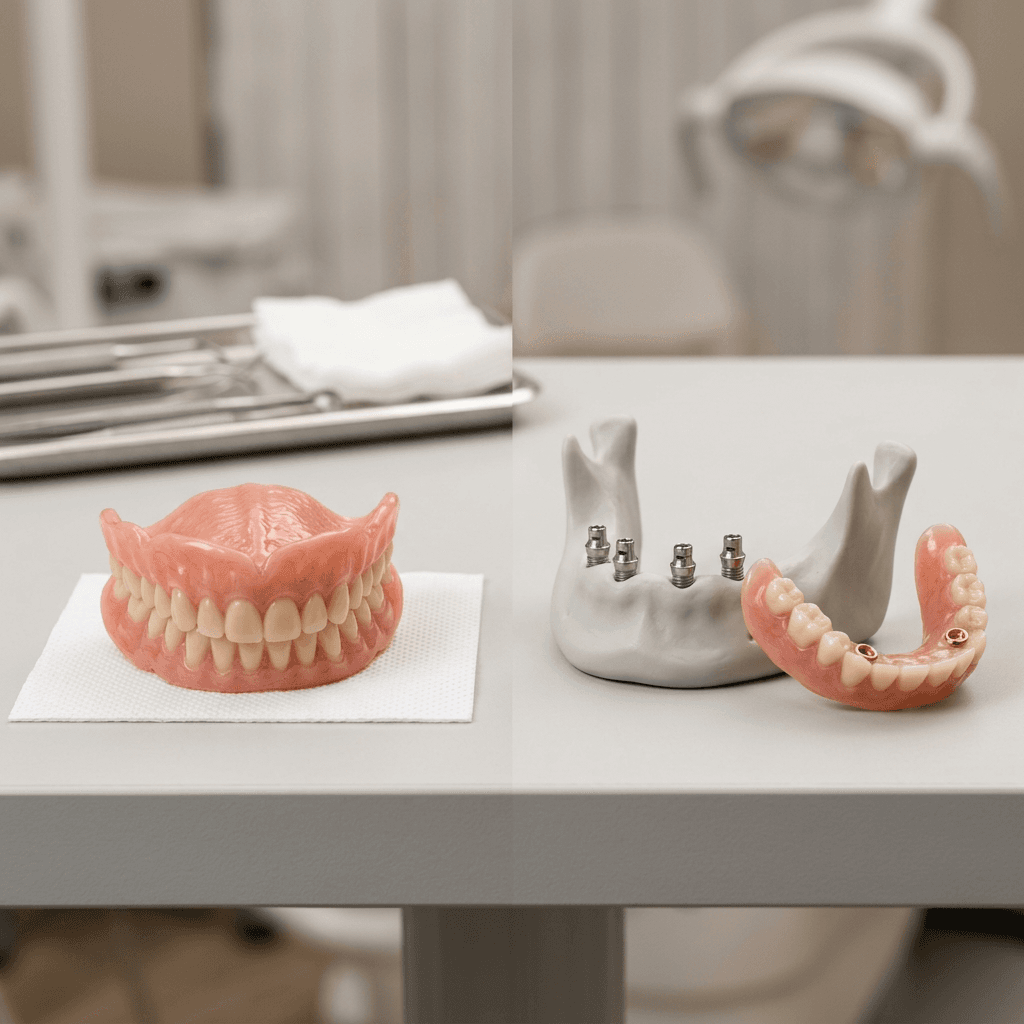
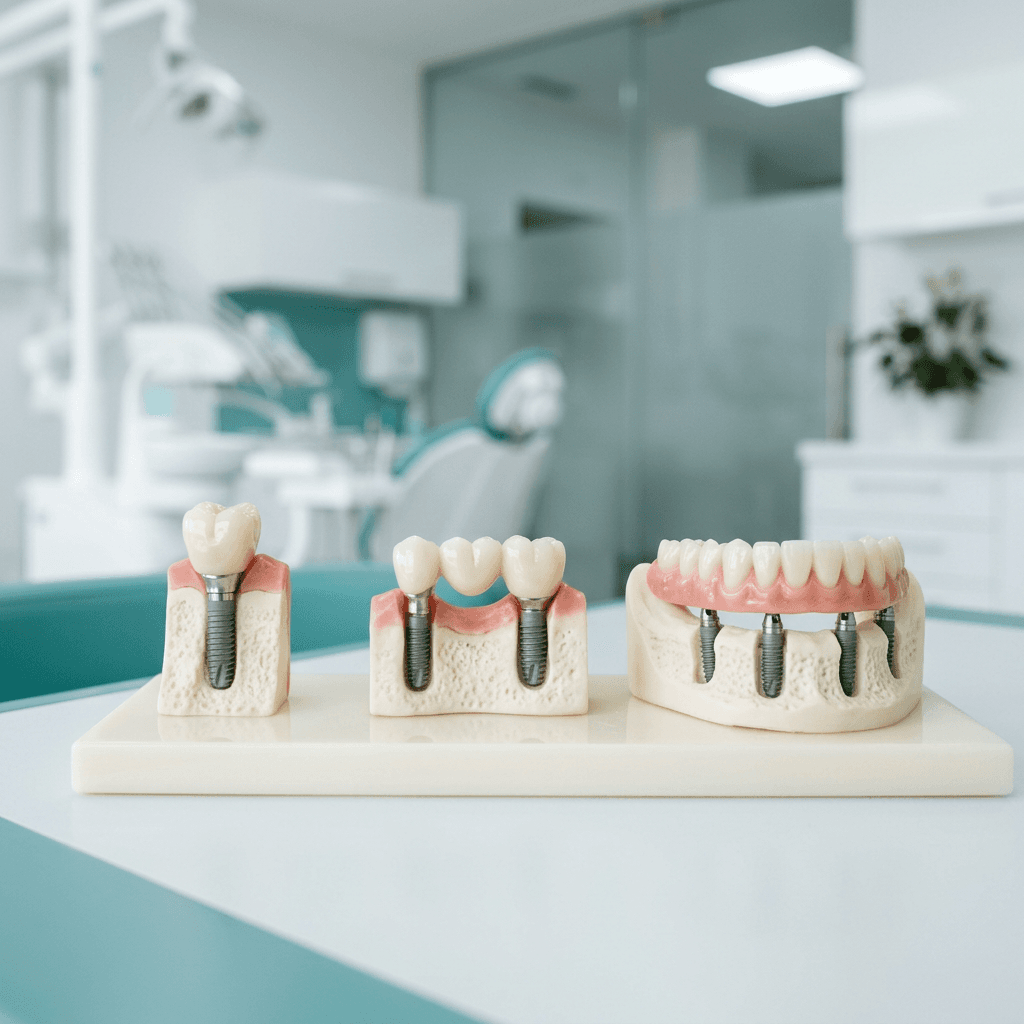
The phrase “dental implants” can describe a single crown, a multi-tooth bridge, a removable denture retained by implants, or a fixed full-arch bridge. Each solves a different problem. Count how many teeth are missing, but also ask whether the remaining teeth are maintainable. Replacing a repairable tooth with an implant is not automatically the better choice.
Use the comparison below as a conversation starter, not a prescription. The number and location of implants depend on anatomy, bite forces, hygiene access and restorative design.
| Option | Usually considered when | Daily care | Question for the estimate |
|---|---|---|---|
| Single implant and crown | One missing tooth with neighboring teeth worth preserving | Clean around the crown and implant; continue routine exams | Are implant, connector and final crown all included? |
| Implant-supported bridge | Several adjacent missing teeth | Clean beneath the bridge as instructed | How many implants support it and who delivers the bridge? |
| Removable implant overdenture | An arch needs replacement and removal for cleaning is acceptable | Remove and clean appliance and attachment sites | Are attachment maintenance and relines quoted? |
| Fixed full-arch bridge | Most or all teeth in an arch cannot be retained | Clean under the fixed bridge and attend maintenance visits | Are provisional and final teeth both in the plan? |
What an implant really replaces
An implant is a fixture placed into jawbone to support a restoration; it is not the visible replacement tooth by itself. A connector and crown, bridge or denture complete the system. The American Dental Association's implant overview explains the basic parts and why healthy surrounding tissue and ongoing care matter.
Bone must heal around an implant before it can reliably carry the planned load. Immediate placement means the fixture goes in at the time of extraction; immediate loading means a temporary restoration is attached early. These are separate decisions. A same-day temporary is not the final set of teeth, and not everyone has enough initial stability for early loading.
For one missing tooth, read the single-tooth implant guide. For a failing arch, start with the full-mouth implant process instead. The correct comparison depends on whether neighboring teeth can be retained.
A Rocklin-to-Roseville consultation checklist
Before committing to surgery, ask who examines you, who places the implants, who designs and delivers the teeth, and which professional handles complications after delivery. A well-coordinated plan may involve more than one clinician; separate offices are not inherently a problem if responsibilities are clear.
Bring a medication list, relevant conditions, prior imaging if available, and your existing dentist's treatment plan. Tell the team about tobacco or nicotine use, diabetes, prior radiation to the jaw, osteoporosis medications and previous implant problems. None of these facts alone gives a complete answer, but they can change healing risk or how the plan is staged.
Ask to see how the planned implant position relates to the proposed final tooth. An implant can integrate into bone and still be difficult to restore or clean if its position does not support the intended prosthesis. Good planning starts with the finished bite, then works backward to surgery.
How to evaluate surgical experience without relying on slogans
Dr. Antipov's Roseville biography identifies him as a Diplomate of the American Board of Oral and Maxillofacial Surgery. Board certification is relevant background, but it is not a guaranteed outcome or a substitute for discussing your particular case. General dentists and specialists can both provide implant care; ask any prospective clinician about their role, training in the proposed procedure, and how they manage a case that does not go as expected.
For challenging bone loss, ask what imaging is necessary and what alternatives exist if the original placement site is unsuitable. Cone-beam imaging can clarify three-dimensional relationships where clinically indicated, but it is not a universal purchase requirement. Ask how findings affect the location, angle and number of implants, and whether a graft or a different restorative approach is preferable.
If you have been told you lack enough bone, the bone-grafting explainer provides context. A second opinion is useful when the proposed solution would remove teeth, require extensive grafting or commit you to an irreversible full-arch plan.
Read the estimate from start to finish
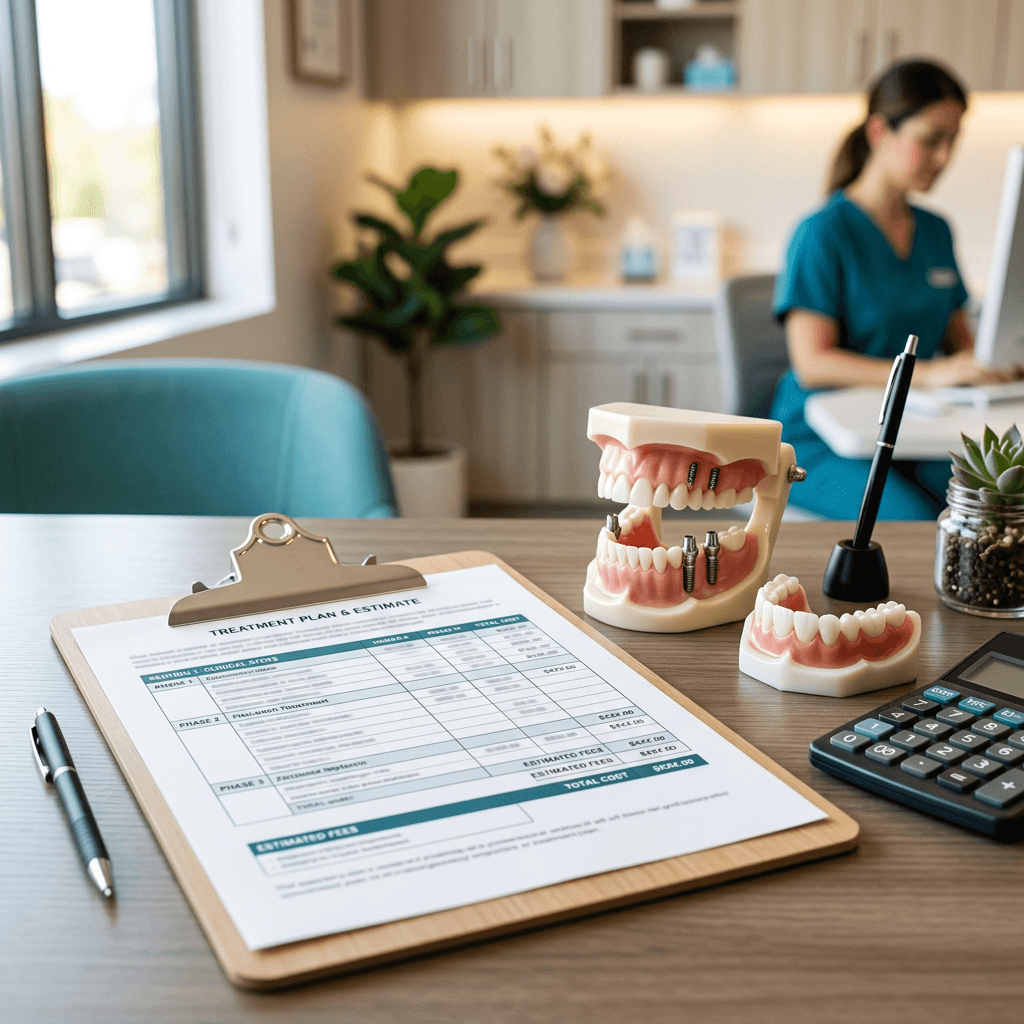
Request a written scope, not merely a total. It should distinguish the exam and imaging, extractions if indicated, grafting if indicated, implant surgery, anesthesia or sedation, abutments, temporary teeth, final prosthesis and scheduled follow-up. Ask who bills for each portion. If bone conditions change at surgery, how will the team obtain consent for a revised plan?
A quote for a single implant fixture cannot be compared directly with a quote that also includes its crown. Likewise, an estimate for one arch cannot be compared with a two-arch proposal. If one plan offers fixed teeth and another a removable overdenture, the costs reflect different prostheses and maintenance needs.
Dental insurance is policy-specific. Request the procedure codes and ask the insurer whether any parts are covered, what the annual maximum and waiting periods are, and whether an authorization is required. Financing may change cash flow, not clinical suitability; read rates, fees and repayment terms in writing before signing.
The stages after surgery matter as much as placement
After placement, follow the surgeon's instructions about food texture, hygiene and activity; these vary with the operation and whether a provisional restoration is used. The gum may appear healed before the deeper bone has matured. Do not use a temporary bridge or denture as proof that the fixtures are ready for unrestricted chewing.
A final restoration has its own engineering decisions: material, fit, access for cleaning and how it meets the opposite teeth. Long-term maintenance includes professional evaluations and addressing looseness, bleeding or bite changes early. An implant cannot develop a cavity, but the tissue surrounding it can become inflamed and bone can be lost.
Our implant aftercare guide discusses routine recovery questions. If pain or swelling worsens instead of improving, contact your treating team promptly rather than waiting for a scheduled cleaning.
Practical logistics for Rocklin patients
Proximity to Roseville may make repeated visits easier, but ask where the examination, operation, restorative visits and urgent follow-up will actually occur. An initial visit may lead to staged treatment, so transportation, time off work and help at home after sedation deserve consideration before you select a date.
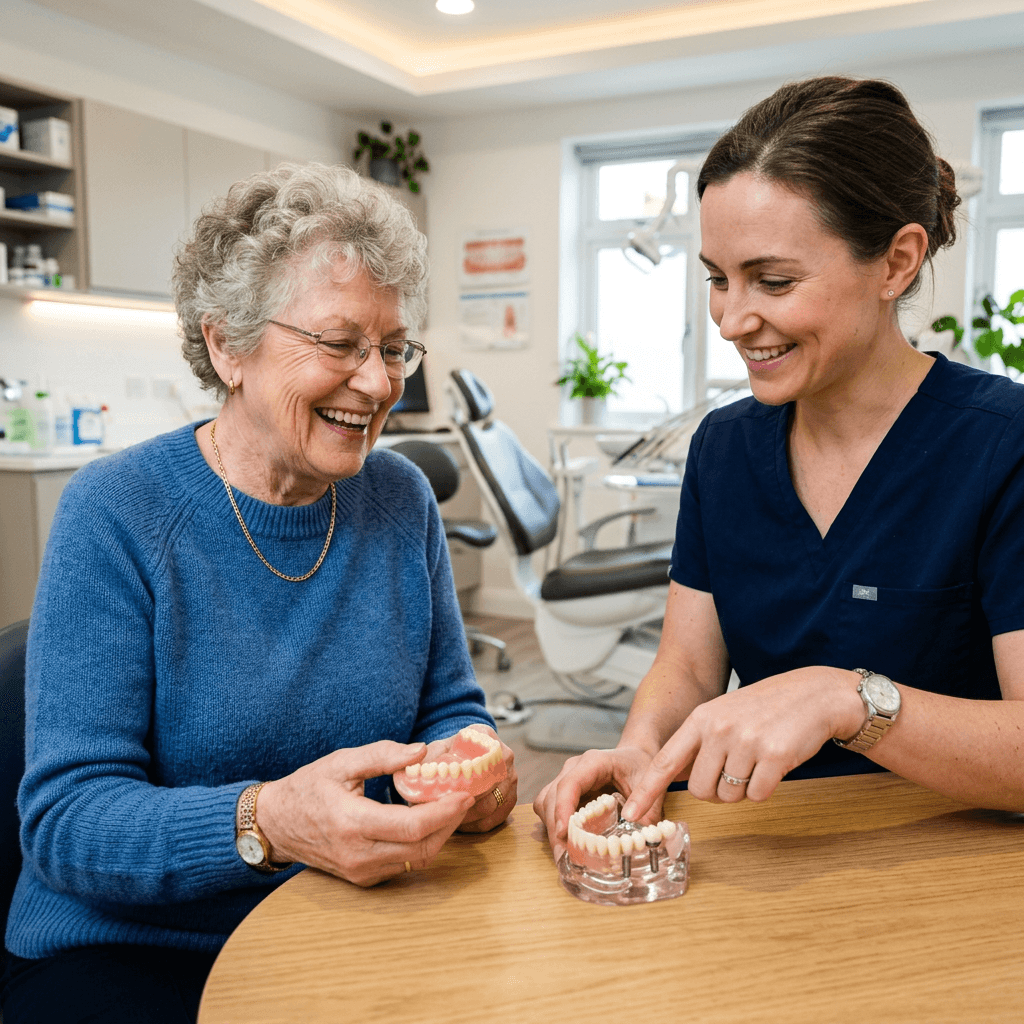
Bring a short list of goals: which foods or activities are difficult now, what you dislike about current teeth or dentures, and whether a removable option is acceptable. A useful consultation distinguishes what surgery can solve from what needs restorative dentistry, gum treatment or a change in bite design. Choose a plan you understand and can maintain rather than one promising an effortless lifetime result.
Frequently Asked Questions
Is there a single best implant material for Rocklin patients?
No. Implant and prosthetic material choices depend on the location, anatomy, planned restoration and clinical history. Ask your clinician what materials are proposed for the fixture and for the visible teeth, and why. Material alone cannot guarantee integration or avoid future maintenance.
Does a same-day implant mean my final crown arrives that day?
Usually not. Same-day placement and immediate temporary teeth refer to different steps; a final restoration is often made after healing and assessment of the bite. Ask what you will wear between surgery and final delivery and what chewing restrictions apply.
Do I need a separate implant for every missing tooth?
Not necessarily. A bridge or full-arch prosthesis may be supported by fewer implants than the number of teeth it replaces. The number and positions depend on the jaw, bite and restoration design. Have the proposal identify exactly what is being supported.
Can I get implants after years of wearing dentures?
Possibly. Longstanding tooth loss may change the bone available for placement, but it does not automatically rule implants out. An examination and appropriate imaging can determine whether grafting, a modified plan or another option makes sense.
How do I compare two Rocklin-area implant estimates?
Line up the same arch, number of teeth, type of final restoration and included stages. Check imaging, extractions, grafting, anesthesia, temporary teeth, final teeth and follow-up separately. Ask both teams to explain differences rather than comparing headline totals.
Will dental insurance pay for an implant?
It depends on your policy, the procedures proposed and any exclusions or limits. Ask for procedure codes and a written benefits review. An insurer's estimate is not a guarantee of payment; confirm your likely responsibility before proceeding.
What if my implant becomes loose or sore later?
Contact the treating clinician promptly. A loose crown or attachment may need a different fix than a loose implant fixture, and new bleeding or swelling warrants assessment. Do not repeatedly tighten or glue a component at home.
Bring your questions to a Roseville implant evaluation
Rocklin residents can discuss their goals and existing records with Dr. Antipov's Roseville team. Ask for a written explanation of the proposed surgical and restorative stages before deciding.
Book a Consultation