Choosing a Dental Implant Surgeon in Roseville: Questions That Matter
By Dr. Antipov Practice Editorial Team. Clinical review pending; this article has not yet been medically reviewed by Dr. Alexander V. Antipov, DDS.
To choose an implant surgeon in Roseville, verify training and licensure, then ask how the proposed implant will support a cleanable final tooth and who manages complications. Dr. Alexander Antipov is a board-certified oral and maxillofacial surgeon in Roseville; the same transparent questions in this guide should be asked of any clinician you consider, including this practice.
This is a consumer decision guide, not a ranking or endorsement of any provider. Clinical suitability, professional licenses, services, fees and coverage should be verified directly with each practice before treatment.
A useful checklist looks beyond a title
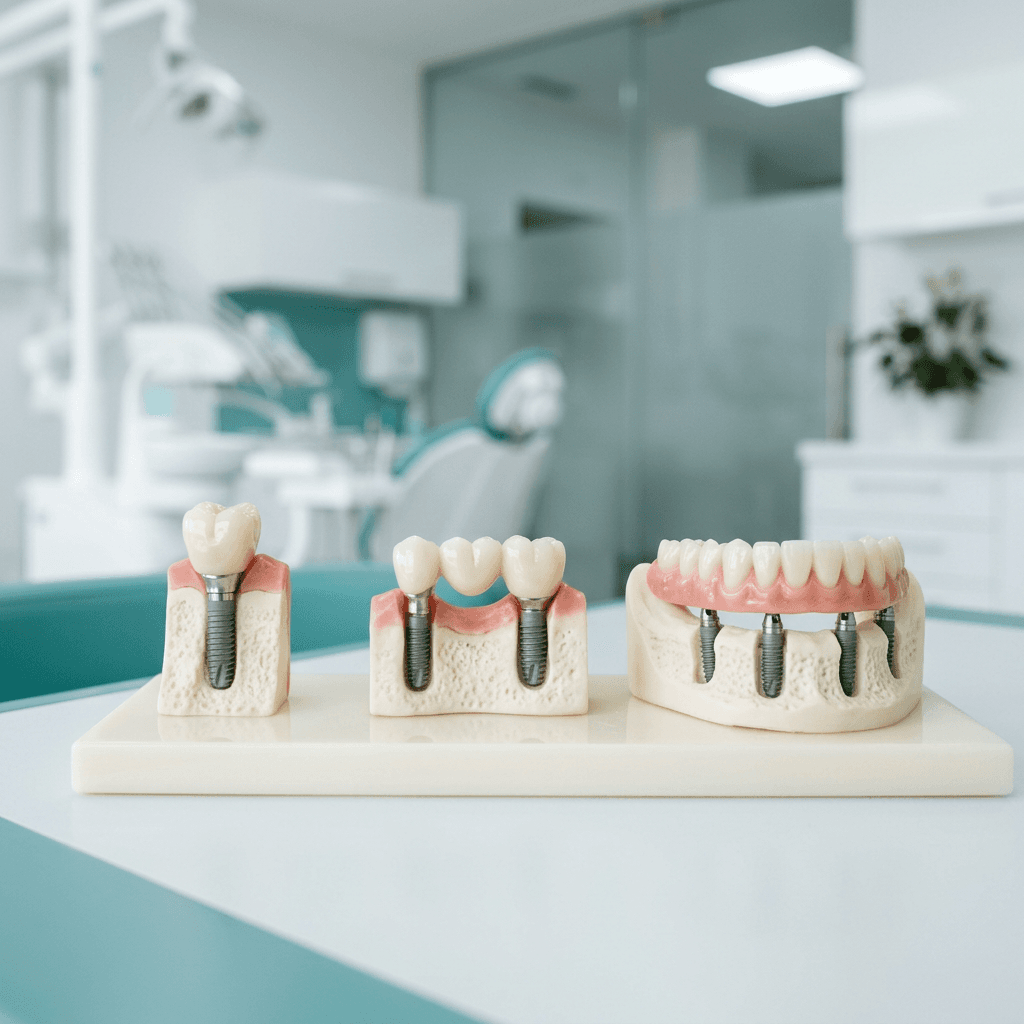
A dental implant is a surgical component of a larger restoration. A provider's qualifications matter, but so do communication with the dentist making the crown, realistic risk discussion and a maintenance plan. General dentists, periodontists and oral and maxillofacial surgeons may all participate in implant care, with different training backgrounds and scopes. Avoid assuming that a title alone guarantees an outcome or that a different team arrangement is inherently inferior.
The American Board of Oral and Maxillofacial Surgery describes its certification process and provides information on the specialty. Dr. Antipov's board-certified oral and maxillofacial surgery credentials are also described on this site's About page. Patients should verify an individual professional's current standing rather than relying only on advertising language.
| Ask this before committing | Why the answer matters | Useful evidence to request |
|---|---|---|
| Who performs surgery and who makes the final tooth? | Implant position must serve the final crown or bridge; separate clinicians need a shared plan. | Names, responsibilities and a written sequence. |
| How is my anatomy assessed? | Bone, neighboring roots, nerve or sinus proximity and bite can change feasibility. | Explanation of the examination and why a particular image is needed. |
| What happens if a graft or temporary tooth is needed? | Added stages alter time, cost and appearance during healing. | An itemized plan and interim-tooth contingency. |
| What anesthesia and recovery instructions apply? | Medical history affects comfort and safety planning. | Consent discussion, instructions and follow-up contact. |
| What if the implant or crown has a problem? | Surgical and restorative complications are handled differently. | Written follow-up responsibilities and repair terms. |
| How will I clean the finished restoration? | Access for hygiene affects long-term tissue health. | Demonstration of tools appropriate to the proposed design. |
Verify qualifications without turning the visit into a credential contest
Ask what specialty training a clinician completed, whether the credentials are current and who will perform each part of your case. Licensure and board certification are different: a state dental license authorizes practice, while specialty certification reflects a separate assessment process. You can ask for the clinician's license number and verify it through the California licensing authorities; clarify who is responsible if a trainee or another provider participates.
Experience is best explored in relation to your needs, not through unsupported aggregate case counts. A single uncomplicated missing molar differs from a patient with prior implant failure, a narrow ridge or a full-arch reconstruction. Ask how often the clinician treats cases like yours, what referral or collaboration is recommended when complexity increases and how they handle findings that change the original plan.
The FDA's implant guidance outlines factors and potential complications to discuss before surgery. A provider willing to discuss limitations is giving you more actionable information than an absolute assurance of success.
Look for a restoration-driven plan
A technically integrated implant is not necessarily a comfortable tooth. Where the crown emerges, how its contacts meet opposing teeth and whether you can clean its gumline all influence day-to-day function. The dentist fabricating the restoration may be different from the surgeon placing the implant. That is common, and can work well when the two agree on position, space, timing and follow-up. An all-in-one office can also work well, but sharing a building is not itself proof of better planning.
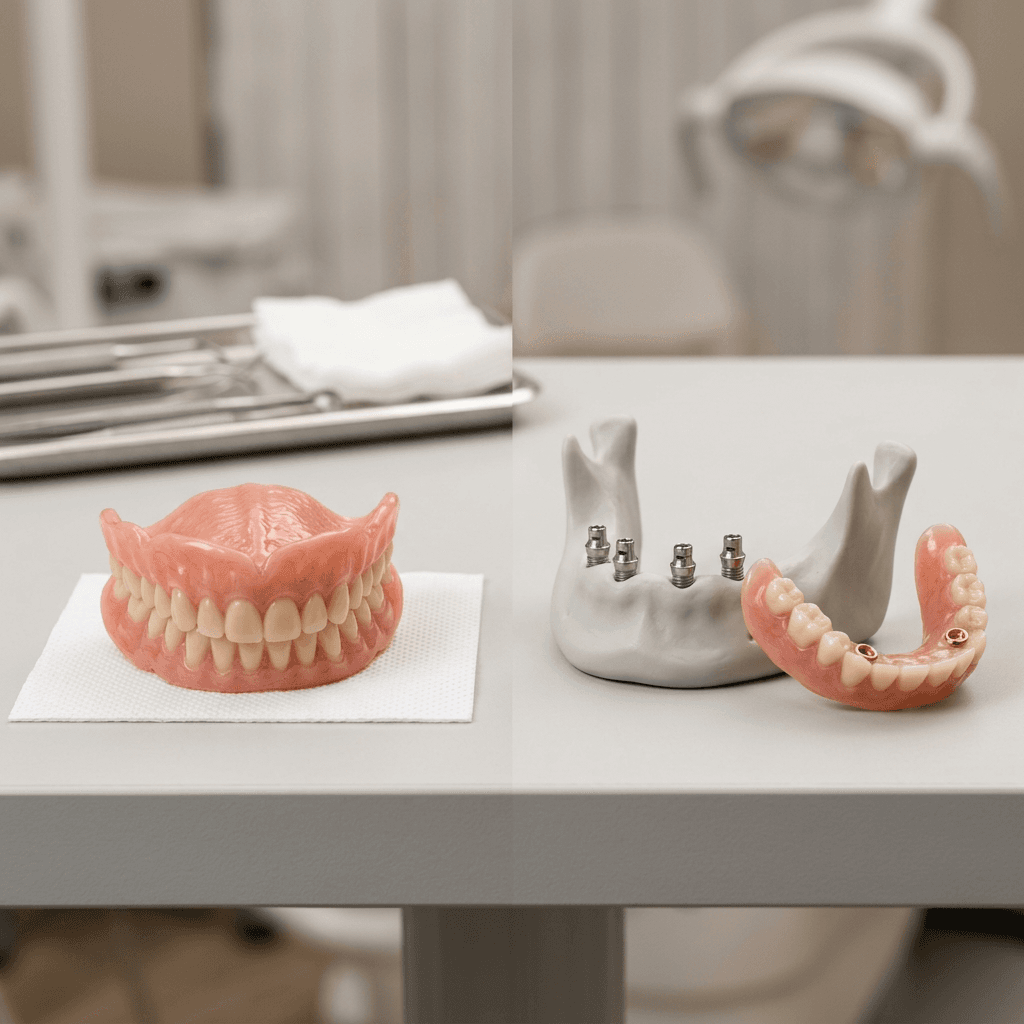
Ask to see how your proposed final tooth drives the surgical position. Does your dentist want to preserve the neighboring teeth? Is there enough restorative space? Would a bridge or removable solution be more sensible if anatomy makes an implant awkward? The answer should acknowledge competing options rather than turn every consultation into an implant-only sales presentation.
For examples of how imaging can inform implant placement, read guided dental implant surgery and 3D planning. Imaging may be useful, but no machine makes a treatment plan accurate automatically.
Ask exactly what a technology claim means
Three-dimensional scans can help visualize bone and critical anatomy, but additional imaging is justified by the clinical question, not the desire to display a feature. Digital planning and surgical guides may help transfer a proposed position to surgery; guide design, fit and clinical verification still matter. An in-house laboratory can change workflow for some practices, but a well-coordinated outside laboratory can produce excellent restorations as well. There is no universal requirement that every case be completed under one roof.
If someone promises same-day teeth, clarify whether this means a temporary tooth attached after placement, a removable temporary or the final prosthesis. Ask what happens if the implant lacks adequate initial stability. Informed consent includes the possibility that the safer plan on surgery day differs from the brochure. Technology is useful when the clinician can tell you what decision it will change for your individual anatomy.
Compare full estimates and the people behind them
Ask for a written scope listing examination, imaging, extraction, grafting, implant, abutment, provisional, final crown or bridge, anesthesia and follow-up. Different offices may divide surgical and restorative bills. Do not compare a stand-alone implant-placement fee with another office's completed tooth. Request estimates for likely contingencies, including a graft discovered to be necessary or a revised temporary plan.
Warranty and guarantee language needs detail rather than a headline: which components, what time period, required maintenance visits and exclusions? A prosthesis warranty is not a promise that living bone cannot change or that surgery cannot fail. Insurance benefits and payment plans also deserve direct verification: find out who submits each claim, what is financed and whether future maintenance is included.
Our guide on why dental implants can be expensive helps unpack the stages a quote might include. The cost conversation should leave you able to explain the full proposed treatment in your own words.
Risk and follow-up are part of selection
Ask how gum disease, smoking, diabetes, medications, bone quality and bite influence your plan. If existing teeth are removable, ask why they cannot reasonably be kept. Discuss anesthesia options and who monitors you, especially if you have significant medical history. Understand routine swelling versus symptoms requiring prompt contact, and confirm how to reach the practice after surgery.
A maintenance handoff should be explicit. Who checks healing? Who delivers and adjusts the crown? Who measures tissue health during future cleanings? If the implant survives but the restoration fractures, who assesses the cause? Patients are better served by clear shared accountability than by an unsupported claim that one office arrangement eliminates complications.
Our article on getting a second opinion for a failed implant illustrates the kinds of diagnostic records that are useful if a prior treatment needs reevaluation.
What to bring and how to decide
Bring an up-to-date medication list, relevant medical conditions, any recent scans or dental X-rays, prior implant information and your top two priorities—perhaps minimal surgery, a fixed tooth, or preserving nearby teeth. Ask the team to write down its recommended option and a reasonable alternative, with the trade-offs of each. If the plan is complex, ask which aspects remain uncertain until a scan or healing review.
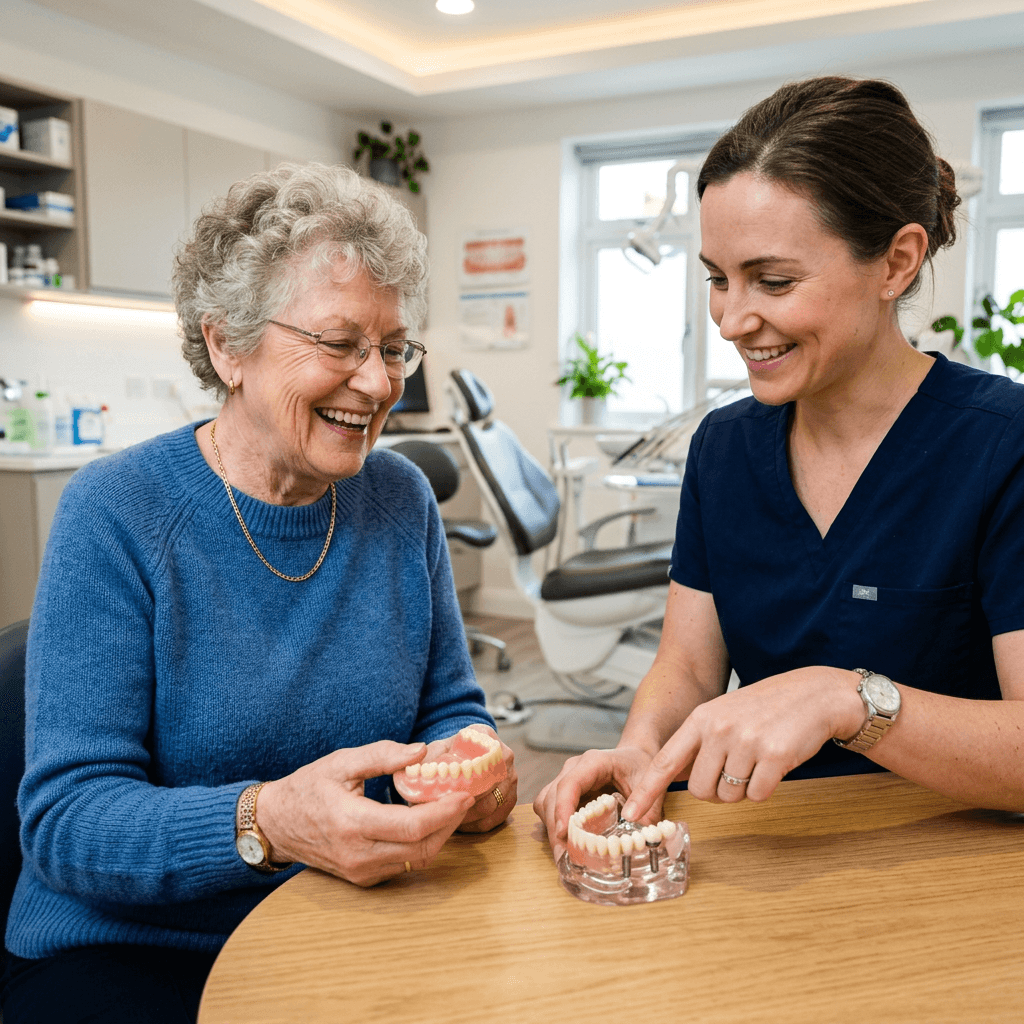
After a consultation, you should know the next step, the approximate sequence of appointments, the teams involved and what you would do if healing or finances require a change. You do not have to choose on the first visit. A good professional relationship allows questions and makes a second opinion possible without portraying another qualified provider as an adversary.
Frequently Asked Questions
Does an oral surgeon have to place every dental implant?
No. Multiple types of properly trained licensed clinicians place implants. A complex surgical case may benefit from specialist involvement, and the restorative dentist remains important regardless of who places the implant.
How can I verify a surgeon's credentials?
Ask for the clinician's name, license details and specialty certification, then use the relevant California licensing resources and certifying board to check current status.
Is an in-house lab essential for a good result?
No. Clear coordination among surgeon, restoring dentist and laboratory is important whether the lab is inside the practice or external.
Should every implant evaluation include a 3D scan?
Imaging should answer relevant anatomical planning questions; the clinician should explain which images are indicated and why. The technology itself does not replace clinical judgment.
What is included in an implant price quote?
It varies. Request a written breakdown of surgery, imaging, any extraction or graft, temporary tooth, abutment, final restoration, anesthesia and follow-up.
Does a warranty mean the implant cannot fail?
No. Ask for written terms distinguishing prosthetic components from surgical outcomes, maintenance obligations, exclusions and who handles a problem.
Can I seek a second opinion without starting over?
Yes. Request copies of imaging and treatment plans so another clinician can assess the same clinical questions; additional examination or imaging may still be indicated.
Bring your questions to the consultation
Considering implant surgery in Roseville? Ask Dr. Antipov's team about the surgical plan, the restoring dentist's role, alternatives, aftercare and an itemized estimate. Restrictions apply.
Book a Free Dental Implant Consultation