Four Zygomatic Implants and One Pterygoid Implant: A Complex Upper-Jaw Case
By Dr. Alexander V. Antipov, DDS. Clinical review pending.
When severe upper-jaw bone loss prevents conventional implant placement, zygomatic implants may provide support by anchoring in the cheekbones. I am Dr. Alexander V. Antipov, DDS, an oral and maxillofacial surgeon in Roseville, and this article adapts my video presentation of a complex case treated with four zygomatic implants and one pterygoid implant.
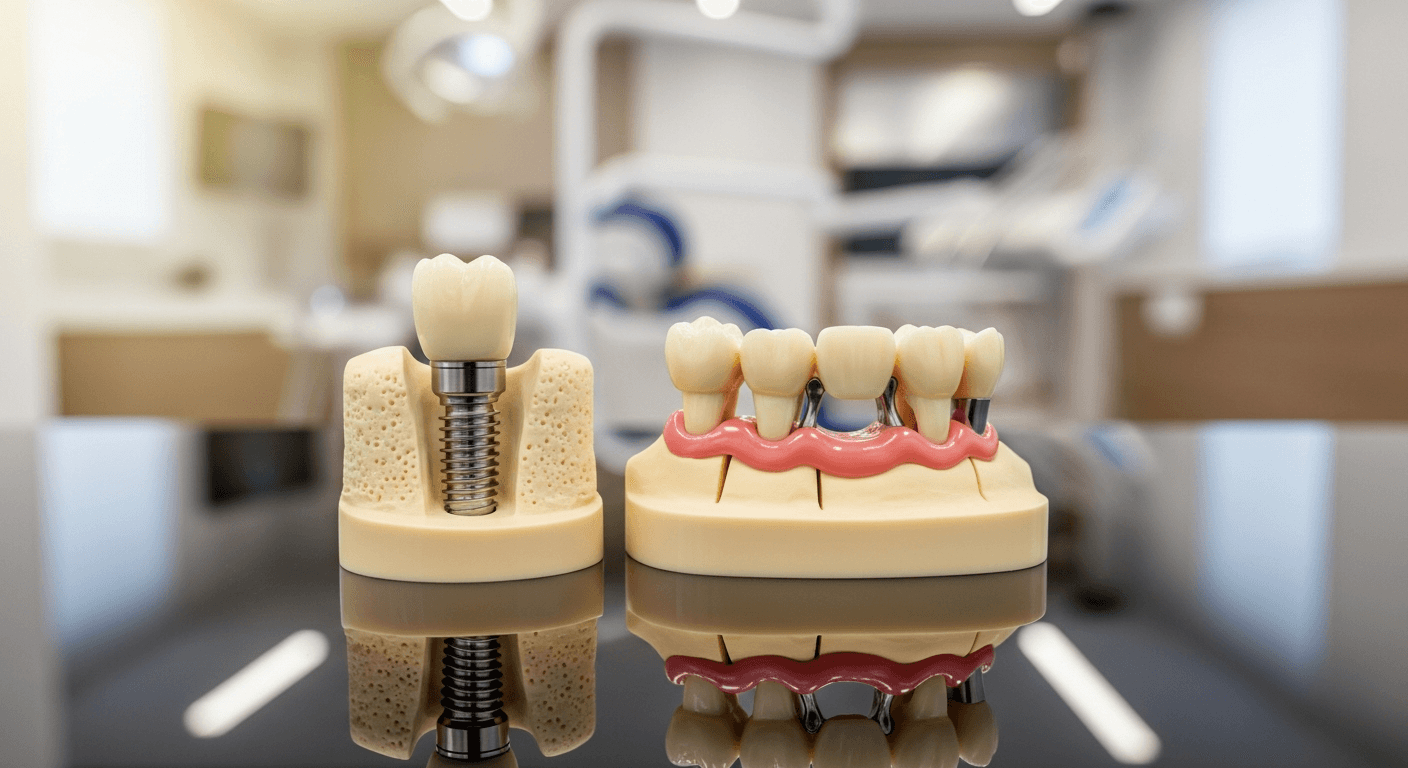
This editorial adaptation of Dr. Antipov's recorded presentation is awaiting his clinical review. It describes one patient's treatment, not a recommendation or guarantee for other patients. The header image is an educational illustration; the patient's clinical images are shown in the source video.
How the Implant Options Differ
The distinction is where the implant obtains support. In this case, the upper jaw did not offer suitable sites for conventional implants, so the plan relied on other anatomical areas. That does not mean the patient had no bone anywhere, or that every patient with bone loss needs the same approach.
| Implant approach | Source of support | Role in this presentation |
|---|---|---|
| Conventional dental implants | Suitable bone in the tooth-bearing jaw | Not feasible in the upper jaw as assessed for this case |
| Zygomatic implants | The cheekbones, or zygomas | Four implants formed the quad-zygoma configuration |
| Pterygoid implant | Bone in the posterior upper-jaw pterygoid region | One additional implant extended support toward the back |
| Combined five-implant plan | Four zygomatic sites plus one pterygoid site | Provided a distribution of support for the planned upper arch |
Watch the Original Presentation
The source is my presentation, “Lack of bone mass? Zygomatic Dental Implants Specialist is ready to help you!”, published on the Fusion Dental Implants channel on August 19, 2021. The video contains the clinical scans and before-and-after images discussed here. This article is a new adaptation, not a report of a newly treated patient.
0:00 — What zygomatic implants are · 0:53 — The patient's history · 2:50 — The five-implant configuration · 4:22 — Digital planning and the restoration
Why This Was Not a Conventional Upper-Jaw Implant Case
The patient traveled from Los Angeles after previous implant failures and consultations about whether fixed teeth were still possible. In the presentation, I describe extensive resorption of the upper jaw. Our assessment did not identify suitable bone for conventional upper-jaw implants, but there was usable cheekbone support on both sides.
The history also included facial trauma and a fracture of the right cheekbone. The presentation identifies a fixation plate and a sinus-related defect as additional planning concerns, with removal of the plate included in the surgical plan. That history mattered because the bone and hardware could not be treated as though this were an uncomplicated jaw.
The lesson is not that everyone previously told 'no' can receive this treatment. It is that the reason for that assessment must be understood. Lack of suitable tooth-bearing bone is different from lack of all possible anchorage, and a complex evaluation must also account for previous surgery, sinus anatomy, soft tissues, and the intended teeth.
For a general overview rather than this individual case, see zygomatic implant treatment and the guide to severe bone loss and implant options.
Why Four Zygomatic Implants Plus One Pterygoid Implant?
In the video, I show five upper implants: a quad-zygoma configuration and one pterygoid implant. 'Quad' refers to four zygomatic implants, not four conventional implants placed into the remaining upper-jaw ridge. The additional pterygoid implant uses a different posterior anchoring region.
I describe the front-to-back distribution of the implants as a way to support the planned arch. This distribution matters because the teeth must function as a restoration, not simply attach to any available implant location. The number five is a description of this patient's plan, not a recommended number for every severely resorbed upper jaw.
The presentation also discusses patients in whom conventional implants can still be placed toward the front and combined with zygomatic support. Different patterns of remaining bone can therefore lead to different configurations. The appropriate plan comes from anatomy and restorative requirements rather than choosing a configuration by name.
The Lower Teeth and Bite Were Part of the Problem
This case was not limited to replacing missing upper teeth. In the presentation, I point out lower teeth that had over-erupted in the absence of an opposing upper dentition and a loss of the intended bite relationship. Rebuilding the upper arch without accounting for the lower teeth would not address the complete functional situation.
The recorded workflow describes completing the lower-jaw work first and then taking further measurements for the upper restoration. Although the presentation discusses a lower-jaw plan involving four to five implants, that planning range should not be mistaken for a documented final lower implant count.
The important distinction is between the surgical anchor and the tooth position. An implant may obtain support in bone, but the teeth still need appropriate proportions, a coordinated bite, and a relationship to the lips and face that can be maintained.
Facial Scanning, Exocad, and 3D-Printed Teeth
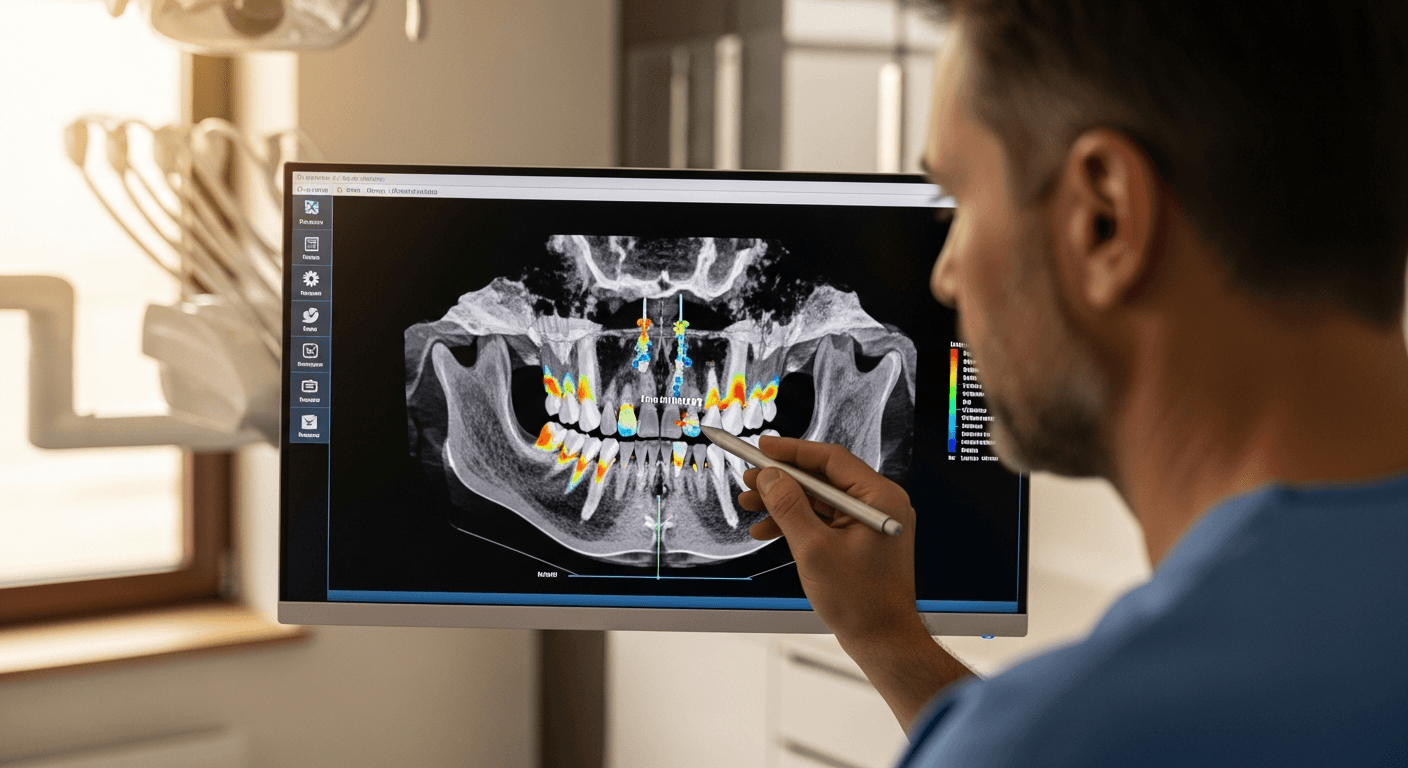
In the video, I describe facial scanning and planning in Exocad, followed by the use of 3D-printed teeth. The digital workflow connected the proposed teeth with the face and the rebuilt bite relationship. It helped us consider the restoration as part of the patient's overall appearance rather than looking only at an isolated dental model.
The presentation shows the teeth supporting the lips and the change in the patient's facial appearance. These are observations from the case shown, not a promise of rejuvenation for other patients. The reference to airway support in the presentation should not be interpreted as evidence that this treatment diagnoses or treats sleep apnea.
The video does not establish long-term follow-up, survival rates, or the service life of the printed restoration. It also does not clearly establish whether the printed teeth shown were intended as an interim or definitive long-term prosthesis. For that reason, I do not describe them here as a guaranteed permanent final material.
The American Dental Association's implant overview explains the broader distinction between implant placement, bone integration, and the customized replacement teeth. It is general background, not evidence for a specific outcome in this zygomatic case.
What This Case Means for Someone Considering Treatment
This presentation illustrates an advanced reconstructive option when conventional upper-jaw implant sites are inadequate. It does not remove the need to compare alternatives or discuss risks. Depending on the individual situation, that conversation may include grafting, other implant configurations, removable rehabilitation, or choosing not to pursue further surgery.
Zygomatic and pterygoid treatment involves complex anatomy. A consultation should address sinus-related complications, infection, soft-tissue problems, implant or restoration failure, injury to nearby structures, and the demands of hygiene and follow-up. The risks and possible benefits must be assessed for the individual rather than inferred from before-and-after images.
If you have had previous implant failures, bring available scans, operative records, implant information, and a complete medical and medication history. The guide to complex dental implant treatment planning can help you organize questions before a consultation in Roseville.
Ask what bone can provide support, how previous trauma affects the plan, what teeth you will have during healing, and who will maintain the restoration. Those answers matter more than a promise of a particular implant count or a one-day result.
Frequently Asked Questions
What is a zygomatic implant?
A zygomatic implant is a long dental implant that obtains support in the cheekbone. It may be considered for selected patients with severe upper-jaw bone loss when conventional implant sites are inadequate.
What does quad zygoma mean?
It describes a configuration using four zygomatic implants. In the case presented by Dr. Antipov, those four implants were combined with one pterygoid implant for a total of five upper implants.
Why was a pterygoid implant added in this case?
Dr. Antipov describes the additional posterior implant as contributing to the front-to-back distribution of support for the planned arch. It was part of this patient's anatomical and restorative plan, not a universal requirement.
Can zygomatic implants help after previous implant failures?
They may be an option in selected cases, but the reason for the previous failures and the remaining anatomy must be assessed. Prior failure does not automatically establish or exclude candidacy.
Were the teeth in the presentation 3D printed?
Yes. The presentation describes Exocad planning and 3D-printed teeth. It does not clearly establish whether the printed restoration shown was interim or definitive, or provide long-term follow-up.
Does this mean I can get fixed teeth in one day?
No individual timeline can be inferred from this case. Surgery, implant stability, temporary teeth, healing, and the definitive restoration must be planned for your situation.
Does the video prove a long-term result or an airway benefit?
No. It shows a clinical presentation and the appearance of the restoration, but does not provide long-term outcome data or establish treatment of an airway disorder such as sleep apnea.
Discuss Your Options for Severe Upper-Jaw Bone Loss
Request a consultation with Dr. Antipov in Roseville. Bring previous implant records and imaging so the discussion can address your anatomy, alternatives, risks, and restorative goals.
Request a Consultation