Failing Dental Bridge: What Does Replacement Really Include?
By Dr. Alexander V. Antipov, DDS. Clinical review pending.
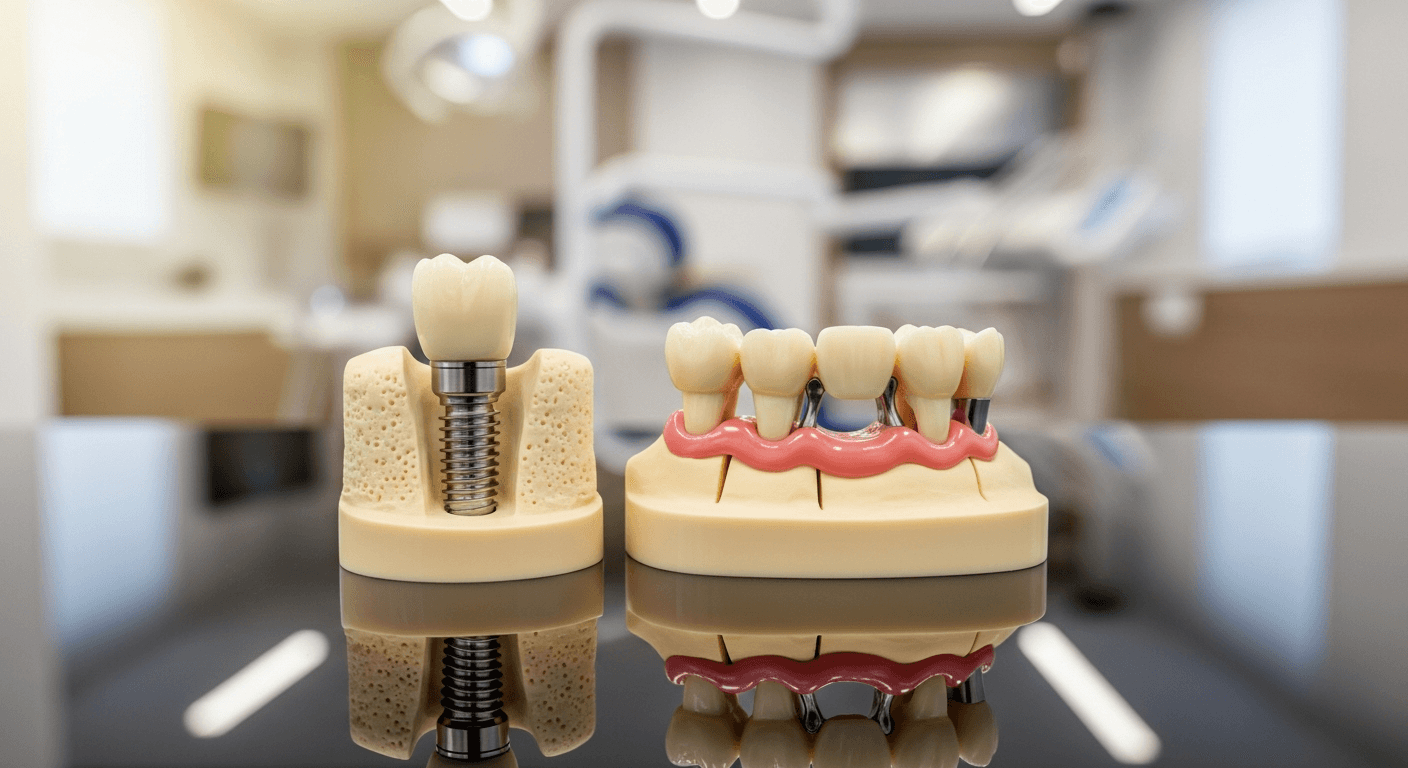
Replacing a failing dental bridge can involve anything from recementing a usable restoration to treating its supporting teeth or planning implants. For patients considering surgical care with Dr. Alexander V. Antipov, DDS, in Roseville, a meaningful cost comparison begins with why the bridge failed—not a national average presented as a local quote.
This guide is educational, not a diagnosis, fee quote, or insurance determination. A restorative dentist and, when indicated, an oral surgeon must assess the bridge and supporting teeth before recommending treatment.
Compare the Treatment, Not Just the New Teeth
A conventional bridge rests on natural teeth. An implant bridge rests on implants. They can look similar above the gums but require different investigations when something goes wrong. This comparison focuses on a failing tooth-supported bridge.
| Possible route | When it may be considered | What the estimate should include |
|---|---|---|
| Repair or recement | Intact bridge with suitable fit and healthy supports | Examination, removal if needed, repair and bite adjustment |
| New tooth-supported bridge | Supporting teeth remain restorable | Tooth treatment, provisional bridge, laboratory work and final bridge |
| Implant-supported replacement | One or more supports cannot be retained | Extraction if indicated, imaging, possible grafting, implants and restoration |
| Removable partial denture | A removable or interim option suits the situation | Appliance design, fitting, adjustments and follow-up |
Find Out What Is Happening Under the Bridge
A loose bridge is not automatically worn out. Cement may have failed, but decay, a fractured supporting tooth, gum disease, or excessive biting forces can produce similar symptoms. Recementing without investigating the cause can hide a problem instead of solving it. Examination and appropriate X-rays help establish whether the supports remain usable.
A tooth that needs treatment is not necessarily a tooth that needs extraction. The restorative dentist may discuss decay removal, a new core, or root canal evaluation. A deeply fractured or nonrestorable tooth changes the plan. Removing a bridge can reveal damage that could not be fully assessed beforehand, so ask how the team handles a revised estimate.
For a restoration already supported by implants, see the separate guide to fixed implant bridge problems and repairs. A loose implant connection requires a different assessment from decay beneath a conventional crown.
Build an Estimate in Four Parts
First, identify diagnostic work: examination, necessary imaging, and consultation with the appropriate clinician. Second, list foundation treatment such as treatment of a retained tooth, extraction, or grafting. Third, identify the temporary solution so you understand what you will wear during healing. Finally, specify the definitive restoration, its material, and who will deliver it.
Ask whether the quoted implant fee includes the connector and crown. For a bridge, confirm the number of units and whether the temporary bridge is included. Sedation, laboratory changes, follow-up visits, and repairs may be separate items. An estimate should explain exclusions rather than leave you to discover them after treatment starts.
Insurance may contribute to some stages without covering the entire plan. Replacement-frequency rules, annual maximums, deductibles, network terms, and missing-tooth exclusions can change your share. A pre-treatment estimate is useful but is not a guarantee of payment. Financing changes the payment schedule, not the underlying treatment price.
When an Implant Discussion Makes Sense
If a supporting tooth cannot be retained, single-tooth implant planning or a larger implant-supported restoration may become relevant. Dr. Antipov's surgical evaluation can address the extraction site, bone support, nearby anatomy, and sequencing with the restorative dentist.
An implant is not a reason to remove otherwise maintainable teeth. Nor does a single failing bridge justify full-arch treatment by itself. Compare how each option affects the teeth you still have, the time spent in provisional teeth, your ability to clean, and the likely maintenance responsibilities.
The American Dental Association's implant overview explains how implants support replacement teeth and why bone healing is part of treatment. It does not establish a fee or guarantee that implants suit every bridge problem.
Bring These Details to the Appointment
Bring the bridge's approximate age, earlier repair records, recent X-rays if available, and a description of what changed. Mention whether the bridge moves, catches food, hurts on biting, or has developed an unpleasant taste. Ask which teeth can reasonably be preserved and whether the cost discussion includes both surgery and the final restoration.
Do not glue a loose bridge with household products or test it with hard foods. Arrange prompt dental advice for movement or persistent pain. Facial swelling, fever, or drainage needs urgent assessment; trouble breathing or swallowing or rapidly spreading swelling requires emergency care.
Frequently Asked Questions
How much will replacing my bridge cost?
A personal estimate depends on the bridge design, condition of its supporting teeth, laboratory work, and any additional treatment. A national price range cannot establish Dr. Antipov's fees or your out-of-pocket cost.
Can a loose bridge simply be cemented back?
Sometimes, if it fits properly and the supporting teeth are healthy. A clinician must first rule out decay, fracture, or another cause of looseness.
Does a broken bridge mean I need implants?
No. Repair or a new tooth-supported bridge may remain possible. Implants become one option when the support and overall treatment goals make them appropriate.
Will insurance pay for a replacement?
Coverage depends on your specific policy, including replacement intervals, annual limits, exclusions, and the proposed procedures. Confirm benefits in writing; an estimate is not guaranteed payment.
Can I keep my teeth while the bridge is replaced?
The team should discuss a temporary restoration or appliance before treatment. The suitable option depends on which teeth remain, whether surgery is needed, and how the area must heal.
How long should a replacement bridge last?
There is no individual lifespan guarantee. Supporting-tooth health, bridge fit, cleaning access, bite forces, and follow-up care affect how long it functions and whether repairs become necessary.
Understand the Surgical Part of Your Replacement Plan
If extraction or implants have been recommended, request an evaluation with Dr. Antipov in Roseville. Bring your restorative treatment plan so the discussion covers the complete replacement pathway.
Request an Evaluation