Severe Bone Loss and Dental Implants: Mapping Your Options
By Dr. Alexander V. Antipov, DDS. Clinical review pending.
Dental implants may be possible with severe jawbone loss, but the answer depends on the location of usable bone, nearby anatomy, health factors, and the replacement teeth being planned. For Sacramento-area patients seeking an assessment with Dr. Alexander V. Antipov, DDS, in Roseville, the starting point is a site-by-site explanation—not a promise that one technique works for every jaw.
This article provides general education about implant planning with reduced jawbone. It cannot establish candidacy, recommend surgery, or replace examination and imaging. Do not stop or change prescribed medication based on dental information online.
Compare Options by the Anatomical Problem
Severe bone loss is a description, not one uniform diagnosis. A thin ridge, insufficient height near a nerve, and an upper-jaw sinus limitation are different problems. The options below are discussion categories, not a ranking or confirmation that any procedure is appropriate or offered for your individual case.
| Finding | Approach that may be discussed | Important limitation |
|---|---|---|
| Insufficient ridge width or a localized defect | Bone grafting or guided bone regeneration | Healing and the amount of predictable reconstruction vary by site |
| Limited bone beneath an upper back-jaw sinus | Sinus augmentation with implant planning | Addresses selected upper-jaw sites, not lower-jaw bone loss |
| Usable bone in selected areas of a toothless arch | A planned full-arch implant distribution | A fixed implant count does not establish adequate support |
| Extensive upper-jaw deficiency | Specialized anchorage approaches, including zygomatic implants in selected cases | Requires specialized assessment and carries procedure-specific risks |
| Surgical risk or anatomy does not support implants | Conventional dentures or another non-implant restoration | Fit, comfort, remaining teeth, and tissue support still need assessment |
Ask What the Phrase 'Not Enough Bone' Means
Bone can be inadequate in height, width, contour, or a combination of dimensions. It also matters where that deficiency lies relative to the planned teeth. Enough bone in one region does not automatically support an implant in a different position, especially if that position is needed for a workable bite and cleaning access.
Tooth loss, gum disease, trauma, prior surgery, and previous implant problems can produce different patterns of loss. The clinician should consider the cause as well as the current shape. Treating active disease and assessing the prognosis of remaining teeth may be necessary before deciding how to replace missing teeth.
The NIDCR's information on gum disease explains how periodontal disease can damage supporting tissues and bone. If that history applies to you, bring records of treatment and maintenance rather than assuming tooth removal alone settles the long-term risk discussion.
Map the Intended Teeth Before Choosing Implant Sites
An implant plan has to support a restoration, not simply place fixtures wherever bone remains. The team considers tooth position, bite forces, speech, appearance, lip support, and spaces required for cleaning. A site that accepts an implant may still be unsuitable for a useful tooth position or practical prosthesis.
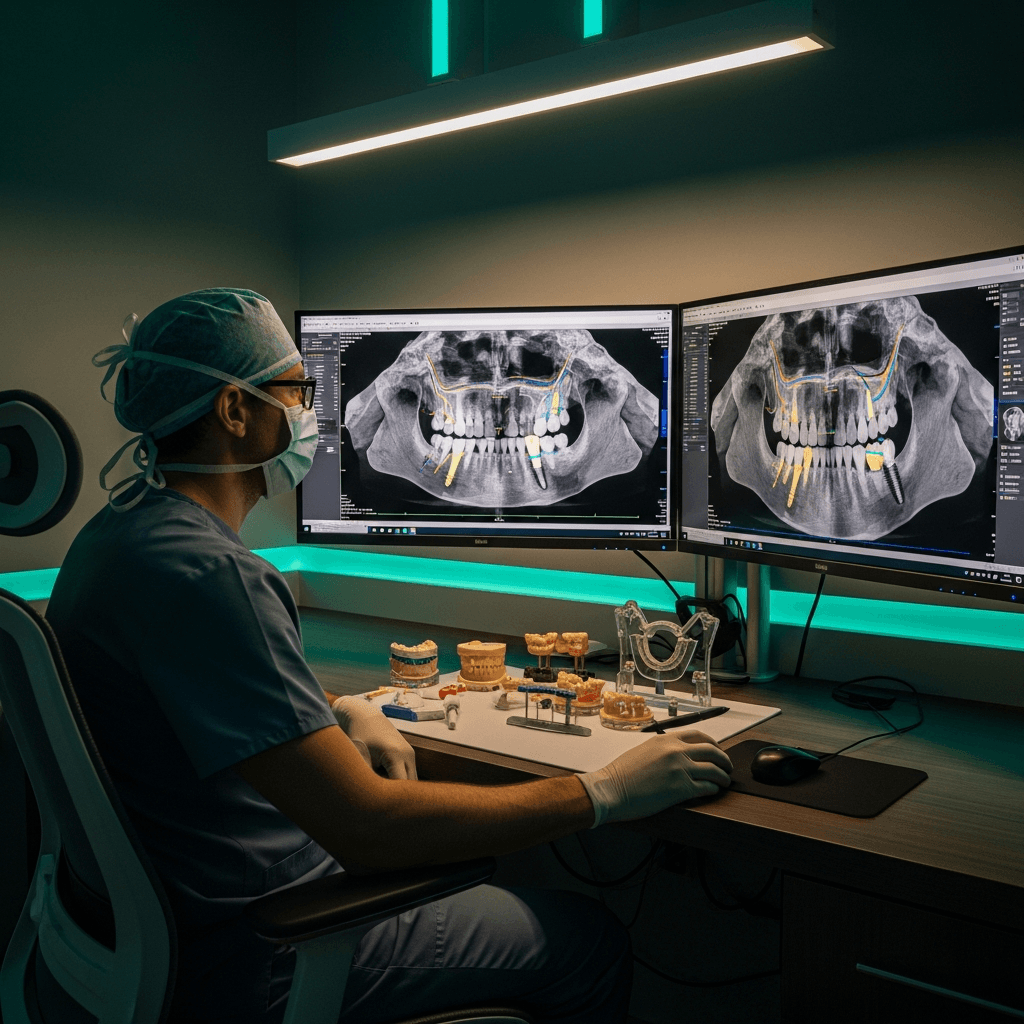
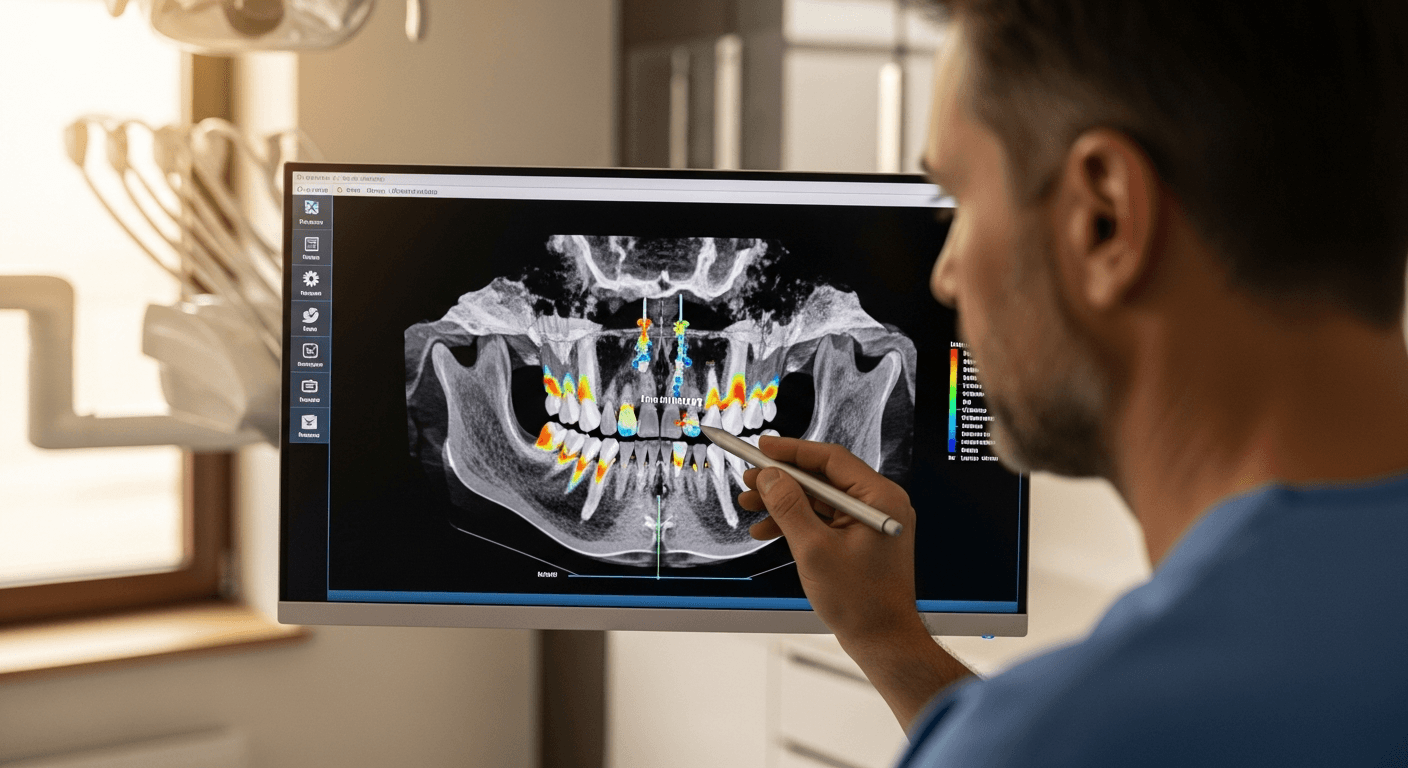
Appropriate imaging helps assess the dimensions of potential sites. When a three-dimensional CBCT scan is justified, it can help map relationships to the sinus, nasal structures, and lower-jaw nerve canal. Imaging should be selected and interpreted for the clinical question; a scan alone cannot assess all soft-tissue, health, or functional concerns.
Ask the clinician to show where support is missing and where it remains. The FDA's dental implant guidance discusses risks including injury to surrounding structures and implant failure. Those risks are reasons to plan carefully, not reasons to assume every complex case is impossible.
Understand What Grafting Can and Cannot Promise
Bone grafting aims to create or improve a foundation at a specific site. Guided bone regeneration may use a barrier membrane with graft material to support regeneration in a planned space. Other defects may call for different reconstructive techniques. The appropriate approach depends on the shape of the deficiency and the tissues available to protect healing.
Ask where the graft material comes from, why that choice fits the site, and whether there is a separate donor area. Discuss healing, infection, wound opening, incomplete regeneration, and the possibility that further treatment will be needed. Grafting does not guarantee sufficient bone or a future successful implant.
Some cases permit grafting and implant placement together; others need separate stages. The practice's bone grafting overview provides background. Your plan should state what findings would allow the next stage and what the alternative would be if healing does not provide the intended support.
Keep Upper-Jaw and Lower-Jaw Decisions Separate
In the back of the upper jaw, limited bone below the sinus may lead to discussion of sinus augmentation. The clinician evaluates sinus anatomy and relevant health history before deciding whether this approach is appropriate. It is not a generic treatment for every thin ridge, and it does not address a lower-jaw nerve limitation.
For selected extensive upper-jaw deficiencies, specialized approaches may use anchorage beyond the reduced dental ridge. Zygomatic implants are one example. This is not simply a shortcut around graft healing: it requires specific expertise, detailed planning, and discussion of distinct surgical and sinus-related risks. A general article cannot establish suitability or local availability.
In the lower jaw, the nerve canal and the remaining bone's dimensions may constrain planning differently. Do not assume that a solution recommended for someone else's upper jaw transfers to your lower jaw. Ask which anatomical structure limits the proposal and whether a different restoration would change the risk-benefit balance.
A Full-Arch Label Does Not Solve Every Deficiency
All-on-4 and other full-arch approaches describe ways to support an entire arch of replacement teeth. In selected patients, implant distribution and angulation may make use of available bone. The label does not prove that enough suitable bone remains, eliminate all grafting needs, or guarantee immediate fixed teeth.
Distinguish implant placement from loading the implants with a restoration. Whether teeth can be attached promptly depends on factors including implant stability, bone support, bite design, and the overall plan. Immediate temporary teeth and the definitive restoration are also different stages, with different expectations and restrictions.
Ask what you would wear if immediate loading is not appropriate. The guide to full-mouth dental implant treatment offers broader context. A careful complex-case plan includes a fallback rather than treating same-day teeth as an unconditional commitment.
Review Healing Risks and Medication History
The team needs a complete health picture, including tobacco or nicotine use, diabetes management, prior radiation to the jaws, immune-related treatment, and previous healing problems. These factors can influence surgical risk and timing. Do not omit a diagnosis because it seems unrelated to dentistry.
Osteoporosis is not the same thing as localized jawbone loss. Some medications used for osteoporosis or cancer are associated with medication-related osteonecrosis of the jaw, or MRONJ. The ADA's osteoporosis medication guidance distinguishes the generally lower-risk osteoporosis context from higher-dose cancer treatment and explains why medication history matters.
Bring the exact drug names, reason for treatment, route, doses, treatment dates, and prescribing clinician's details. Do not stop, delay, or alter a prescription on your own. The surgeon and prescriber should coordinate when needed, weighing dental risks alongside the consequences of interrupting treatment. There is no universal medication pause that makes implant surgery safe.
Use a Second Opinion to Clarify, Not to Chase a Guarantee
If you were told implants were not possible, obtain the earlier recommendation and available imaging. The conclusion may reflect a particular site, medical issue, restoration, or acceptable level of surgical complexity. A second assessment can explain the reasoning and may confirm the original conclusion; its value is clarity, not a guaranteed different answer.
Ask for a staged written plan covering disease treatment, any reconstruction, healing checkpoints, implant placement, temporary teeth, definitive restoration, and maintenance. Clarify which stages have separate fees and what happens if a planned stage cannot proceed. A more invasive option is not automatically a better option.
For patients traveling from Sacramento to the Roseville practice, organize records before the appointment and review Dr. Antipov's background. Bring goals stated in everyday terms, such as managing a lower denture or replacing a particular tooth. A sound decision may involve implants, a removable solution, or a non-implant plan that better fits your health and priorities.
Frequently Asked Questions
Can I get implants after many years without teeth?
Possibly. Time without teeth does not determine candidacy by itself. The assessment considers current bone dimensions, nearby anatomy, oral health, medical history, and the restoration you want. Long-standing tooth loss can make planning more complex without settling the answer.
Does severe bone loss always require a bone graft?
No. Some plans may use suitable remaining bone, while others require reconstruction or favor a non-implant option. The location of the deficiency and the intended replacement teeth determine which approaches deserve discussion. No technique applies universally.
Is a sinus lift used for lower-jaw bone loss?
No. Sinus augmentation concerns selected upper back-jaw sites near the maxillary sinus. Lower-jaw planning involves different anatomy, including the nerve canal. Ask which specific limitation a proposed procedure is intended to address.
Can All-on-4 guarantee fixed teeth despite severe bone loss?
No. A full-arch label does not establish adequate bone, implant stability, or suitability for immediate loading. The team must assess the individual jaw and restoration. Ask about alternatives and temporary teeth if the preferred sequence is not appropriate.
Should I stop osteoporosis medicine before an evaluation?
No. Do not stop or change a prescribed medication on your own. Bring the medication name, treatment schedule, indication, and prescriber's details. The dental team and prescribing clinician can coordinate risk assessment and any necessary treatment decisions.
How long will treatment take if I need grafting?
There is no single timeline. The defect, graft technique, healing response, and whether stages can be combined affect sequencing. Ask for an estimated pathway with clinical checkpoints rather than a fixed completion date that ignores how the site heals.
What if implants remain too risky after assessment?
Ask about conventional dentures or other restorations appropriate to your remaining teeth and tissues. A non-implant plan can be a considered clinical choice, not a failure. The decision should weigh function, comfort, surgical risk, maintenance, and your preferences.
Understand the Anatomy Behind Your Options
Request a complex implant assessment in Roseville, serving Sacramento-area patients. Bring previous recommendations, imaging, and your medication list for an individualized discussion of reasonable treatment paths.
Request an Implant Assessment