Complex Dental Implant Treatment: Build a Decision Map
By Dr. Alexander V. Antipov, DDS. Clinical review pending.
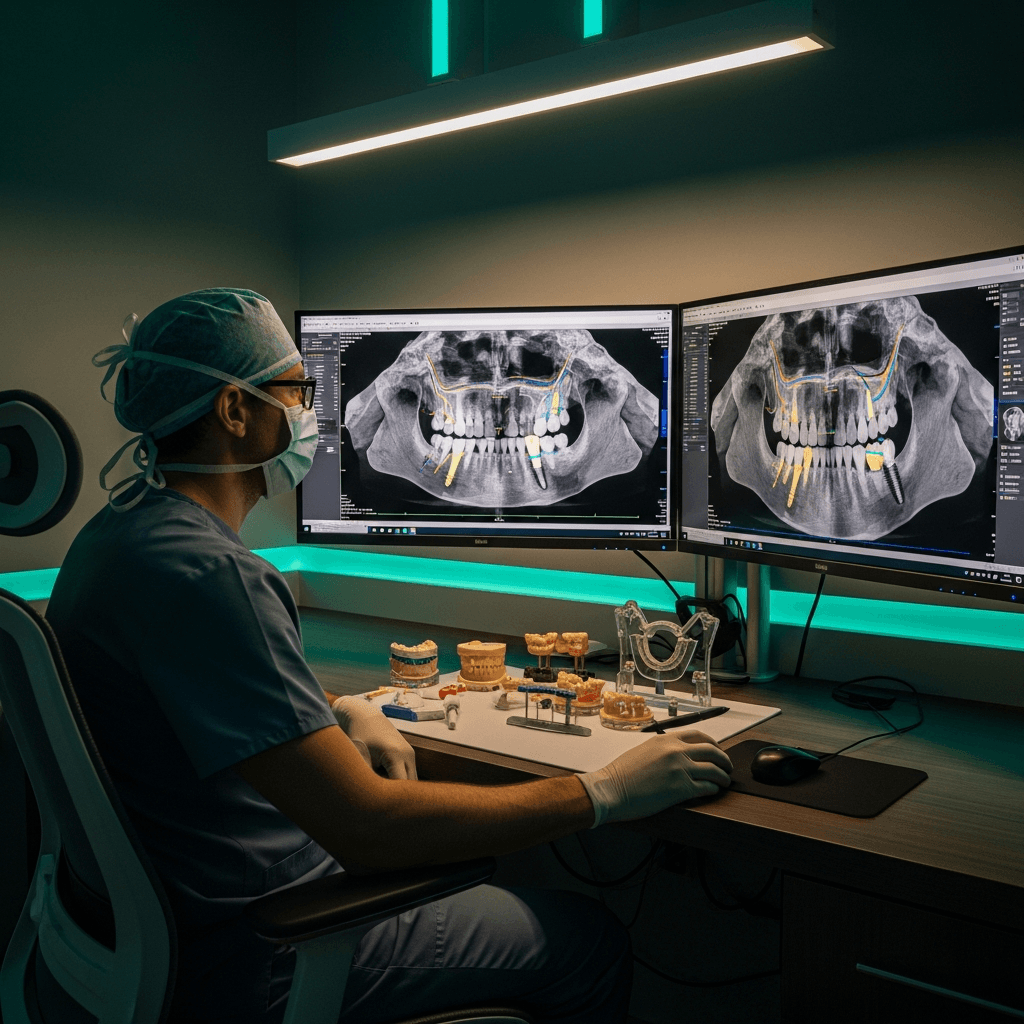
Complex dental implant treatment requires identifying the obstacles to a maintainable restoration before choosing the surgery. For Sacramento-area patients seeing Dr. Alexander V. Antipov, DDS, in Roseville, that means connecting the condition of the bone and gums, previous treatment, medical history, and desired replacement teeth in one individualized plan—not assuming a named technique solves every difficult case.
This article explains complex implant planning for general education. It cannot determine candidacy, diagnose implant failure, or recommend a procedure or medication change. An examination, appropriate records, and coordination with treating clinicians may be necessary; outcomes and treatment timing vary.
Identify the planning obstacle before comparing procedures
“Complex” is a description of planning needs, not a diagnosis or a promise that advanced surgery is required. Two people with missing upper teeth may need different care because their remaining bone, bite, soft tissues, and medical risks differ. A useful consultation should explain those differences in ordinary language.
This comparison organizes questions rather than selecting a treatment. Several issues may overlap, and an apparently minor restoration problem can deserve attention before a larger reconstruction is considered.
| Planning issue | What needs clarification | Possible direction to discuss |
|---|---|---|
| Previous implant failure | Why it failed and whether the cause persists | Treat disease or mechanical problems before replacement |
| Limited bone volume | Where usable bone remains and nearby anatomy | Grafting, modified placement, another restoration, or specialist alternatives |
| Full-arch tooth loss | Bite, lip support, restorative space, and cleaning access | Fixed or removable implant-supported designs, or conventional dentures |
| Loose or damaged existing bridge | Whether the bridge, connector, implant, or tissue is affected | Repair may differ substantially from implant replacement |
| Medical or medication concerns | Condition, treatment history, and surgical implications | Coordination with the prescribing clinician and individualized risk assessment |
Begin with the teeth you need to use and clean
The visible replacement teeth are not an afterthought. Their position affects chewing, speech, appearance, and the room available for the bridge and supporting components. A plan that focuses only on placing implants may miss whether the finished restoration can be cleaned or whether its shape provides appropriate lip support.
Discuss whether a fixed restoration or a removable design best matches your circumstances. Fixed teeth remain in place for routine home care, but the underside still needs cleaning. Removable designs require handling and maintenance too. Dexterity, vision, caregiver support, and willingness to attend maintenance visits belong in this discussion.
Our hybrid dentures and fixed implant bridges guide explains design distinctions. Ask the clinician to show where you would clean and how the proposed restoration changes your daily routine, rather than choosing by appearance alone.
Use records to explain uncertainty, not just collect images
Bring previous radiographs, surgical reports, implant identification information, and the dates of earlier treatment when available. An implant system name and component records can matter when evaluating an existing restoration. If records are missing, say so; do not guess the brand or assume all parts are interchangeable.
Three-dimensional imaging may help assess anatomy and available bone when clinically justified. The FDA's dental implant guidance emphasizes discussing medical history, risks, and expected benefits with the dental provider. A scan supports the assessment; it does not independently establish candidacy or guarantee that an implant will integrate.
Ask which findings are known now, which need further evaluation, and which may remain uncertain until treatment. This creates a decision map: what must be addressed first, what alternatives remain, and what new information would change the recommendation. Uncertainty should be explained, not concealed behind impressive images.
A failed implant needs a cause-based plan
An implant fixture, its connecting parts, and the visible restoration are different components. A loose bridge does not automatically mean the fixture is loose in bone. Conversely, comfortable chewing does not prove the surrounding tissues are healthy. Examination and appropriate imaging help distinguish mechanical trouble from disease or loss of support.
When replacement is considered, ask what could have contributed to the earlier failure: local infection, bone limitations, bite forces, restoration design, hygiene access, tobacco exposure, or other health factors. Sometimes the explanation is incomplete even after investigation. The plan should acknowledge that and explain how risk will be managed.
The second-opinion guide for failed implants can help organize records and questions. A second assessment can clarify reasoning without proving that the previous clinician was wrong or promising that a replacement will succeed.
Bone limitations create choices, not one universal rescue
Bone volume and anatomy can limit where conventional implants can be placed. A discussion may include grafting, a staged approach, changing the restoration, or deciding against implants. Bone quantity is only part of the picture: the proposed implant positions must also support a usable bite and restoration.
For selected upper-jaw cases, specialized approaches such as zygomatic implants may enter the discussion. These are not interchangeable with routine implants and require a careful explanation of anatomy, procedure-specific risks, alternatives, and follow-up. An advanced technique should solve a defined problem rather than serve as a marketing label.
Read the severe bone loss implant options guide for background. Ask why the recommended path fits your findings and why the alternatives were not preferred. The answer matters more than whether the plan uses four implants, six implants, or a particular brand name.
Make the medical review specific
List medications, doses, reasons for use, and relevant treatment dates. Mention diabetes, tobacco use, immune-related conditions, prior head or neck radiation, and previous healing problems. The clinician may need records or communication with your treating doctor; a generic statement that you are healthy is not a substitute.
Osteoporosis treatment deserves particular care. The ADA's guidance on osteoporosis medications and jaw osteonecrosis distinguishes the generally low MRONJ risk associated with osteoporosis treatment from higher-risk oncology regimens. Medication type, indication, dose, duration, and other risk factors influence the discussion; osteoporosis alone does not settle candidacy.
Do not stop or delay prescribed medication on your own to prepare for implants. Any proposed change requires coordination with the prescribing clinician and a balance of dental and systemic risks. In particular, treatment interruption can have consequences beyond the mouth. A screening blood test cannot simply certify that surgery carries no MRONJ risk.
Ask for a sequence and a backup plan
A written sequence should explain disease control, extractions if needed, any site preparation, implant placement, temporary teeth, and the final restoration. Not every case needs every stage. Ask what you will wear between appointments, whether there are dietary limits, and what circumstances could delay progression.
Same-day temporary teeth are not guaranteed. Immediate loading depends on clinical conditions and the planned restoration; a temporary bridge is not necessarily the final bridge. Ask what happens if the implants cannot support the intended temporary restoration at surgery. Knowing the alternative in advance avoids mistaking an adaptation for an unexplained failure.
Plan for recovery and follow-up travel from Sacramento to Roseville. Discuss transportation if sedation is planned, work obligations, assistance at home, and who to contact after hours. Obtain written cost information that distinguishes planned care from potential changes, repairs, and ongoing maintenance.
Leave with criteria for a decision
A useful consultation ends with more than a procedure name. You should understand the problem being treated, the proposed restoration, the main risks, the alternatives—including no implant treatment—and the steps needed before a final recommendation. It is reasonable to request explanations or time to consider them.
The ADA implant overview provides general background, while your own plan must address your findings. You can contact Dr. Antipov's Roseville practice to discuss evaluation of a challenging case without assuming treatment will be possible.
Frequently Asked Questions
Does a complex case always require bone grafting?
No. Grafting is one possible approach, not a definition of complex care. The available bone, anatomy, restoration design, and health factors guide the discussion. Other implant approaches, a different restoration, or non-implant replacement may be considered. An examination is needed before choosing among them.
Can I seek another opinion after being told implants are impossible?
Yes. Bring the original recommendation and available records so the next clinician can explain whether the limitation concerns anatomy, health risks, a particular technique, or the proposed restoration. Another opinion may confirm the limitation or identify alternatives; it is not a promise that treatment will be offered.
Will a failed implant always need replacement?
Not necessarily. First determine whether the problem involves the restoration, connecting parts, supporting tissues, or implant fixture. The findings may support repair, disease treatment, removal, a replacement plan, or another type of tooth replacement. Repeating the previous surgery without evaluating the cause is not a complete plan.
Are temporary teeth guaranteed on surgery day?
No. Timing depends on clinical conditions, implant stability, and the restoration plan. Ask what temporary solution is intended and what alternative is available if immediate loading is unsuitable. Temporary and final restorations may have different materials, restrictions, and timelines, which should be explained before surgery.
Should I stop osteoporosis medication before an implant consultation?
No. Do not change prescribed treatment on your own. Bring the medication name, dose, indication, and dosing history. The dental clinician and prescribing doctor can assess dental and systemic risks together. MRONJ considerations differ between osteoporosis and oncology treatment, and a medication interruption is not automatically safer.
Does more imaging guarantee a better result?
No. Appropriate imaging can clarify anatomy and support planning, but it must be interpreted alongside the examination, history, and restorative goals. Images cannot guarantee healing or eliminate complications. Ask what question an image is intended to answer and whether existing records are adequate for part of the assessment.
What symptoms should not wait for a routine consultation?
Promptly report increasing swelling, drainage, worsening pain, or a loose restoration to a dental professional. Rapidly spreading facial or neck swelling, trouble swallowing, or difficulty breathing warrants emergency evaluation. Do not try to tighten components or repeatedly test implant movement yourself while awaiting advice.
Get a clearer map of your treatment options
Discuss your history, current concerns, and restorative goals with Dr. Antipov's Roseville practice, serving Sacramento-area patients. An evaluation can clarify options and limitations without guaranteeing candidacy or a particular result.
Schedule Your Consultation