Healthy Gums Around Dental Implants: Your Maintenance Plan
By Dr. Alexander V. Antipov, DDS. Clinical review pending.
Healthy gums around dental implants require gentle daily plaque removal, cleaning access around the restoration, and professional monitoring—even when the teeth feel secure. For patients receiving care from Dr. Alexander Antipov in Roseville, the practical next step is to build a maintenance plan around the implant restoration you actually have, rather than treating it like a maintenance-free replacement.
This educational guide addresses maintenance after implant treatment, not a diagnosis of gum disease or personalized postoperative instructions. Follow your treating clinician's healing instructions; persistent symptoms require an examination.
Match the maintenance task to the situation
A single implant crown, a short bridge, and a fixed full-arch bridge do not provide identical access for cleaning. Some spaces are visible in a mirror; others require a threader or another aid demonstrated by your dental team. The best routine is one you can perform consistently without forcing tools into the tissue.
Use this comparison to organize your questions. It distinguishes everyday maintenance from findings that need professional attention, without suggesting that you can diagnose the supporting bone at home.
| Situation | Home-care priority | What the dental team checks |
|---|---|---|
| Healed single implant crown | Brush the gumline and clean adjacent spaces gently | Tissue condition, crown fit, bite, and supporting bone when indicated |
| Healed implant-supported bridge | Reach beneath the connected teeth with an appropriate cleaning aid | Access, plaque retention, and the condition of each implant site |
| Fixed full-arch bridge | Clean the gumline and underside using the demonstrated technique | Bridge contour, hygiene access, tissue health, and mechanical components |
| Newly operated implant site | Follow the specific healing instructions rather than a mature-site routine | Wound healing and when normal cleaning can resume |
| Recurring bleeding or drainage | Record the change and request assessment; do not scrub or probe harder | Possible tissue inflammation, restoration problems, and bone changes |
A secure implant is not the same as a healthy implant site
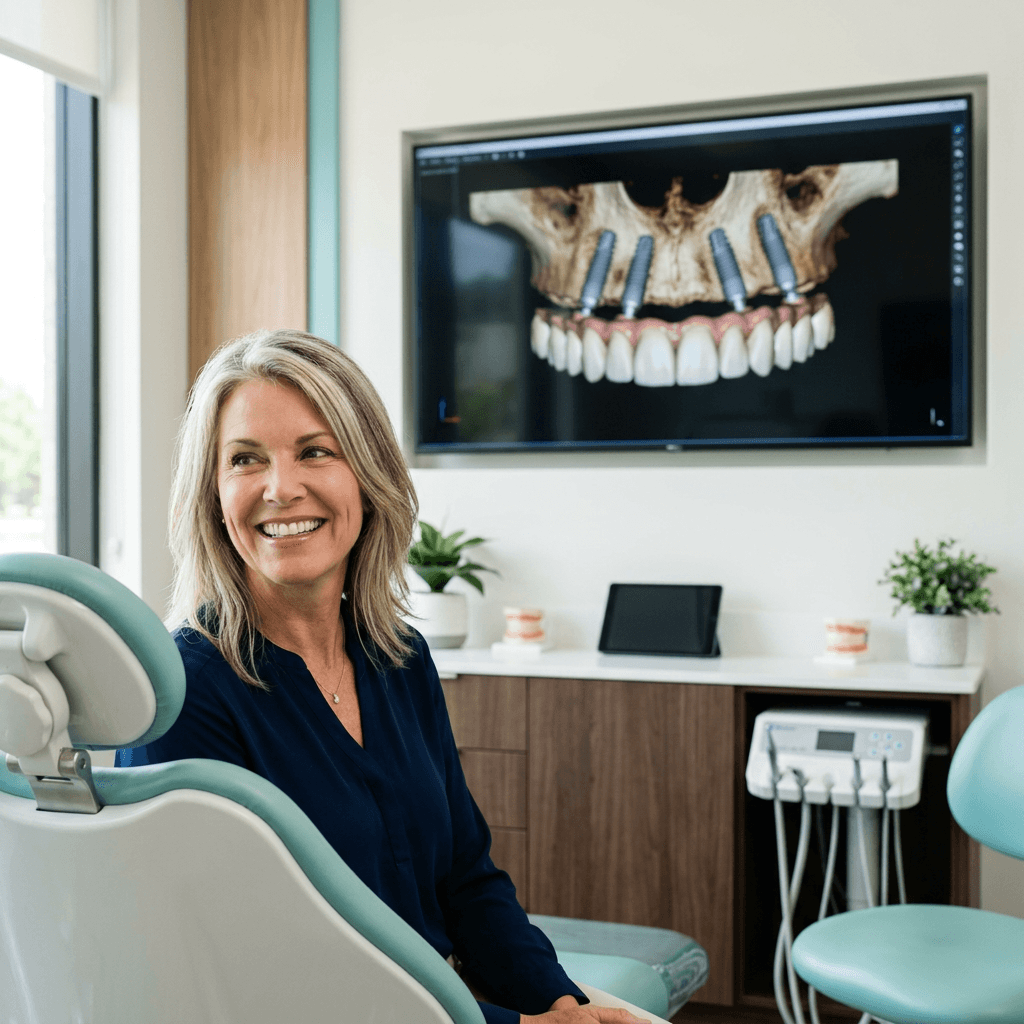
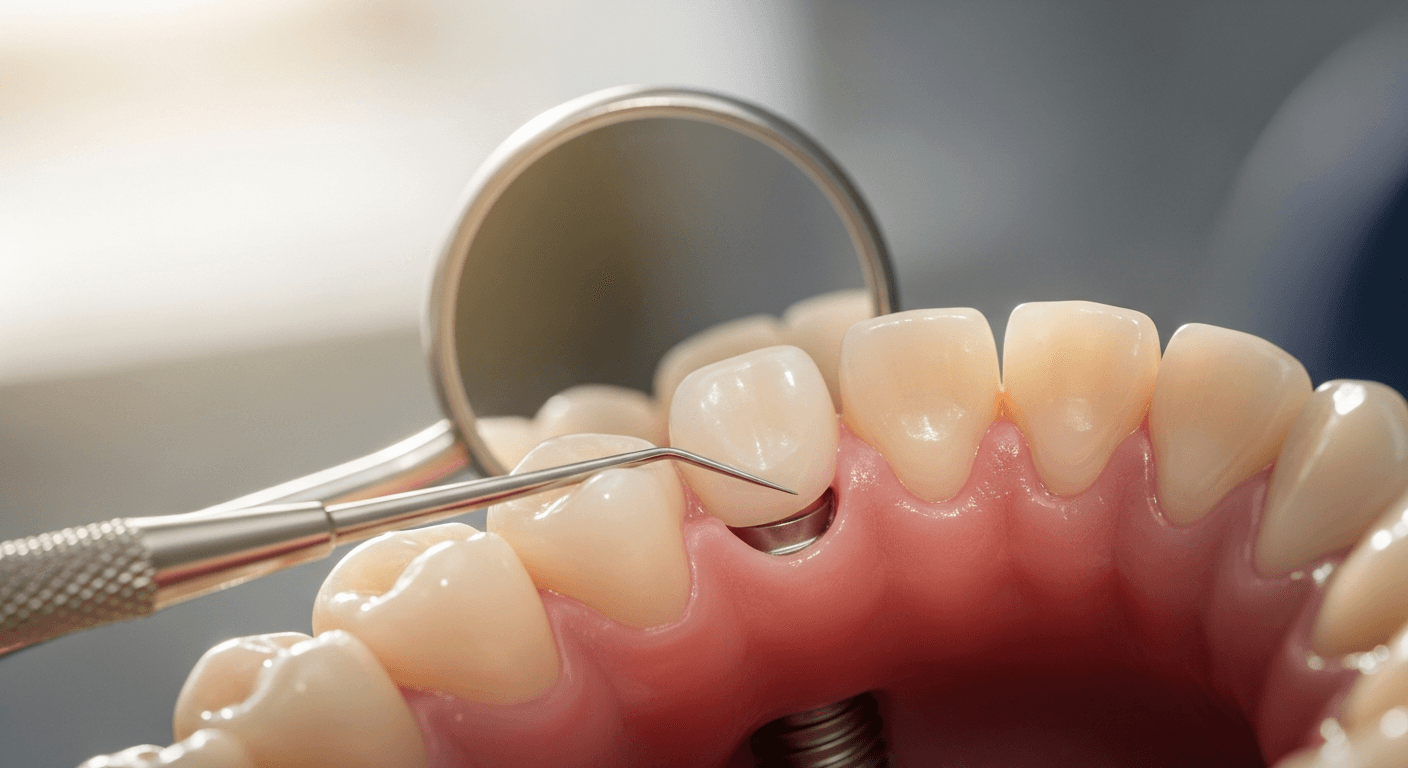
The implant fixture sits in bone, while the restoration is the visible tooth or bridge attached above it. The surrounding gum forms an important tissue interface, but the implant does not have the same periodontal ligament as a natural tooth. This helps explain why monitoring an implant involves more than looking for cavities or testing whether the bridge moves.
An implant can remain in place while nearby tissue is inflamed. Conversely, a loose restoration may involve a connector or screw rather than a loose fixture. Neither situation can be sorted out reliably by repeatedly wiggling the tooth yourself. A clinician assesses the tissue and the mechanical parts together.
The American Dental Association's implant overview describes implants and the importance of oral health. Our guide to cavities and gum disease around implants explains why a cavity-resistant fixture still needs care. This article focuses on turning that principle into a workable maintenance routine.
Build a repeatable routine around the restoration
Once your treating clinician has cleared the site for normal hygiene, brush twice daily with a soft-bristled toothbrush. Use controlled pressure along the gumline and across accessible restoration surfaces. Continue caring for the natural teeth elsewhere in your mouth with the toothpaste and technique your dentist recommends. Ask whether the restoration material requires any product precautions.
Add daily cleaning of spaces the toothbrush cannot reach. Depending on the design, the team may recommend floss, a threader, an appropriately sized interdental brush, or a water flosser. These are tools, not interchangeable promises: a device is useful only if its technique reaches the intended space. Do not force a brush through an opening that is too small.
At a visit, ask to demonstrate your routine back to the clinician or hygienist. This is more useful than leaving with a list of brand names. Show where a tool catches, which hand position is awkward, and whether you can reach the underside of a bridge. Reduced dexterity, vision problems, and discomfort are legitimate reasons to adapt the approach.
The dental implant aftercare guide covers the broader recovery context. Immediately after surgery, its general advice must still defer to your own written instructions: do not begin flossing or irrigating a fresh surgical area simply because those tools suit a healed implant.
Treat cleaning access as part of the restoration's function
If you cannot clean beneath a bridge, the answer is not automatically more effort. The opening may be difficult to locate, a tool may be unsuitable, or the contour may need clinical review. Describe the problem precisely: for example, food collects behind one part of the bridge, or the same spot bleeds whenever a threader passes beneath it.
Bring your cleaning tools to the appointment. The team can see whether the issue is technique, tool size, or access created by the restoration. Sometimes instruction solves the problem; sometimes professional cleaning or restorative assessment is needed. Do not file the bridge, remove screws, or use sharp household objects to reach trapped debris.
A fixed bridge is not designed for you to detach at home. Whether it needs professional removal during a particular maintenance visit depends on clinical findings and the restoration. Ask how the team will inspect and clean it rather than assuming removal is either always required or never appropriate.
Know the distinction between soft-tissue inflammation and bone disease
Peri-implant mucositis describes inflammation of the soft tissue around an implant without the disease-related supporting-bone loss that defines peri-implantitis. Peri-implantitis involves inflammation together with progressive loss of supporting bone. Bleeding, redness, or soreness may prompt assessment, but a symptom alone cannot establish either diagnosis.
The distinction matters because the care needed can differ. Improving plaque control and professional treatment may address soft-tissue inflammation, while disease involving bone can require more involved management. There is no reliable home test that tells you which condition is present, and absence of pain does not rule out a problem.
During assessment, a clinician may evaluate bleeding, tissue measurements, plaque, restoration fit, and the bite. Imaging is selected when useful, and previous records may help interpret changes over time. A photograph of the gum can document an observation, but it cannot replace examination or show the full condition of the bone.
Make follow-up visits a monitoring system, not just a polish
Your maintenance interval should reflect your tissue condition, previous gum disease, ability to clean, restoration design, and relevant health factors. A universal calendar cannot account for those differences. Before leaving a visit, confirm when you should return and what change would justify contacting the office earlier.
Share a history of periodontitis, tobacco use, diabetes, and changes in medications or health. The National Institute of Dental and Craniofacial Research's gum-disease guidance explains plaque-related disease and relevant risk factors around natural teeth. Those background factors also belong in an implant maintenance discussion, although the anatomy and diagnosis around implants are distinct.
If you change dental providers, ask how prior implant records and images will be transferred. Knowing the implant system and restoration history can help future care, especially if a component needs attention. Do not let the transfer become a reason to postpone an assessment of new swelling or bleeding.
Use a clear escalation plan for new changes
Contact your dental team about repeated bleeding, swelling, tenderness, drainage, persistent unpleasant taste, a bite change, or a restoration that feels loose. Note when the symptom began and whether it is worsening. Keep cleaning gently as instructed, but avoid trying to disinfect deep spaces with unprescribed products or taking leftover antibiotics.
Seek urgent medical attention for rapidly spreading facial swelling, trouble breathing or swallowing, or severe systemic illness. For a loose bridge or sudden mechanical change, stop testing it with your fingers and avoid chewing on it while you obtain prompt dental guidance. Remote advice can help determine the next step, but it may not identify the cause.
When a symptom raises concern about deeper problems, the implant complications guide provides additional context. Routine maintenance is intended to detect and address changes; it is not a guarantee against complications, nor does every concern mean that an implant needs replacement.
Frequently Asked Questions
Can an implant be unhealthy even if it does not hurt?
Yes. Comfort alone does not establish healthy gum or bone around an implant. Keep scheduled examinations and mention recurring bleeding, swelling, or cleaning difficulty even without pain. Clinical monitoring can identify findings that you cannot judge from sensation or appearance.
Should I stop cleaning a spot that bleeds?
Do not simply abandon the area or scrub it harder. Use the gentle technique your team recommends and contact them about recurring bleeding. If the site was recently operated on, follow the surgical instructions and ask before introducing a new tool.
Is a water flosser enough for every implant bridge?
No single device suits every restoration or replaces all other care. Ask your clinician to demonstrate how to reach your bridge's specific spaces and whether a water flosser should be combined with another aid. Correct access and consistent technique matter more than a device's label.
Does a fixed full-arch bridge need to come off at every cleaning?
Not necessarily. The clinician decides how to examine and clean the restoration based on its design and your findings. Some situations warrant professional removal or further assessment. You should not detach a fixed bridge yourself or assume that home cleaning makes professional visits unnecessary.
How often should I schedule implant maintenance?
Ask for an individualized interval based on your tissues, restoration, oral-health history, and home-care access. Some people need closer monitoring than others. New or worsening symptoms should be discussed before the next routine appointment rather than waiting for a calendar date.
Can mouthwash cure inflammation around an implant?
A rinse does not establish a diagnosis or correct every cause of inflammation. Your clinician may prescribe or recommend a product for a specific reason, but it should not replace cleaning access and assessment. Do not start prolonged use of strong antiseptics without professional advice.
What should I bring to a gum-health appointment?
Bring your current medication list, relevant implant records if available, and the tools you use to clean. Describe the exact location, timing, and pattern of symptoms. Include changes in health, smoking, and difficulty reaching particular spaces so the team can evaluate the problem in context.
Make your implant maintenance plan workable
Contact Dr. Alexander Antipov's Roseville practice to discuss persistent gum changes or questions about your implant restoration. An examination can clarify what needs attention and how to coordinate ongoing care.
Book a Consultation