Can Dental Implants Get Cavities or Gum Disease? Facts
Medically reviewed by Dr. Alexander V. Antipov, DDS — Board-Certified Oral & Maxillofacial Surgeon · Diplomate, American Board of Oral & Maxillofacial Surgery (ABOMS) · California Dental License #50724
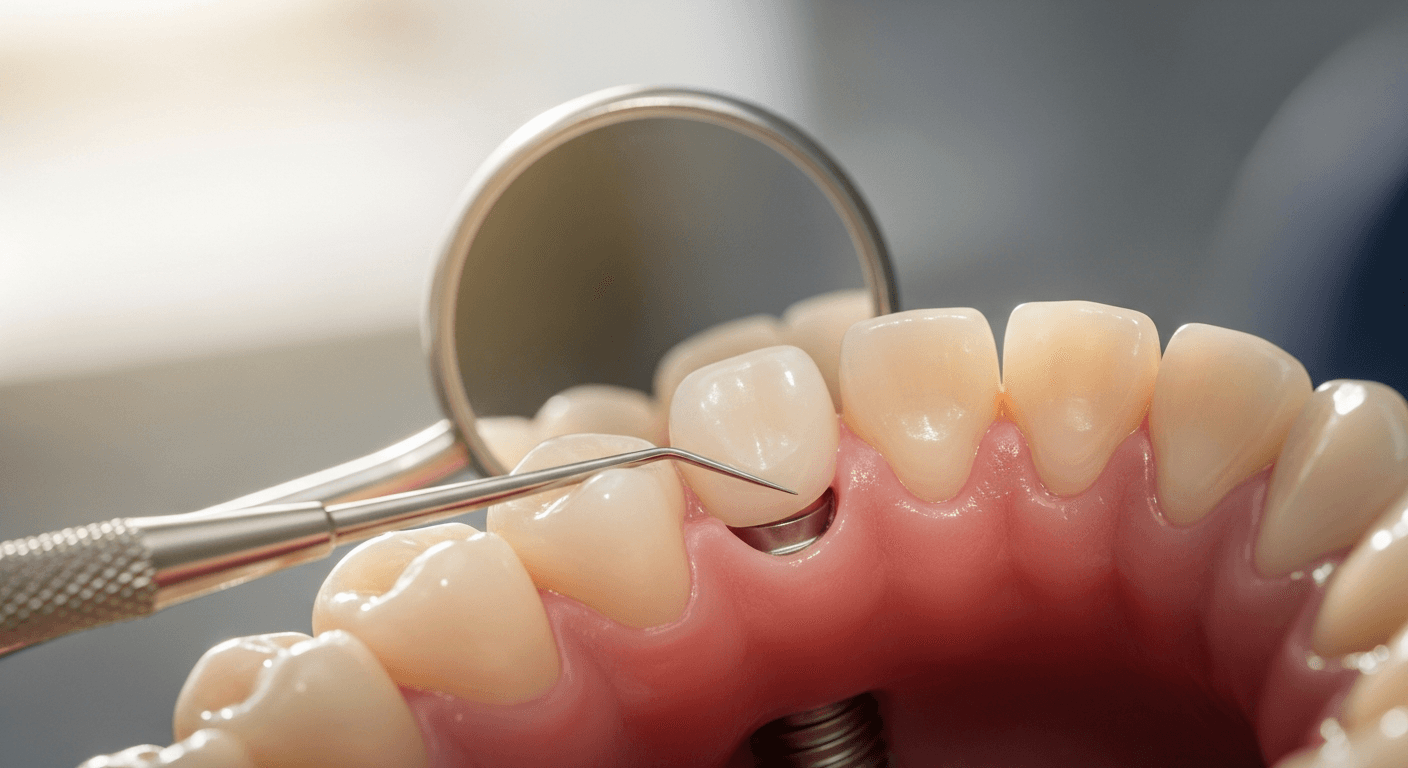
No — dental implants cannot get cavities, but the gum and bone around them can become infected with peri-implantitis, explains Dr. Alexander Antipov, a board-certified oral and maxillofacial surgeon in Roseville, CA. Implants are made of titanium or ceramic, so they never decay like natural teeth — yet the living tissue around them still needs care. That condition, peri-implantitis, is the leading reason implants fail years after placement, and it is largely preventable.
This article is for general education — consult a qualified oral surgeon for a personalized recommendation.
Why Implants Cannot Decay
Cavities form when bacteria erode tooth enamel. An implant has no enamel — it is made of titanium or ceramic, materials that simply do not decay. That is one genuine advantage implants have over natural teeth.
But the crown is not the whole story. What surrounds the implant — your own gum and bone — remains living tissue that needs care.
| Concern | Natural tooth | Dental implant |
|---|---|---|
| Cavities (decay) | Enamel can be eroded by bacteria | No enamel — cannot decay |
| Gum and bone infection | Gum disease can loosen the tooth | Peri-implantitis can destroy supporting bone |
| Ongoing care | Daily cleaning and regular checkups | Daily cleaning and regular checkups |
Peri-Implantitis: The Real Threat
Peri-implantitis is inflammation of the tissues around an implant, driven by bacterial plaque. Left unchecked, it destroys the bone that holds the implant, much like advanced gum disease loosens natural teeth. It is the most common reason an implant fails after years of good function.
- — Early sign: red, swollen, or bleeding gums around the implant
- — Later sign: gum recession or a deepening pocket
- — Advanced sign: bone loss and eventually a loose implant
What Causes Late Implant Failure
Implants that fail at the five- or ten-year mark usually share a few risk factors:
- — Plaque buildup from inconsistent hygiene
- — Smoking, which fuels inflammation and bone loss
- — Skipped professional cleanings and checkups
- — Uncontrolled diabetes or a history of gum disease
- — Excess bite force from untreated grinding
How to Protect Your Implants for Life
The good news is that peri-implantitis is largely preventable with the same discipline that protects natural teeth. Daily cleaning, not smoking, and regular maintenance visits catch problems early. Our guide to dental implant aftercare and our overview of dental implant complications go deeper on keeping implants healthy.
Frequently Asked Questions
Can a dental implant get a cavity?
No. Implants are made of titanium or ceramic and cannot decay. However, neighboring natural teeth can still get cavities and need normal care.
What is peri-implantitis?
It is gum disease around an implant — a bacterial infection that inflames the gum and can destroy supporting bone if untreated. It is the leading cause of late implant failure.
How do I prevent gum disease around my implant?
Brush and clean around it daily, avoid smoking, and keep regular professional cleanings so early inflammation is caught and treated.
Can peri-implantitis be treated?
Yes, especially when caught early. Treatment ranges from deep cleaning to surgical repair of the bone, which is why regular checkups matter so much.
What are the early warning signs of peri-implantitis?
The earliest sign is red, swollen, or bleeding gums around the implant. Later it can show as gum recession or a deepening pocket, and if advanced, bone loss and eventually a loose implant.
Why do implants fail years after they were placed?
Late failures usually share a few risk factors: plaque from inconsistent hygiene, smoking, skipped professional cleanings, uncontrolled diabetes or a history of gum disease, and excess bite force from untreated grinding.
Want your implants to last for life?
Dr. Antipov provides implant maintenance and early treatment of any gum issues to protect your investment. Book a consultation in Roseville.
Book a Free Consultation