Dental Implant Warning Signs: Repair or Surgical Revision?
By Dr. Alexander V. Antipov, DDS. Clinical review pending.

Persistent pain, bleeding, swelling, or new movement around a dental implant deserves professional assessment, but these changes do not establish that surgical revision is needed. An evaluation with Dr. Alexander Antipov in Roseville can help distinguish a problem with the replacement tooth or its connection from a concern involving the implant fixture, gums, or supporting bone.
This article provides general education about implant warning signs, not a diagnosis or personalized treatment advice. Trouble breathing or swallowing requires emergency medical care; other new or worsening symptoms should be discussed promptly with a dental professional.
Match the change to the next action—not a diagnosis
Start with what has changed and how quickly it is changing. The table below organizes a call to your care team; it cannot identify the damaged component or decide whether surgery is appropriate. Tell the office if the problem follows a recent procedure, an injury, or a repair.
| What you notice | What remains uncertain | Useful next action |
|---|---|---|
| Crown or bridge feels newly loose | Whether the restoration, connection, or implant fixture is moving | Contact the dental team promptly; do not twist or repeatedly test it |
| Recurring bleeding or gum tenderness | Whether irritation or disease affects only soft tissue or also supporting bone | Arrange an examination and describe the pattern |
| Persistent pain or a changed bite | Whether the cause is mechanical, inflammatory, or another dental problem | Request assessment rather than chewing repeatedly to reproduce pain |
| Drainage, fever, or rapidly increasing swelling | The source and extent of a possible infection | Seek urgent clinical assessment |
| Difficulty breathing or swallowing | Whether infection or another condition threatens the airway | Seek emergency medical help immediately |
First, protect yourself while arranging care
A new change should not become a home stress test. Pulling a crown, pressing on a bridge, or biting something hard to see whether it moves does not reliably separate a loose screw from a moving implant. It may aggravate the problem. Avoid deliberately loading the area and ask the office what eating and cleaning precautions apply until you are examined.
Call with a concise description: where the concern is, when it began, whether it is worsening, and whether you have swelling, fever, drainage, or difficulty swallowing. These details help the team assess urgency. Do not wait for a routine cleaning when a restoration has suddenly become unstable or symptoms are escalating.
Rapid swelling and difficulty breathing or swallowing require emergency attention, not an online consultation request. MedlinePlus guidance on dental abscesses provides background on dental infection and its potential complications. That resource is not a way to diagnose an implant infection; a clinician must determine the source.
Do not start leftover antibiotics, stop prescribed medication, or glue an implant restoration into place yourself. Medication may not address a mechanical problem, and temporary symptom relief does not establish that supporting tissues are healthy. If a component comes off, keep it safely and ask the team how to bring it to the appointment.
Think in layers: replacement tooth, connection, fixture, tissue
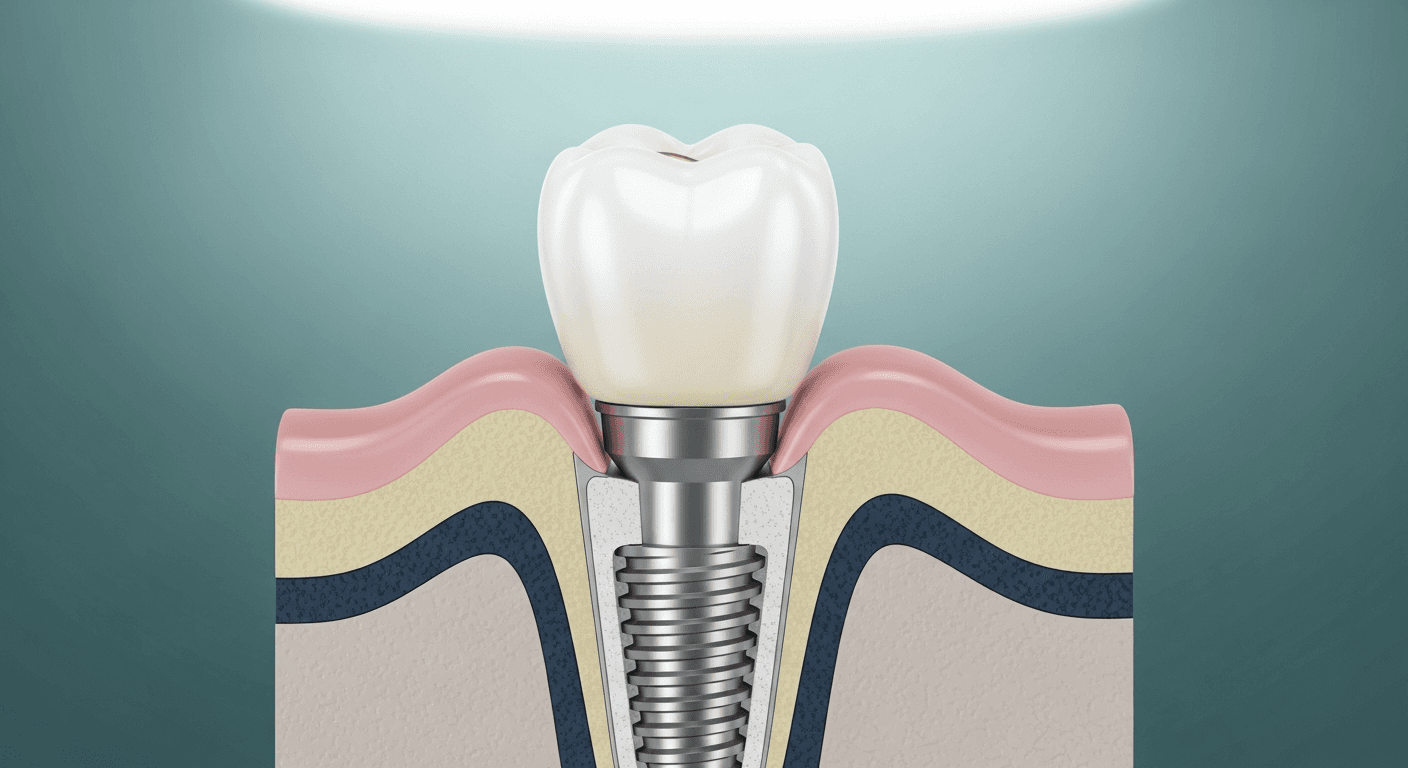
The visible crown or bridge is not the implant itself. Below it are connecting components, an implant fixture within the jaw, and the tissues supporting the system. A problem in any of these layers can change how chewing feels. Everyday language such as 'my implant is loose' does not identify which layer needs treatment.
A chipped tooth, loose connecting screw, or damaged prosthesis may call for restoration-focused care. A fixture that moves in bone raises a different concern. Gum inflammation or bone changes can coexist with an apparently intact bridge. This is why an assessment should consider the whole system rather than simply tighten a part and assume the investigation is finished.
For a closer look at replacement-tooth problems, read repairing a broken implant crown or prosthesis. The purpose of that distinction is to avoid confusing prosthetic repair with surgery on the implant or surrounding structures—not to promise that a loose crown is always a simple fix.
Pain also needs context. Discomfort soon after surgery is assessed differently from new pain after years of comfortable function, but neither timing supplies a diagnosis. Nearby teeth, bite changes, and soft-tissue irritation may matter. Tell the clinician what preceded the symptom rather than deciding beforehand that the implant must be removed.
What the examination needs to establish
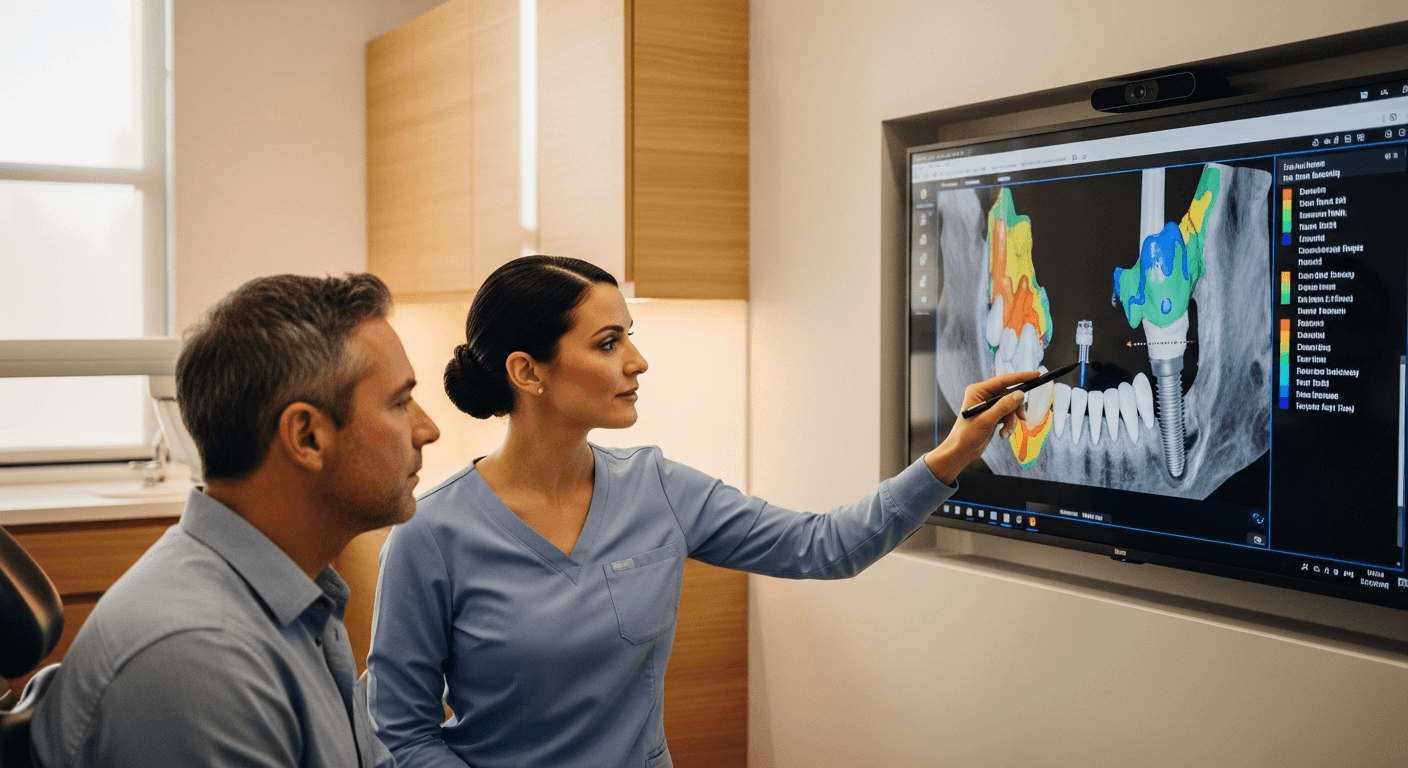
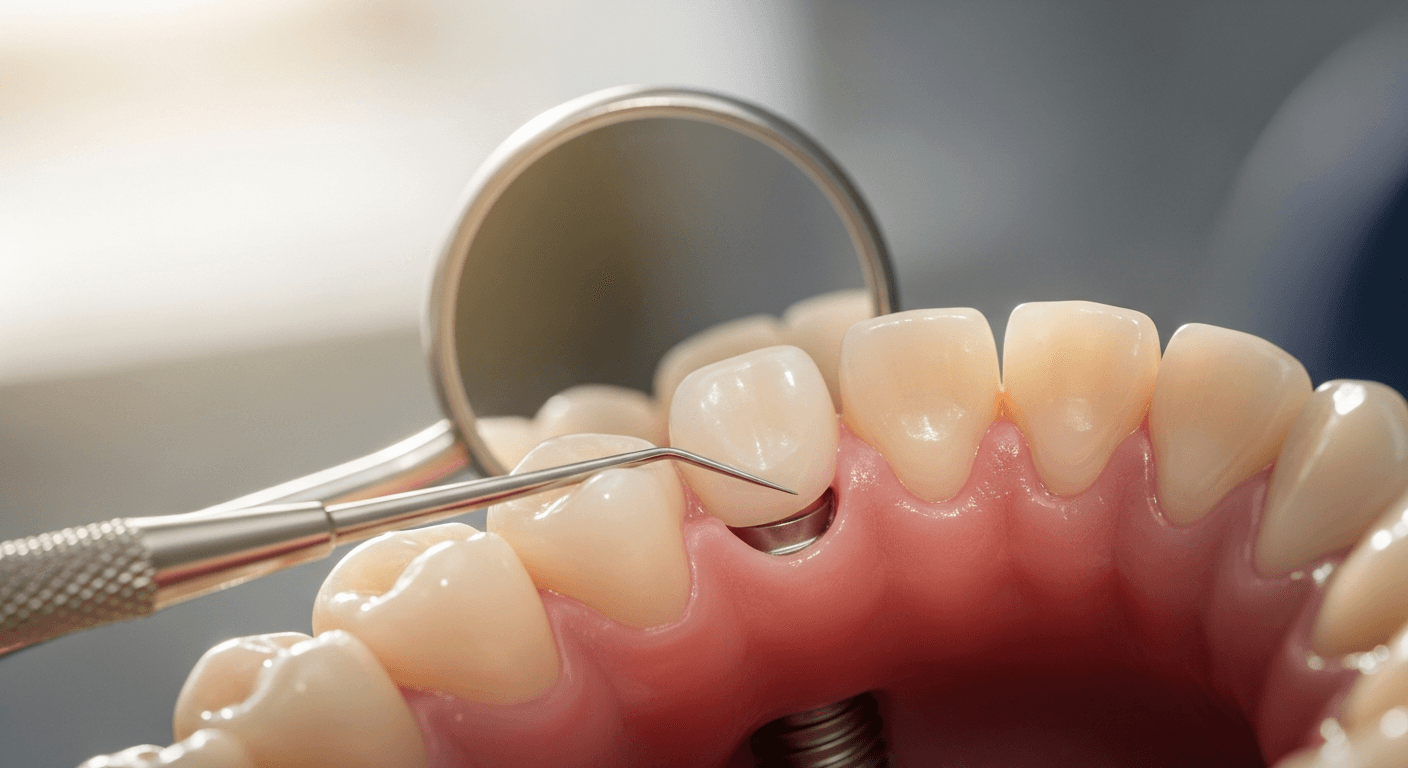
A useful evaluation connects your history with current findings. The clinician may assess restoration integrity, component movement, bite contacts, gum condition, and supporting bone using appropriate examination and imaging. Prior images can help show change over time; additional images should be selected for the clinical question rather than assumed necessary in every case.
Expect the discussion to separate observations from conclusions. 'There is bleeding here' describes a finding. 'This implant needs removal' is a treatment recommendation that requires supporting evidence. Ask what is known, what remains uncertain, and whether another professional should evaluate the restorative or periodontal part of the problem.
Smoking, diabetes management, earlier gum disease, and maintenance history can influence this review. The National Institute of Dental and Craniofacial Research gum-disease overview explains tissue inflammation and risk factors around natural teeth. Implant tissues need their own assessment; those background risk factors do not, by themselves, prove implant failure.
An absence of pain is not proof that every component is healthy, just as pain alone is not proof of failure. Scheduled professional examinations remain important. If your symptoms fluctuate, describe both better and worse days so the visit does not focus only on how the area happens to feel that morning.
Four possible pathways after diagnosis
Observation is appropriate only when findings support it and follow-up is defined. Ask what is being monitored, when reassessment should occur, and which changes require an earlier call. Monitoring should be an active plan, not a vague instruction to return someday if the problem becomes unbearable.
Restoration repair addresses the crown, bridge, or connection when those parts are responsible. Tissue treatment addresses inflammation or other disease around the implant. Some patients need both. The clinician should explain whether a repair resolves the diagnosed problem or is one step in a broader plan involving bite adjustment, tissue care, or reassessment.
Surgical revision enters the discussion when the fixture or supporting structures require surgical management. That may involve several decisions rather than immediate replacement: whether the implant can be retained, whether removal is indicated, what tissue repair is needed, and whether or when another implant is appropriate. Symptoms alone cannot settle those questions.
Review the practice's implant rescue and revision information for the scope of evaluation. Ask for the reasoning behind the proposed sequence and the alternatives, including their limitations. A revision consultation is not a commitment to removal or a guarantee that a replacement can be placed immediately.
Build a short, useful history before your appointment
Bring a symptom timeline rather than a long list of possible internet diagnoses. Include approximate onset, whether discomfort is spontaneous or related to eating, any recent repairs, and changes in how your teeth meet. Note drainage, bleeding, or swelling without pressing the tissue to provoke it. Existing photographs may help describe a visible change, but cannot establish bone health.
Useful records include implant brand and component information, placement and restoration dates, prior radiographs, the treating offices' contact details, and earlier maintenance notes. Bring your medication list and relevant medical history. Missing paperwork should not delay an urgent assessment; the office can discuss requesting records and identifying components as needed.
If recommendations differ or you need more explanation, a second opinion on an implant concern can help clarify the evidence and choices. Share earlier plans openly so the comparison addresses the same findings rather than disconnected descriptions of the problem.
Before leaving, make sure you know the working diagnosis, next appointment, interim precautions, and contact route for worsening symptoms. Ask who will manage restoration work if surgical care is also needed. The immediate goal is a clear, evidence-based next step—not predicting an outcome from one symptom or deciding that the whole treatment must start over.
Frequently Asked Questions
Does bleeding around an implant mean I need revision surgery?
Not necessarily. Bleeding can indicate irritation or inflammation, but an examination must establish the tissues involved and whether supporting bone is affected. Recurring bleeding deserves evaluation rather than a self-diagnosis. Tissue treatment, restoration changes, or other care may be considered according to the findings.
How can I tell whether the crown or implant is loose?
You cannot reliably distinguish that by pulling or biting on it. The crown, connecting parts, and fixture may produce similar sensations but require different treatment. Contact your dental team promptly for new movement, avoid repeatedly testing the area, and follow the team's interim instructions.
Which symptoms should not wait for a routine appointment?
New mobility, drainage, worsening pain, fever, or rapidly increasing swelling needs prompt guidance and may require urgent clinical assessment. Difficulty breathing or swallowing needs emergency medical attention immediately. An online request or scheduled consultation is not an appropriate substitute for emergency care.
Can a crown repair avoid implant removal?
A repair may be appropriate if the diagnosed problem is limited to the restoration or its connection and the implant and supporting tissues are suitable. It is not automatically an alternative to removal. The clinician needs to check for additional mechanical or tissue problems before recommending care.
Should I wait until I have all my old implant records?
No. Arrange assessment based on symptoms and urgency, even if records are missing. Bring what you have and identify prior treating offices. Implant details, earlier images, and repair history can help, but the clinician can discuss how to obtain information while addressing the current concern.
Can an implant develop a problem years after placement?
Yes. Restoration wear, component problems, and changes in surrounding tissues can arise after a long period of comfortable function. The timing does not identify the cause or prove removal is necessary. Current examination findings, health history, and comparison with earlier records guide the next step.
Does a revision evaluation commit me to surgery?
No. An evaluation is intended to identify the affected components and explain suitable options. Ask why monitoring, repair, tissue treatment, or surgery is recommended and what remains uncertain. Dr. Alexander Antipov's Roseville practice can discuss surgical concerns alongside the restorative coordination your case may require.
Get an existing implant concern assessed
Contact Dr. Alexander Antipov's Roseville practice to discuss an implant evaluation and the records to bring. For urgent or worsening symptoms, call for guidance; breathing or swallowing difficulty requires emergency medical care.
Request an Implant Evaluation