Repairing a Broken Implant Crown or Prosthesis Guide
Medically reviewed by Dr. Alexander V. Antipov, DDS — Board-Certified Oral & Maxillofacial Surgeon · Diplomate, American Board of Oral & Maxillofacial Surgery (ABOMS) · California Dental License #50724
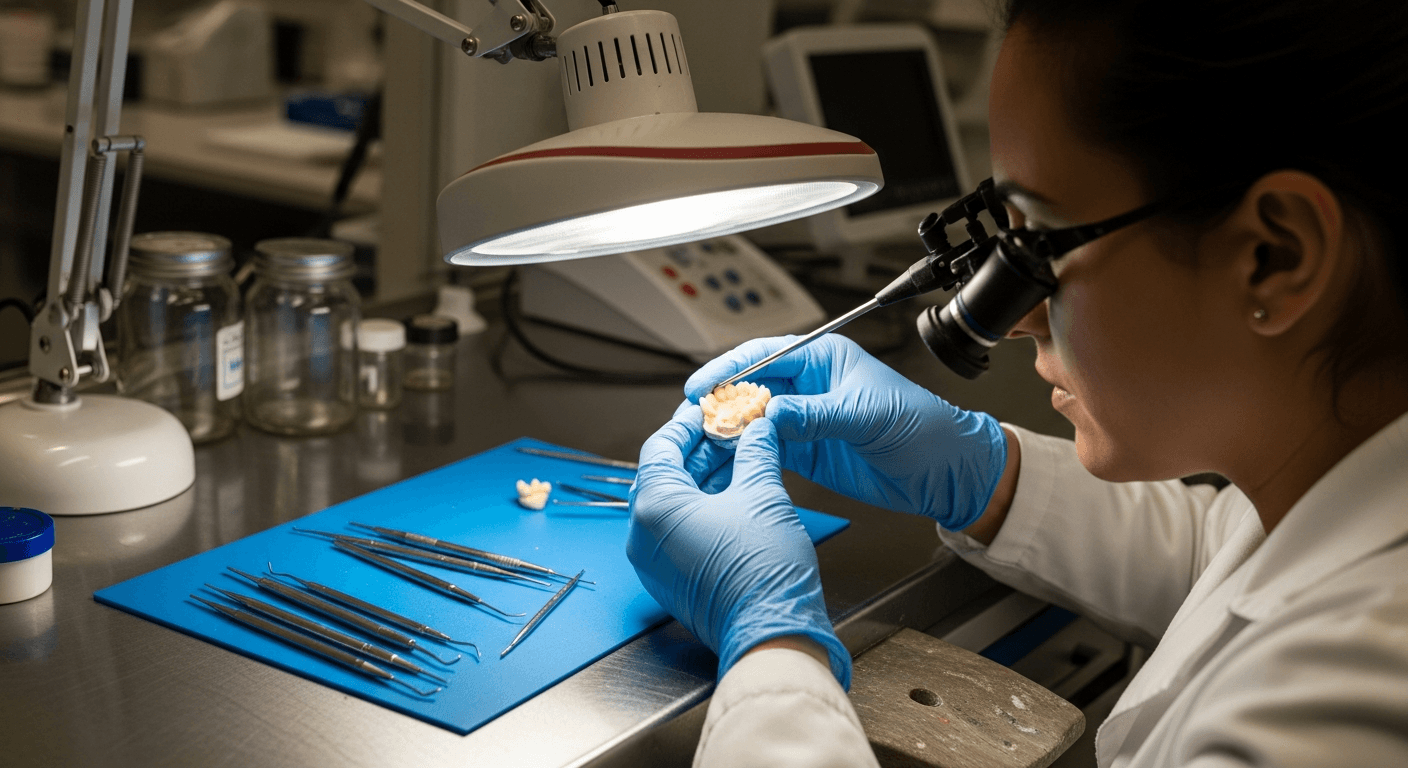
A broken implant crown or bridge can almost always be repaired or replaced while the implant itself stays in place, explains Dr. Alexander Antipov, a board-certified oral and maxillofacial surgeon in Roseville, CA. The implant in your jaw and the tooth you see are two separate parts, so when something breaks it is usually the visible restoration, not the implant itself. That is reassuring, because the part anchored in your bone rarely needs to change.
This article is for general education — consult a qualified oral surgeon for a personalized recommendation.
The Crown and the Implant Are Different
An implant restoration is built in layers. The implant body sits in the bone, an abutment connects to it, and the crown or bridge sits on top. When a patient says a tooth broke, the implant underneath is usually intact — the fracture is in the porcelain, acrylic, or zirconia above it. That is reassuring, because the part anchored in your bone rarely needs to change.
| Damage | Repair Option |
|---|---|
| Minor chip on a crown | Polish the chip |
| Small crown fracture | Bond the fracture |
| Large crown break | Replace the crown |
| Chip in a full-arch bridge | Repair the acrylic or replace worn teeth |
| Repeated bridge fractures | Upgrade to a stronger zirconia arch |
Why Implant Restorations Break
Restorations are strong but not indestructible. Several factors lead to cracks and chips:
- — Grinding or clenching at night
- — An uneven bite that overloads one area
- — Acrylic that has worn down over years
- — A long cantilever on a full-arch bridge
Repair Options for a Single Crown
For a single implant crown, the fix depends on the damage:
- — Polishing a minor chip
- — Bonding a small fracture
- — Replacing the crown when the break is large
Repair Options for a Full-Arch Bridge
A broken full-arch prosthesis is more involved but still very fixable. Depending on the case, treatment may include:
- — Repairing a chip in the acrylic
- — Replacing worn teeth on the bridge
- — Upgrading to a stronger zirconia arch
- — Redesigning the bite to balance force
Preventing Future Breakage
A repair lasts longer when the cause is addressed. A night guard protects against grinding, and regular maintenance catches wear early. Patients with repeated fractures often benefit from switching to a stronger material so the same spot does not break again.
Frequently Asked Questions
Does a broken crown mean my implant failed?
Usually not. The implant in the bone is typically intact — the break is in the restoration above it.
Why do implant restorations break?
Restorations are strong but not indestructible. Grinding, an uneven bite, worn acrylic, or a long cantilever on a full-arch bridge can all cause cracks and chips.
Can a single broken crown be fixed without replacing it?
Often yes. A minor chip can be polished and a small fracture bonded; only larger breaks call for a new crown.
Can a full-arch bridge be repaired in the mouth?
Minor repairs sometimes can be. Larger fractures usually need the bridge repaired or replaced in the lab.
How do I stop crowns from breaking again?
Correcting the bite and wearing a night guard are the most effective steps, especially for people who grind.
What if my full-arch bridge keeps breaking in the same spot?
Repeated fractures usually point to an underlying cause — grinding, an uneven bite, worn acrylic, or a long cantilever. Addressing that cause, often by redesigning the bite or upgrading to a stronger zirconia arch, keeps the same spot from breaking again.
Cracked or chipped implant tooth?
Dr. Antipov repairs and redesigns implant restorations, correcting the cause so the result holds up. Book a consultation at our Roseville practice.
Book a Free Consultation