Dental Implants With Gum Disease: Treat the Foundation First
By Dr. Antipov Practice Editorial Team. Clinical review pending; this article has not yet been medically reviewed by Dr. Alexander V. Antipov, DDS.
Yes, people with a history of gum disease may be able to receive dental implants, but active periodontitis needs assessment and treatment first. For patients seeing Dr. Alexander Antipov, a board-certified oral and maxillofacial surgeon in Roseville, the question is not simply whether a tooth is missing: it is whether the gums, remaining teeth, bone and home-care routine can support a restoration over time.
Educational information only, not a diagnosis or a promise of implant eligibility. Bleeding, loose teeth, pus or persistent swelling deserve an in-person periodontal assessment; treatment timing depends on your examination and medical history.
Active disease and a controlled history are different situations
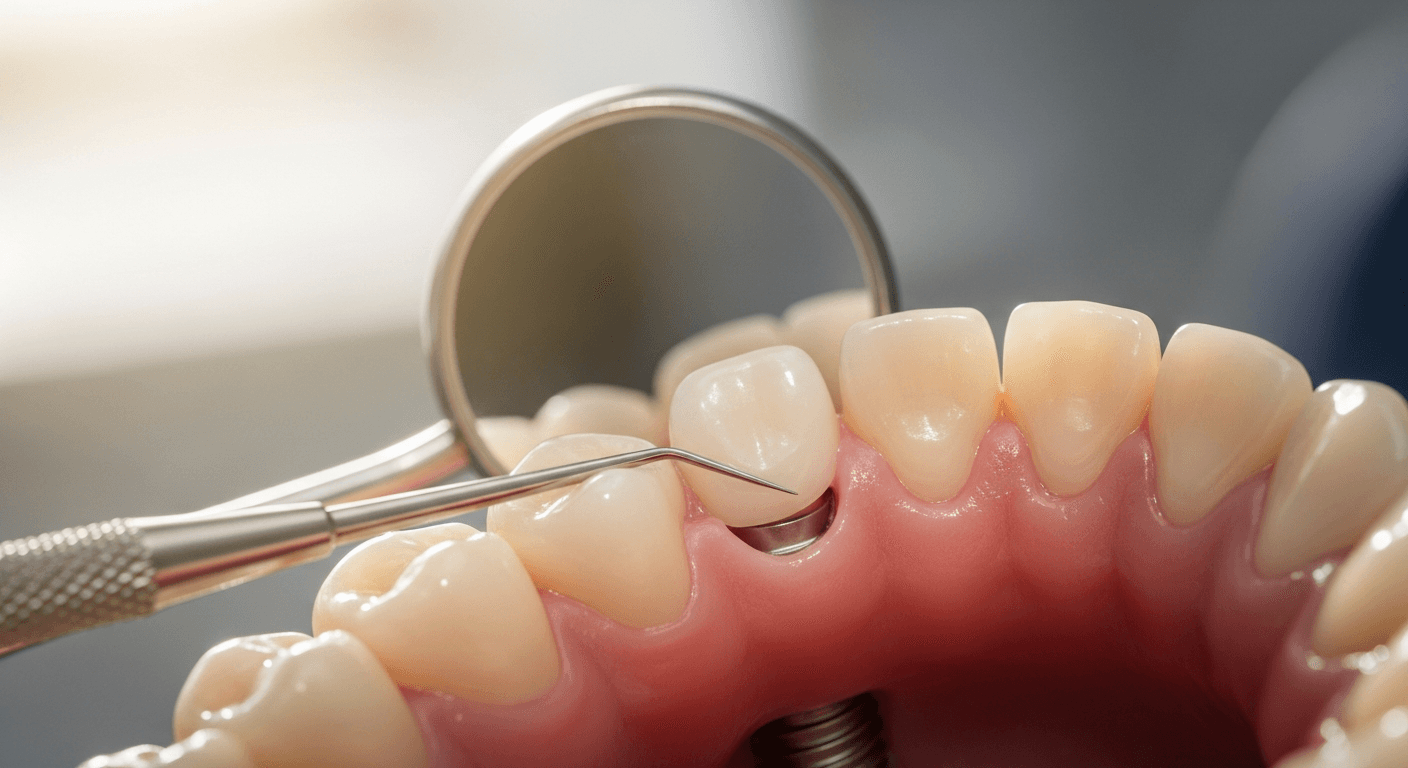
A person who had periodontitis years ago and now attends maintenance visits is not in the same position as someone whose gums bleed daily and whose pockets are deepening. Neither a healthy-looking smile nor an isolated X-ray proves that inflammation is controlled. The clinician checks probing depths, bleeding, recession, tooth mobility and changes in bone levels, and considers how effectively the patient can clean around a future implant.
The National Institute of Dental and Craniofacial Research explains that periodontitis involves destruction of the tissues and bone supporting teeth. It is not reversed simply by removing a failing tooth. If bacterial deposits and inflammation remain elsewhere in the mouth, an implant placed into that same environment will still require careful surveillance.
| Clinical situation | What it means for an implant plan | Practical next step |
|---|---|---|
| Gingivitis without attachment loss | Inflammation may improve with cleaning and daily plaque control; an implant evaluation can proceed alongside care. | Address bleeding and confirm a workable cleaning routine. |
| Active periodontitis with deep pockets | Ongoing inflammation and supporting-bone changes make immediate elective placement less appropriate. | Complete periodontal treatment and reassess tissue response. |
| Previously treated, stable periodontitis | Implants may be considered, but prior disease remains a long-term risk factor. | Agree on a maintenance schedule before surgery. |
| Major ridge loss after tooth loss | A clean mouth can still lack sufficient bone or favorable gum contours. | Assess three-dimensional anatomy and discuss grafting or alternative restorations. |
| Loose or infected existing implant | Inflammation around an implant is not ordinary gum disease on a tooth. | Seek prompt examination to distinguish mucositis, peri-implantitis or another cause. |
Why treating a missing tooth does not treat periodontitis
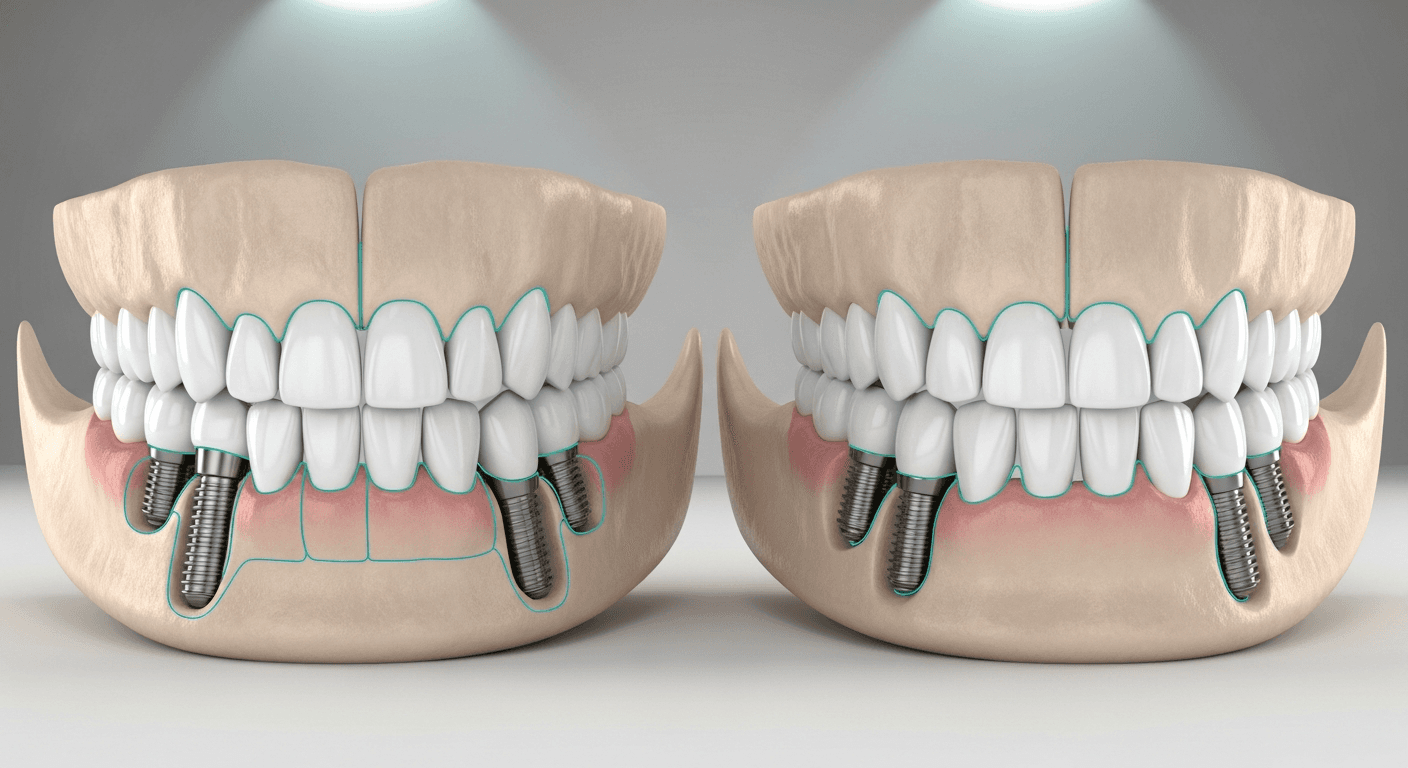
Periodontal disease involves a bacterial biofilm and the body's inflammatory response. In its advanced form it damages the attachment and bone around natural teeth. An implant is not susceptible to tooth decay, but the tissues around it can become inflamed and can lose supporting bone. That condition, peri-implantitis, is not an inevitable outcome of past gum disease; it is a reason to take disease control and follow-up seriously.
The FDA's dental implant patient guidance advises patients to discuss health conditions and follow cleaning and regular dental-visit instructions. It also lists infection and implant failure among possible risks. No implant material or surgical shortcut makes plaque control unnecessary.
The most useful starting point is a complete-mouth evaluation, not a quote for one post. If a neighboring tooth has untreated pockets, its infection and future prognosis matter to the restoration. Equally important is whether the person can clean the eventual crown where it meets the gums. A design that creates an inaccessible ledge can complicate care even when surgery itself goes smoothly.
What happens before implant placement?
Your general dentist or periodontist may recommend scaling and root planing, targeted care for persistent pockets, extractions when teeth cannot be saved, and a personalized recall interval. The response is then measured: less bleeding and inflammation, stable probing measurements and an achievable daily hygiene plan matter more than an arbitrary number of weeks on a calendar. Some people need further periodontal treatment. Others can proceed to restorative planning once the disease is stable.
If the tooth is still present, the team should first consider whether it can be predictably maintained. Removing salvageable teeth solely to simplify an implant plan should not be treated as a default. Where extraction is appropriate, the need for socket preservation, staged bone reconstruction or no graft at all depends on the shape of the remaining ridge and the position planned for the final tooth.
Our guide to bone grafting for dental implants explains why grafting can create space for a properly positioned restoration, but also why a graft adds healing time and is not automatically required.
The bone and soft-tissue questions
Periodontitis can reduce the height and width of the jaw ridge, especially around teeth that have been loose for a long time. A panoramic image may show broad patterns of bone loss, while additional imaging may be indicated to inspect the three-dimensional bone available at a proposed site. The goal is not merely to find a place where a screw fits: it is to place a future crown in a position that looks appropriate, functions comfortably and can be cleaned.
Gum thickness and contour matter too. Recession can reveal implant components or make a crown difficult to shape naturally, particularly in the smile zone. Soft-tissue grafting is an option in selected cases, not a routine requirement for everyone who once had gum disease. Clinical examination determines whether an aesthetic or hygiene issue is likely and whether it is worth addressing before, during or after implant placement.
Patients concerned about persistent bleeding or inflammation around an existing implant can also read how implant complications are evaluated. A new implant site and an inflamed existing implant need different diagnostic questions.
A realistic treatment sequence in Roseville
The first conversation should cover what happened to the missing tooth, when it was lost and whether other teeth remain at risk. Bring a medication list, history of periodontal therapy and any recent radiographs. The team may coordinate with your treating dentist or periodontist so the surgeon's implant plan and the restorative dentist's crown plan match.
Next comes periodontal stabilization and reassessment. Only then does the team decide whether the implant site has enough bone and an appropriate soft-tissue envelope, and whether grafting would improve the position of the final restoration. Placement is followed by healing; the length varies with the site, any grafting and individual health factors. A temporary tooth may be possible, but an immediately attached replacement is not automatically suitable for a site with infection or limited primary stability.
Finally, the crown or bridge is shaped for bite and cleanability, and a maintenance plan begins. This last stage is not optional aftercare. A history of periodontitis makes recurring checks of bleeding, tissue condition and bone levels particularly important. Ask who will handle professional maintenance and what symptoms should prompt a visit between scheduled appointments.
Risk reduction is a shared job
Brushing along the gumline twice daily, cleaning between teeth and around restorations, and following a professional recall schedule reduce preventable inflammation. The exact interdental brush or floss technique depends on the crown and the spaces around it; ask your dental team to demonstrate on your own restoration. Smoking, uncontrolled diabetes and difficulty cleaning because of limited dexterity should be discussed before surgery rather than discovered afterward.
See our implant aftercare guide for day-to-day care and signs worth reporting. Dr. Antipov's Roseville evaluation can address surgical feasibility, but maintaining periodontal health requires continuing care with the dentist or periodontal team, not a one-time procedure.
Be wary of two opposite promises: that a prior periodontal diagnosis means implants are impossible, or that extracting teeth automatically eliminates gum disease risk forever. Both miss the individual factors that determine whether treatment is sensible. The useful question is what the exam reveals today and how the mouth will be maintained once the final teeth are in place.
Frequently Asked Questions
Can I get an implant while my gums are bleeding?
Bleeding needs evaluation before elective placement. It may reflect gingivitis, periodontitis or another problem; the cause and response to treatment determine when an implant should be considered.
Does a history of periodontitis automatically rule out implants?
No. Controlled disease and a sustainable maintenance routine can make implant treatment possible, although past periodontitis may increase future peri-implant disease risk.
Will extracting diseased teeth eliminate my gum-disease risk?
No. Removing teeth removes the affected tooth sites, not the tendency toward plaque-related inflammation. Implants and remaining teeth still need care and follow-up.
Will I need a graft if periodontitis caused bone loss?
Not necessarily. The answer depends on the available bone, the intended crown position and nearby anatomy. Some sites need reconstruction; others do not.
How long after periodontal treatment must I wait?
There is no universal wait period. Clinicians reassess inflammation and healing, then account for any extractions or grafting before choosing a placement date.
Can an implant get gum disease?
Implants cannot get cavities or tooth periodontitis, but surrounding tissues can develop peri-implant mucositis or peri-implantitis. Bleeding, swelling or a change in fit should be checked.
Who coordinates my treatment if I already see a periodontist?
Ask the surgeon, periodontal clinician and restoring dentist to share their findings and agree on disease control, implant position, crown design and follow-up responsibility.
Start with the health of the foundation
If you have been told gum disease complicates your implant options, request an individual assessment with Dr. Antipov in Roseville. Bring recent periodontal records so the surgical plan can account for what has already been treated. Restrictions apply.
Book a Free Dental Implant Consultation