Are Dental Implants Worth It for Seniors? Health, Effort and Value
By Dr. Antipov Practice Editorial Team. Clinical review pending; this article has not yet been medically reviewed by Dr. Alexander V. Antipov, DDS.

Dental implants can be worth considering for an older adult who wants a steadier replacement for missing teeth, but they are not automatically the best value for everyone. In Roseville, Dr. Alexander Antipov, a board-certified oral and maxillofacial surgeon, considers the person's overall health, existing teeth, ability to maintain the restoration and goals for eating and speaking—not a birthday alone.
This article offers general education, not medical clearance or a financial recommendation. Medication changes, particularly blood thinners or drugs affecting bone, must be directed by your prescribing clinician; implant candidacy requires an individual examination.
What does “worth it” mean in later life?
Worth is not a single number on a treatment estimate. A person with a comfortable, well-fitting denture and limited interest in surgery may see little benefit from replacing it. Another person may spend every meal managing a loose lower denture and value stability far more than a fixed appearance. The comparison should include daily use, time in the chair, cleaning demands, risk of further procedures and financial priorities.
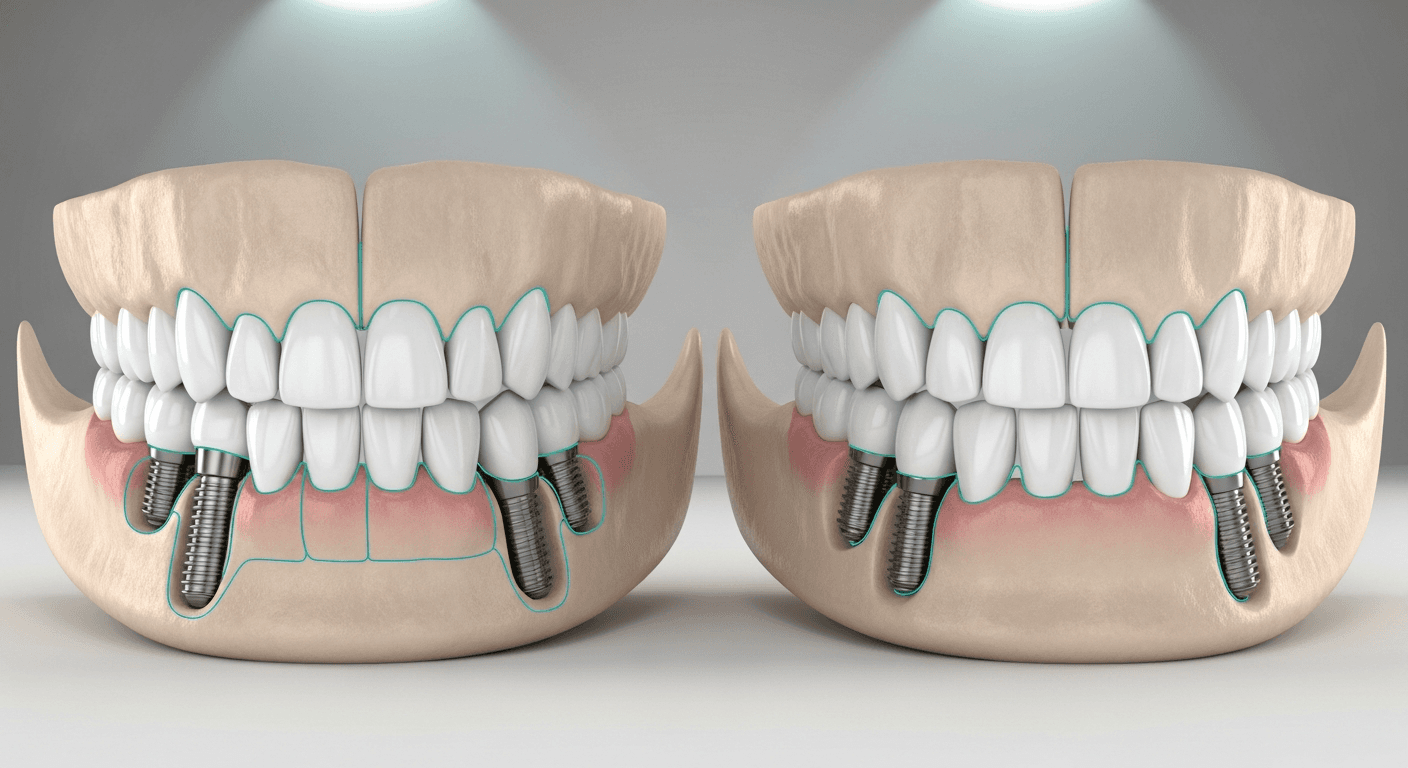
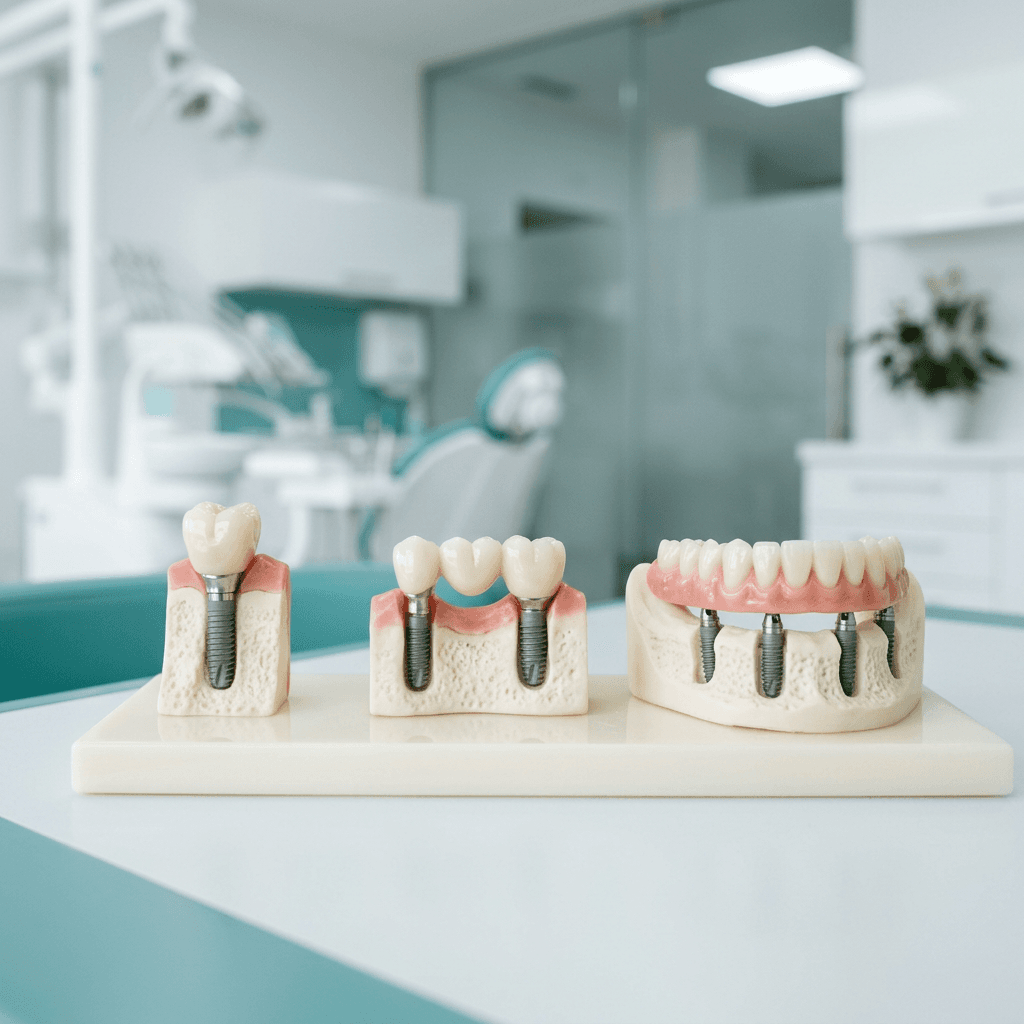
Implants provide anchorage for different kinds of teeth: an individual crown, a removable denture retained by implants or a fixed full-arch bridge. Those are not interchangeable experiences. A removable overdenture still comes out for cleaning; a fixed bridge stays attached for everyday life but requires careful cleaning underneath. Neither is a substitute for preventive visits.
| Option | Daily experience | Commitment and limitation |
|---|---|---|
| Conventional removable denture | Can replace many teeth without implant surgery; fit may change as the ridge remodels. | Remove and clean daily; adjustments, relines or replacement may be needed. |
| Implant-retained removable denture | Attachment points may improve retention, especially for a troublesome lower denture. | Surgery and attachment maintenance; denture still removed and cleaned. |
| Fixed full-arch implant bridge | Does not come out at home; can feel secure for speech and meals after healing. | More extensive planning and investment; cleaning below bridge and professional maintenance required. |
| Individual implant crowns | Replace selected missing teeth without joining healthy neighbors into a bridge. | Each site requires evaluation; may be unnecessary when other teeth or a denture plan serve the goal. |
| Repair or reline existing denture | Least disruptive if problems are mainly fit-related and tissues are healthy. | Does not add implant retention; benefit depends on bone and denture design. |
Function matters more than a promise of perfect chewing
A stable restoration may make it easier to chew a wider variety of foods than a loose denture. That does not mean every patient returns to every food immediately, nor does an implant directly treat heart disease, cognitive decline or malnutrition. Food choices depend on muscles, saliva, swallowing, other teeth and general health as well as the prosthesis. If eating has become difficult, discuss nutrition with your medical team rather than assuming a dental procedure alone solves the problem.
The American Dental Association's overview of dentures describes their role in replacing teeth and the need for ongoing care. Its implant information provides a useful starting point for discussing fixed and removable implant restorations.
Speech and social comfort deserve consideration too, but they vary from person to person. An upper denture may be perfectly manageable for one patient, while another dislikes palate coverage. Ask the clinician to show how much of your palate and gumline each proposed design covers. A trial adjustment to an existing denture may clarify whether an implant is really needed.
Health screening: age is not the diagnosis
A date of birth is less informative than healing capacity, medication exposure and the ability to tolerate and recover from treatment. Bring a complete list of prescriptions and over-the-counter drugs, including the indication for any osteoporosis medicine. Mention diabetes, tobacco use, past radiation to the jaws, immune suppression, prior implant complications and any history of delayed wound healing. An oral surgeon can coordinate with the treating physician when needed.
Do not stop anticoagulants or bone medications on a dental article's advice. Changes may create risks outside the mouth. A person with controlled chronic illness might still be a candidate; a person of any age with active infection or unaddressed medical risks may need a different sequence. Sedation is also a separate decision from whether to place implants. Review the options and their requirements rather than assuming that older adults need or cannot have a particular kind.
The FDA dental implant guidance asks patients to disclose health conditions and medications and describes possible implant complications. Our article about implants with osteoporosis and autoimmune conditions explores why the details of treatment matter more than a diagnosis label alone.
Can you realistically clean the finished teeth?
An implant's metal or ceramic parts cannot develop cavities, but its surrounding tissues can become inflamed. A fixed arch is not simply brushed across its visible front. Its underside and the implant connections need attention, sometimes with specialized brushes, floss or other tools chosen for the design. An overdenture must be removed and cleaned, along with its attachments and the gums beneath it.
This matters particularly if arthritis, vision changes or a caregiver's availability affect daily care. Try the proposed cleaning tools before choosing a restoration; ask for a demonstration and explain if the technique feels unrealistic. A plan that is excellent on a scan but impossible to clean at home is not good value. Professional recalls let the team assess fit, inflammation and wear, and adjust the maintenance routine.
Read our implant aftercare and maintenance guide to see why follow-up continues after the final prosthesis is delivered.
Budget the whole pathway, including future service
Ask for an itemized estimate: evaluation, imaging if needed, extraction, grafting, implant surgery, provisional teeth, final prosthesis and any expected attachment replacements or professional maintenance. An implant-retained overdenture can be a middle option for someone seeking denture stability without a fixed bridge. But its lower initial scope does not mean it is free of repair or relining costs.
Original Medicare generally does not cover routine dental services such as dentures or implants; Medicare's dental coverage page explains the limited exceptions. Medicare Advantage benefits and private dental policies vary by specific plan. Confirm coverage with the insurer using treatment codes and ask whether the surgical and restorative portions are billed separately.
There is no reliable universal lifetime-savings calculation. A denture can serve well for years with periodic maintenance; implants can also need repairs or replacement components. Compare realistic estimates and consider what part of the expense buys a meaningful improvement in your everyday life. If preserving savings is more important than a fixed prosthesis, that preference belongs in the decision.
Planning the sequence with less disruption
A consultation should start by identifying which teeth can stay, not by assuming a full arch needs extraction. If existing teeth are maintainable, targeted replacements or an improved partial denture may be more conservative. When teeth cannot be saved, the plan should specify whether temporary teeth are possible and how eating will change during healing. A same-day temporary, when clinically appropriate, is not the final restoration and does not remove the need for a healing period.
If travel or caregiving makes repeated visits difficult, request a stage-by-stage schedule. Who handles surgical follow-up? Who adjusts a removable denture while implants heal? Who repairs a fractured tooth on the prosthesis? These practical questions often matter more than a photograph of the finished smile.
Our separate article on whether there is an age limit for implants focuses on eligibility. This guide instead asks whether a particular improvement is worth its total care burden for you.
Frequently Asked Questions
Is there an age after which implants are not worthwhile?
No single birthday determines value. Goals, medical risks, available bone, ability to clean and the alternatives are more useful than age alone.
Would two implants help my loose lower denture?
A removable denture retained by implants may improve retention for some patients. The number and location of implants depend on anatomy, prosthesis design and your examination.
Do fixed implant teeth require less cleaning than dentures?
They require a different kind of cleaning, not necessarily less. The area under a fixed bridge needs daily access, while removable dentures and attachments need cleaning outside and inside the mouth.
Can I have implants if I take osteoporosis medication?
Medication type, dose, route and reason for taking it all matter. Tell the surgeon and prescribing physician; never stop the medication on your own.
Does Medicare pay for implant dentures?
Original Medicare usually excludes routine dental care, with limited exceptions. Medicare Advantage and other policies differ; verify your specific benefits before assuming coverage.
Will implants let me eat anything right away?
No. Healing restorations may require a modified diet, and final chewing ability varies with the prosthesis and your overall oral and physical health.
What if my current denture only recently started slipping?
Have its fit and your oral tissues assessed. An adjustment, reline or new denture might solve the immediate problem without implant surgery.
Discuss the value, not just the procedure
Bring your medication list, existing denture and questions about day-to-day care to an implant evaluation with Dr. Antipov in Roseville. Ask for alternatives and a complete staged estimate. Restrictions apply.
Book a Free Dental Implant Consultation