Immediate-Load Full-Arch Implants: Who May Be a Candidate?
By Dr. Alexander V. Antipov, DDS. Clinical review pending.
Immediate-load full-arch implants may be considered when the planned implants, supporting bone, bite, and health factors can support an early provisional restoration. Dr. Alexander Antipov in Roseville evaluates those conditions individually; being able to receive implants does not automatically mean they should be loaded immediately or that final teeth can be delivered on surgery day.
This article is general education about immediate-loading selection, not a determination of candidacy or a promised treatment schedule. Implant placement, provisional teeth, and the definitive restoration require individual surgical and restorative planning.
Separate four decisions that advertising can blur
The first question is not 'How fast can I get teeth?' It is which stage is being described. Placement timing, loading timing, temporary teeth, and the definitive prosthesis are related but separate decisions. Clarifying those terms makes treatment proposals easier to compare without assuming the earliest restoration completes treatment.
| Decision | What it actually describes | What it does not establish |
|---|---|---|
| Immediate placement | An implant is placed at the time a tooth is removed | That the implant can immediately support teeth |
| Immediate loading | A restoration is connected early after placement under an appropriate protocol | Eligibility for every patient or unrestricted chewing |
| Provisional full-arch teeth | An interim restoration used during the treatment sequence | That healing is complete or the final prosthesis is ready |
| Delayed loading | The implant-supported restoration is connected after a planned healing interval | That implant treatment has failed |
| Definitive restoration | The planned final prosthesis after clinical and restorative reassessment | A maintenance-free result or guaranteed lifetime |
Candidacy has a planning stage and a confirmation stage
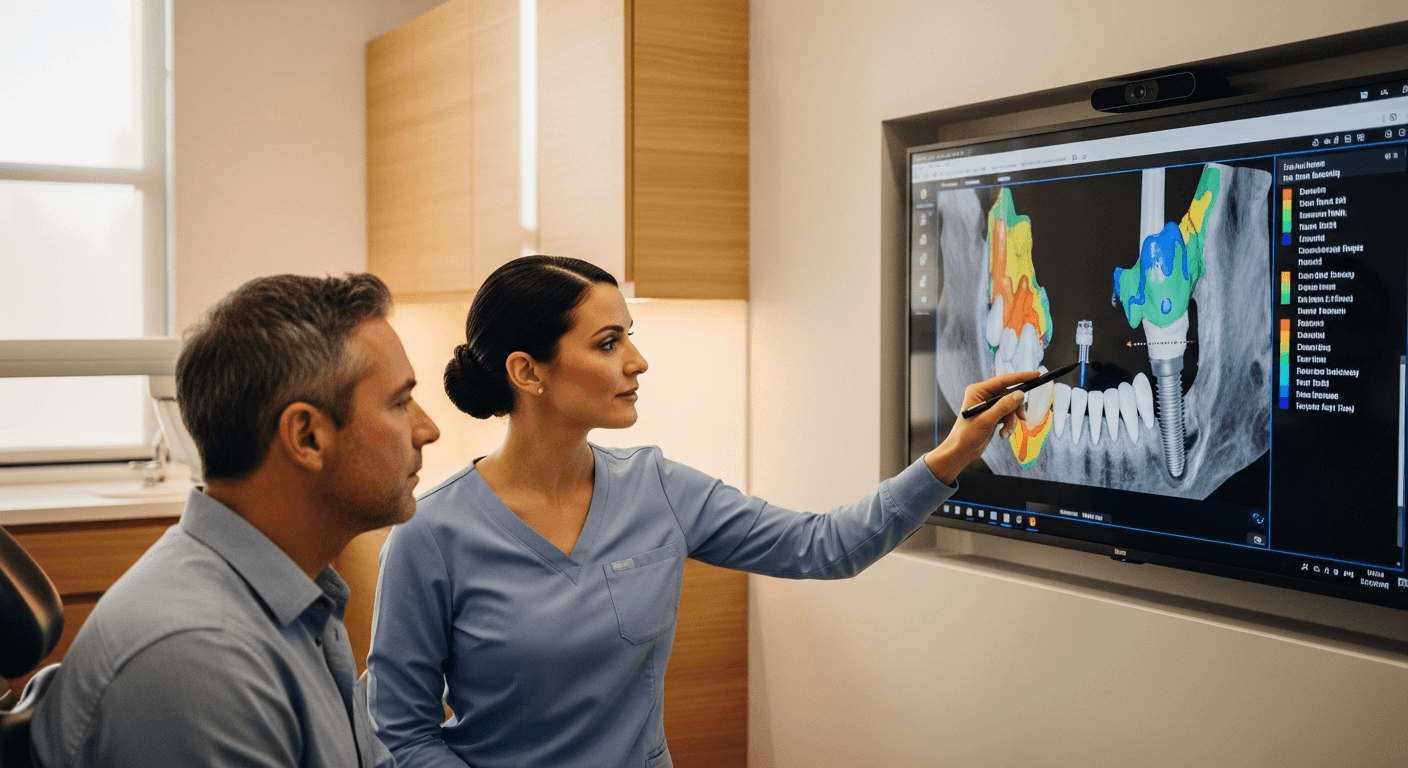
Before surgery, examination and appropriate imaging help assess bone anatomy, proposed implant positions, oral disease, and the space needed for the restoration. Your history adds information that an image cannot provide, including medications, smoking, medical conditions, and whether you grind or clench. Those findings support a proposed approach, not certainty about every surgical detail.
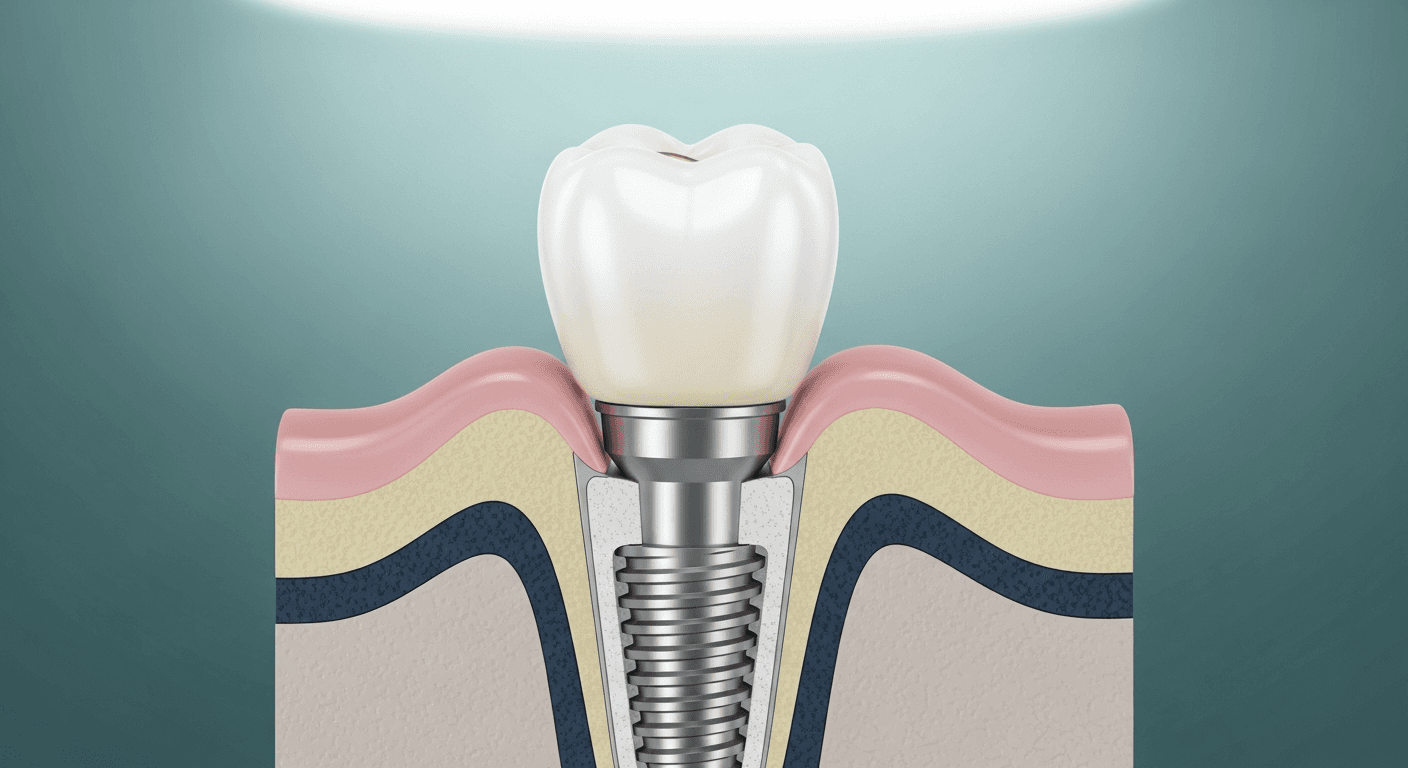
During placement, the surgeon assesses the implants' initial stability and whether the actual findings support the intended loading protocol. Primary stability means the initial mechanical hold in bone. It is different from osseointegration, the biological process by which bone develops a stable connection with the implant during healing.
A favorable scan does not replace that clinical assessment. There is no single number patients can use to approve themselves for immediate loading across all implant systems and full-arch designs. Ask what measures and findings your surgeon uses and how the restoration plan affects the decision. An isolated measurement cannot represent the whole case.
For background on the biological sequence, the American Dental Association's implant overview distinguishes surgical placement, bone healing, and replacement teeth, and notes that some patients may receive implants and temporary teeth together. It does not promise immediate loading for everyone.
The full arch is a system, not a collection of separate posts
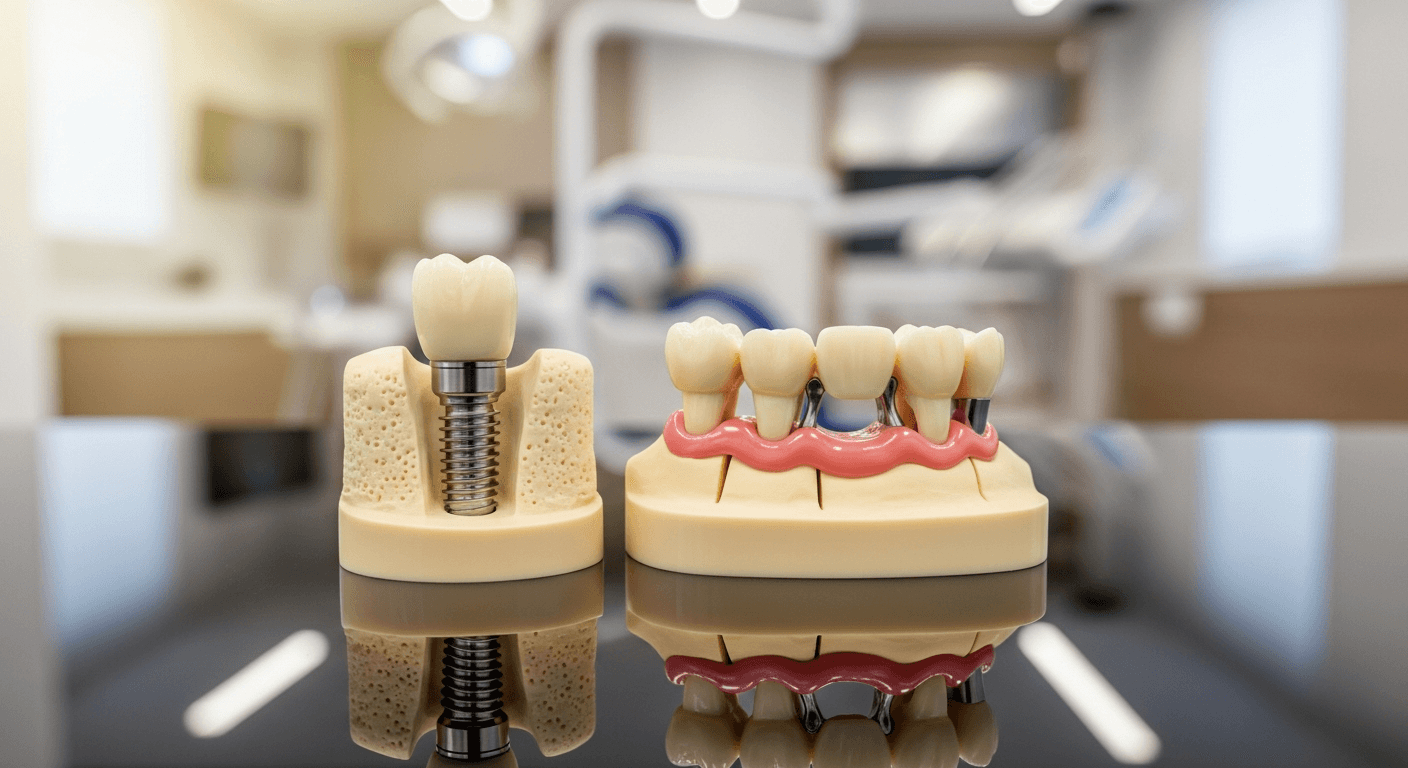
A full-arch bridge links replacement teeth to several implants. Planning therefore considers how those implants are distributed, how the bridge fits, and where chewing forces will act. Counting implants does not determine candidacy. A named approach such as All-on-4 describes one full-arch configuration, not automatic permission to load that configuration immediately.
Available bone, jaw anatomy, opposing teeth, and the proposed bite all matter. Upper and lower jaws may need different loading plans. Ask whether each arch qualifies for the same approach and how a longer healing interval would change the sequence.
The restoration also needs to support cleaning and follow-up. A design that supplies teeth early still has to account for hygiene access, tissue changes, and future adjustment. Discuss how the provisional teeth will function while healing and what clinical checks are needed before moving to the definitive restoration.
The practice's full-arch implant treatment information provides a broader starting point for understanding the restoration. At your assessment, bring the conversation back to why the proposed implant arrangement and loading sequence fit your specific jaw and bite.
Health and daily habits belong in the selection discussion
Share your complete medication and medical history, including diabetes management, past healing difficulties, bone-related conditions, and treatments that may affect surgical planning. None of these details should be hidden to secure a faster timeline. A recommendation can depend on how a condition is managed, other risk factors, and the scope of treatment.
Smoking and nicotine use need an honest discussion. Tell the team what products you use and how often, rather than assuming only cigarettes count. Ask how your habits affect the proposed treatment and whether preparation or coordination with your medical clinician is needed. Do not stop prescribed medications or change diabetes treatment independently.
The NIDCR gum-disease resource discusses tobacco use, diabetes, and oral-tissue health. It offers context for the health history, not an immediate-loading eligibility rule. Implant candidacy and loading decisions require a separate assessment of your intended treatment.
Practical ability to follow the healing instructions also matters. Explain if work, caregiving, food access, or travel could make a restricted diet and timely appointments difficult. That conversation is not a test of character. It helps the team determine whether the proposed provisional phase is workable and what support or adjustments should be discussed.
Understand the backup plan before the procedure
If immediate loading is being considered, ask what happens if the surgical findings do not support it. The answer should identify the alternative restoration arrangement, how it protects the surgical sites, and how later loading would be reassessed. Do not assume that your current denture can be used unchanged over newly treated areas.
A staged approach can be the planned first choice or a contingency. It allows the team to organize care around healing or other clinical needs. Delaying implant-supported teeth does not mean the implants have failed, and it should not be framed as a penalty for being a less desirable patient.
Clarify how a change would be communicated and documented, including any effects on appointments and the written estimate. Consent should cover the meaningful alternatives in understandable language before surgery, not leave you discovering afterward that 'same day' referred only to placement. Ask which parts of the plan are provisional and which findings could change them.
Our same-day implant explainer addresses the broader timing terminology. This candidacy discussion goes further: the important issue is the clinical evidence for your loading approach and the agreed response if conditions differ from expectations.
Early teeth are a protected healing phase
A fixed provisional bridge may feel stable while the implants are still healing. That sensation is not permission to eat as though treatment were complete. Ask for written dietary and activity instructions tailored to your plan, including what 'soft food' means in practice and whom to contact if you cannot follow the restrictions.
The temporary restoration can help assess appearance, speech, comfort, and bite before a definitive prosthesis is made. Report problems rather than adjusting it yourself. The final stage depends on reassessment and restorative planning, not simply the surgery date.
Follow-up is part of the treatment, even if you feel well. Ask who checks healing, who adjusts the provisional, and how urgent concerns are handled. New movement, increasing pain, swelling, or a changed bite should be reported promptly. These symptoms need assessment; they do not automatically identify implant failure.
Immediate loading does not eliminate maintenance. Implants and prostheses have different care needs. Ask how to clean the restoration and whether its design suits your dexterity and routine.
Leave the consultation with reasons, not just a date
A useful proposal explains why immediate or delayed loading is recommended, which teeth are temporary, what remains to be confirmed, and the planned follow-up. Ask for an itemized estimate separating surgery, provisional teeth, definitive restoration, and any additional procedures. A financial arrangement cannot establish clinical suitability for early loading.
If you are still deciding whether implant treatment itself is appropriate, start with who may be a candidate for dental implants. Eligibility for implants is the broader question. Eligibility for immediate loading is an additional decision about how those implants will support teeth during healing.
Write down the recommendation in your own words and check your understanding with the team. You should be able to explain the preferred approach, backup arrangement, and next decision point without relying on a slogan. Your wish for early teeth belongs alongside clinical selection and informed consent.
Frequently Asked Questions
Does immediate loading mean final teeth on surgery day?
No. Immediate loading describes early connection of a restoration when clinical conditions support it. In full-arch treatment, those teeth are commonly provisional. Healing assessment and restorative work still follow. Ask your team exactly which prosthesis is planned at each stage and what determines the definitive restoration's timing.
Can a scan confirm immediate-loading candidacy?
Imaging helps planning but cannot confirm every factor. Examination, health history, bite, restoration design, and initial stability assessed during placement also matter. The preoperative proposal should explain what remains conditional and what the team will do if actual surgical findings do not support immediate loading.
Does All-on-4 automatically qualify for immediate loading?
No. All-on-4 is a full-arch configuration, not an individual loading decision. Bone, implant stability, distribution, bite, and health factors still need assessment. Ask why the proposed configuration and loading sequence are suitable for your case rather than treating the implant count as proof of eligibility.
Can both arches use the same loading schedule?
Sometimes, but the upper and lower jaws require their own assessment within the overall plan. Conditions may differ, so one arch may need a different sequence. Ask how a staged approach for either arch would affect provisional teeth, appointments, and the way the restorations meet.
Does being offered delayed loading mean treatment has failed?
No. Delayed loading may be the recommended approach from the beginning or a contingency when findings differ during surgery. It organizes treatment around clinical needs and healing. Ask what supports the recommendation, what interim teeth are appropriate, and how readiness for the next stage will be assessed.
Can I chew normally with a fixed provisional bridge?
Do not assume so. A bridge may feel secure while implants are still healing. Follow your team's written dietary restrictions and ask what foods are appropriate for your restoration. Do not test the bridge with hard foods or adjust it yourself; report pain, movement, or bite changes.
What should an immediate-loading proposal include?
It should explain the evidence for the recommendation, provisional and definitive restoration stages, the backup plan, and follow-up responsibilities. Request an itemized estimate and clarification of possible changes. A Roseville assessment with Dr. Alexander Antipov can help connect those details to your anatomy, health, and treatment goals.
Discuss full-arch loading options in Roseville
Ask Dr. Alexander Antipov's practice about the assessment needed to compare immediate and staged loading. Bring questions about temporary teeth, clinical conditions, and the alternative plan if early loading is not appropriate.
Request a Full-Arch Assessment