All-on-4 for San Francisco Patients: Planning Care in Roseville
By Dr. Alexander V. Antipov, DDS. Clinical review pending.
San Francisco residents considering All-on-4 with Dr. Alexander Antipov should plan for evaluation, surgery, recovery, and return visits at his Roseville office—not a San Francisco treatment location. A workable travel plan depends on the clinical stages you actually need, including whether a temporary fixed bridge is appropriate, rather than assuming one trip will complete treatment.
This guide supports travel planning for dental implant care; it is not medical clearance to travel, a treatment estimate, or a promise of immediate fixed teeth. Your surgeon's individualized anesthesia, recovery, and follow-up instructions take priority.
Compare the trips before choosing dates
Start by treating full-arch care as a series of decisions, not an appointment advertised by its shortest possible timeline. Some assessments can begin with a records discussion, but clinical examination and appropriate imaging are needed to determine a plan. Ask which visits must take place in person and which questions can be addressed in advance.
This planning table separates the purpose of each stage from the transportation commitment. It is not a fixed itinerary: grafting, staged implant placement, healing concerns, and restorative adjustments can change the sequence.
| Stage | What needs clarification | Travel implication |
|---|---|---|
| Initial evaluation | Diagnosis, options, relevant imaging, and who plans the teeth | Reserve enough time for discussion; do not assume surgery follows immediately |
| Surgical treatment | Extractions, implant placement, anesthesia, and provisional plan | Arrange the required responsible adult and confirm discharge arrangements |
| Early recovery review | Healing, symptoms, hygiene, and bridge or bite concerns | Confirm whether you should remain nearby and when an examination is needed |
| Final restoration visits | Readiness for final teeth, fit checks, and adjustments | Allow for more than one restorative appointment if needed |
| Long-term maintenance | Who monitors tissues and handles mechanical problems | Plan routine access and an urgent-care route after returning to San Francisco |
Confirm that the treatment—not the headline—fits you
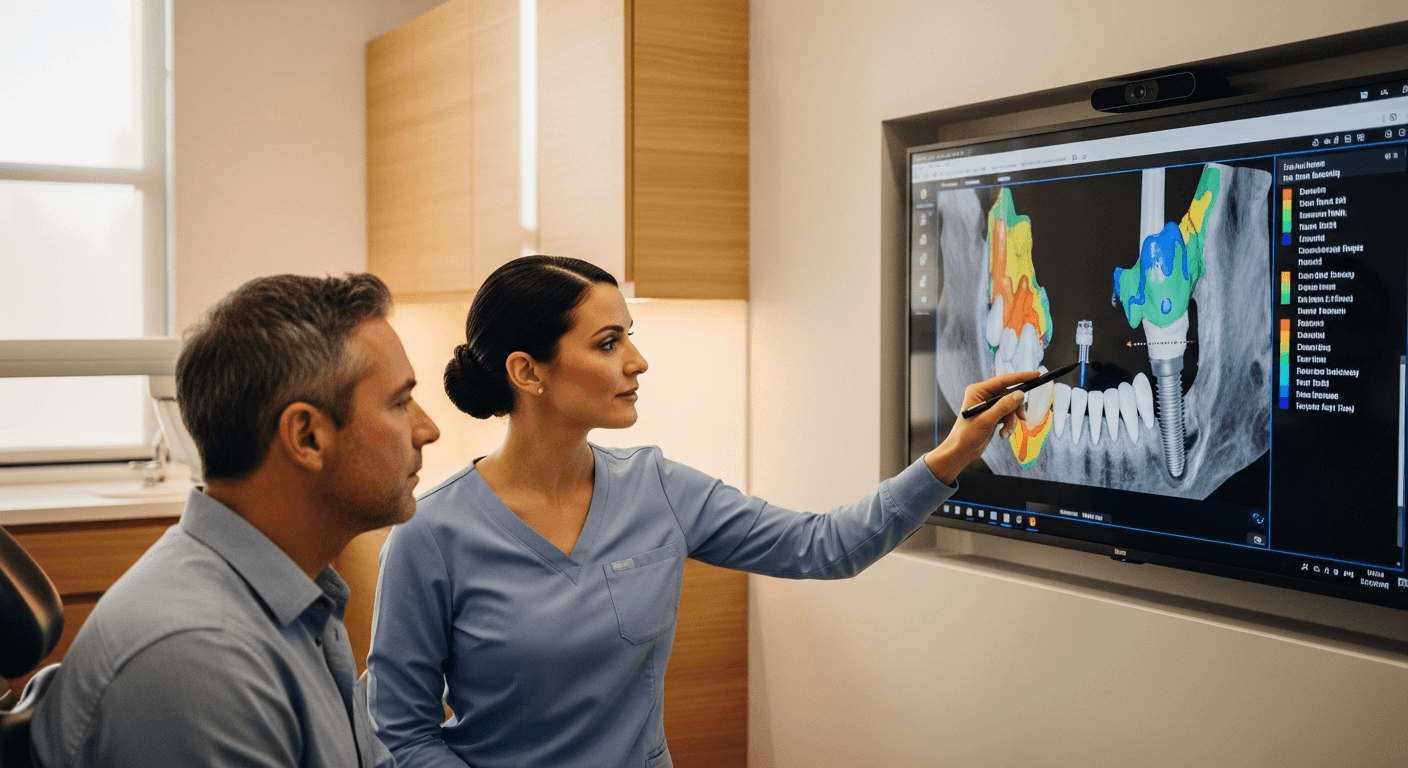
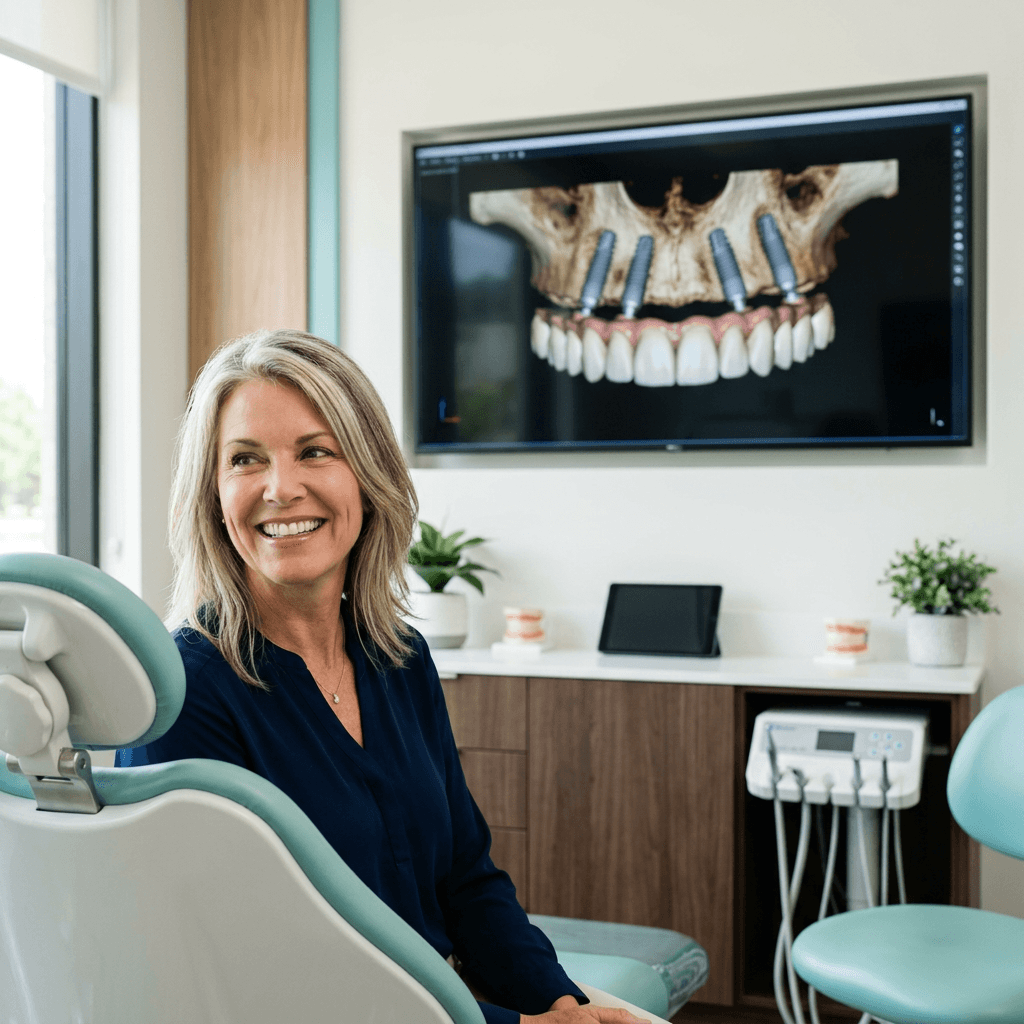
All-on-4 generally describes a fixed full-arch bridge supported by four strategically positioned implants. It is one approach within full-arch implant care, not a rule that every jaw should receive exactly four fixtures. Bone availability, anatomy, the opposing bite, health, and the planned restoration influence the recommended design.
For some patients, a temporary bridge can be attached soon after implant placement. That is a conditional clinical choice, not a travel convenience the team can promise before assessment. Initial implant stability and other findings can change the loading plan, including on surgery day. The temporary bridge is also not proof that healing is complete.
Read the full-arch implant overview before arranging travel, and use the ADA's explanation of dental implants for basic background. Ask the team to describe both the intended provisional teeth and the alternative if immediate loading is not appropriate.
Prepare a useful first visit from the Bay Area
Before departure, send or bring a current medication list, relevant medical conditions, previous dental treatment plans, and available implant or imaging records. Ask the office how to transfer records securely and whether older images are useful. Existing records can inform assessment, but they do not guarantee that new imaging will be unnecessary.
Write down the problems you want treatment to address: denture movement, difficulty chewing, failing teeth, or discomfort with the current restoration. Also identify practical limits, such as work commitments, caregiving responsibilities, and whether someone can accompany you. These details help the team discuss an achievable plan instead of discovering travel constraints after surgery is booked.
At the consultation, clarify whether remaining teeth can be maintained, which alternatives are reasonable, and why the proposed full-arch design is recommended. Ask who is responsible for the surgery and who will design, deliver, and adjust the bridge. Leave with a written outline of stages and unresolved decisions, not just a proposed surgery date.
Build a door-to-door plan with flexibility
Use the confirmed Roseville office address when planning your route. Traffic, transfers, weather, parking, and the final leg from a station or airport can make a nominal journey length misleading. Do not rely on a generic San Francisco-to-Sacramento estimate or schedule an arrival that leaves no buffer before a surgical appointment.
The practice's patient travel guide provides a starting point for regional logistics. Verify current transport and accommodation details directly before booking. For office access and location confirmation, use the contact page rather than assuming a Bay Area satellite office exists.
If lodging is needed, prioritize practical recovery needs over sightseeing: easy access to the office, a quiet place to rest, suitable food options, and room for your companion. Flexible reservations may reduce the disruption if the clinical plan changes. Ask the team whether your situation calls for staying nearby and how that recommendation might change after the procedure.
Public transportation may be suitable for some nonsurgical visits, but it should not automatically become the discharge plan after sedation. A rideshare driver is not the same as a responsible adult who receives instructions and stays with you as directed. Confirm what the office accepts before paying for transport.
Make the companion and anesthesia plan explicit
Ask what form of anesthesia is proposed and which instructions apply to food, drink, medications, arrival time, and escort requirements. Never stop prescribed medication on your own to simplify the trip. If a medical condition requires coordination with another clinician, complete that discussion before locking in nonrefundable arrangements.
The AAOMS patient resource on anesthesia explains common approaches used in oral surgery. The practice's sedation and anesthesia information can help you prepare questions, but neither replaces the instructions issued for your procedure.
After sedation, do not plan to drive yourself, manage a complicated solo transfer, or make important decisions while impaired. Your companion should know the destination, receive the discharge directions, and understand whom to call. Discuss how long supervision is needed and whether the return journey should be postponed rather than assuming discharge means independent travel is appropriate.
Plan recovery around function, not a promised return date
Early recovery can involve swelling, soreness, changes in speech, and dietary restrictions. Work that requires lifting, long conversations, or public-facing duties creates different demands from quiet desk work. Arrange flexibility instead of treating a generic recovery estimate as a personal deadline. Ask when your actual duties and travel plans can resume.
Stock suitable foods and know how you will obtain prescribed medication. A temporary fixed bridge still needs protection during healing; it should not be used to test hard or crunchy foods because it feels secure. Follow the prescribed diet and cleaning routine, and confirm how those instructions will change as healing is assessed.
Before leaving Roseville, ask what symptoms warrant calling the practice, which require an examination, and how to obtain urgent local care in San Francisco. Rapidly spreading swelling or difficulty breathing or swallowing needs urgent medical attention. A travel plan should never delay emergency treatment because the original office is far away.
Budget for the care journey and decide who follows you
Request a written estimate that separates surgery, anesthesia, extractions or grafting when needed, provisional teeth, final teeth, and follow-up. Then add your own transportation, lodging, companion time, and missed-work costs. Do not assume treatment in Roseville will be cheaper overall than a Bay Area plan; meaningful comparison requires matching the clinical scope.
Ask which visits are included, what happens if an adjustment is needed after you return home, and which additional services could generate fees. Insurance benefits and financing terms should be confirmed separately. A low monthly payment does not describe the total borrowing cost, and a benefits estimate is not a guarantee that a claim will be paid.
For maintenance, determine what your local dentist can reasonably provide and which problems require the treating team. Record who monitors the implant tissues, who checks the bridge, and how records will be shared. Shared care only works when responsibilities are agreed upon; do not assume a new dentist will adjust an unfamiliar bridge without assessment.
The most useful itinerary is therefore a clinical plan plus a contingency plan. Confirm the first scheduled reviews, retain a way to reach the team, and leave room for later restorative appointments. Treatment can provide fixed replacement teeth for selected patients, but neither the implants nor the bridge comes with a guarantee of permanence or freedom from future care.
Frequently Asked Questions
Does Dr. Antipov have an All-on-4 office in San Francisco?
This guide concerns care at Dr. Alexander Antipov's Roseville office. It does not describe a San Francisco office. Confirm the treatment address and appointment details with the practice before arranging transportation, lodging, or time away from work.
Can I finish all treatment in one trip?
Do not assume so. Evaluation, surgery, healing checks, and final restoration appointments may require separate visits. Even if a temporary fixed bridge is appropriate soon after surgery, healing and later restorative care continue. Request the proposed visit sequence before booking travel.
Can I drive back to San Francisco after sedation?
No; arrange the responsible adult and transportation required by your surgical team. Ask when driving can resume and whether you should stay nearby. Discharge does not mean you are ready to drive or navigate a complicated solo return journey.
How many nights should I reserve in Roseville?
There is no universal stay length. Your procedure, health, anesthesia, early review schedule, and recovery determine the recommendation. Discuss this before booking and consider flexible reservations so a changed clinical plan does not force premature travel.
Are surgery-day teeth the final teeth?
When immediate loading is suitable, the initial fixed teeth are generally a provisional bridge used during healing. Final restoration timing depends on clinical readiness and restorative planning. Ask what alternative is planned if surgery-day stability does not support the intended temporary bridge.
Can a San Francisco dentist handle all later care?
Some maintenance may be coordinated locally, but responsibilities need agreement. Ask which visits require the original treating team and what records your local dentist needs. Bridge adjustments, component problems, or suspected implant disease may require specialized assessment rather than routine cleaning alone.
What should I include in my travel budget?
Include transport, parking, lodging if advised, meals compatible with recovery, companion expenses, missed work, and return visits. Keep these separate from the written treatment estimate so you can compare complete care journeys rather than headline surgical prices.
Plan the clinical visits before the travel bookings
Contact Dr. Alexander Antipov's Roseville practice to discuss a full-arch implant evaluation, the likely treatment stages, and your San Francisco travel constraints.
Book a Consultation