How to Verify a Board-Certified Oral Surgeon: Practical Steps
By Dr. Alexander V. Antipov, DDS. Clinical review pending.
To verify a board-certified oral surgeon, match the clinician's identity to the appropriate specialty board and check state licensure separately; a practice biography alone is not current verification. Patients researching Dr. Alexander Antipov in Roseville can use the same independent process they would use for any surgeon, starting with the exact professional name and the American Board of Oral and Maxillofacial Surgery's resources.
This guide explains public credential checks, not legal advice, a complete background investigation, or a prediction of surgical results. Database interfaces and verification requirements can change; follow the board's and regulator's current instructions.
Separate the claims before opening a search tool
A clinician can hold a dental license, complete specialty training, belong to professional associations, and earn board certification. Those statements are related but not interchangeable. Start by writing down the specific claim you want to check, rather than looking for one page that supposedly proves every qualification.
The table below identifies the appropriate evidence and its limits. It also prevents a common mistake: interpreting membership initials, a star rating, or a displayed certificate as a substitute for checking current status.
| Claim | Where to start | What it does not establish |
|---|---|---|
| ABOMS board certification | ABOMS public directory and formal verification instructions | A guaranteed outcome or suitability for every procedure |
| California dental licensure | California Department of Consumer Affairs license search | Board certification or a particular level of implant experience |
| Oral and maxillofacial surgery training | Practice biography, training institution, and clarification from the clinician | Current certification status by itself |
| Professional association membership | The named association's membership information | That the association issued specialty board certification |
| Anesthesia-related authorization | Applicable Dental Board of California permit information | That every anesthesia method is suitable for this patient |
Step 1: identify the person who will actually treat you
Record the full professional name, middle initial if used, stated specialty, and practice location. Ask for the California dental license number when available. These details reduce the risk of matching a clinician to someone with a similar name. A practice brand is not the person whose credentials you need to verify.
For this practice, the Dr. Antipov biography is the starting point for identity and training information. It is useful context, but an independently checked official record answers a different question. Keep both sources in your notes rather than treating one as a replacement for the other.
Also ask who is expected to perform each part of your treatment. The surgeon, restorative dentist, and anesthesia professional may have different responsibilities. A credential associated with the practice owner does not automatically describe every clinician working on your case. If a treatment provider changes, repeat the relevant checks for that person.
Step 2: use the oral and maxillofacial surgery board
For the ABOMS credential, begin at the American Board of Oral and Maxillofacial Surgery. Its name matters: a certificate from a course or an implant organization is not the same claim as certification by this specialty board. Ask which board is meant if an advertisement says only “board-certified.”
The ABOMS Find a Diplomate directory provides a public starting point. Search the professional name carefully and compare available identifiers. ABOMS states that this directory lists surgeons who choose to make their profiles public; it is not a comprehensive list or official first-source verification.
A matching public profile is helpful, but read what the tool says about its own scope. Do not infer a certification date, expiration date, or current status that the result does not show. Likewise, the word Diplomate identifies a board credential; it is not a rating of bedside manner or proof of expertise in every procedure within the specialty.
Step 3: resolve missing or ambiguous results correctly
A missing public listing is an unresolved question, not proof that a surgeon is uncertified. Check spelling and alternate professional name forms first. If there are several matches, use other identifying details rather than selecting the closest-looking name. A city mismatch can reflect changed practice information, but it still warrants clarification.
For a more definitive check, follow the ABOMS formal verification process and its verification FAQ. Review the current submission requirements and any applicable fees before proceeding. Ask the office to clarify identity details if the board requires information you do not have.
Save the date and source of the response. Distinguish a formal verification result from an office's explanation, a downloaded biography, or an old certificate photograph. If the response does not answer your question, seek clarification from the board instead of turning uncertainty into a public accusation or a reassuring assumption.
Step 4: check California licensure independently
Open the California Department of Consumer Affairs license search and use the Dental Board of California or dentist category as provided by the current interface. Search by license number if you have it, or by name with careful identity matching. Certification and permission to practice are separate checks.
Read the license type, displayed status, and relevant dates rather than assuming that any returned record is sufficient. Review linked official documents when the record provides them. Some terms require context; do not interpret an unfamiliar status or enforcement entry solely from a snippet or a third-party summary.
If a record appears inconsistent with the office's information, ask for the precise license number and contact the regulator for clarification when necessary. A search failure can be an identity or interface problem, but it should be resolved before you rely on the claim. Keep your note factual: what the official record says, when you checked it, and what remains unanswered.
Step 5: distinguish anesthesia questions from the surgeon's board credential
Board certification is not a blanket explanation of every anesthesia arrangement. If sedation or general anesthesia is planned, ask who administers it, what authorization applies to that role and setting, and how your health history influences the recommendation. Requirements depend on the proposed technique and the clinician's responsibilities.
The Dental Board of California is the official starting point for state dental permit information. Use its current guidance rather than assuming every treatment requires the same permit. Our sedation and anesthesia page helps frame the clinical discussion without replacing a regulator's credential information.
For your own safety, disclose medications, prior anesthesia reactions, and relevant medical conditions. A credential check cannot determine whether a specific anesthetic plan is suitable for you. That requires assessment and clear instructions about preparation, monitoring, discharge, transportation, and recovery.
Keep a small verification record you can update
Use a simple note with the clinician's exact name, license number if known, claimed board, official resources consulted, date checked, and unresolved questions. Do not collect unnecessary private information or rely on copied search-engine summaries. Credentials can change over time, so an undated screenshot is weaker evidence than a dated check of the official source.
If you are helping a family member, share the links and explain what each result establishes. Keep facts separate from preferences: a current license is a credential fact, while feeling comfortable with a clinician's communication is a personal assessment. Both can matter, but they should not be confused.
Avoid compiling a numerical ranking from unrelated credentials. Association memberships, degrees, course certificates, and board status do not add up to a guaranteed quality score. The purpose of this workflow is to reduce uncertainty about verifiable claims, then move on to the separate question of whether the proposed care fits the patient.
After verification, connect the credentials to the proposed care
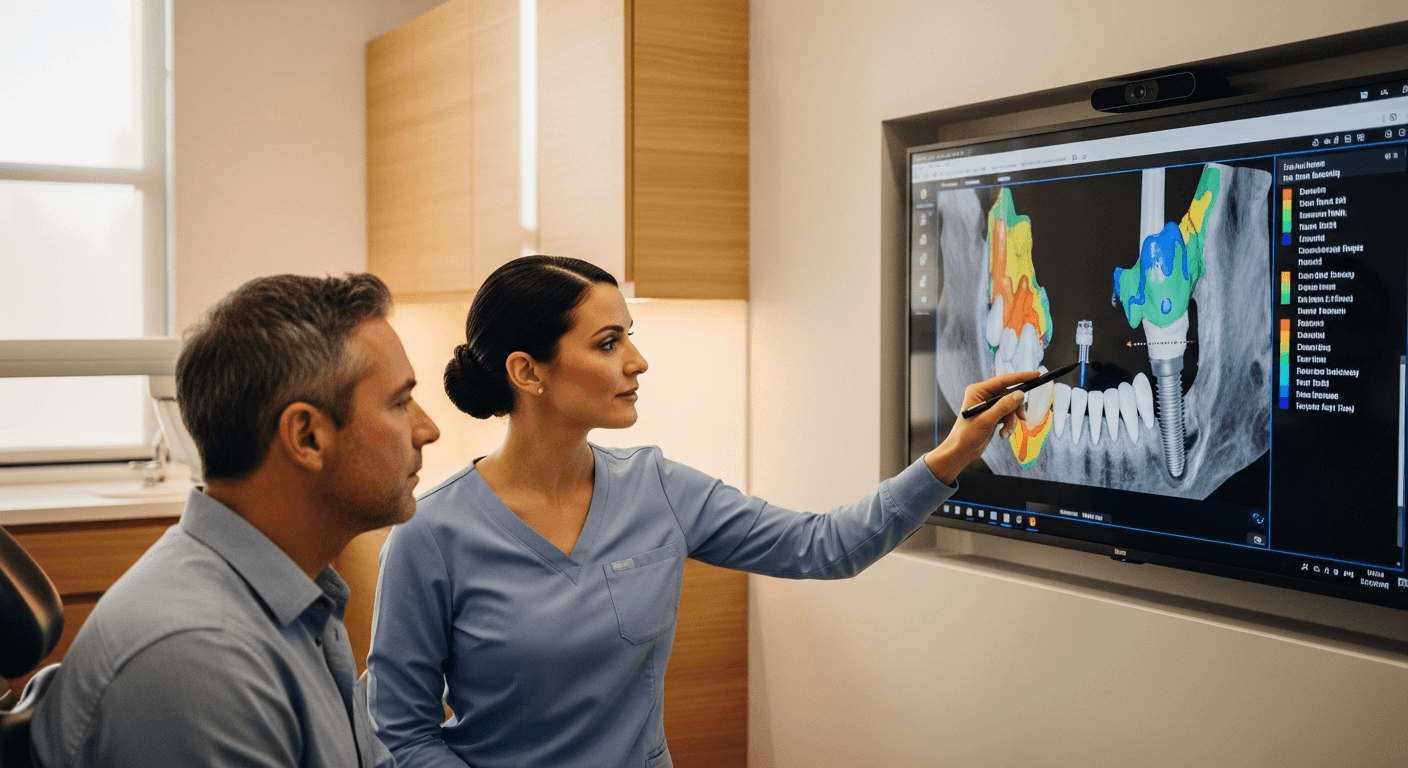
Understanding what an oral surgeon does helps put specialty training in context. Verification itself cannot tell you whether you need implant surgery, whether a tooth can be saved, or whether the recommended restoration is the right one.
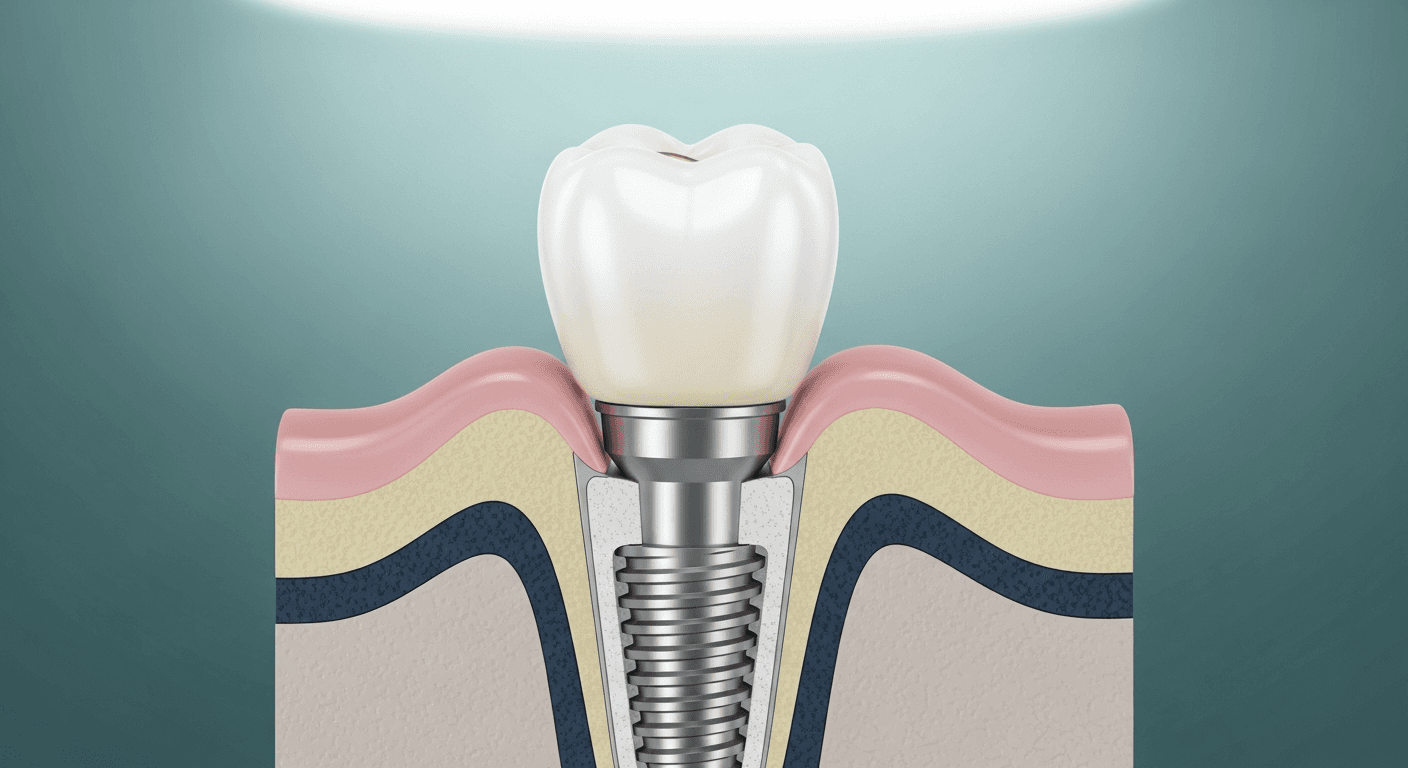
Ask the clinician to connect the diagnosis to the treatment stages, alternatives, and important risks. For implant care, establish who plans and provides the replacement teeth as well as who places the fixtures. For other oral surgery, ask which follow-up needs belong to the surgeon and which belong to another treating professional.
You should be able to explain the recommendation in your own words before consenting. If credentials or treatment details remain unclear, request clarification or another opinion rather than feeling compelled to proceed because a title sounds impressive. A verified credential is meaningful evidence of qualifications, but it is neither a guarantee nor a substitute for informed consent.
Frequently Asked Questions
Which board should I check for an oral and maxillofacial surgeon?
For a claim of ABOMS certification, use the American Board of Oral and Maxillofacial Surgery's resources. If the practice names a different board, ask exactly what credential is being claimed. Do not assume an implant-course certificate or association membership is the same qualification.
Does an absent ABOMS directory profile mean the surgeon is not certified?
No. ABOMS explains that its public directory includes surgeons who choose to make their profiles available and is not a comprehensive first-source verification tool. Check identity details and follow the board's formal verification instructions when the public listing does not resolve the question.
Is a California dental license the same as board certification?
No. A dental license concerns authorization to practice under state rules. Specialty board certification is a separate professional credential. Check both through the appropriate official sources, and do not treat either one as a guarantee of a particular treatment outcome.
What if two surgeons have the same name?
Compare middle initials, location, license number, and other available professional identifiers. Ask the office for clarification rather than choosing the first result. If uncertainty remains, contact the board or regulator with the identifying information required by its current process.
Can I rely on a certificate displayed in the office?
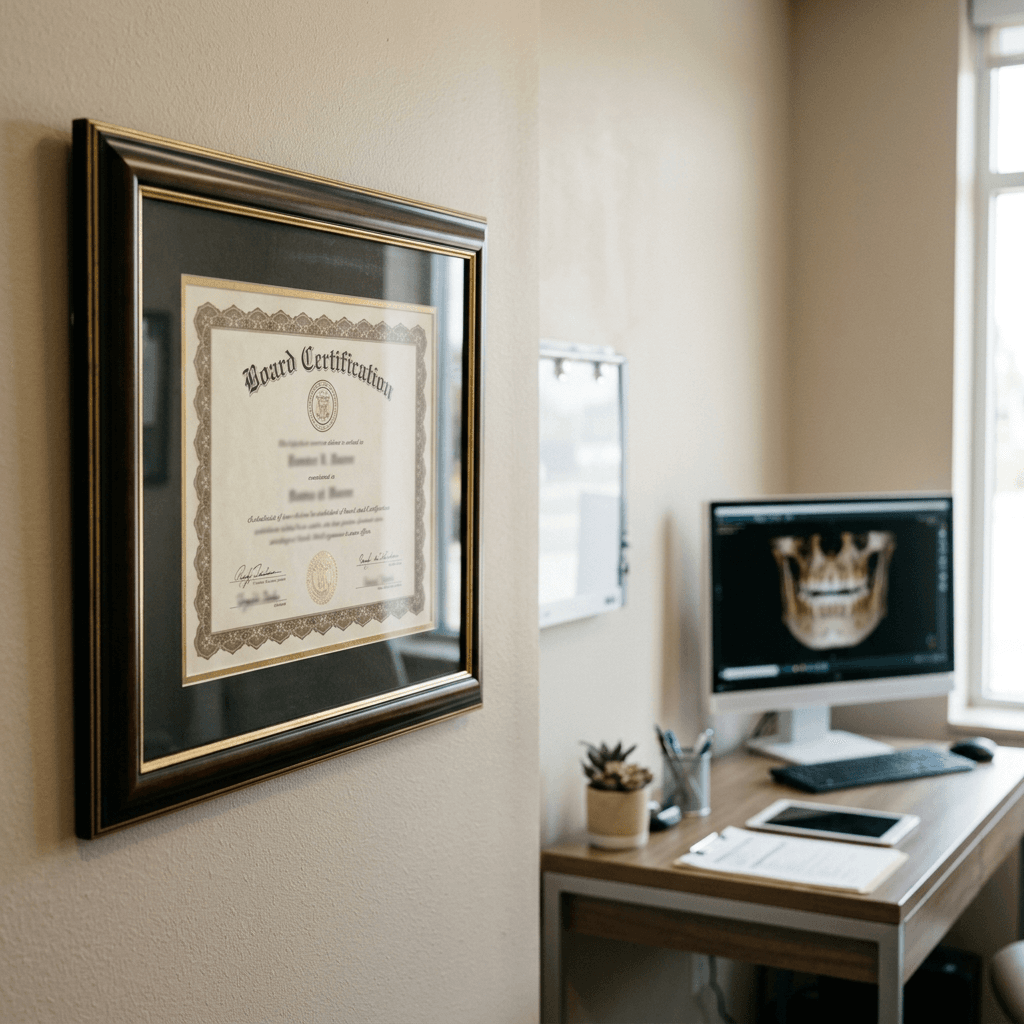
A displayed certificate may provide useful background, but it does not independently confirm current status. Use the issuing board's verification resources and record when you checked. An old biography, photograph, or third-party directory should not replace that process.
Does board certification prove a surgeon is the best choice for my procedure?
No. It is a meaningful credential, not a comparison score or guarantee. After verifying it, discuss procedure-specific experience, diagnosis, alternatives, risks, and care responsibilities. Your health and clinical needs still determine whether the proposed plan is appropriate.
Should I verify the restorative dentist as well as the surgeon?
Identify every clinician responsible for your treatment and check the credentials relevant to each role. A surgeon's certification does not apply to a different dentist providing the bridge or crown. Clarify who delivers the restoration and who handles later tissue or mechanical concerns.
Bring your credential and treatment questions
Contact Dr. Alexander Antipov's Roseville practice to clarify clinician identity, treatment responsibilities, and your consultation questions. Independent verification and an individualized discussion serve different, complementary purposes.
Book a Consultation