Understanding a Combined Jaw Deformity
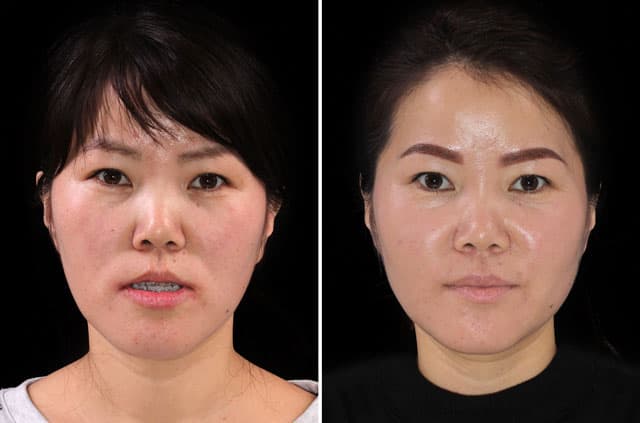
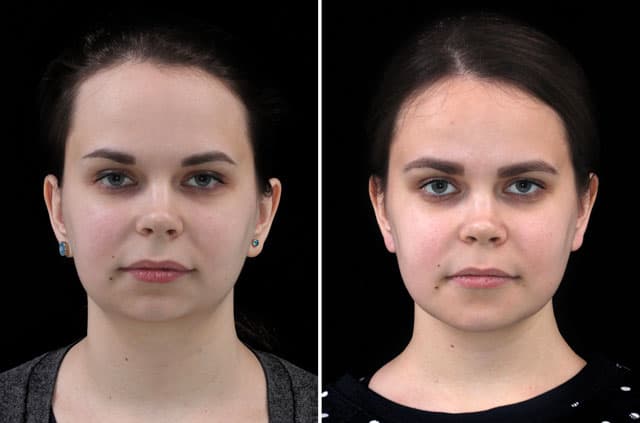
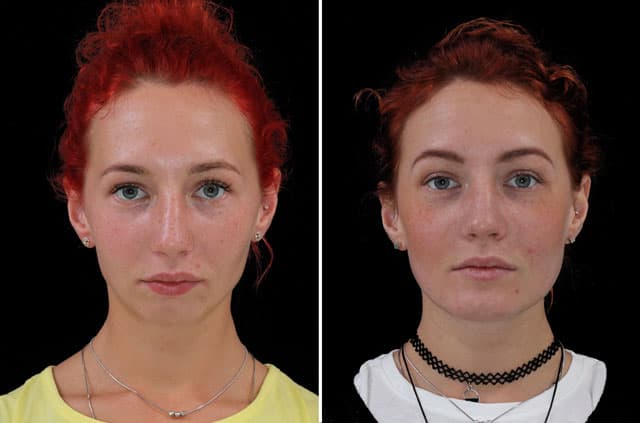
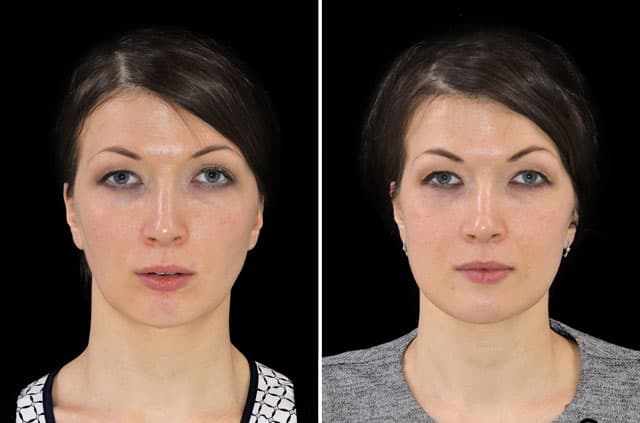
When the upper and lower jaws develop unevenly, the result is more than a cosmetic concern. This case involved a combined asymmetric deformity of both the maxilla (upper jaw) and the mandible (lower jaw), classified as a Class II skeletal occlusion anomaly. In a Class II relationship, the lower jaw sits too far back relative to the upper jaw, which affects how the teeth meet, how the face is balanced, and often how comfortably a person chews and breathes.
Asymmetry adds another layer of complexity. When one side of the face has grown differently from the other, the midlines of the upper and lower teeth no longer align, and the chin may appear deviated to one side. Patients living with these conditions frequently notice difficulty biting evenly, jaw fatigue, and a facial profile that does not match how they feel inside. Corrective jaw surgery is designed to address the underlying skeletal structure rather than masking the problem.
The Diagnosis Explained
Two findings defined this case. The first was an asymmetric deformity of the maxilla and mandible, meaning both jaws were positioned or shaped in a way that created imbalance between the two sides of the face. Because both jaws were involved, correcting only one would have left the bite and facial proportions incomplete.
The second finding was a Class II skeletal occlusion anomaly. Orthodontists and surgeons use the Angle classification to describe how the jaws relate to one another. A Class II pattern indicates a retruded or deficient lower jaw, which can crowd the airway, strain the chewing muscles, and produce a recessed chin appearance. Understanding both findings together allowed for a surgical plan that treated the deformity as a whole.
The Surgical Plan
The correction used a coordinated, multi-part approach. A Le Fort I level osteotomy was performed on the upper jaw. In this procedure, the surgeon makes a precise horizontal cut that allows the entire upper jaw to be repositioned, leveled, and aligned with the rest of the face. It is one of the foundational techniques in orthognathic surgery and gives the surgeon control over how the upper teeth and midface sit.
A total maxillomandibular advancement was then carried out, bringing both jaws forward together into a more functional and balanced position. Advancing both jaws can improve the bite, open the airway behind the tongue, and create a fuller, better-supported lower face. Finally, a genioplasty reshaped and repositioned the chin. Because the bony chin contributes so much to facial harmony, refining it after the jaws are aligned helps complete the profile and center an asymmetric chin.
Each of these moves was planned to work in concert. By combining upper jaw, lower jaw, and chin correction, the surgery addressed both the occlusion (how the teeth bite together) and the outward facial balance in a single, comprehensive treatment.
Pre-Surgical Orthodontics and Treatment Planning
Before orthognathic surgery for a Class II skeletal occlusion anomaly, most patients complete a phase of pre-surgical orthodontics that can last many months. During this preparation, braces or aligners level and align each dental arch and remove the dental compensations the body naturally develops to camouflage an underlying skeletal imbalance. Although the bite can temporarily look less ideal during this stage, positioning the teeth over their bony bases is exactly what allows the jaws to fit together precisely once they are repositioned in surgery.
Detailed planning is equally important in an asymmetric case like this one. Three-dimensional imaging, dental models, and careful facial analysis help the surgeon map how far to reposition the upper jaw at the Le Fort I level, how to balance the total maxillomandibular advancement so both jaws move forward together, and how to center an off-set chin with genioplasty. This blueprint is what turns a complex asymmetry into a series of measured, predictable surgical moves rather than guesswork.
This close collaboration between the orthodontist and the oral and maxillofacial surgeon is a hallmark of modern malocclusion correction. By the day of surgery, the teeth are arranged so that the new jaw relationship is stable and supportive of a balanced facial profile, and after surgery a final phase of orthodontics typically fine-tunes the way the teeth settle together. Understanding this team-based timeline helps patients in Roseville and the greater Sacramento area set realistic expectations for the full course of treatment.
Recovery and What to Expect
Recovery from double jaw surgery with genioplasty is a gradual process, and expectations are best framed in general terms. In the first one to two weeks, patients typically experience swelling and bruising that peaks early and then steadily improves. A soft or liquid diet is usually recommended during the initial healing phase to protect the repositioned bones as they begin to knit together.
Over the following weeks, swelling continues to subside and most people return to many of their normal routines, while the bone itself continues to heal and stabilize over several months. Orthodontic treatment commonly accompanies orthognathic surgery to fine-tune the bite before and after the procedure. Follow-up visits allow the surgical team to monitor healing and confirm that the new jaw position is settling as planned.
Corrective Jaw Surgery in Roseville, CA
This case was treated by Dr. Alexander V. Antipov at Galleria Oral & Facial Surgery in Roseville, CA. Complex orthognathic cases like this one — involving asymmetry, a Class II skeletal pattern, and combined jaw and chin correction — benefit from a surgeon with deep experience in facial skeletal surgery and careful, individualized planning.
Patients throughout Roseville, Sacramento, Placer County, and the wider Northern California region turn to our practice for corrective jaw surgery and facial balancing procedures. If you are living with an uneven bite, jaw asymmetry, or a profile that does not reflect how you want to look and feel, a consultation is the best way to understand whether jaw surgery could help. Our team is glad to discuss your goals and walk you through the options.