Understanding Class II Malocclusion
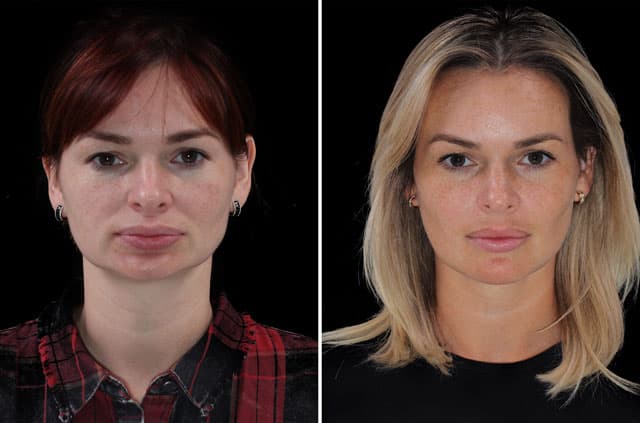
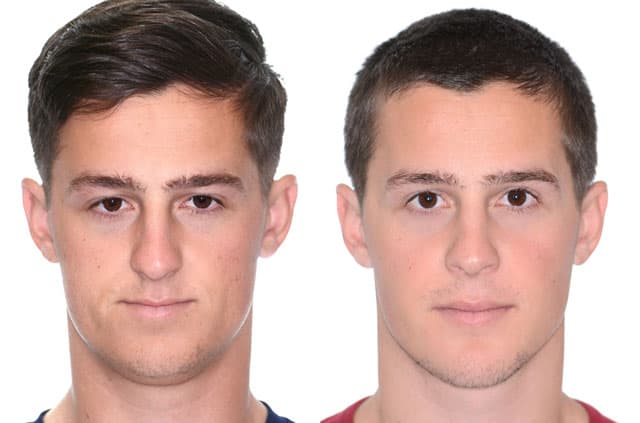
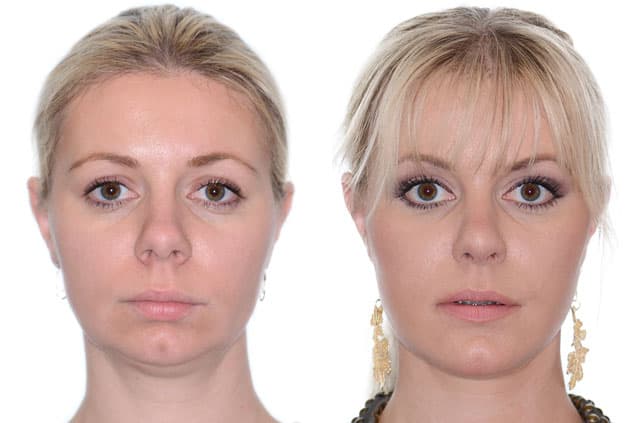
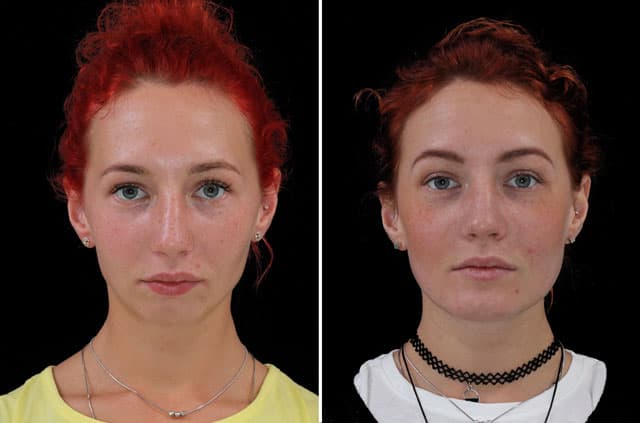
Class II malocclusion is one of the most common skeletal bite patterns, and when it is paired with asymmetry it can meaningfully affect both function and appearance. In this case, the patient had an asymmetric deformity of the upper and lower jaw alongside a Class II skeletal occlusion anomaly. The combination means the lower jaw was positioned too far back while the jaws were also uneven from side to side.
People with this pattern often describe difficulty biting cleanly, a chin and lower face that look set back, and a bite that simply does not line up. Because the root of the problem lies in the position and shape of the jaw bones, orthodontics alone cannot fully resolve it. Corrective jaw surgery directly repositions the skeleton so the teeth, jaws, and facial profile can come into alignment.
The Diagnosis Explained
The documented diagnosis described an asymmetric deformity of the upper and lower jaw. This indicates that both the maxilla and mandible were uneven, contributing to mismatched dental midlines and a face that lacked balance between its two sides. Addressing only one jaw would have left the asymmetry partially uncorrected.
The case was also identified as a Class II skeletal occlusion anomaly. This classification points to a lower jaw set behind its ideal position relative to the upper jaw, a relationship that commonly produces an increased overjet and a recessive chin appearance. Defining both the asymmetry and the Class II pattern allowed the surgical team to plan corrections that treated the deformity in a unified way.
The Surgical Plan
The lower jaw was corrected with a bilateral sagittal split osteotomy, in which the mandible is divided on both sides and repositioned forward and rotated as needed to address its backward, asymmetric position. This versatile technique is a mainstay of corrective jaw surgery because it lets the surgeon set the lower jaw precisely against the upper teeth.
An osteotomy of the upper jaw at the Le Fort I level allowed the maxilla to be repositioned and leveled so the two jaws would meet properly and the facial midline would be more symmetric. To finish the profile, a genioplasty was performed to lengthen and advance the chin, improving lower-face proportions and helping center the chin.
Coordinating these three corrections is the essence of comprehensive orthognathic surgery. By moving the upper jaw, lower jaw, and chin in relation to one another, the plan aimed to deliver both a functional Class I bite and improved facial balance.
Pre-Surgical Orthodontics and Treatment Planning
Correcting a Class II malocclusion with coexisting asymmetry begins long before the operating room. Most patients complete a phase of pre-surgical orthodontics that often lasts many months, during which braces or aligners level and align each dental arch and remove the dental compensations that develop to disguise an underlying skeletal imbalance. Although the bite can temporarily appear less ideal during this stage, positioning the teeth over their bony bases is what allows the jaws to interlock accurately once they are repositioned with surgery.
Detailed planning then translates the diagnosis into a precise surgical map. Three-dimensional imaging, dental models, and facial analysis help the surgeon decide how far to advance and rotate the lower jaw with the bilateral sagittal split osteotomy, how to level and reposition the upper jaw at the Le Fort I level, and how to lengthen and advance the chin with genioplasty. This blueprint ensures the upper jaw, lower jaw, and chin are moved as a coordinated unit so the asymmetry is corrected and a stable Class I bite is achieved.
This sequence reflects the close partnership between the orthodontist and the oral and maxillofacial surgeon that defines malocclusion correction and facial asymmetry correction. A final phase of orthodontics after surgery typically refines how the teeth settle together. For patients across Roseville, Sacramento, and Placer County, understanding this team-based timeline helps set realistic expectations for the full course of orthognathic surgery from preparation through finishing.
Recovery and What to Expect
Recovery after combined jaw and chin surgery generally unfolds in stages. The first one to two weeks typically bring the most swelling and bruising, which then diminish steadily. A soft or liquid diet during early healing helps protect the newly positioned bones while they begin to stabilize.
As the weeks pass, most visible swelling resolves and patients return to more of their usual routine, while the bone continues to consolidate over the following months. Orthodontic treatment commonly accompanies jaw surgery to refine the final bite. Scheduled follow-up visits allow the surgical team to monitor healing and confirm the corrected position is holding. These reflect typical expectations for this type of surgery rather than a specific guaranteed result.
Corrective Jaw Surgery in Roseville, CA
This Class II correction was performed by Dr. Alexander V. Antipov at Galleria Oral & Facial Surgery in Roseville, CA. Treating a Class II malocclusion with coexisting asymmetry calls for careful, individualized surgical planning to achieve both a stable bite and a balanced face.
Patients from Roseville, Sacramento, Placer County, and across Northern California rely on our practice for corrective jaw surgery and bite correction. If an overbite, recessed chin, or uneven jaw is affecting how you eat or how you feel about your profile, we encourage you to schedule a consultation so we can assess your needs and explain your options.