Understanding a Comprehensive Facial Correction
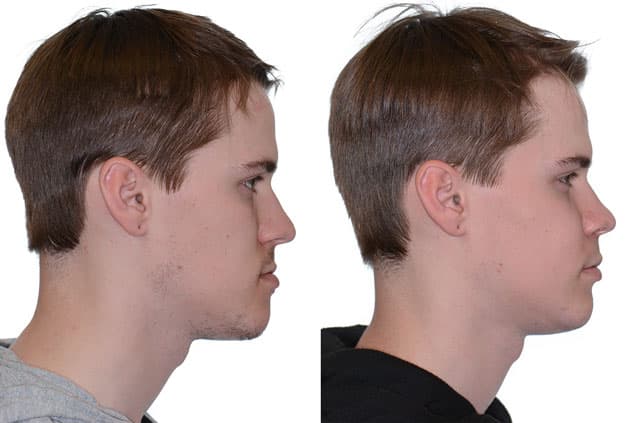
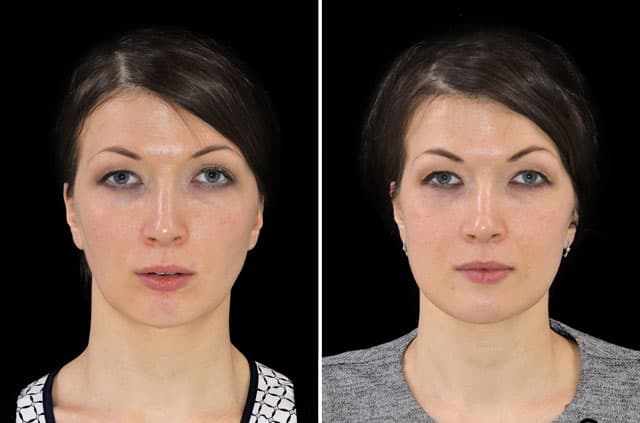
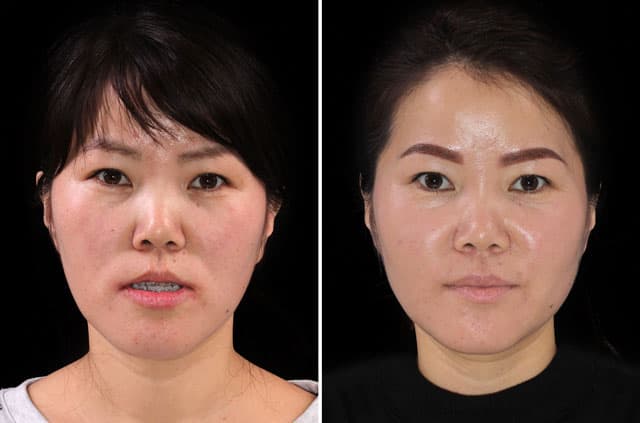
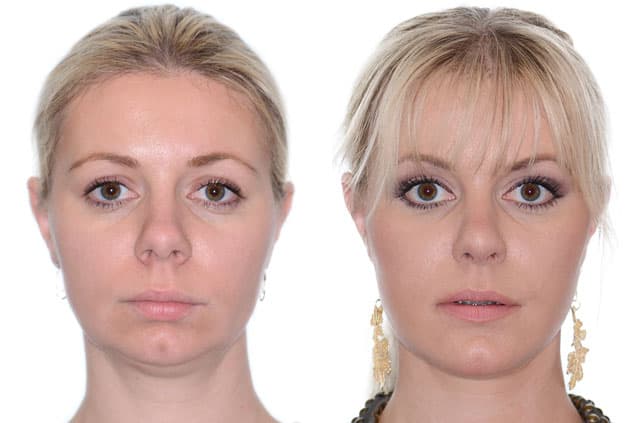
Some patients present with deformities significant enough that improving the bite alone would leave the face out of balance. This case involved severe maxillary asymmetry along with a short mandibular length and a Class II malocclusion, accompanied by chin deviation, nasal deviation, and a wide nasal base. Treating concerns of this scope calls for a combined plan that addresses the jaws, the nose, and facial volume together.
When the upper jaw is severely asymmetric and the lower jaw is short, the imbalance ripples across the entire face — the chin shifts off center, the nose appears deviated, and the cheeks may look hollow or uneven. A complete face makeover approach corrects the underlying skeleton first, then refines the nose and restores soft-tissue volume, so that every element works together for a harmonious result.
The Diagnosis Explained
The documented findings were extensive. Severe maxillary asymmetry meant the upper jaw was markedly uneven from side to side, while a short mandibular length indicated the lower jaw was underdeveloped, contributing to a Class II malocclusion in which the lower jaw sits behind its ideal position.
Chin deviation reflected a chin shifted off the facial midline, and nasal deviation with a wide nasal base described a nose pulled off center and broad at its foundation — both common companions of significant skeletal asymmetry. Recognizing each of these findings made it clear that a layered plan addressing the jaws, the nose, and facial contour would be needed to restore overall balance.
The Surgical Plan
Correction began with the facial skeleton. A maxillary Le Fort I osteotomy performed as a 3-piece advancement allowed the upper jaw to be leveled, shaped, and repositioned to correct its severe asymmetry. A mandibular bilateral sagittal split osteotomy (BSSO) then advanced and aligned the short lower jaw so the two jaws could meet properly. Bone grafting to the maxilla and mandible supported solid healing in the corrected positions.
With the skeleton realigned, attention turned to the overlying features. A rhinoplasty with nasal base reduction refined the deviated nose and narrowed the wide nasal base, harmonizing it with the newly balanced jaws. Addressing the nose after the underlying bones are corrected is important, because skeletal changes alter how the nose sits on the face.
Finally, fat transfer from the inner thigh was used for cheek augmentation, restoring volume and smoothing contour where the face had appeared uneven or deficient. By layering skeletal correction, nasal refinement, and soft-tissue volume, the plan aimed to deliver a comprehensive, balanced transformation rather than a single isolated change.
Pre-Surgical Orthodontics and Sequencing
A complete face makeover that combines jaw surgery, rhinoplasty, and fat transfer relies on meticulous preparation and sequencing. Most patients first complete a phase of pre-surgical orthodontics, often lasting many months, during which braces or aligners level and coordinate each dental arch and remove the dental compensations that develop around a short, asymmetric lower jaw. With a Class II malocclusion, the teeth often tip to disguise the imbalance, so reversing those compensations is essential for the realigned jaws to meet in a stable bite.
Detailed three-dimensional planning maps every move in advance. Imaging, dental models, and facial analysis help the surgeon plan how to level and reposition the severely asymmetric upper jaw with the 3-piece Le Fort I osteotomy, how far to advance the short lower jaw with the bilateral sagittal split osteotomy, and where bone grafting will stabilize the corrected positions. Because the skeleton is the foundation, it is corrected first; the rhinoplasty with nasal base reduction and the fat transfer for cheek augmentation are layered on afterward so they refine a face that is already structurally balanced.
This staged approach reflects the close collaboration between the orthodontist and the oral and maxillofacial surgeon that defines orthognathic surgery and facial asymmetry correction. A final phase of orthodontics after surgery usually refines how the teeth settle together. For patients across Roseville, Sacramento, and Placer County, understanding this team-based timeline helps set realistic expectations for the preparation, surgery, and healing that a comprehensive transformation involves.
Recovery and What to Expect
A combined procedure of this scope involves a recovery that is best understood in general phases. Swelling and bruising across the jaws, nose, and cheeks are typically most noticeable in the first one to two weeks and then improve gradually. A soft or liquid diet during early healing protects the repositioned and grafted bone.
Because the treatment included bone grafting, rhinoplasty, and fat transfer, different tissues heal on different timelines. Bone consolidation and the final settling of nasal and soft-tissue results continue over several months. Patients generally see much of the visible swelling resolve within several weeks while subtle refinements continue beneath the surface. Orthodontic care commonly accompanies the jaw surgery, and regular follow-up visits help track healing across all the areas treated. These are general expectations, not guarantees for any individual.
Corrective Jaw Surgery and Facial Balancing in Roseville, CA
This complete facial correction was performed by Dr. Alexander V. Antipov at Galleria Oral & Facial Surgery in Roseville, CA. Combining corrective jaw surgery with rhinoplasty and fat transfer in a unified plan requires broad surgical expertise across the facial skeleton and soft tissues.
We serve patients throughout Roseville, Sacramento, Placer County, and Northern California who are seeking comprehensive correction of facial asymmetry and jaw deformity. If significant asymmetry, a deviated chin or nose, and a backward jaw position are affecting your function and confidence, we welcome you to schedule a consultation so we can evaluate your anatomy and discuss a personalized plan.