Understanding Asymmetric Jaw Imbalance
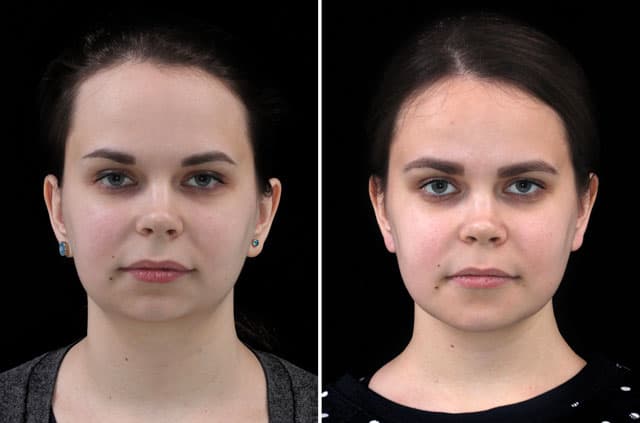
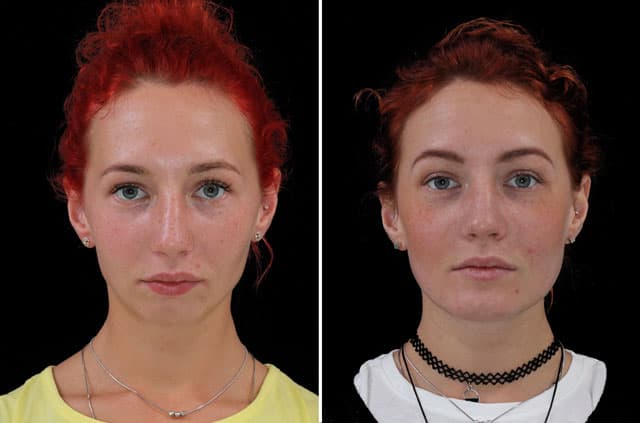
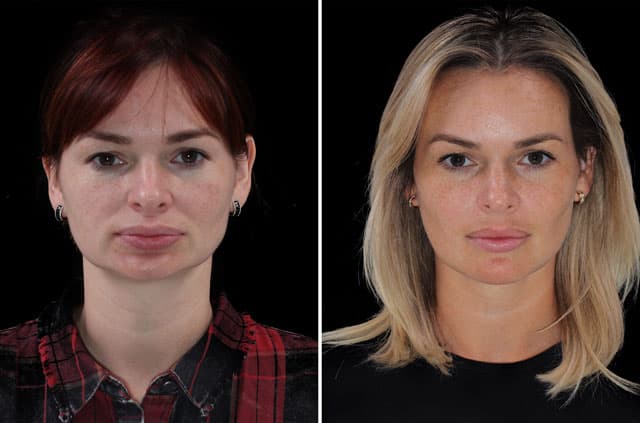
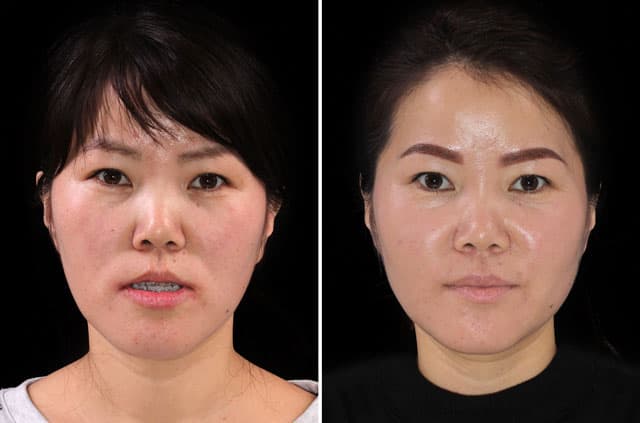
Facial and jaw asymmetry can affect both function and confidence. In this case, the patient presented with a complex combination of findings centered on an asymmetric Class II occlusion anomaly. When the jaws grow unevenly, the midlines of the upper and lower teeth drift apart, the chin can shift to one side, and even the nose may appear deviated as the underlying skeleton pulls facial structures off center.
Conditions like these rarely exist in isolation. Asymmetry of the jaws often travels with bite problems and, in some patients, joint symptoms. A thorough evaluation looks at the whole picture — skeletal proportions, the way the teeth meet, the position of the chin, and the health of the jaw joints — so that the surgical plan can restore both balance and comfortable function.
The Diagnosis Explained
Several documented findings shaped this treatment. Maxillary hypoplasia asymmetry refers to an upper jaw that is underdeveloped and uneven from side to side, while mandibular asymmetry hyperplasia describes a lower jaw that has overgrown asymmetrically. Together these created mismatched jaws and an off-center bite.
An inferior border chin deviation meant the bony lower edge of the chin was shifted to one side, and a nasal deviation reflected how skeletal imbalance can influence the appearance of the nose. The patient also had a left temporomandibular disorder, indicating symptoms in the left jaw joint, along with an Angle Class III malocclusion in how the teeth related. Mapping each of these findings allowed the surgical team to design corrections that worked together rather than against one another.
The Surgical Plan
The lower jaw was addressed with a bilateral sagittal split osteotomy, commonly called a BSSO. In this widely used technique, the mandible is carefully divided on both sides so it can be repositioned forward, backward, or rotated to correct asymmetry, then secured in its improved position. BSSO is a cornerstone of corrective jaw surgery because of the precise control it offers over lower jaw alignment.
The upper jaw was corrected with an osteotomy at the Le Fort I level, allowing the maxilla to be leveled and repositioned to match the realigned lower jaw and to even out the asymmetry. To complete the profile, a genioplasty was performed to lengthen and advance the chin, refining the lower face and helping to center a deviated chin point.
Sequencing matters in cases like this. By coordinating the upper jaw, lower jaw, and chin procedures, the plan aimed to bring the bite into a stable relationship while simultaneously restoring symmetry across the midface and lower face.
Orthodontics, Joint Health, and Planning
An asymmetric Class II occlusion with an Angle Class III dental relationship and joint symptoms calls for thorough preparation before surgery. Most patients complete a phase of pre-surgical orthodontics in which braces or aligners level and coordinate each arch and remove the dental compensations that mask the true skeletal imbalance. This step is essential because the bilateral sagittal split osteotomy and the Le Fort I osteotomy can only deliver a clean, stable bite if the teeth are first positioned correctly over their bony bases.
Because a left temporomandibular disorder was part of this presentation, planning also accounts for how the jaw joint will tolerate the new position. Three-dimensional imaging, dental models, and detailed facial analysis help the surgeon decide how to rotate and reposition the asymmetric mandible, how far to level the maxilla, and how to lengthen and advance the chin with genioplasty so the deviated chin point and nasal deviation are addressed together. Careful seating of the condyles during surgery is intended to support comfortable jaw function rather than aggravate the joint.
This collaboration between orthodontist and oral and maxillofacial surgeon is central to facial asymmetry correction. By the time of surgery, the dentition is prepared so the realigned jaws meet predictably, and a final phase of orthodontics afterward refines how the teeth settle. For patients across Roseville, Sacramento, and Placer County, understanding this team-based sequence helps frame the full timeline of orthognathic surgery from start to finish.
Recovery and What to Expect
Patients undergoing combined jaw and chin surgery can generally expect a staged recovery. Swelling and bruising are most noticeable in the first one to two weeks and then improve steadily. A soft or liquid diet during early healing protects the repositioned bone, and gentle activity is usually encouraged as comfort allows.
Over the following weeks and months, the bone continues to consolidate in its new position. Because a temporomandibular disorder was part of this case, careful attention to jaw function and comfortable opening is part of typical follow-up. Orthodontic care frequently complements orthognathic surgery to perfect the bite, and regular check-ups help the surgical team confirm that healing is progressing as intended. These timelines describe general expectations rather than a guarantee for any individual.
Corrective Jaw Surgery in Roseville, CA
This correction was performed by Dr. André-David Kahwach at Galleria Oral & Facial Surgery in Roseville, CA. Multifaceted cases involving jaw asymmetry, chin and nasal deviation, and joint symptoms call for meticulous planning and surgical expertise in the facial skeleton.
Our practice serves patients across Roseville, Sacramento, Placer County, and Northern California who are seeking solutions for asymmetry, bite problems, and jaw discomfort. If you recognize some of these concerns in your own jaw or smile, we welcome you to schedule a consultation so we can evaluate your situation and explain whether corrective jaw surgery may be right for you.