Understanding the Condition
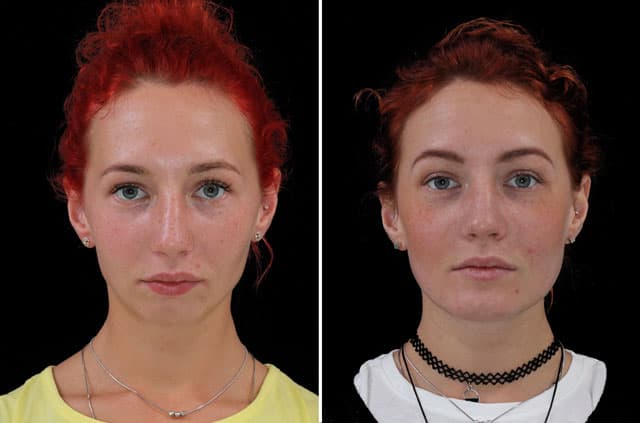
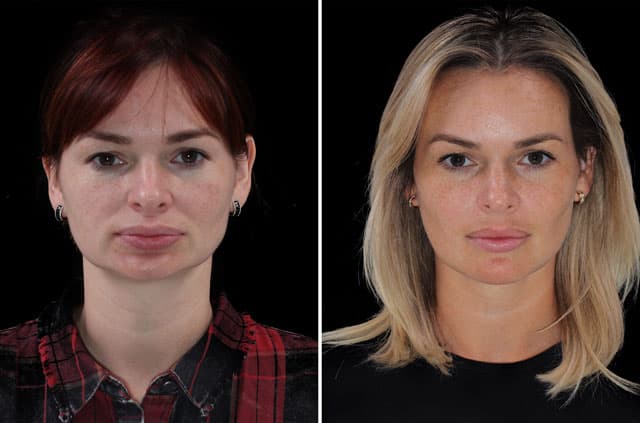
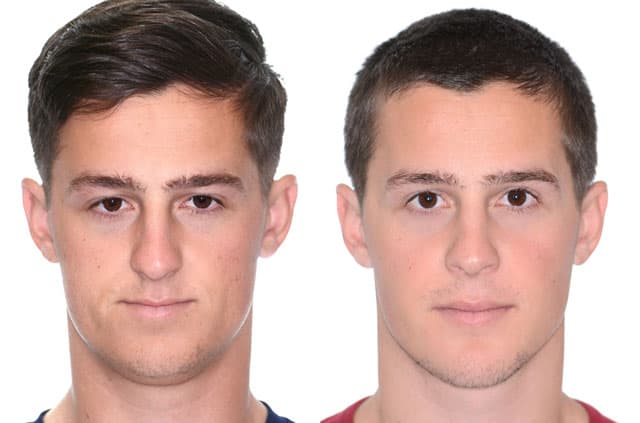
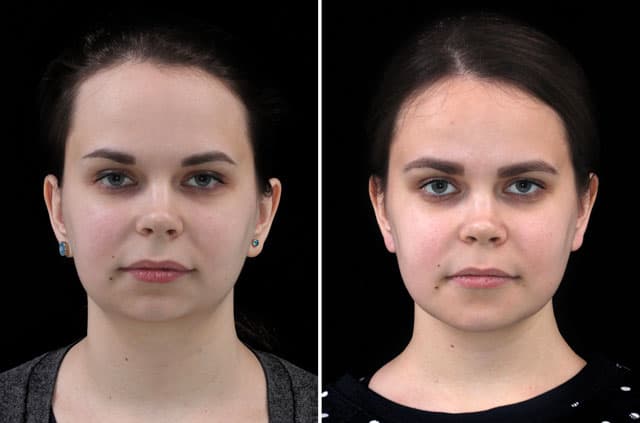
An asymmetric Class II skeletal deformity affects far more than appearance. As documented in this case, the imbalance created both functional and aesthetic compromise — meaning the patient's bite did not work efficiently and the facial proportions were noticeably uneven. When the lower jaw sits too far back and the jaws are also asymmetric, chewing can become tiring, the chin may look recessed or deviated, and overall facial balance is affected.
Comprehensive correction in cases like this often requires repositioning both jaws and the chin together. Treating the deformity as a whole, rather than in isolated pieces, is what allows the bite and the facial profile to be improved at the same time. This case is notable because all three corrections were completed in a single anesthesia session, sparing the patient multiple separate operations.
The Diagnosis Explained
The documented diagnosis included an asymmetric deformity of the maxilla and mandible. This means both the upper and lower jaws were uneven from side to side, which throws off the alignment of the teeth and the symmetry of the face. Because both jaws were involved, a complete correction needed to address each one.
The case was also classified as a Class II skeletal malocclusion. In Angle's classification, a Class II pattern reflects a lower jaw positioned behind where it should be relative to the upper jaw. This relationship commonly contributes to a deep or strained bite and a profile in which the chin and lower face appear set back. Recognizing both the asymmetry and the Class II pattern guided a plan built to restore harmony in three dimensions.
The Surgical Plan
Three coordinated procedures formed the treatment. A bilateral sagittal split osteotomy (BSSO) of the lower jaw allowed the mandible to be divided on both sides and repositioned, correcting its backward position and asymmetry. This technique gives the surgeon fine control to advance and rotate the lower jaw into a balanced, functional relationship with the upper teeth.
An osteotomy of the upper jaw at the level of Le Fort I let the maxilla be leveled and repositioned so the two jaws could meet correctly. Performing the upper and lower corrections together is often described as double or three-jaw surgery, and it is the most reliable way to fix a combined skeletal deformity. A genioplasty to lengthen and advance the chin then refined the lower face and helped center the chin point.
Completing all three procedures in one anesthesia session is a meaningful advantage for the right patient. It consolidates recovery into a single healing period and allows the surgeon to harmonize the upper jaw, lower jaw, and chin against one another during the same operation for a cohesive result.
Pre-Surgical Orthodontics and Treatment Planning
Three-jaw surgery for an asymmetric Class II skeletal deformity is the culmination of careful preparation. Most patients first complete a phase of pre-surgical orthodontics, typically lasting many months, during which braces or aligners level and align each dental arch and remove the dental compensations the body develops to mask a skeletal imbalance. Positioning the teeth over their true bony bases is what allows the maxilla and mandible to interlock precisely once they are repositioned, so this groundwork directly affects how stable the final bite will be.
Detailed three-dimensional planning is what makes a single-session correction possible. Imaging, dental models, and facial analysis let the surgeon decide how far to advance and rotate the lower jaw with the bilateral sagittal split osteotomy, how to level and reposition the upper jaw at the Le Fort I level, and how to lengthen and advance the chin with genioplasty. Because all three moves are mapped in advance, they can be sequenced safely within one anesthesia session and balanced against one another for a unified result.
This planning reflects the close partnership between the orthodontist and the oral and maxillofacial surgeon that defines modern orthognathic surgery and malocclusion correction. After surgery, a final phase of orthodontics usually fine-tunes how the teeth settle together. For patients across Roseville, Sacramento, and Placer County, appreciating this team-based timeline helps set realistic expectations for the months of preparation and refinement that surround the operation itself.
Recovery and What to Expect
Recovery after three-jaw surgery follows a predictable general pattern. Swelling and bruising are typically most pronounced in the first week or two and then ease steadily. A soft or liquid diet is usually advised during the early phase to protect the repositioned bones, with a gradual return to firmer foods as healing allows.
Patients generally find that much of the visible swelling resolves within several weeks, while the deeper bony healing and final settling of the bite continue over the following months. Orthodontic treatment commonly works hand in hand with surgery to finalize the occlusion. Regular follow-up visits let the surgical team track healing and stability. These are general expectations for this type of procedure, not a promise of a specific individual outcome.
Corrective Jaw Surgery in Roseville, CA
This three-jaw correction was performed by Dr. Alexander V. Antipov at Galleria Oral & Facial Surgery in Roseville, CA. Combining upper jaw, lower jaw, and chin surgery in a single session requires extensive experience and precise three-dimensional planning, both of which are central to our approach.
We care for patients throughout Roseville, Sacramento, Placer County, and Northern California who are seeking correction of complex jaw and bite deformities. If a Class II bite, jaw asymmetry, or facial imbalance is affecting your function or confidence, we invite you to schedule a consultation. Our team will evaluate your anatomy and discuss whether corrective jaw surgery could help you reach your goals.