Replacing Removable Dentures with Fixed Teeth: A Practical Guide
By Dr. Alexander V. Antipov, DDS. Clinical review pending.
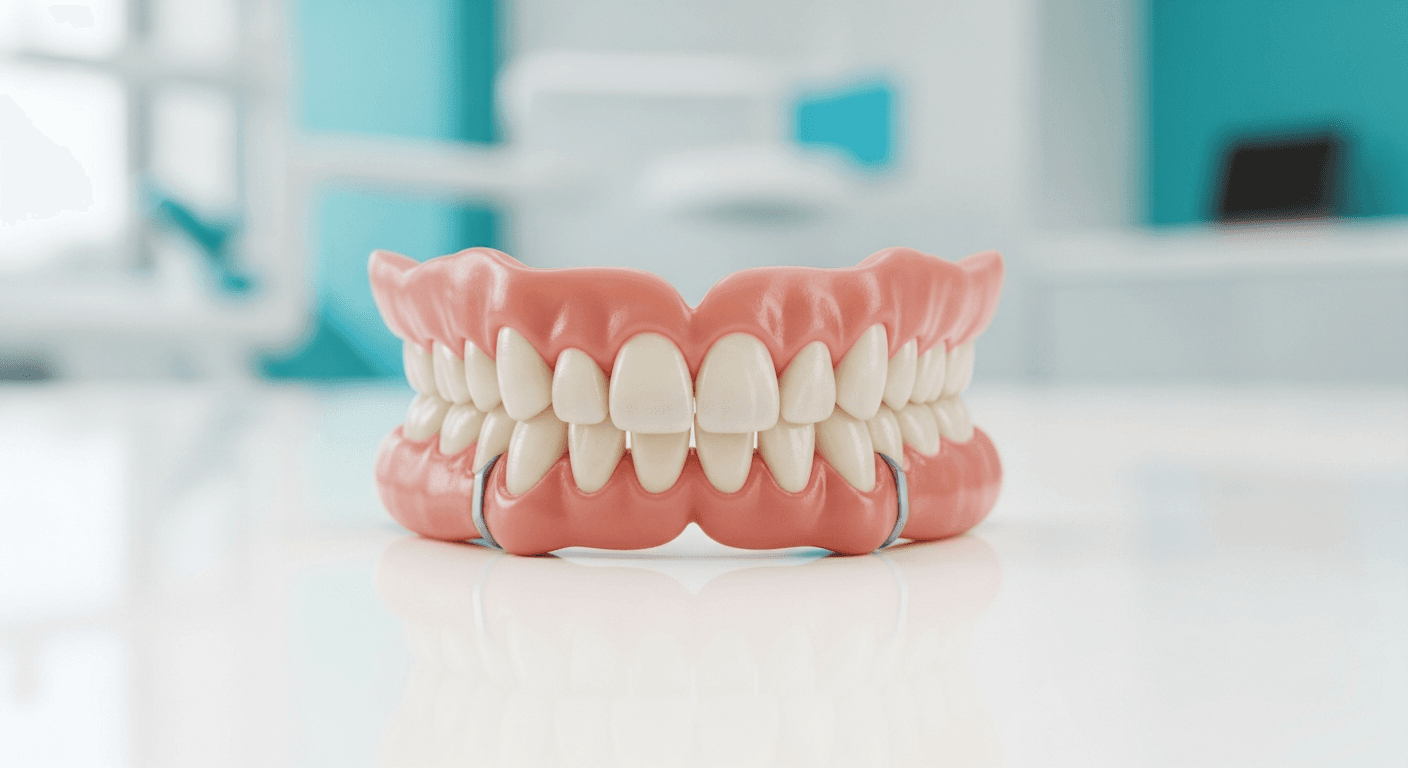
Some denture wearers can replace removable dentures with fixed implant-supported teeth after an individual assessment with Dr. Alexander Antipov in Roseville. Fixed means the patient does not remove the restoration for daily care; it does not mean the teeth last forever, never need repairs or suit every mouth.
This guide is general education about denture replacement, not confirmation of implant candidacy or a prescription for denture use during healing. Your surgical and restorative clinicians must assess your anatomy, health, bite and cleaning needs before recommending a transition plan.
Choose a daily routine, not a permanence slogan
The desire to leave dentures behind often comes from a particular frustration: movement while speaking, discomfort during meals, adhesive use or dislike of taking teeth out. Start by naming that problem. A loose denture may need an adjustment, reline or replacement rather than surgery. Implant options become a more useful discussion when your team knows what the current denture does and does not do well.
The table separates support and care choices from the promise implied by get rid of dentures forever. Every pathway requires examinations and maintenance.
| Pathway | How teeth are supported | Daily removal | Planning trade-off |
|---|---|---|---|
| Adjust or reline current denture | Existing denture rests on oral tissues. | Yes, as instructed. | May address fit without implants; does not change the basic support system. |
| New conventional denture | New denture rests on oral tissues. | Yes, as instructed. | Revisits fit, tooth arrangement and appearance without implant surgery. |
| Removable implant-retained denture | Denture attaches to implants; tissue support varies by design. | Yes, for cleaning. | Adds retention while preserving access to clean the denture and attachments. |
| Fixed full-arch implant bridge | Bridge is secured to planned implant supports. | No routine patient removal. | Requires cleaning beneath the bridge and professional access for servicing. |
Bring your existing denture into the planning conversation
Your current denture contains useful information even if you dislike it. Its tooth positions, bite, lip support and speech characteristics can help the restorative clinician understand what should change. Bring it to the evaluation, along with any previous implant or dental records available. Explain whether soreness is new, whether the denture feels loose all day or whether movement mainly occurs while chewing.
Do not assume that fixed teeth should reproduce every feature of a denture. A denture's gum-colored flange can replace lost tissue contours and help support the lips. A fixed restoration has a different relationship to the ridge and must allow cleaning. Someone with substantial tissue loss may need a careful discussion of appearance and support rather than a simple swap of attachments.
The American Dental Association's denture overview explains conventional denture care and adaptation. Its implant overview describes implant-supported replacement teeth. These are useful starting points, but your existing fit and anatomy need an individual examination.
Test whether fixed teeth fit your cleaning abilities
Not taking teeth out is convenient for some people, but it changes the cleaning task rather than eliminating it. A fixed arch leaves surfaces that must be reached beneath and around the restoration. Ask the clinician to show you where cleaning tools would go and what the proposed bridge design does to make those spaces accessible.
Consider hand dexterity, vision, comfort reaching the back of the mouth and whether you have help when needed. A removable implant-retained denture may offer easier direct access for someone who struggles to clean beneath a fixed bridge. That is a practical reason to discuss it, not evidence that removable teeth are an inferior fallback.
The practice's snap-on denture information provides another pathway to discuss alongside full-arch implant treatment. Ask for a demonstration using a model and later your own restoration. If a recommended tool is difficult to use, say so before the final design is accepted.
Let the assessment determine the implant plan
Wearing dentures for years does not by itself confirm or rule out implant treatment. The team needs to evaluate the jawbone, soft tissues, bite and space available for replacement teeth. Imaging may be needed to assess implant positions and their relationship to nearby anatomy. The restoration being planned should guide the surgical discussion, not be left until after implants are placed.
Provide a complete health and medication history, including tobacco use, diabetes, previous radiation or treatment with medications that may affect bone. Do not stop or change prescribed medication yourself. Age alone is not a treatment plan; overall health, healing considerations and the ability to manage follow-up must be assessed together.
All-on-4 describes one full-arch approach using four implants. It does not prove that four supports suit your anatomy or that grafting is unnecessary. Ask why the proposed implant number and positions fit the restoration and what other options are reasonable. A specific technique should be the result of assessment rather than the reason to bypass it.
Plan what you will wear between stages
One of the most important transition questions is not what the final teeth look like, but what happens before they are ready. Ask whether your existing denture can be used, whether it must be modified and whether a different temporary is planned. Some dentures can place unwanted pressure on healing areas. Follow the treating team's instructions rather than putting a familiar denture back in on your own.
Some suitable patients may receive a fixed provisional restoration near the time of implant placement. Others need a healing interval before implants support replacement teeth. Immediate placement of implants and immediate loading with teeth are different decisions. Neither means the final restoration is complete or that healing has finished.
Ask what happens if surgical findings require a change in the temporary plan. You should know the alternative before the procedure, including possible restrictions on wearing a denture. Do not accept an absolute promise that you will never have time without teeth; provisional arrangements depend on clinical circumstances and should be explained honestly.
Expect a fitting process, not instant familiarity
A fixed bridge may change tongue movement, speech and bite. Discuss what you liked in your previous denture with the restorative team. Trial stages, when included, can help assess appearance, bite and function before final fabrication.
Temporary teeth may require dietary limits to protect the healing implants and provisional restoration. A stronger feeling of attachment is not permission to chew whatever you like. Ask when and how restrictions will be reassessed. Work, travel and caregiving plans should allow time for checks and adjustments rather than treating the surgery date as the end of care.
Our dental implant aftercare article can help organize questions about recovery and home care. Your own instructions take precedence, particularly for diet, cleaning near surgical areas and use of any temporary denture or bridge.
Understand what can still need repair
A fixed restoration has several parts: implants in the bone, connectors and the visible replacement teeth. A worn or chipped tooth, loose connector or bridge problem is not automatically the same as implant failure. Conversely, comfortable-looking teeth do not exclude inflammation around an implant. Regular clinical review is needed to assess both the restoration and its supporting tissues.
Ask whom to contact if the bridge feels loose or the bite changes. Do not tighten screws, use household glue or remove it yourself. Report swelling, drainage, persistent bleeding or movement promptly. Severe breathing or swallowing difficulty requires emergency care.
No implant or prosthesis is guaranteed to last forever. Request written information about repair policies, what any warranty covers and what it excludes. Also ask whether replacement parts and records will be available if another clinician later needs to service the restoration. A durable plan includes a way to manage future problems, not a claim that problems cannot occur.
Decide what makes the transition worthwhile for you
Compare the proposed improvement with the work required to maintain it. Fixed teeth may address your preference not to remove a denture, while a removable implant-retained option may offer a cleaning routine you prefer. Continuing with a well-fitting conventional denture is also a legitimate choice if surgery or the ongoing commitment does not suit you.
Request an estimate that names the temporary and final teeth, surgery, indicated preparatory care and follow-up responsibilities. At the Roseville consultation, describe one or two daily goals and ask how each option addresses them. A thoughtful transition starts with realistic expectations about support, appearance, cleaning and repairs—not a promise to make dental care disappear.
Frequently Asked Questions
Can I get rid of removable dentures forever?
Some patients can transition to fixed implant-supported teeth, but no restoration can be promised to last forever. Fixed teeth still require cleaning, examinations and possible repairs or replacement. The practical goal is changing daily denture use, not eliminating future dental care.
Does fixed mean my dentist can never remove the teeth?
No. Fixed means you do not remove the restoration for routine daily care. A clinician may need to remove it for assessment, servicing or repair, depending on its design. Do not attempt to loosen or remove a fixed bridge at home.
Can my current denture be used while implants heal?
Possibly, but the treating team must determine whether it is safe and whether adjustments are required. A denture can press on healing sites. Ask for a specific temporary plan and do not resume wearing it after surgery without the instructions provided for your case.
Is a removable implant-retained denture a lesser option?
Not necessarily. It may provide retention while allowing direct access for cleaning, and it may suit your anatomy, tissue-support needs or preferences. Fixed and removable designs have different trade-offs. The appropriate choice depends on clinical findings and a routine you can maintain.
Do years of denture wear rule out fixed teeth?
No, but long-term denture use can accompany changes in ridge anatomy that need assessment. Examination, imaging, health history and restorative planning determine the available options. The length of time you have worn dentures does not establish candidacy on its own.
Will fixed implant teeth feel exactly like natural teeth?
That should not be promised. Tooth shape, gum contours, bite, speech and cleaning access may differ from both natural teeth and your previous denture. Discuss expectations and any trial stages with the restorative clinician so concerns can be addressed during fitting.
Will my fixed teeth be completed on surgery day?
Do not assume so. Some selected patients may receive provisional teeth near surgery, while others need healing before loading. Final restorations may require later records, fitting and bite assessment. Ask about the planned sequence and the alternative if an immediate temporary is unsuitable.
Discuss a realistic transition from dentures
Book an implant consultation with Dr. Alexander Antipov in Roseville to explore fixed and removable pathways, temporary arrangements and ongoing care.
Book an Implant Consultation