Replacing Old Failing Bridges With Implants: Key Steps
Medically reviewed by Dr. Alexander V. Antipov, DDS — Board-Certified Oral & Maxillofacial Surgeon · Diplomate, American Board of Oral & Maxillofacial Surgery (ABOMS) · California Dental License #50724
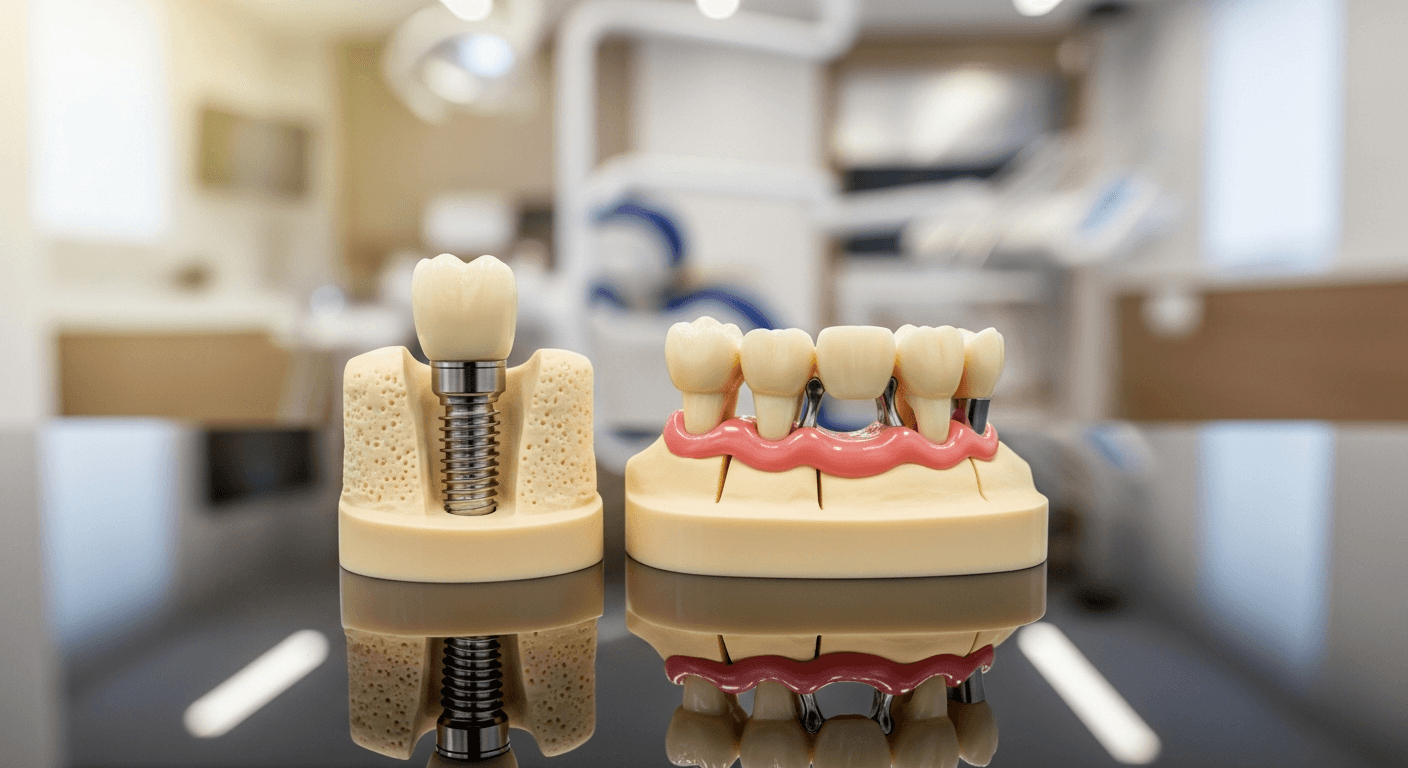
When an old dental bridge fails, replacing it with implants is often the stronger, longer-lasting fix, explains Dr. Alexander Antipov, a board-certified oral and maxillofacial surgeon in Roseville, CA. Traditional bridges restore missing teeth, but they do not last forever — a bridge relies on the natural teeth beside the gap, and over time those supporting teeth can decay or weaken. When a bridge fails, dental implants often provide a stronger and more permanent solution.
This article is for general education — consult a qualified oral surgeon for a personalized recommendation.
Why Bridges Eventually Fail
A bridge is a connected set of crowns anchored to natural teeth on either side of the gap. The weak point is those support teeth, which over the years can develop:
- — Decay underneath the crowns
- — Cracks from carrying extra load
- — Gum recession and bone loss
- — Root problems that require extraction
| Feature | Traditional Bridge | Dental Implants |
|---|---|---|
| Support | Relies on neighboring teeth | Stands on its own in the jawbone |
| Effect on healthy teeth | Requires grinding them down | Leaves them intact |
| Bone | Bone under the gap is lost | Preserves bone where the root is missing |
| Cleaning | Harder to clean underneath | Easier daily cleaning |
| Lifespan | Support teeth can decay or crack | Longer lifespan with proper care |
Why Implants Are a Stronger Replacement
Implants do not depend on neighboring teeth. Each implant stands on its own in the jawbone, which keeps the surrounding teeth intact. The advantages over a new bridge include:
- — No grinding down of healthy teeth
- — Bone preservation where the tooth root is missing
- — A longer lifespan with proper care
- — Easier daily cleaning
What the Replacement Process Involves
Switching from a bridge to implants is a planned, step-by-step process. The typical path includes:
- — Removing the old bridge and assessing the teeth
- — Extracting any failed support teeth
- — Bone grafting where volume has been lost
- — Placing implants once the site is healthy
- — Attaching the final crowns or bridge on the implants
Is It Worth the Switch?
For many patients, replacing a repeatedly failing bridge with implants ends a cycle of repairs. The decision depends on your bone, your budget, and your goals — and a consultation makes the right path clear. If you are weighing your choices, compare them in our guide on implants versus other tooth-replacement options.
Frequently Asked Questions
Can I get implants right after the bridge is removed?
Sometimes. If the bone and gum are healthy, implants can be placed soon after. Other cases need grafting first.
Why do bridges eventually fail?
The weak point is the support teeth on either side of the gap, which can develop decay under the crowns, cracks from extra load, gum recession, or root problems that require extraction.
Why are implants stronger than a new bridge?
Each implant stands on its own in the bone, so it does not depend on neighboring teeth, preserves bone where the root is missing, and is easier to clean.
What does switching from a bridge to implants involve?
It is a staged process: remove the old bridge, extract any failed support teeth, graft where bone is low, place implants once the site is healthy, then attach the final teeth.
Will I be without teeth during treatment?
No. Temporary teeth keep you comfortable and confident throughout the process.
Are implants more expensive than a new bridge?
Implants often cost more upfront but can last far longer, which makes them cost-effective over time.
Tired of repairing the same bridge?
Dr. Antipov helps patients move from failing bridges to durable implants. Book a consultation at our Roseville practice to plan each step.
Book a Free Consultation