Dental Implant Recovery Time: A Complete 2026 Healing Guide
Medically reviewed by Dr. Alexander V. Antipov, DDS — Board-Certified Oral & Maxillofacial Surgeon · Diplomate, American Board of Oral & Maxillofacial Surgery (ABOMS) · California Dental License #50724

Dental implant recovery happens on two very different clocks, explains Dr. Alexander Antipov, a board-certified oral and maxillofacial surgeon in Roseville, CA: the functional recovery — most patients with a single implant return to work within 1–3 days — and the biological recovery, the 3–6 months of osseointegration during which the jawbone quietly fuses with the implant beneath healed gums. Understanding both timelines removes most of the anxiety from the process. This guide maps the whole journey: the critical first 72 hours of swelling and rest protocols, week-by-week soft tissue healing, the “quiet phase” of deep bone integration, how recovery differs between a single implant and a same-day All-on-4 arch, and the lifestyle adjustments that protect your investment along the way.
This article is for general education and is not a substitute for your surgeon's post-operative instructions. Healing timelines vary with your health, bone quality, and procedure type — always follow the personalized aftercare plan you receive at your surgery.
The Recovery Timeline at a Glance
Here is the full arc of a typical implant recovery, from the ride home to your permanent teeth:
| Stage | Timeframe | What's happening |
|---|---|---|
| Critical window | First 72 hours | Swelling peaks at 48–72 hours; rest, elevation, and icing cycles protect the site |
| Soft tissue closure | Weeks 1–2 | Gums close over the site; most patients fully back to work and light routines |
| Early bone response | Weeks 2–8 | Bone cells begin attaching to the implant surface; normal diet gradually returns |
| Deep integration (“quiet phase”) | Months 3–6 | Bone matures around the implant with no physical sensation; stability verified by your surgeon |
| Final restoration | After integration confirmed | Temporary tooth swapped for the permanent crown or bridge |
The First 72 Hours: The Critical Healing Window
The first three days set the stage for everything that follows. If your surgery used IV sedation, expect grogginess the rest of that day — plan for a ride home and no responsibilities. For the first 24 hours, keep your head elevated on two pillows (even sleeping) so gravity reduces pressure at the surgical site, and run a 20-minutes-on, 20-minutes-off icing cycle on the outside of your face starting as soon as you get home.
Don't be alarmed if you look puffier on day two or three than on surgery day — swelling normally peaks 48–72 hours post-op before receding. By the end of day three you can usually switch from cold compresses to gentle warm salt-water rinses. Brush your other teeth normally but leave the surgical site completely alone: no poking with your tongue, no pulling your lip back to inspect stitches. Fever, or pain that worsens despite medication, is a call-the-office-now signal.
Weeks 1–2: Soft Tissue Closure
During the first fourteen days your gums close over the surgical site, and non-dissolvable sutures (if used) come out. Most patients are back to a full work schedule within days — desk work often the very next day, physically demanding jobs after about a week. An itchy sensation around the gums is a good sign: blood flow increasing and nerves repairing as tissue knits together. Knowing what normal healing looks like matters most in this window — our guide to normal healing vs. infection signs covers exactly what should and shouldn't be happening day by day.
Months 3–6: Osseointegration, the Quiet Phase
The true success of your implant is decided by osseointegration — the biological process in which bone cells attach directly to the dental implant's titanium or zirconia surface until it is structurally part of your jaw. It typically spans three to six months, and it is called the quiet phase for a reason: you feel completely normal while the fusion is still reaching peak stability beneath the surface. This is why the temporary-to-permanent transition is scheduled by verification, not by the calendar — Dr. Antipov confirms integration with imaging and stability checks before attaching your final teeth.
The discipline this phase demands is simple: don't overload the implant early. Micro-movement during fusion causes soft scar tissue to form instead of bone — the root cause of loose, failing implants. The National Institute of Dental and Craniofacial Research's overview of dental implant care emphasizes the same follow-up-driven approach to protecting the bond.
Single Implant vs. All-on-4: Two Different Recoveries
A single tooth implant is a localized event — you can usually chew on the opposite side almost immediately, and daily life barely changes beyond protecting the one healing site. Full-arch procedures involve more tissue work and IV sedation, but carry a unique advantage: with same-day provisional teeth, your functional recovery — smiling, speaking, facing the world — happens almost immediately even while bone integration continues underneath.
All-on-4 patients follow a more structured path: liquids for the first 24 hours, then soft foods (yogurt, protein shakes, mashed potatoes) for several weeks to prevent micro-movement while the implants fuse under load. Expect minor speech adjustments — “s” and “f” sounds — that resolve within 7–10 days as your tongue adapts to the new bridge. For the full week-by-week arc of a full-arch case, see our All-on-4 recovery timeline.
Lifestyle Rules That Protect Your Investment
A handful of habits have outsized influence on how smoothly you heal:
- — No strenuous exercise for 7 days: elevated heart rate and blood pressure increase swelling and bleeding risk at the site. Walks are fine; gym sessions and Sacramento-summer trail runs are not.
- — No smoking or vaping: nicotine constricts blood vessels and is one of the strongest predictors of implant failure — our guide for smokers explains the risk window.
- — No straws for the first week: suction can disturb the healing clot.
- — Hydrate and eat protein: tissue repair and bone building consume resources — give your body the raw materials.
- — Keep every follow-up: integration is verified, not assumed; short check visits catch small issues before they become revisions.
How Specialist Care Shortens Recovery
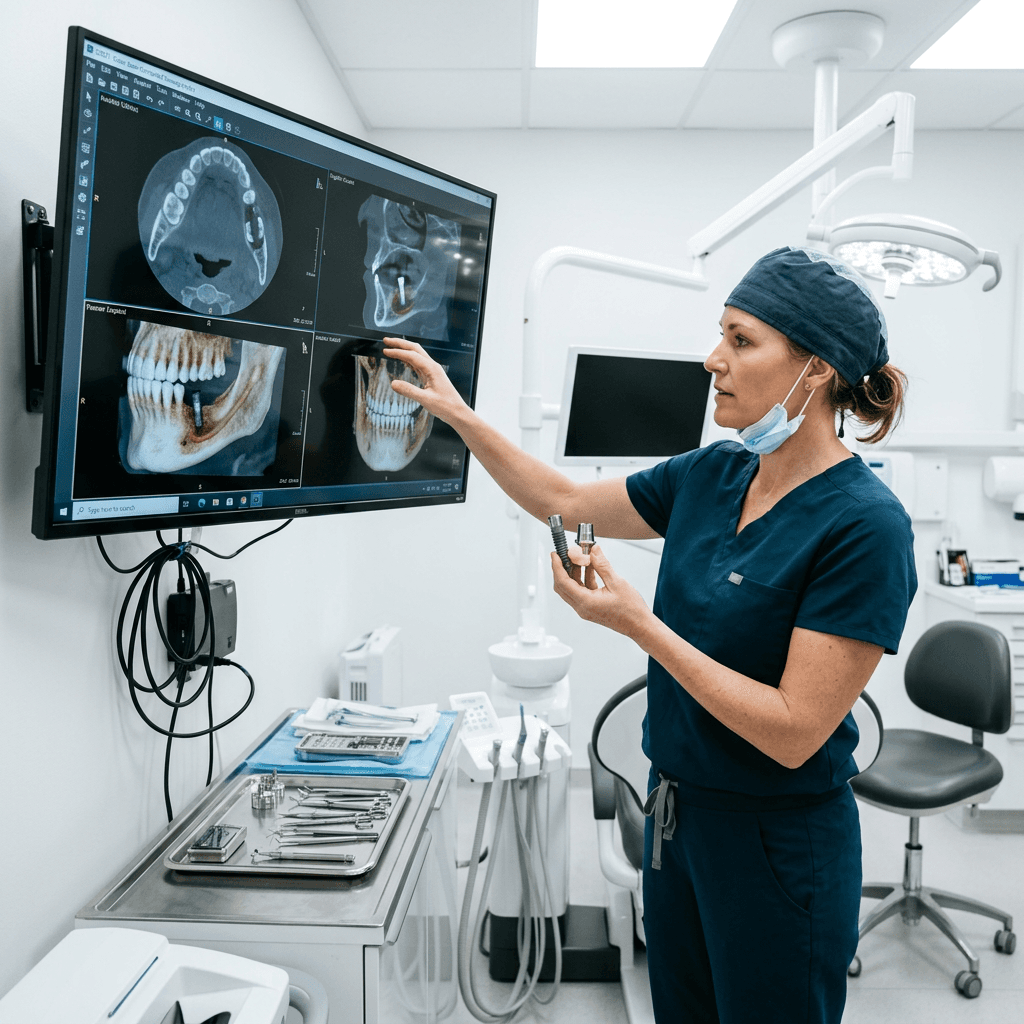
The most direct way to shorten recovery is to reduce surgical trauma in the first place. Dr. Antipov is a board-certified oral and maxillofacial surgeon and Diplomate of the American Board of Oral and Maxillofacial Surgery. At his Roseville office, every implant is planned on 3D CBCT imaging and placed with guided precision — smaller incisions, less tissue disruption, a milder inflammatory response, and therefore less swelling and a faster return to routine. Patients travel from Sacramento, Rocklin, Granite Bay, Folsom, and El Dorado Hills for that difference.
Your recovery plan is personalized to your medical history and procedure at the consultation, you leave surgery with written aftercare instructions, and the office stays accessible for follow-ups through the final crown — a structured, monitored path rather than a printout and a goodbye.
Frequently Asked Questions
How long does it take to fully recover from a dental implant?
Functional recovery is fast — most single-implant patients return to work within 1–3 days and normal eating within a couple of weeks. Full biological recovery, where the jawbone finishes fusing with the implant, takes three to six months, after which the permanent crown is placed.
How many days should I take off work after implant surgery?
Most desk workers take 1–2 days off for a single implant; physically demanding jobs warrant about a week. Full-arch procedures under IV sedation usually call for 3–5 days of rest. Plan around the 48–72 hour swelling peak rather than surgery day itself.
When does swelling peak after dental implant surgery?
Swelling typically peaks 48 to 72 hours after surgery — looking puffier on day two or three than on surgery day is normal, not a warning sign. Head elevation and 20-minute icing cycles in the first 24 hours significantly reduce the peak; swelling then recedes steadily over the following days.
What can I eat during dental implant recovery?
Start with liquids and very soft foods — yogurt, smoothies, mashed potatoes, eggs — for the first days, then progress to soft solids over 1–2 weeks for a single implant. Full-arch patients follow a longer structured progression, avoiding hard chewing for several weeks so the loaded implants stay motionless during fusion.
When can I exercise again after getting a dental implant?
Wait about seven days before strenuous exercise. Elevated heart rate and blood pressure increase bleeding and swelling at the surgical site during early healing. Gentle walking is fine right away; weight training, running, and high-intensity workouts should wait a full week or until your surgeon clears you.
How long does osseointegration take?
Typically three to six months. Bone cells progressively attach to the implant surface and mineralize until the post is structurally part of your jaw. You feel nothing during this quiet phase — which is why final restoration timing is based on verified stability, not just the calendar.
Is All-on-4 recovery harder than a single implant?
The first week involves more rest and a stricter soft-food diet because more implants and tissue are involved — but functionally it can feel easier, since you leave surgery with a full set of provisional teeth the same day. Speech adapts within 7–10 days, and the bone-fusion timeline is similar.
What signs during recovery mean I should call my surgeon?
Fever, pain that worsens after day three despite medication, swelling that grows instead of receding after 72 hours, pus or a bad taste from the site, or a mobile implant all warrant an immediate call. Early contact almost always means a simple fix; waiting turns small issues into big ones.
Start Your Recovery With a Plan, Not a Guess
Schedule a free implant consultation with Dr. Antipov in Roseville — you'll get 3D CBCT imaging, a personalized treatment and recovery roadmap, and transparent, all-inclusive pricing backed by a price-match guarantee. Restrictions apply.
Book a Free Consultation