Dental Implants for Smokers: Risks and What to Know
Medically reviewed by Dr. Alexander V. Antipov, DDS — Board-Certified Oral & Maxillofacial Surgeon · Diplomate, American Board of Oral & Maxillofacial Surgery (ABOMS) · California Dental License #50724
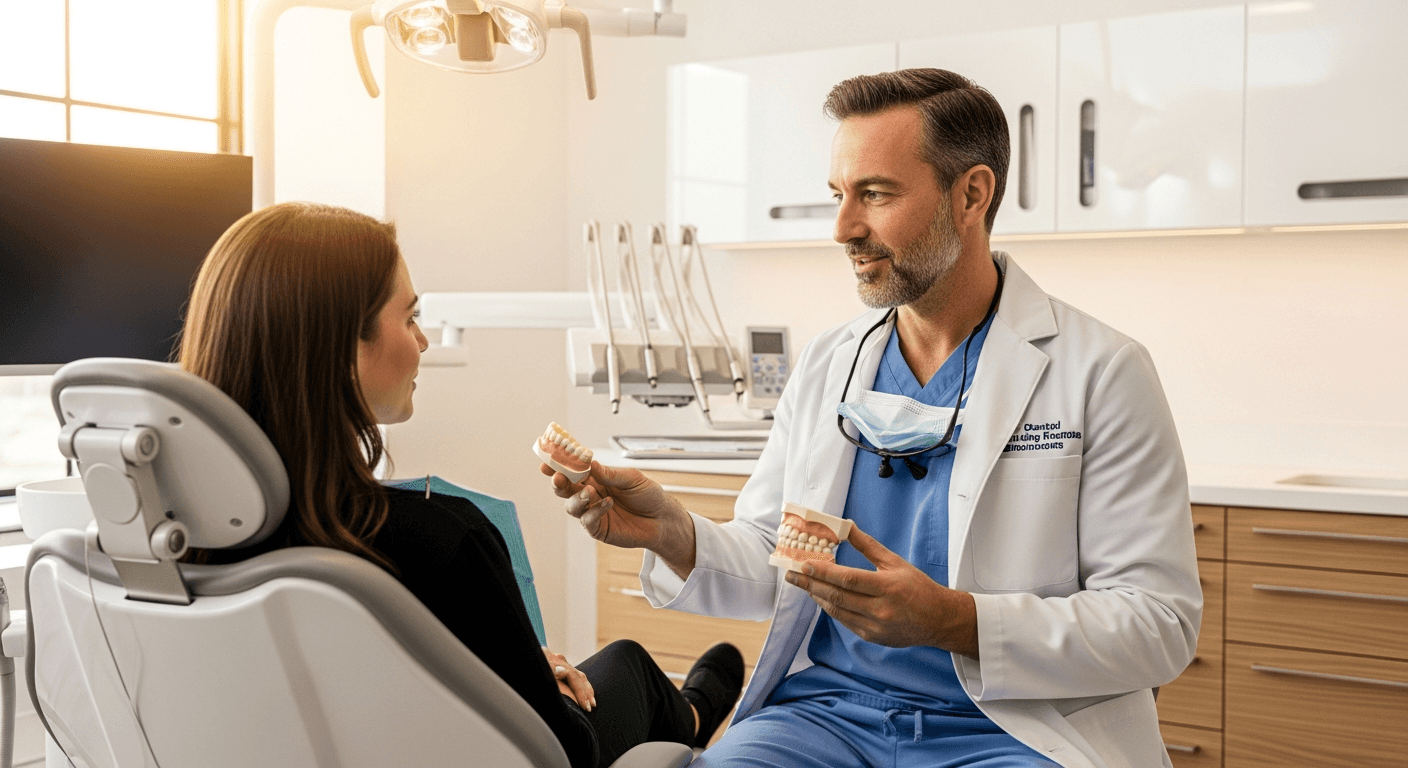
Smoking does raise the risk of implant failure, but it does not automatically disqualify you — many smokers still have successful implants, especially when they cut back or quit around the time of surgery, explains Dr. Alexander Antipov, a board-certified oral and maxillofacial surgeon in Roseville, CA. Smokers are often warned that implants simply will not work for them, but the reality is more nuanced. Understanding why smoking hurts healing is the key to improving your odds.
This article is for general education — consult a qualified oral surgeon for a personalized recommendation.
How Smoking Undermines Healing
Implants rely on healthy gums and bone fusing around them. Tobacco smoke narrows blood vessels and lowers oxygen in the tissues, which slows healing and weakens the body's defense against infection at the surgical site.
It also raises the risk of peri-implantitis — inflammation around an implant that can lead to bone loss and, eventually, failure years down the line.
| Smoking status | Effect on implant healing |
|---|---|
| Actively smoking through healing | Highest risk of failure and peri-implantitis |
| Stopping 1–2 weeks before and during early healing | Measurably improves success |
| Quitting for good | Healing approaches that of a non-smoker |
How Much Does Quitting Help?
Even a short break from smoking around surgery makes a real difference. Many surgeons advise stopping for at least a week or two before the procedure and through the early healing weeks, when the risk of failure is highest.
The longer you stay off tobacco, the closer your healing comes to that of a non-smoker — and quitting for good gives implants their best chance to last.
Gum Disease History Matters Too
Many long-term smokers also have a history of gum disease, which must be treated and stabilized before implants are placed. Active infection in the mouth is a setup for failure. Our guide to dental implant complications covers the warning signs to watch for.
Improving Your Odds as a Smoker
- — Reduce or stop smoking before and after surgery
- — Treat any gum disease before implants are placed
- — Keep hygiene meticulous during healing
- — Attend regular maintenance visits to catch problems early
Frequently Asked Questions
Will a surgeon refuse to place implants if I smoke?
Most will still treat smokers but will explain the higher risk and strongly encourage cutting back or quitting around surgery to protect the result.
How long should I stop smoking before implant surgery?
Stopping at least one to two weeks before and through early healing is commonly advised. Longer is better, and quitting for good is best of all.
Does vaping carry the same risk?
Vaping still delivers substances that can impair healing and is not a safe substitute around implant surgery. Tell your surgeon if you vape.
Can implants fail years later from smoking?
Yes. Smoking raises the long-term risk of peri-implantitis and bone loss, so ongoing care matters as much as the surgery itself.
How exactly does smoking affect implant healing?
Tobacco smoke narrows blood vessels and lowers oxygen in the tissues, which slows healing and weakens the body's defense against infection at the surgical site — and it raises the risk of peri-implantitis over time.
What can I do to improve my odds as a smoker?
Reduce or stop smoking before and after surgery, treat any gum disease before implants are placed, keep hygiene meticulous during healing, and attend regular maintenance visits to catch problems early.
A smoker considering implants?
Dr. Antipov gives an honest assessment of your risk and a plan to improve your odds. Book a free dental implant consultation at our Roseville practice. Restrictions apply.
Book a Free Consultation